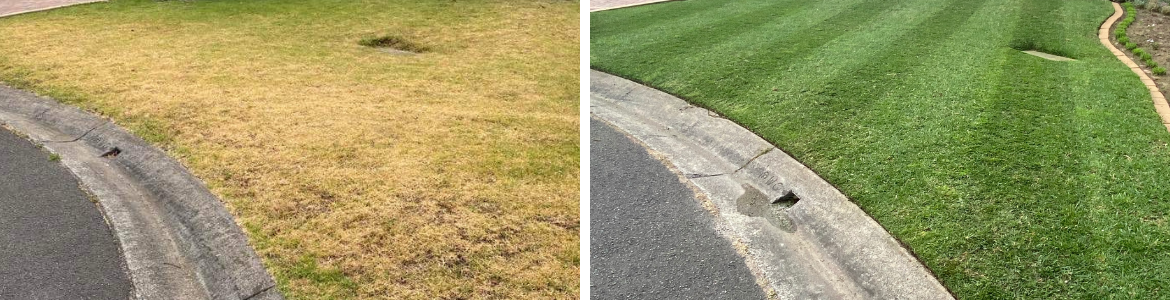
Over the Winter, we noticed our lawn had become overtaken by clover, weeds and overall wasn’t looking as green or healthy as it was last Summer. We researched for about a month before starting any work and invested in tools and supplies we needed to bring our lawn back for Spring.
Note: We have a Kikuyu lawn so the methods and products used may not be suitable depending on your lawn/grass type.
BEFORE AND AFTER:
 Before & After Lawn Renovation
 Before & After Lawn Renovation
Here’s how we tackled our lawn renovation:
Step 1: Identifying the issues with the lawn
- Thick and dense lawn from thatch build up (leaf to soil level was 4+ inches in some areas);
- African Black Beetle and larvae infestation;
- Clover and broadleaf weeds throughout.
 Our unhealthy lawn - mostly thatch, dead material and beetle larvae damage
 Our unhealthy lawn - mostly thatch, dead material and beetle larvae damage
 End of Winter - White Clover, Poa Annua, Paspalum and Ryegrass weeds
Step 2: Treating for weeds and clover
We used the Saxon Patio Weeder to manually pull all the broadleaf weeds (Thistle, Plantain Weed, Dandelion Weed, Cudweed). Generally they are easy to identify - round in growth habit and some are hairy/prickly.
 Manually removed broadleaf weeds
We then sprayed all the whole lawn to target any remaining weeds in particular - White Clover Weed. We used Yates Bindii and Clover Lawn Weedkiller Concentrate and mixed the concentrate in a sprayer bottle.
Note: We avoided spraying for a few days either side of mowing to allow the lawn to recover from the mow before spraying with weedkiller and a few days after to allow the weeds to fully absorb the weed killer product.
Step 3: Scalping the lawn
With a lawn as thick as ours, we had to gradually reduce the cut height over a few weekends leading up to the actual lawn renovation. It would have been difficult to scalp the thick lawn resulting in choking out the rotary mower.
Scalping: We set our mower to the lowest height setting and went over the lawns twice. We had to stop often to empty the catcher because of how much thatch and clippings were being collected. I wouldn't suggest doing this with a battery-operated mower as this process requires you to essentially cut down the entire lawn to almost soil level.
 A couple of weeks prior to lawn renovation - gradually reducing mow height so that there is less to scalp. Still plenty of clover weeds at this stage
 Pre-scalp: Clover has been treated and died off.
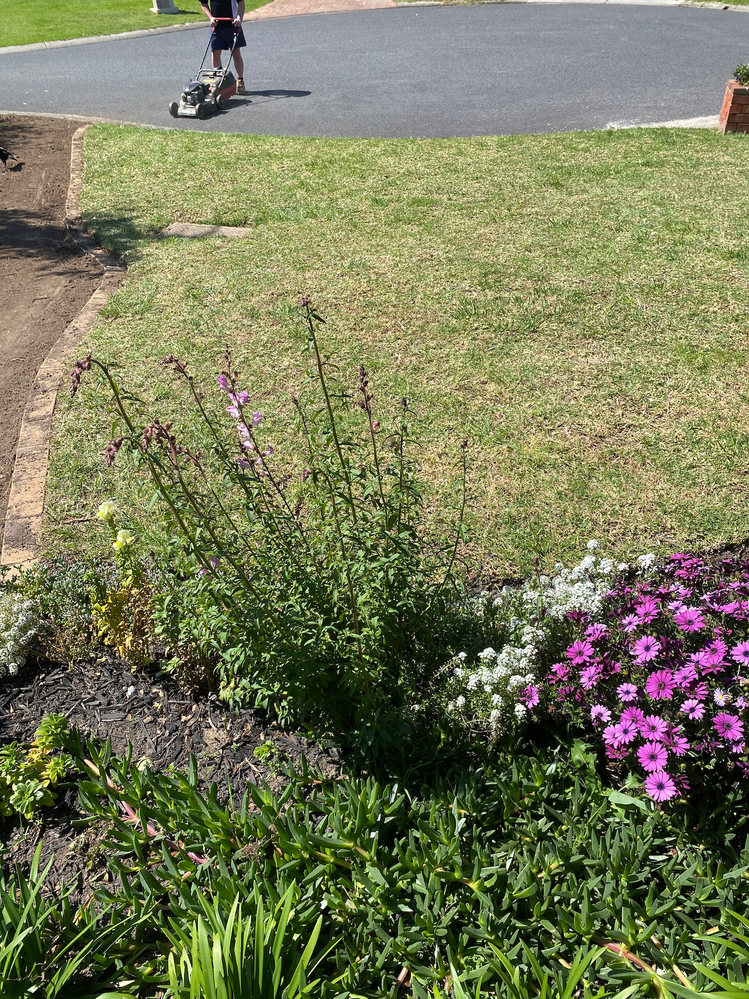
 Scalped lawn - stolons and soil now visible
 Dead material collected from the scalping process
Step 4: Scarifying the lawn
We purchased a Ryobi Scarifier and a couple of 5.0Ah batteries for the scarifying process. The scarifier has stainless steel blades that cut through and remove the thatch and dead material in the lawn. By removing the dead layer of grass that sits on the soil, it allows for more water, air and nutrients to reach the grass roots.
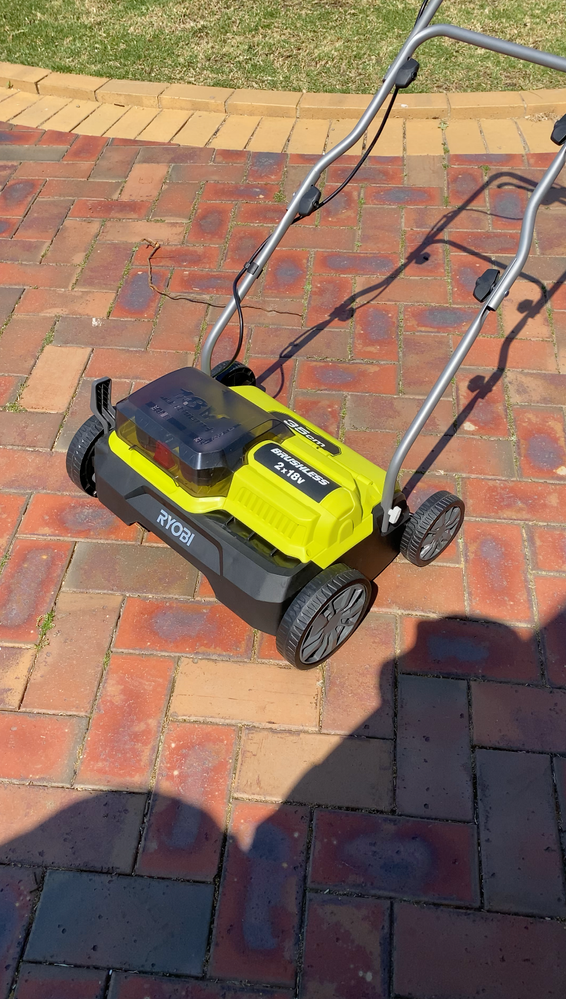
We went over the lawns twice in different directions and didn’t use the catcher that came with the scarifier. Instead, we picked up the dead material with the rotary mower. We ended up removing over 1 trailer load of thatch from the two front lawn areas!
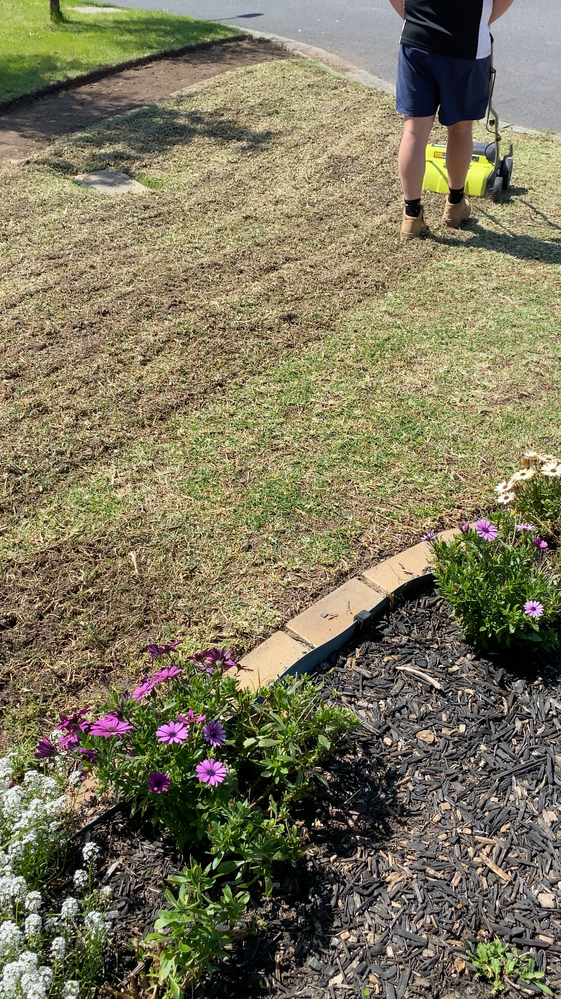
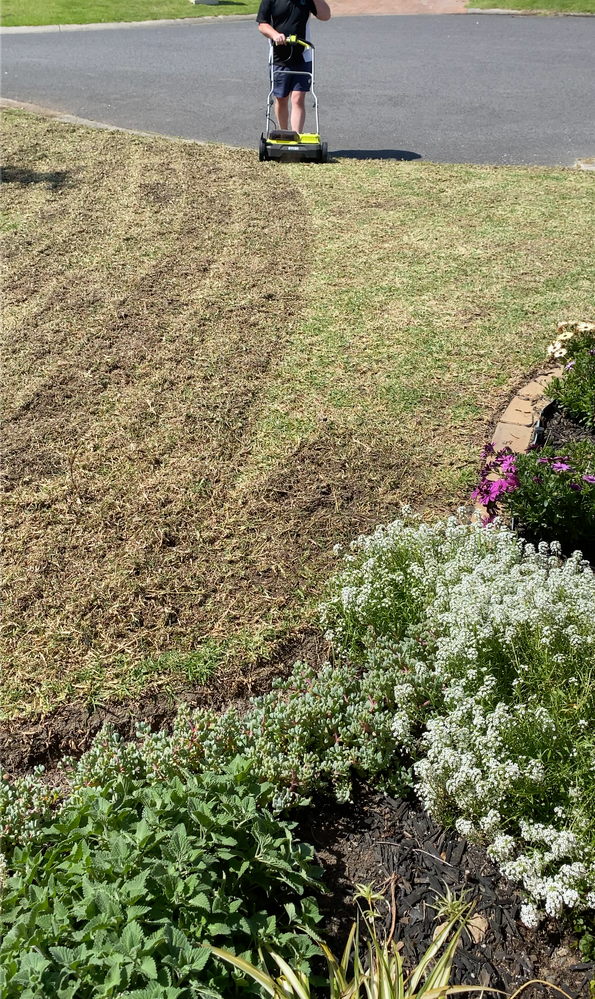
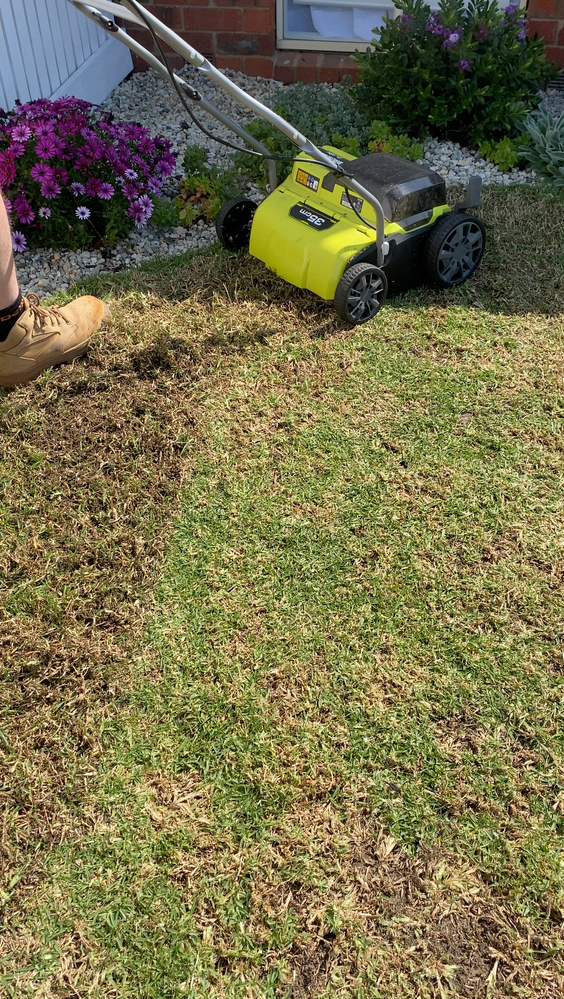
 Picked up all the dead material left behind by the scarifier using the rotary mower. There was so much that we had to keep emptying the catcher every few metres.
While it may look like we’ve decimated the lawn and there’s nothing left of it, in contrast we’ve only removed all the thatch and dead material to allow the lawn to breathe again. The grass solons/runners still remain within the lawn and will eventually grow and spread out as the lawn recovers. Now that much of the soil is exposed, it will allow for light, air and nutrients to reach the grass roots.
 Post-scarification: Plenty of soil exposure, minimal dead material left behind and low cut height achieved.
Step 5: Fertilising
We had half a bag of Neutrog Sudden Impact Lawn Fertiliser leftover from last season so we used this slow-release granular fertiliser after scarifying and generously watered it in. This product worked really well for us last year and isn’t as expensive as other lawn fertilisers. It would probably be beneficial to also water in with Seasol or a liquid fertiliser but we didn't have some on-hand at the time.
 Spread granular fertiliser ready to be watered
 Fertiliser applied and ready for watering
 Neutrog Sudden Impact Fertiliser used post-lawn renovation
Step 6 (Week 1): Treating for lawn beetle and larvae
We noticed a lot of magpie activity on the lawn as they would feast on the worms and black beetles. We waited for a rainy day and just before the rains came, we sprinkled a couple of bottles of Richgro Lawn Beetle and Grub Killa Insecticide and if we notice more insect damage throughout the season, will reapply as needed.
Week 1 Recovery:
 WEEK 1 RECOVERY
 WEEK 1 RECOVERY
 WEEK 1 RECOVERY
 WEEK 1 RECOVERY
Step 7 (Week 2): Core-aeration and levelling with sand
After 2 weeks the lawn was starting to recover and fill in but there were still some low spots and dips. So before spreading sand, to level out these areas, we manually core-aerated the lawn. We used the Cyclone Lawn Aerator but struggled to get decent cores as the soil was surprisingly not compacted.
 Manually core-aerating
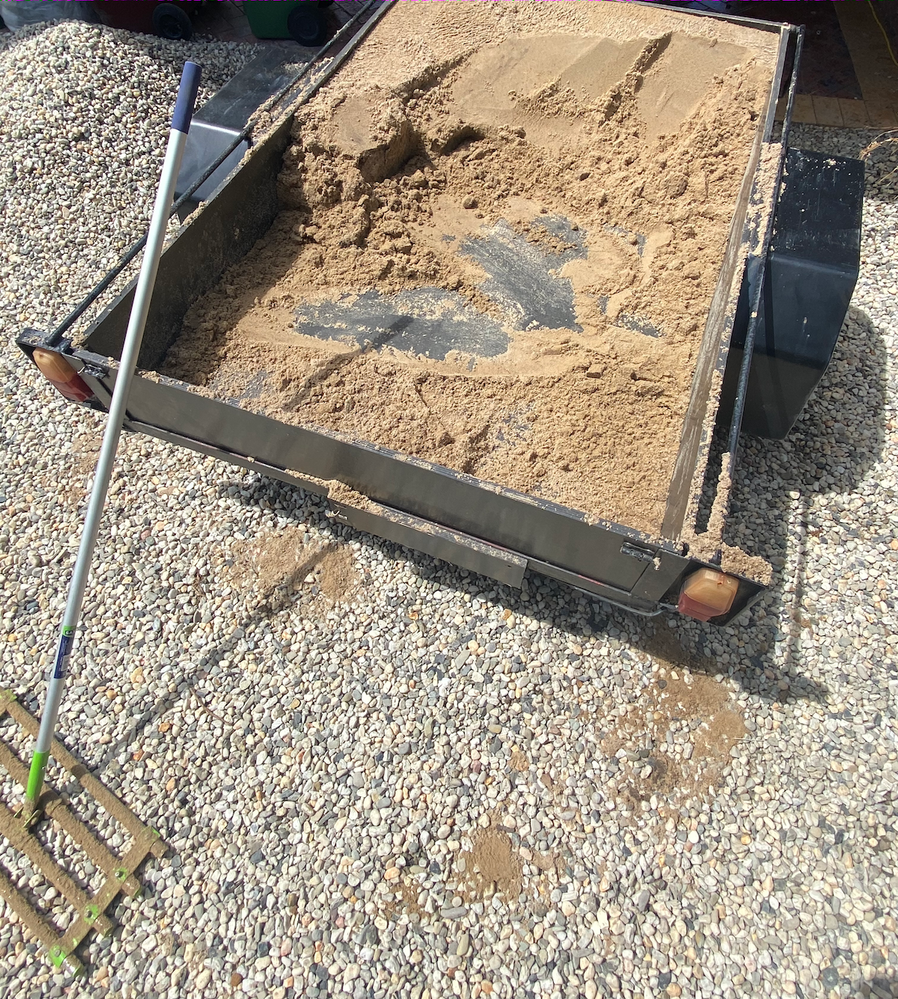
 Levelling/top dressing the low spots in the lawn with sand
 The lawn after levelling with sand
Week 2 Recovery:
 Week 2 Recovery - photo before applying the sand to low spots
We purchased the Ryobi Edger to create the sharp edges.
 Week 2 Recovery - photo before applying the sand to low spots.
Step 8: Recovery after lawn renovation
We kept the lawn well-watered, continued to hand pull any weeds that emerged. We mow every 3-4 days to keep the ryegrass down (we still have remnants of other grasses within the Kikuyu from scattering off-the-shelf lawn seed last year). We might have to apply a lawn growth regulator to slow down the growth so we don’t have to mow so often.
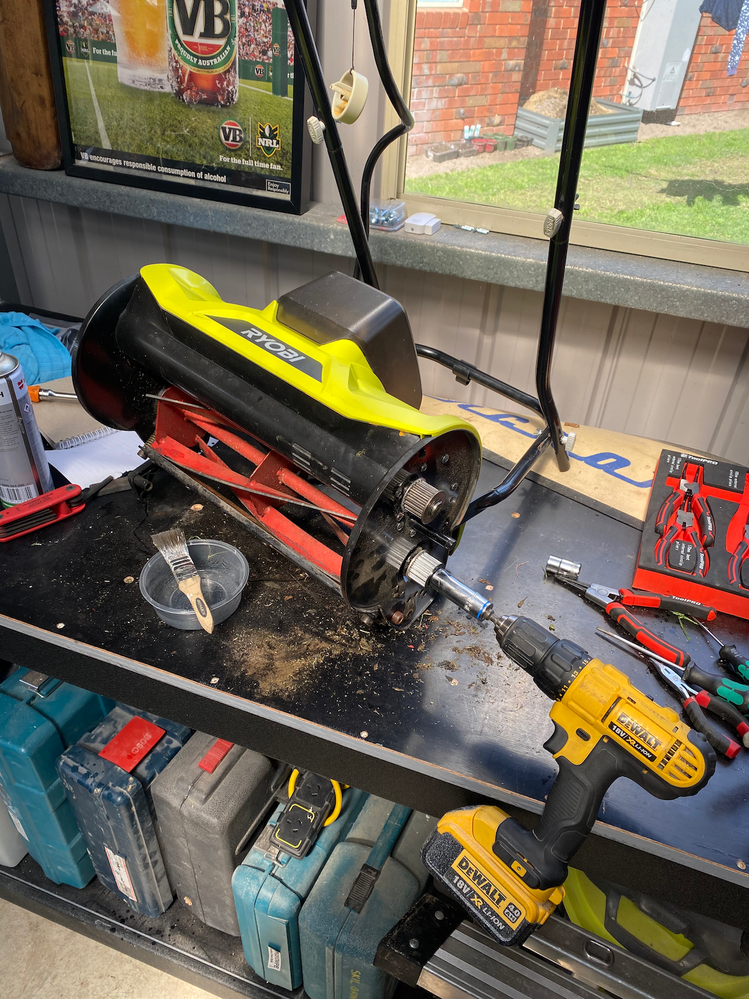
To create the stripes, we purchased a (now discontinued) Ryobi cylinder mower and modified it by adding a weighted roller on the back. We spent some time taking it apart and backlapping the cylinder mower with backlapping paste. Backlapping maintains the sharpness of the blades for a sharp scissor-like cut.
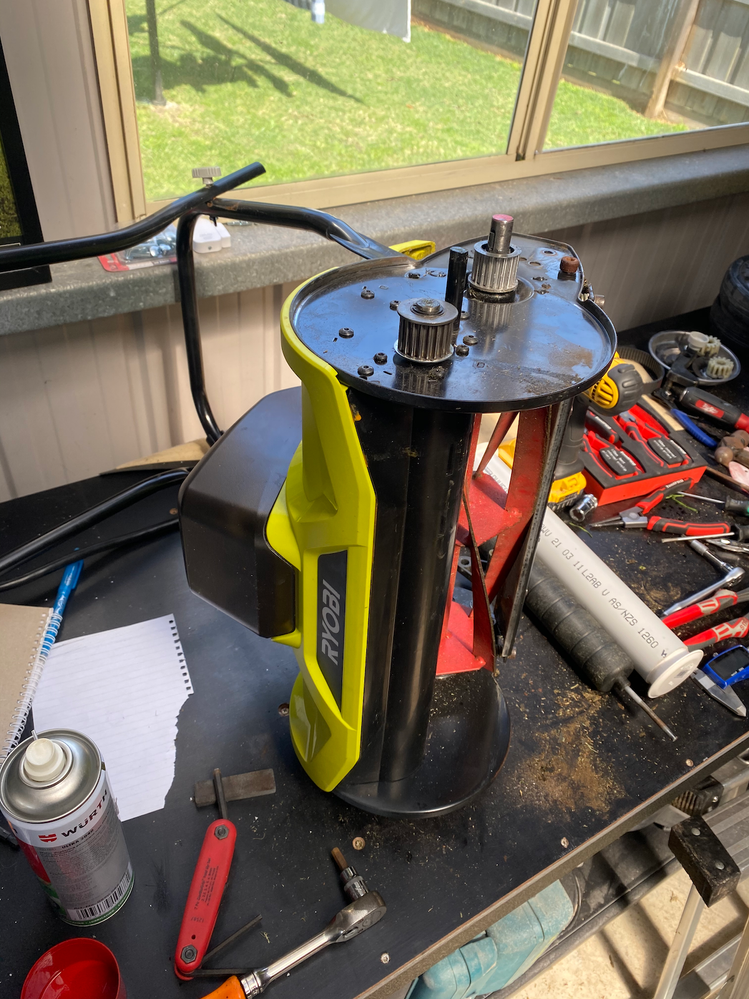
Week 3 Recovery:
 Week 3 Recovery: Some areas with sand still visible where the grass has yet to fill in.
 Week 3 Recovery: Overall filling in nicely with some sandy spots needing a little longer to fill in
Week 4 Recovery:
4 weeks after doing the lawn renovation, it has almost fully recovered. There are still some areas which need to thicken out a bit but overall, happy with the recovery after 4 weeks.
In the process of planning for this lawn renovation, we discovered a brick garden bed edge (photo below) that was concealed under the old thick lawn! The side garden bed is still a work in progress while we continue to planting it out.
 Week 4 Recovery
 Week 4 Recovery
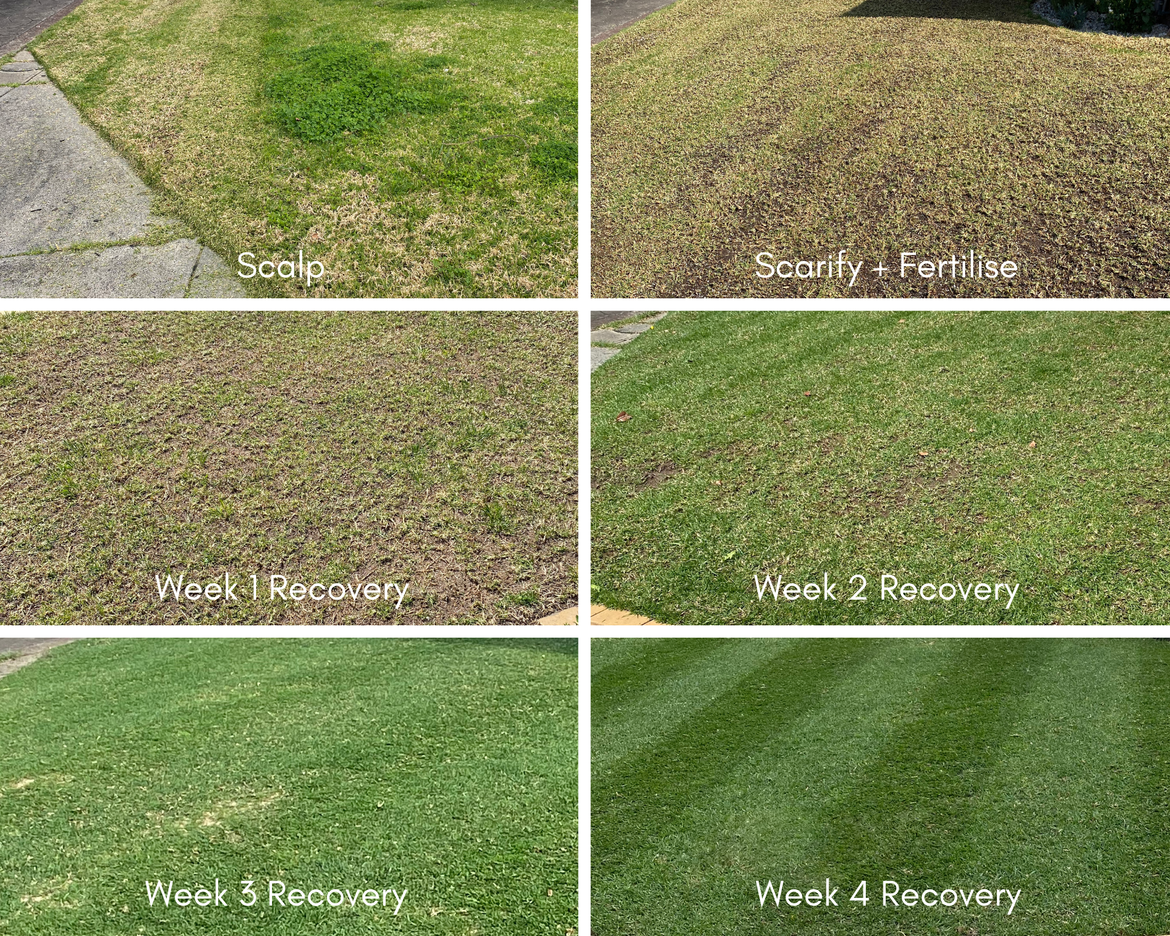
Tips/Lessons learnt:
- Treat weeds and apply a beetle insecticide before they overtake and decimate the lawn;
- Avoid using off-the-shelf lawn seed unless the grass seed is the same as what is in your existing lawn. Otherwise you’ll end up with a mix of different grasses in your lawn;
- Renovate lawn in the growing season (34°C Rule: Add your low and high degree temperature and if it’s above 34°C consistently, then it’s warm enough to do a lawn renovation);
- For stripes, we purchased a reel mower and modified/added a weighted roller on the back. Alternatively, you can roll over and create the stripes using a water filled roller.
- (For Kikuyu lawns) Maintain a low mowing height and mow often to avoid thatch build up. We made the mistake of mowing higher in the Summer months to maintain a green-looking lawn which resulted in creating a thick, dense and unhealthy lawn.