I absolutely love restoration projects. Facebook is riddled with things is desperate need of some TLC, some diamonds in the rough which, with a little bit of elbow grease, still have many meaningful years ahead of them.
Following my anvil projects, I thought I'd end this year on a high note and get one more challenging restoration under my belt before hanging up the old apron ahead of the festive season, and decided that an old copy press (sometimes simply called a book press) was the best place to look.
Now there are many of these on the marketplace, but typically sold at exorbitant prices given the recent generational obsession with all things vintage. I knew that getting a reasonably priced press would mean nigh-unsalvageable.
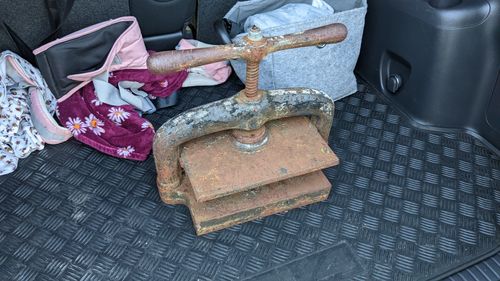
And this is how I found her: Completely seized in place after many years of sleeping outside in the garden, serving as a steady foundation for the likes of spiders and snails to rest during the day. It's a 18th century Quality D copy press.
First things first, I had to get it completely disassembled. This involved MANY repetitive and liberal applications of WD40, spiced with some love from my trusty MAPP torch in key areas where the expansion and contraction was needed to free up the mechanism with a couple of blows with a rubber dead blow hammer. As I disassembled it, I also used a wire brush to clean off most of the flaking rust. I didn't have the right sized socket for the big bolts that held it together, so I used some questionable engineering loopholes involving two shifting spanners and no shortage of repeated whispered utterances like "Come on ya b#stard!"
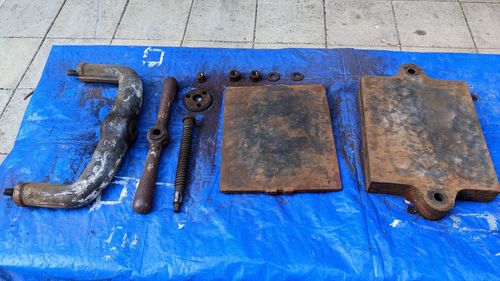
What remained was a mixture of more stubborn rust, interrupted by patches of lead based paint. At this point I was able to break out my trusty Ryobi 18V angle grinder, alternating between the cup wire brush and twisted wire wheel to clean everything up to a bare metal finish. The smaller parts were done on my bench mounted wire brush.
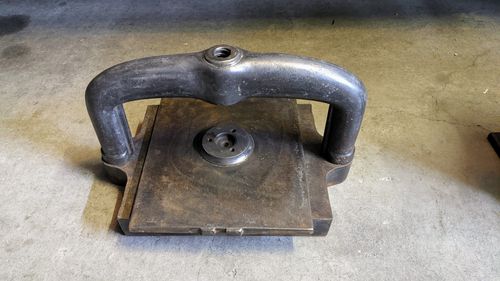
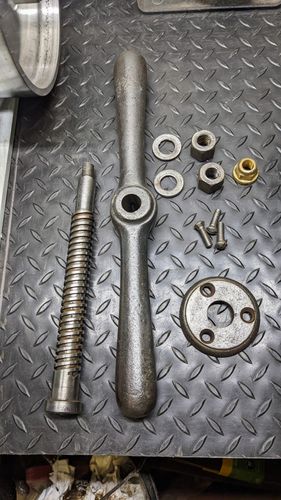
Once I was happy that all the problematic rust was gone, I gave everything a once over with a acetone rag before commencing painting. The goal here was "deep lustre", so I started with two coats of satin black, followed by two coats of clear acrylic. I also applied some gold accents to finish it off and polished the threaded rod to a shine.
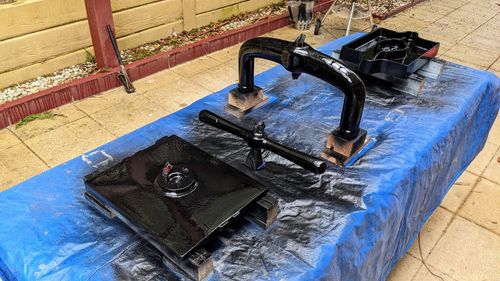
Finally, I cold blued the nuts, bolts and washers to a matte black finish, oiled / greased and reassembled it all.
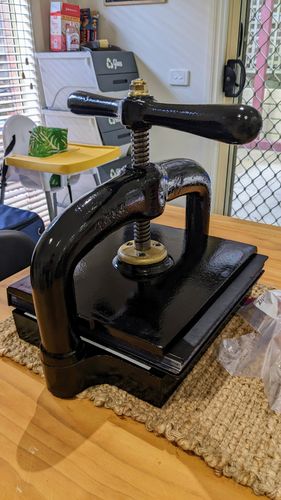
This is the perfect example in my books of a restoration project that didn't cost much and left me with a valuable conversation piece at the end. It's easily achievable over a weekend and gave me such a sense of accomplishment, knowing that this piece of history was forgotten in someone's yard and now makes a really nice centrepiece on a coffee table somewhere.
Merry Christmas and may your new year be filled with awesome projects!
~M


