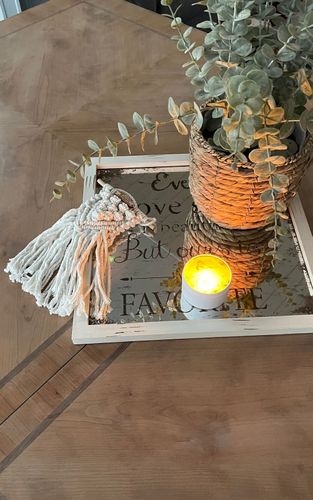
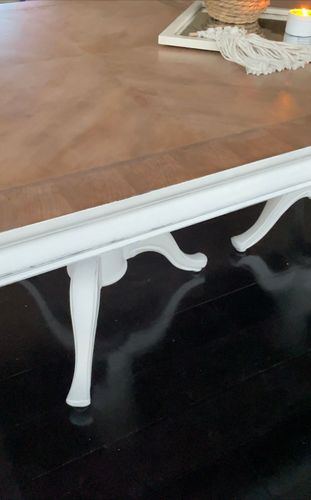
After six years of hating this table, I am finally doing something about it. I'm delighted with how it turned out, so I thought I would share my 8-step process.
https://www.youtube.com/watch/FjRCOhwKhRc
Materials
- Oven Cleaner
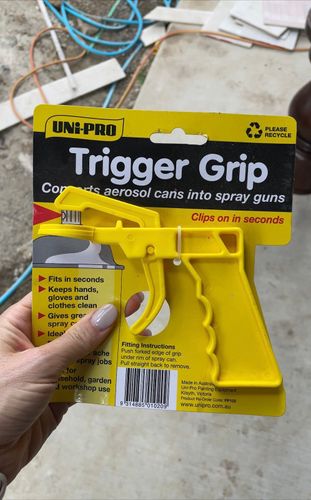
- Comfort Grip
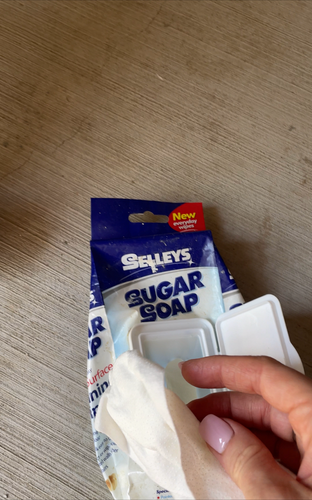
- Sugar Soap
- Cleaning Clothes
- Sander, I used an orbital Sander
- 80 grit sandpaper
- 240 Grit Sandpaper
- Primer
- Paint
I had grand plans to strip the varnish from the table top and leave it natural. However, after a closer look, I realised my solid wood table was MDF! So those plans went out the window; II just hoped it was varnish on the tabletop and not a laminate veneer.
Step One: Strip the Top Layer of the veneer
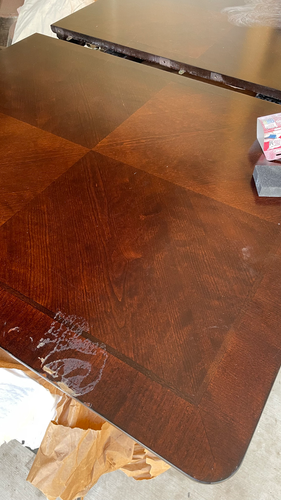
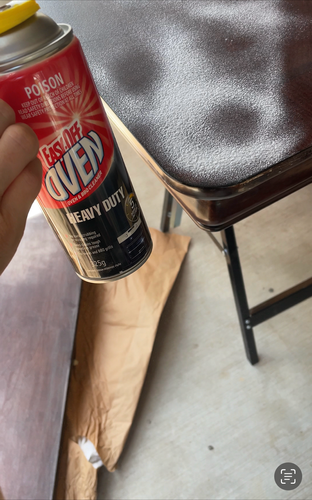
As it is MD, F, I was worried about how I would strip the varnish off the table. I needed to get the top coat off, as it was pretty thick. Oven cleaner is my go-to for stripping varnish and stain. It's so easy and requires minimal heavy lifting.
Having recently used oven cleaner to strip another piece of furniture, I found keeping my finger out of the trigger challenges. So I picked up this Trigger Grip from Bunning.s
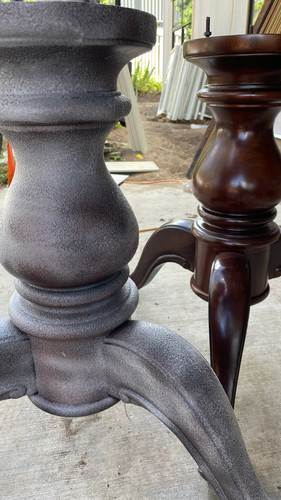
Step Two: Wash it off
You spray it on, leave it for 60 minutes and hose it off.
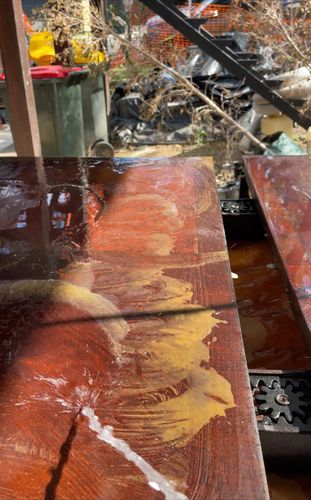
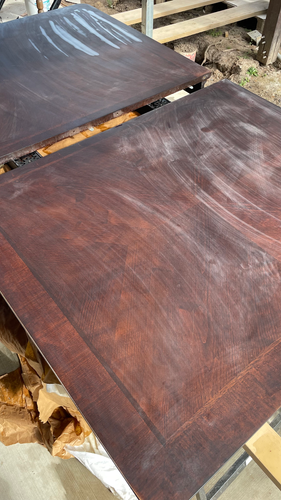
Step Three: Sugar Soap
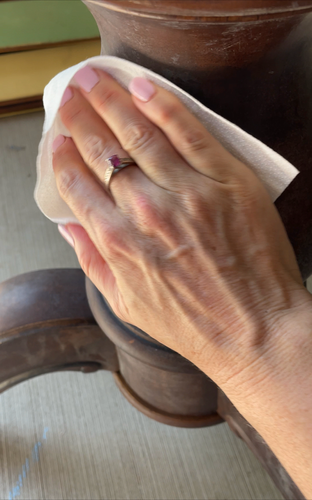
I wiped the table and legs with sugar soap, ready for paint.
Step Four: Sand the tabletop
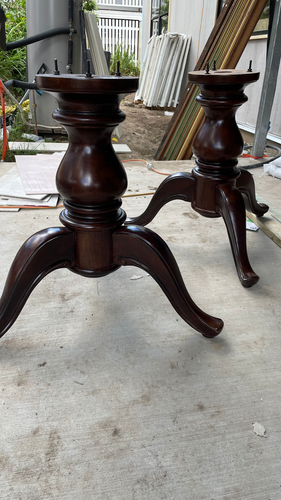
As I had to paint the edge of the table and legs (as they're MDF), I lightly hand sanded the edge of the table and legs ready for paint.
Luckily, a wood veneer was on the top of the table; II sanded the table top using an orbital sander and 80-grit sandpaper to remove the excess varnish. I had to be careful as it was fragile, and I needed to be very careful about exposing the MDF and effectively ruining the table.
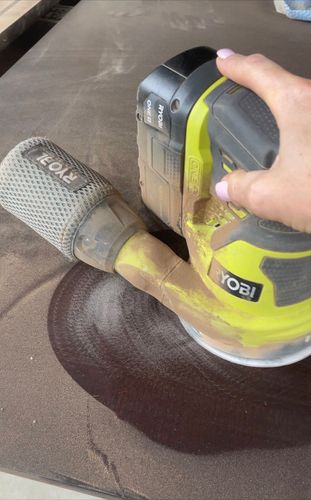
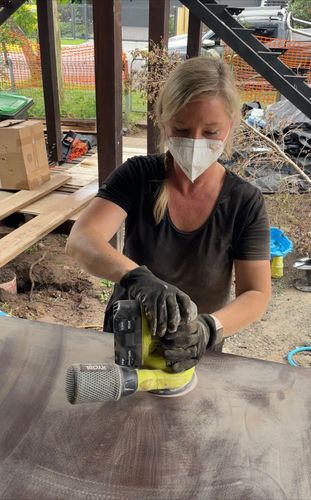
Once the varnish had been removed,d I sanded again with an orbital sander, using 240 grit paper to smooth.
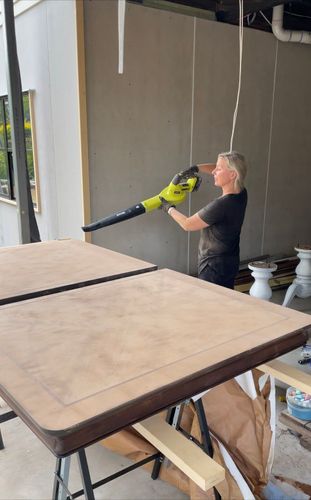
Step Five: Paint
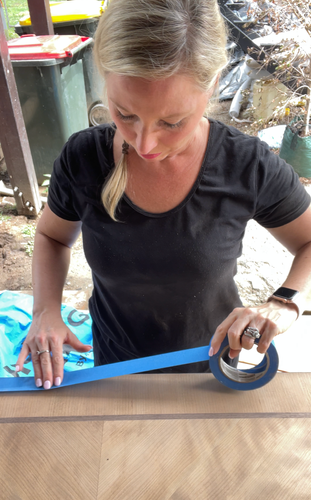
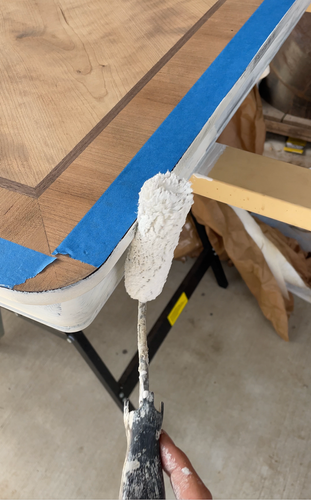
Before I painted,d I wiped the table top and legs with sugar soap. I used blue tape around the edges of the the tabletop (I'm a messy painter) and painted the edge of the table and the legs.
I primed the side of the table and used a roller and brush to paint the edges, removing the blue tape before the final layer of paint had dried.
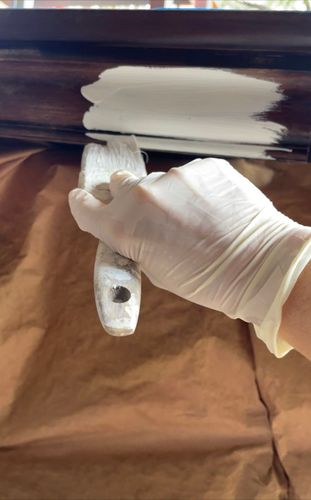
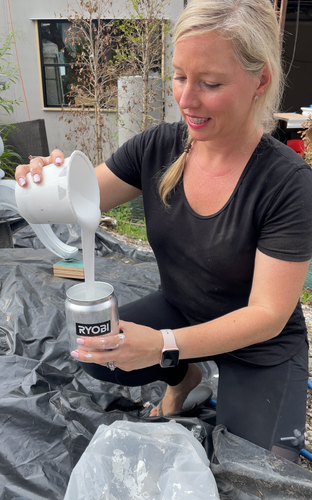
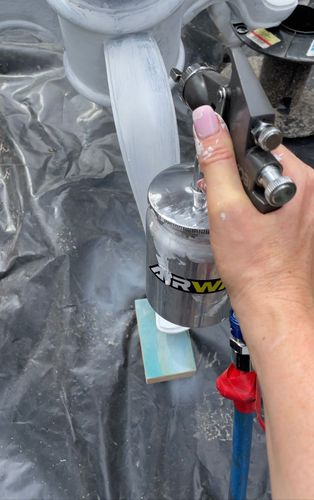
Once the legs were prime,d I sprayedtwo2 coats of top coat.
Step Six: Distress
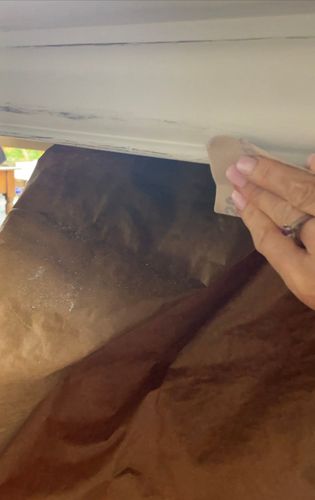
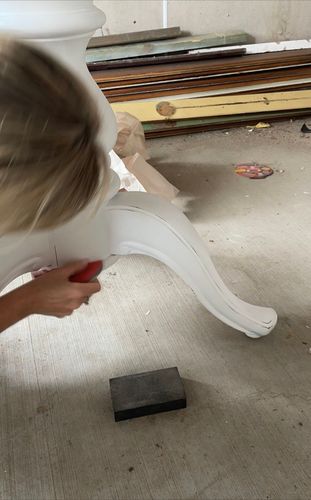
I left the table for 48 hours for the paint to dry before I distressed the colour entirely. There is no right or wrong way to distress; it's personal taste. I like to run a course sanding pad along the corners and edges of the table and legs to remove and rough up the paint.
Step Seven: White Wash
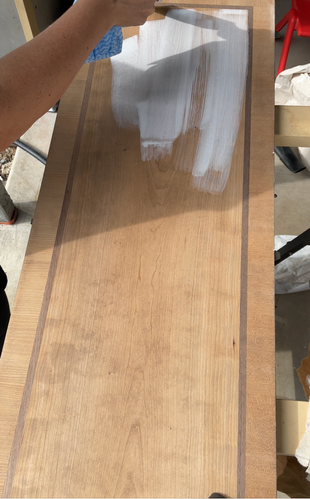
I felt the tabletop was too yellow, and some irregular patches would only be accentuated with stain or bleaching. I wanted to lighten the to,p, so I slept on it for a few days, walked past it and stared at it for a few days,s then decided to whitewash it.
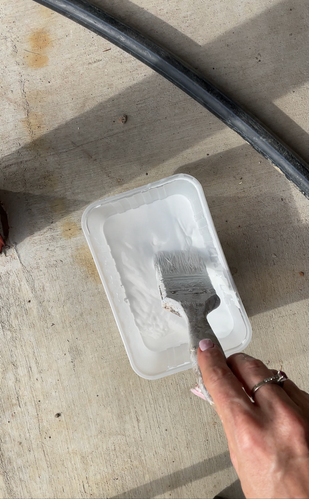
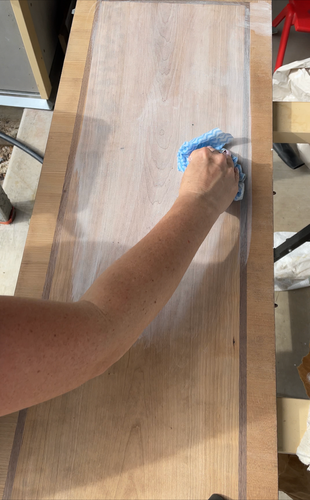
I didn't use an exact measure. I filled a takeaway container with ⅔ full of water and mixed the paintbrush I had used. Other than the brush,h I didn't add any other paint. I brushed it on in the direction of the wood and then wiped it off with a damp cloth.
I just did the one layer,r but you could add a second, then let it dry for 24 hours.s
Step Eight: Poly
I used a water-based poly; I didn't want to yellow the look with an an oil-based. I painted three coats of poly with a paintbrush and sanded with 240-grit sandpaper in between applications.
That was it. It was a relatively straightforward process. I always think the most challenging part of any DIY project is the fear of how it will turn out.
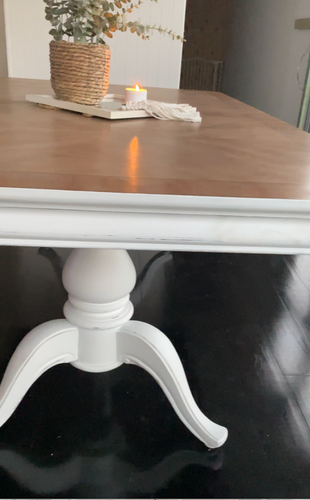
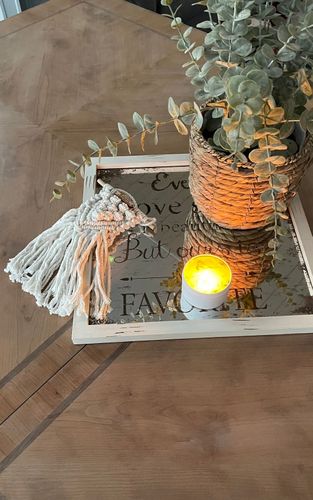
My advice is not to suffer from paralysis by analysis. You can always paint it or try a different method if it doesn't turn out.
DIY Tip, If you're lazy like me and don't like to wash brushes you can put them in a bag in between coats.


