Steps
Step 1
I wanted the table top to be strong and of an industrial style.
I think I took the hard way to build the actual timber top but live and learn. I wanted to be able to pull all the hardwood timber slats together with a thread rod. I drilled 3 sets of matching holes to thread the timber through and thought that doing the bolts up would compress the timber.. Naive id say lol I would do it differently next time for sure.
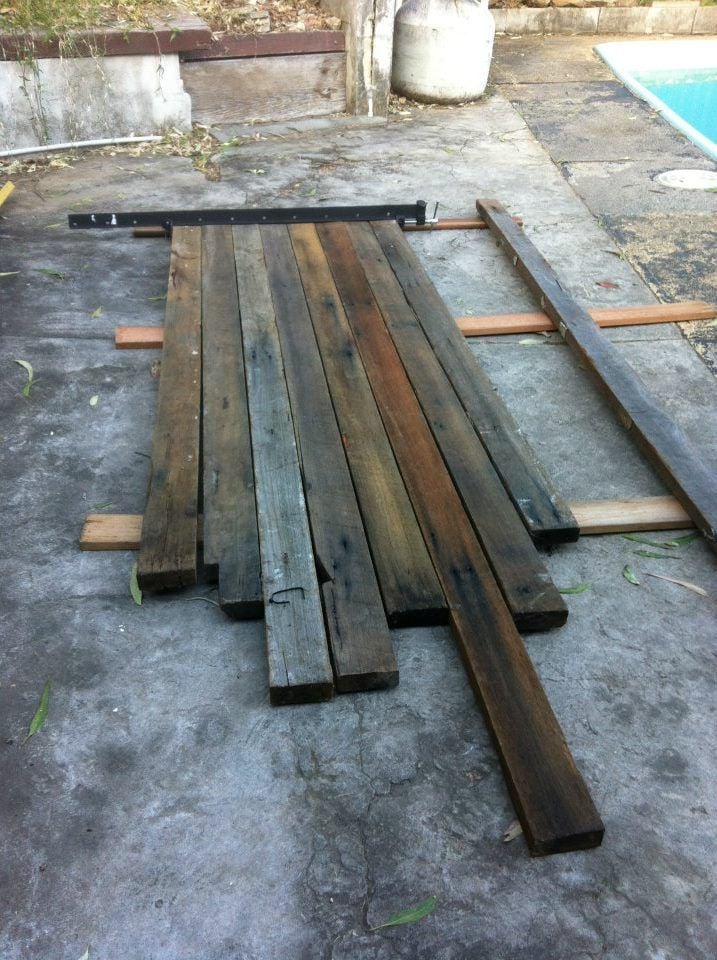
Aligning the timber and sorting out the colouring. Plus also trying to minimise the difference in edging height between the timber pieces.
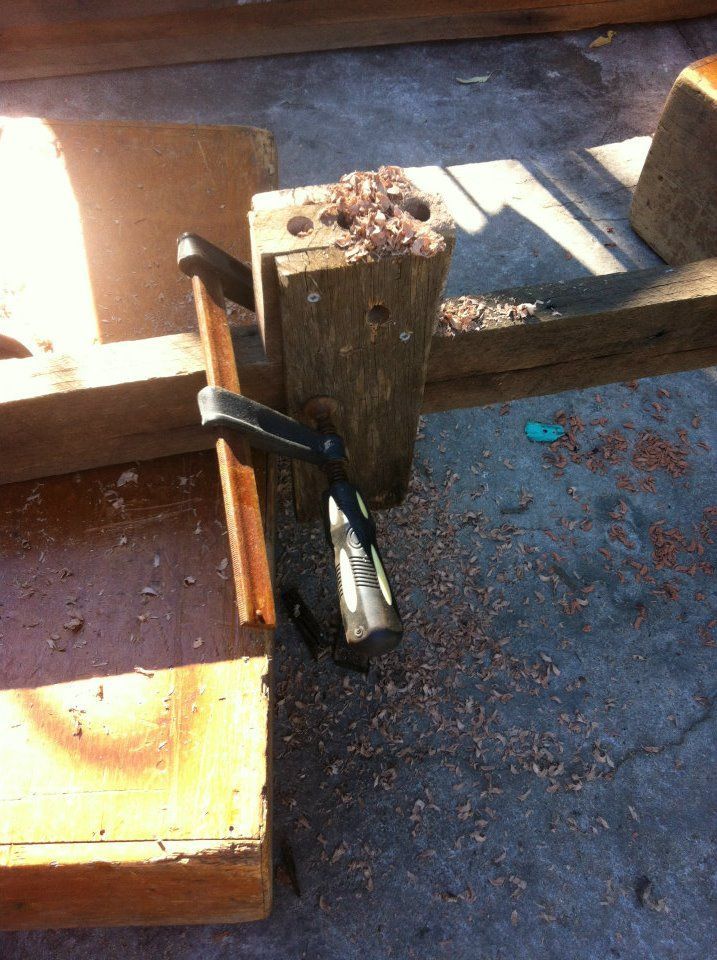
This was my template tool for making sure my holes were straight.
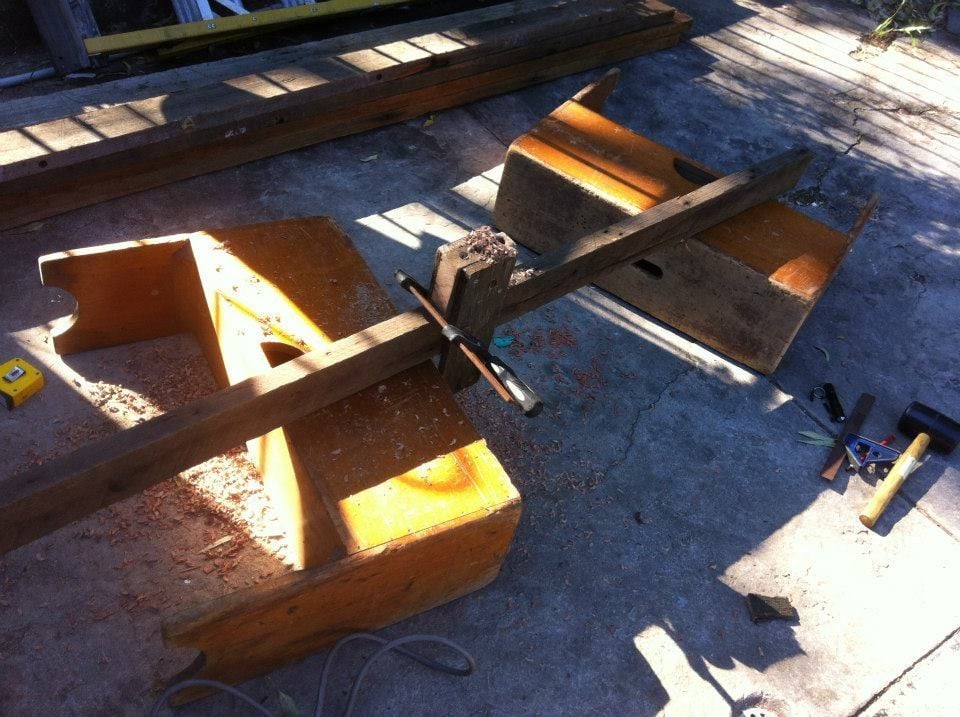
It really made sure they were true vertical
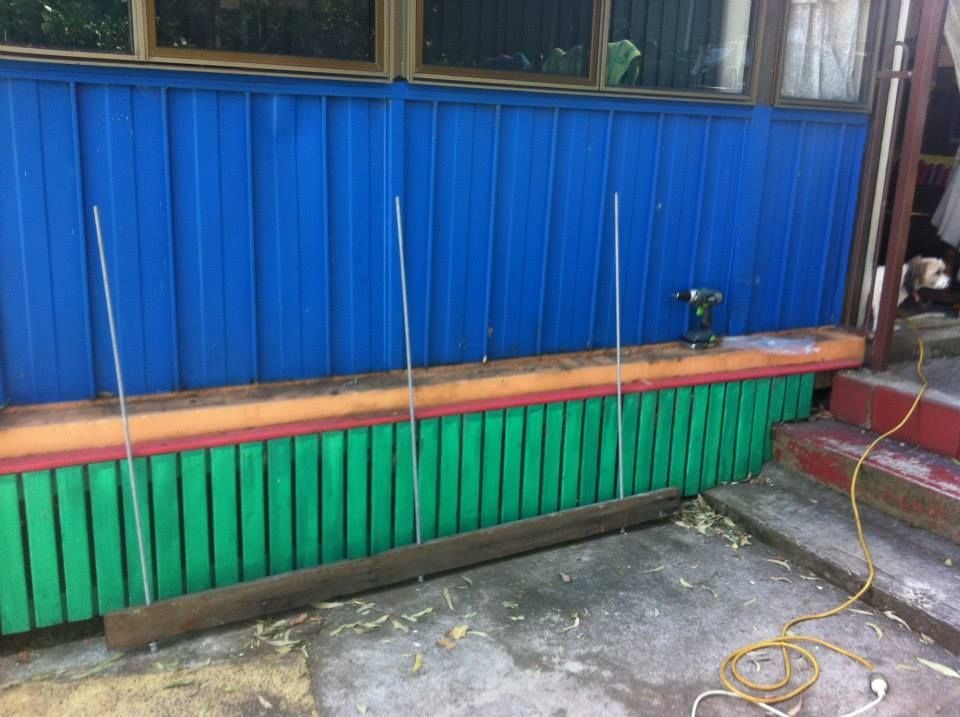
To show my thinking about the threaded bar and bringing the slats together with it
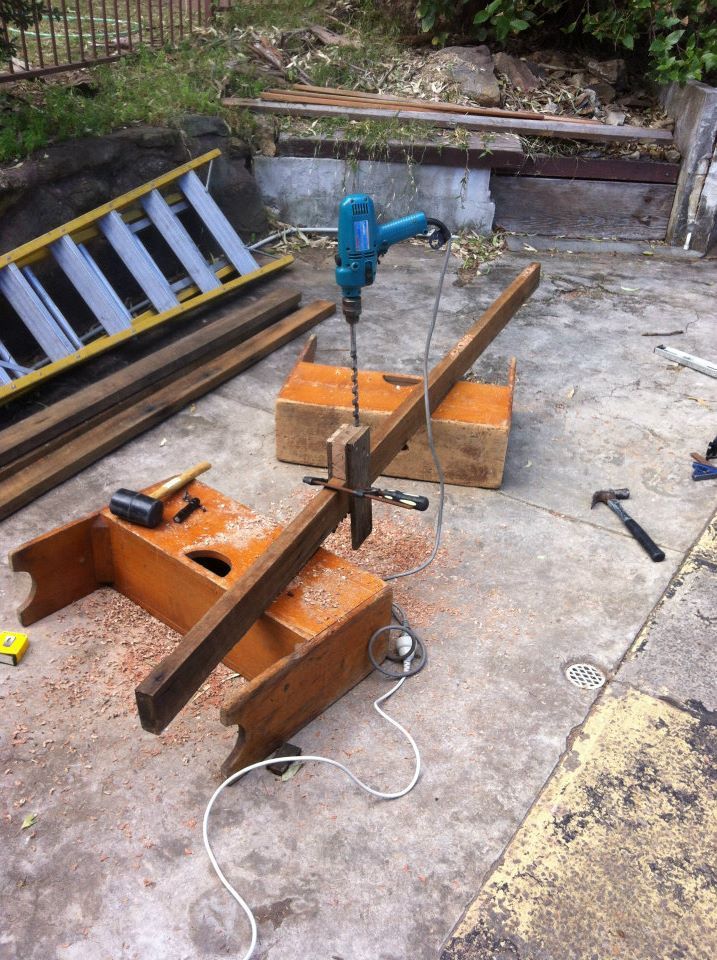
To show the drill bit length and the reason why the template made it easier to keep the hole dead straight.
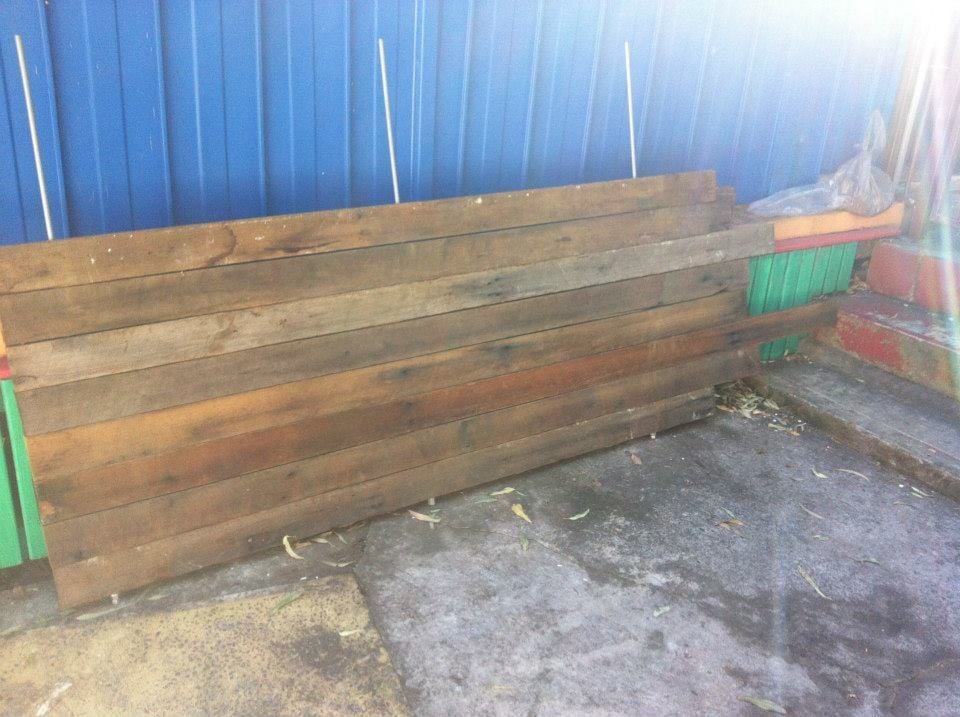
Its coming together nicely. No real gaps between the pieces.
Step 2
I used Timber glue along the edges and then clamped them together using 3 large clamps. I thought that id be able to use the threaded rod to compress them all together... not so. I found that they off course dont want to compress level (they bend like a banana)
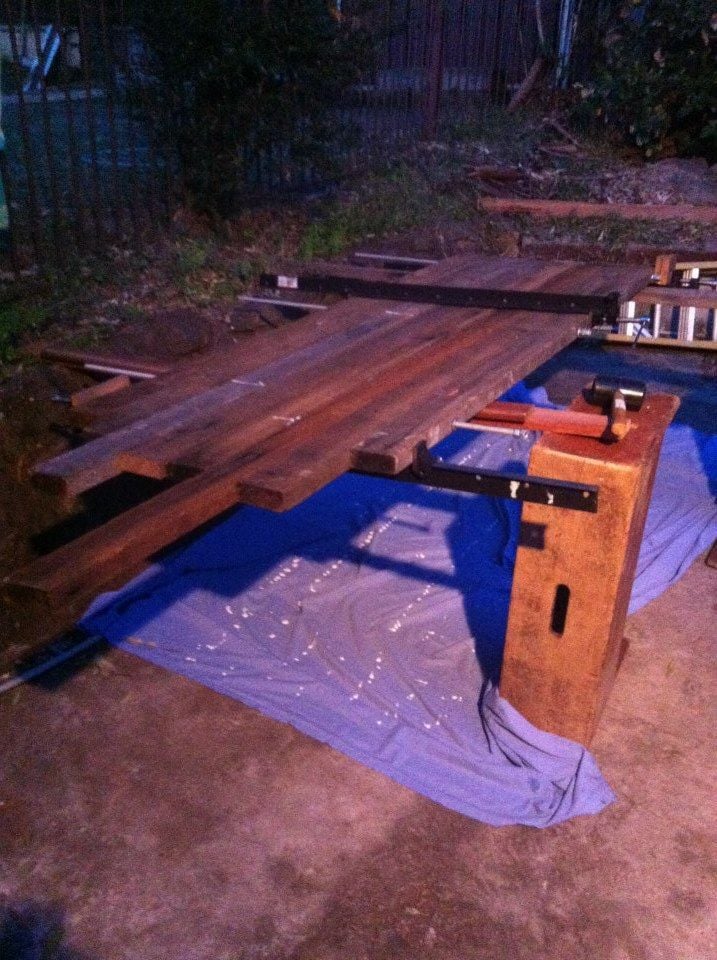
Getting there slowly. Next time I would just have three pieces of timber and screw them into the timber from the underside... I over engineered this to the max. It did turn out very nice tho.
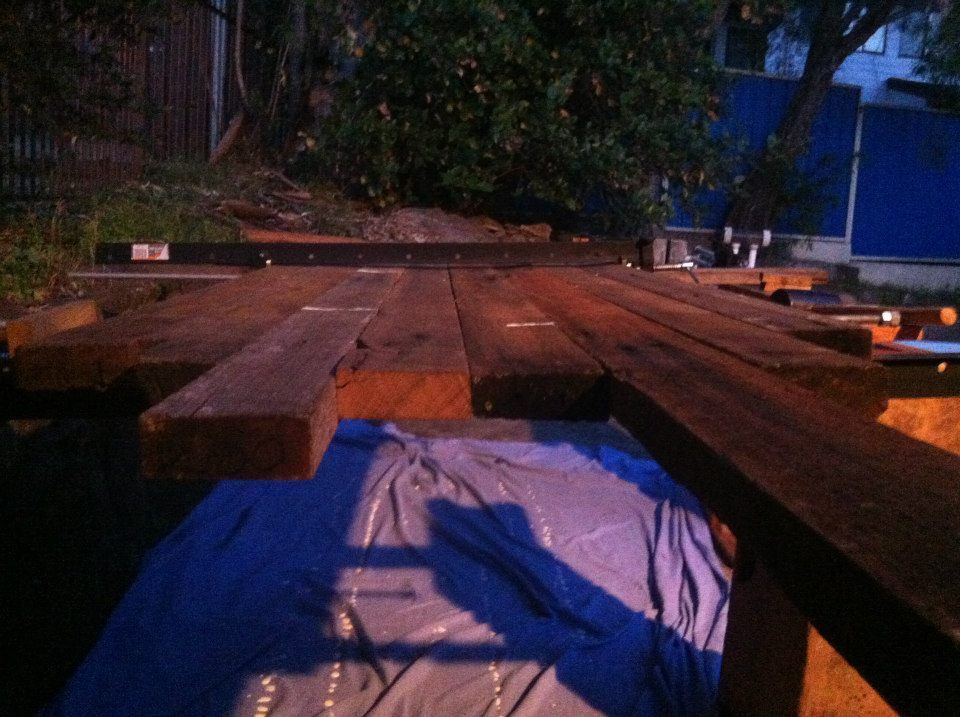
Kept them as level as i could while tightening the clamps up. At this point the threaded rod was just in situ
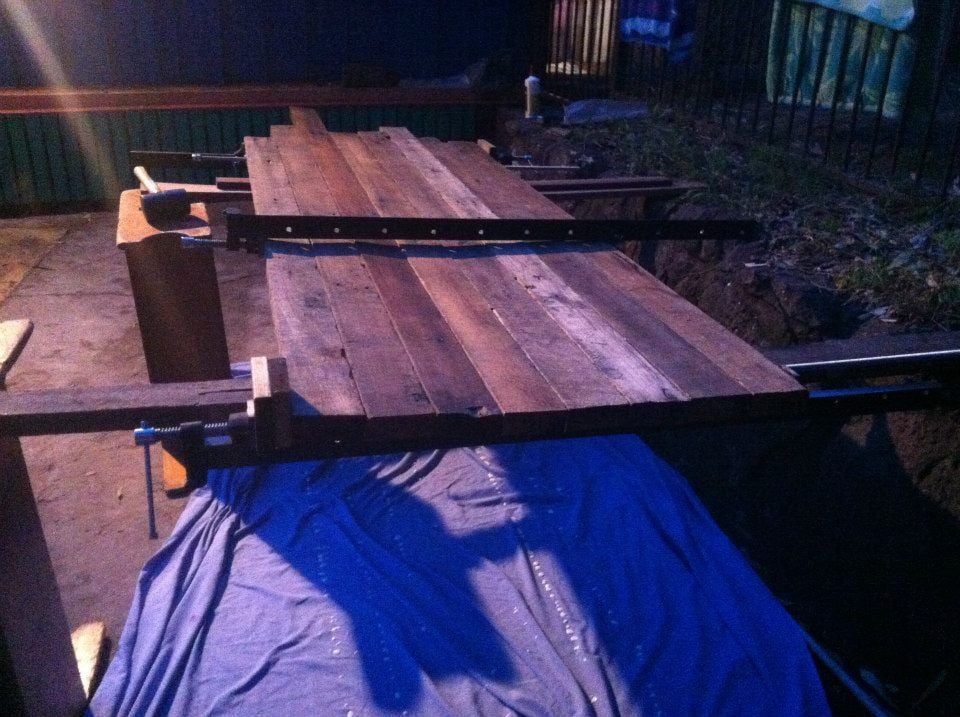
Was fairly happy in how it was working out.
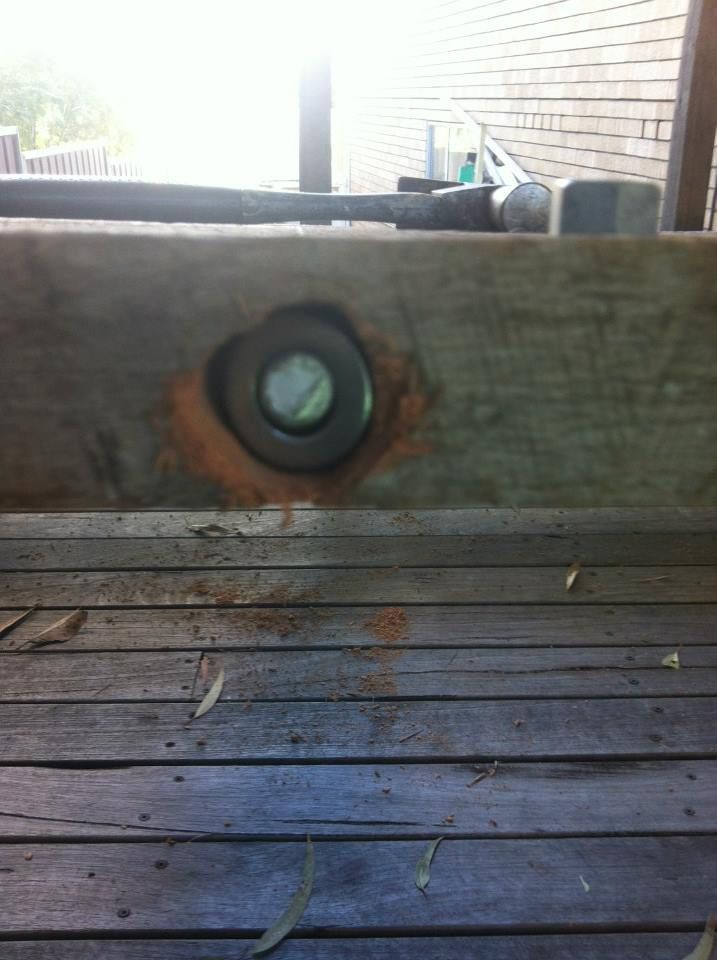
First major hurdle. I messed up. I did not leave enough space to countersink the nut and also did not factor in a socket to fit over the nut...
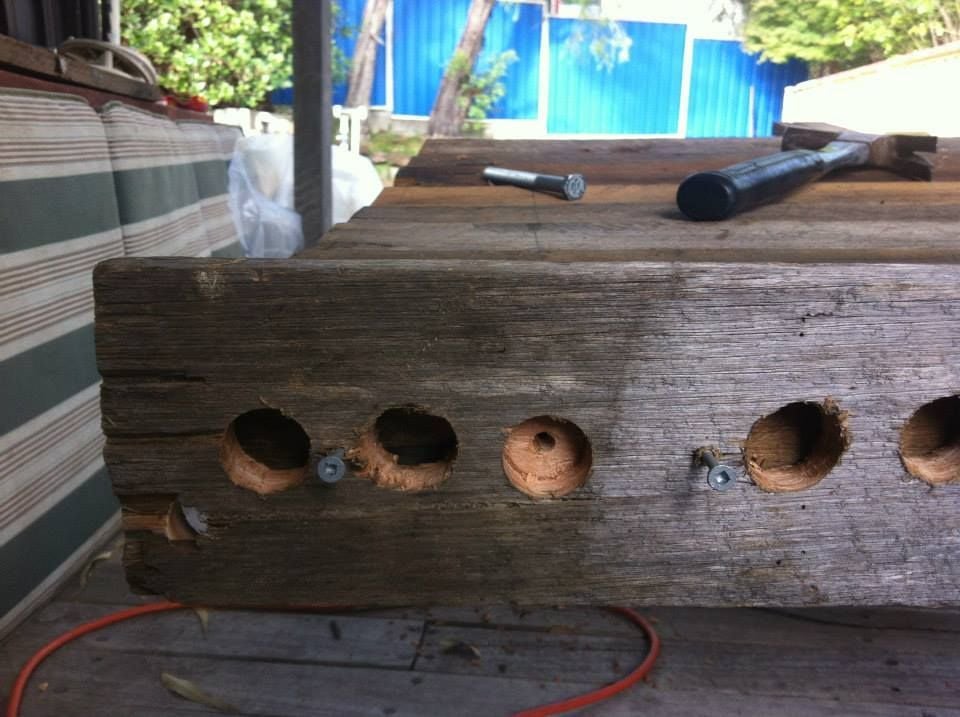
My template tool used yet again. This time I needed to enlarge an existing hole to accomodate the washer and nut plus a socket. Seriously should have drilled the larger hole first and then the hole through the timber for the two outside rails. I managed it but it was a fiddly pain.
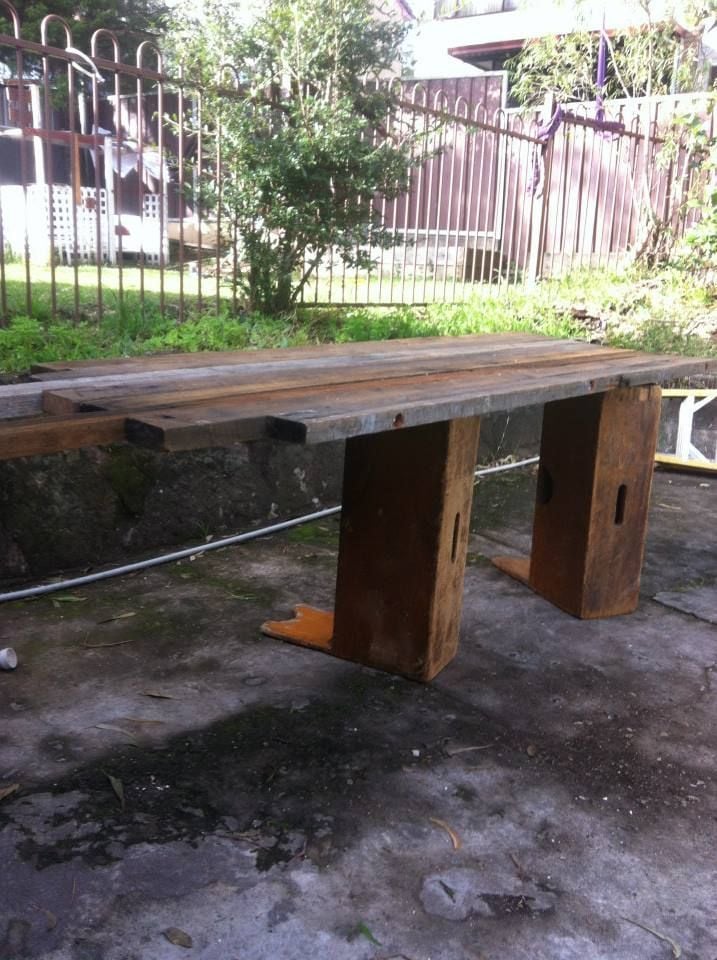
Bolts through the timber, cut and done up.
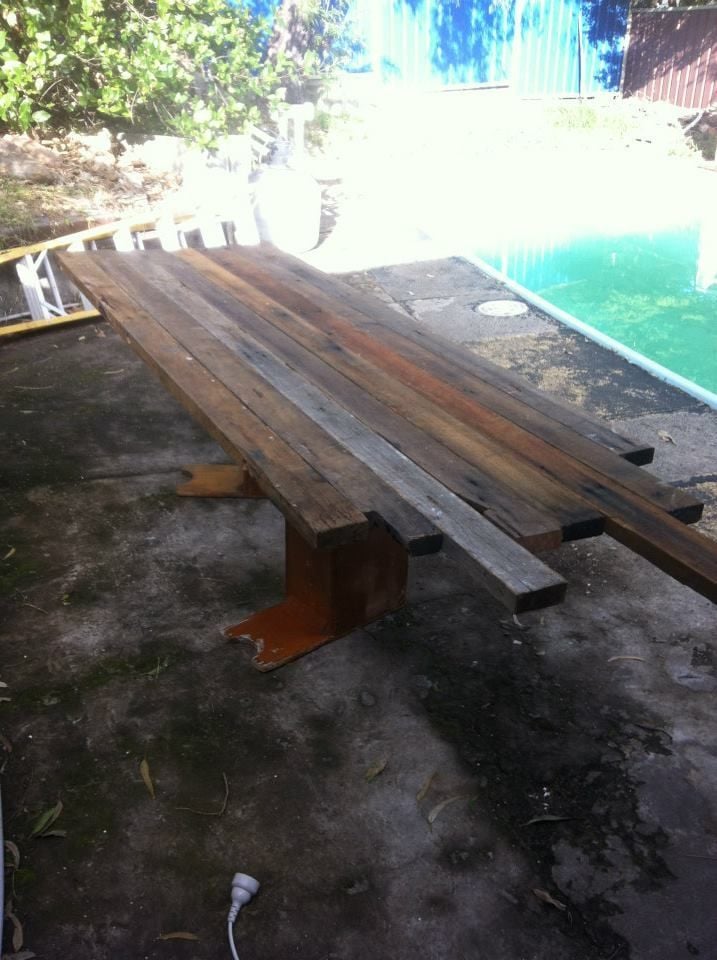
Better view of the top of the table.
Ends are trimmed and looking approximately what I expected.
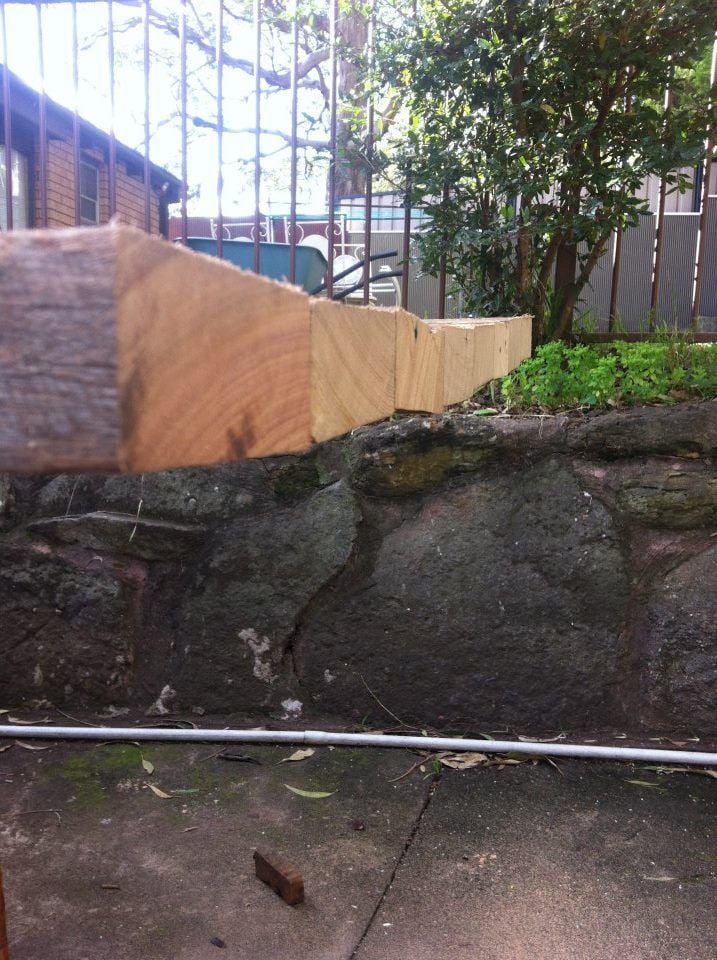
Second issue. This is the banana I was talking about. Almost level but not what I had thought would happen.
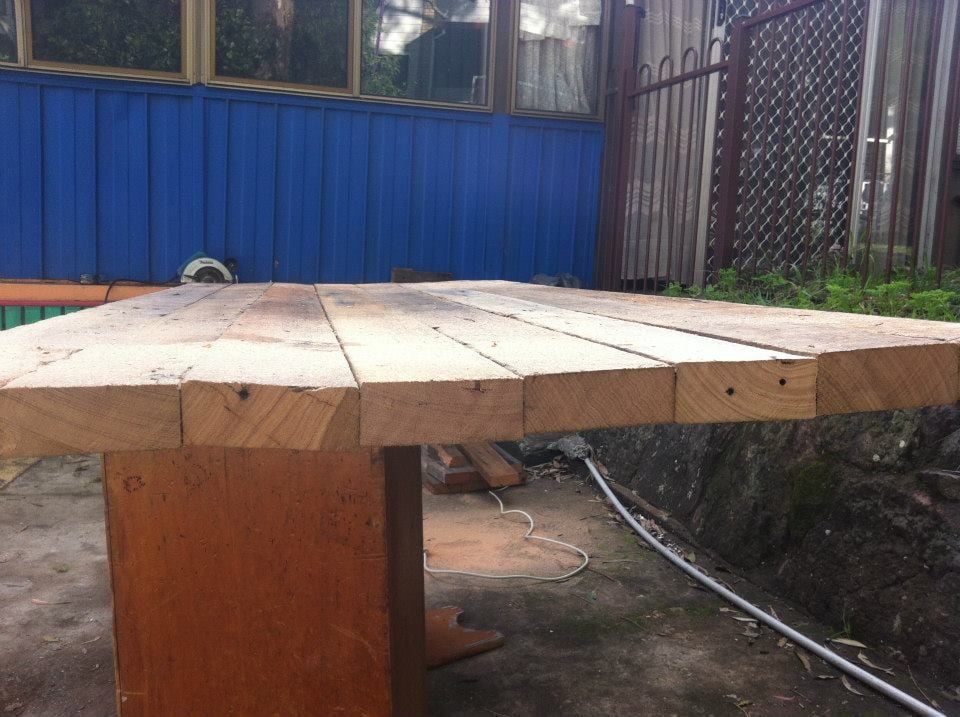
After planning the high sides it looked a lot better.
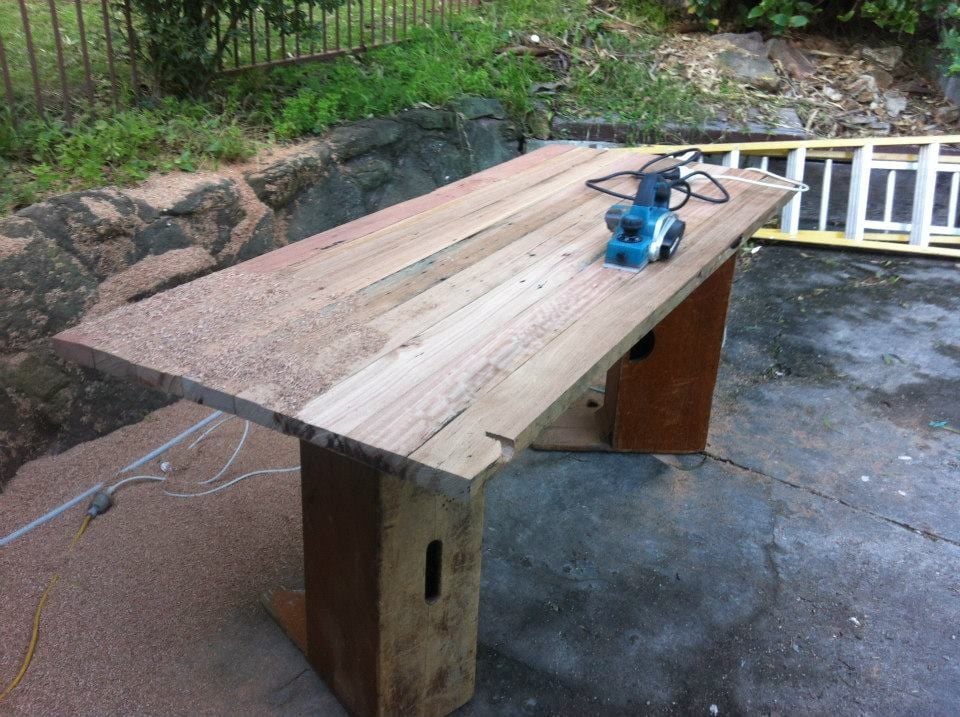
So much fun planning timber with my new planner! Loved the colour of the timber once the top came off.
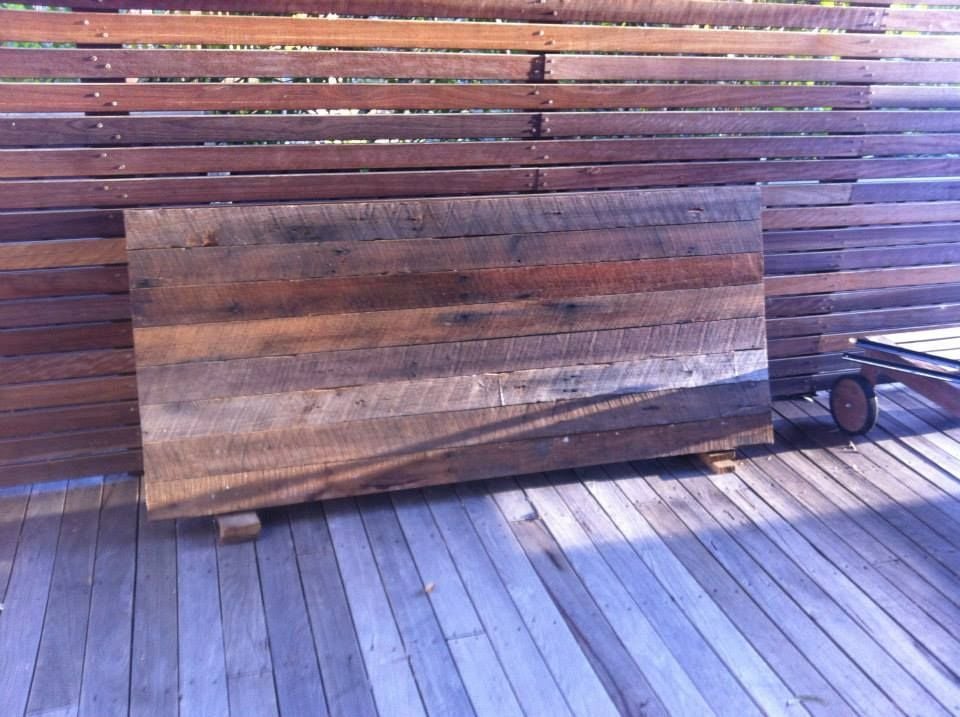
The Underside
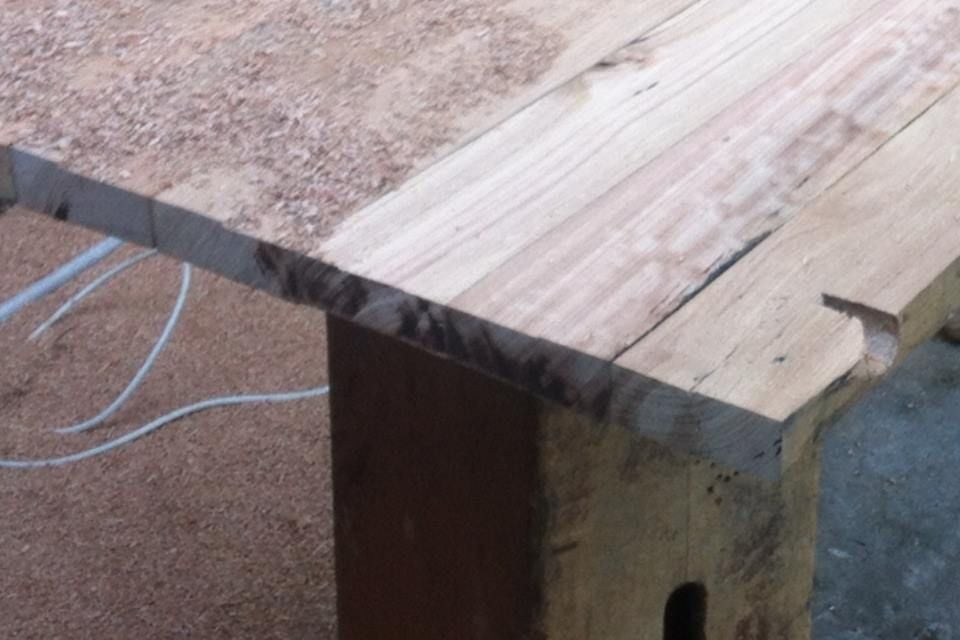
With the planner removing high points it started looking like what i had in mind.
Step 3
Time to start the re-working of the old chairs I had purchased from a junk shop. I carefully undid the old staples so i could keep the old pieces as a template for the new cushions.
The old chair base was particle board that was flaking due to age. I wanted a hard underside that would last.
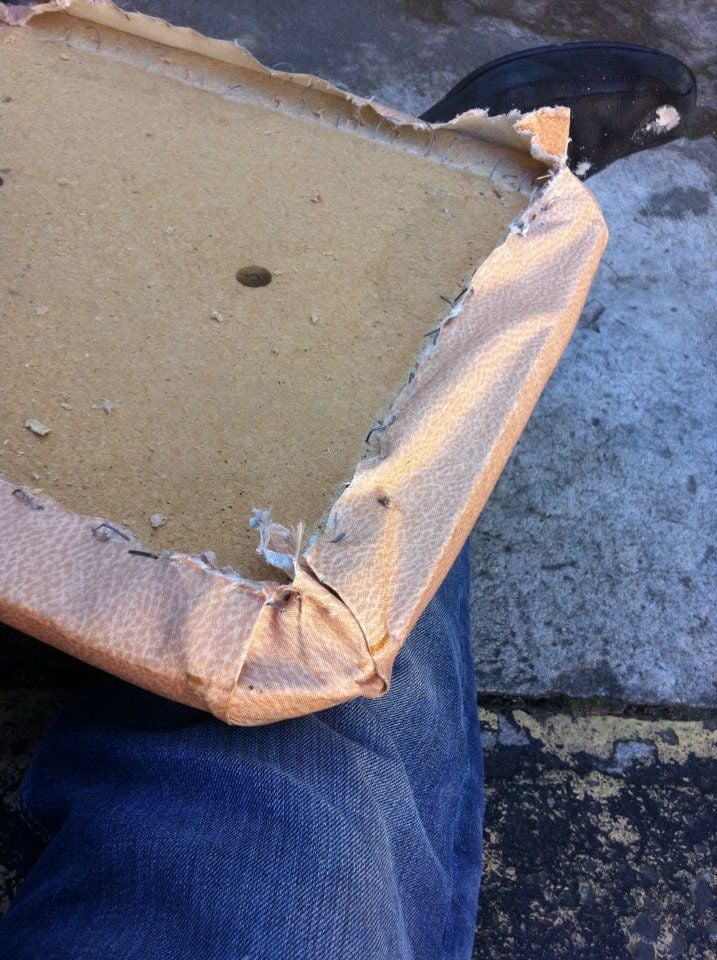
I removed all the old staples
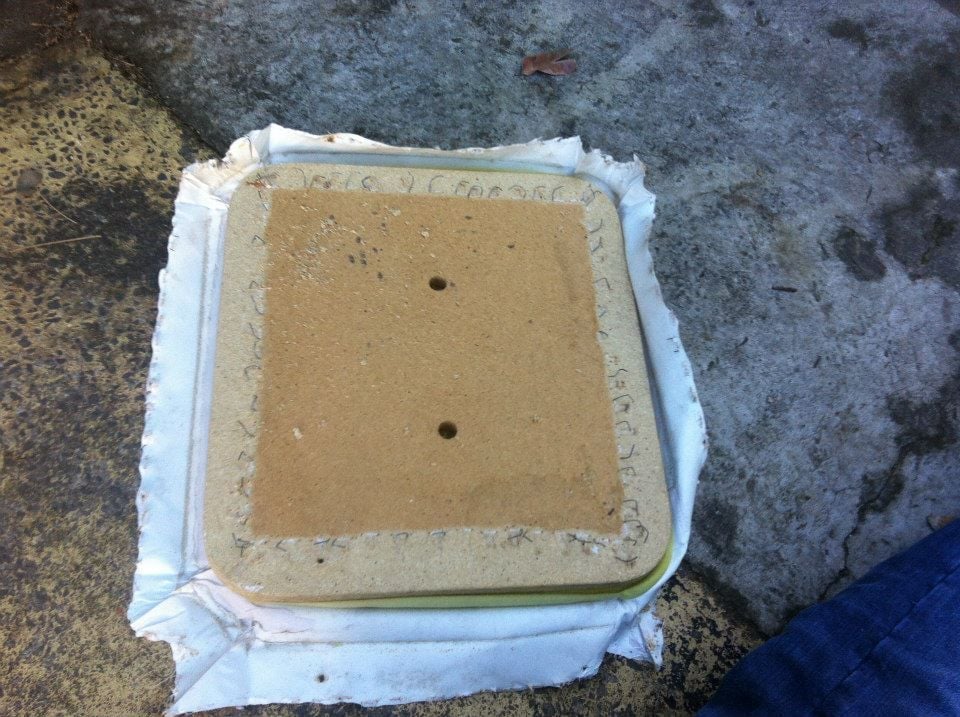
It wasnt too hard to do, I just used a large flat bladed screwdriver and a pair of snubbed nose pliers.
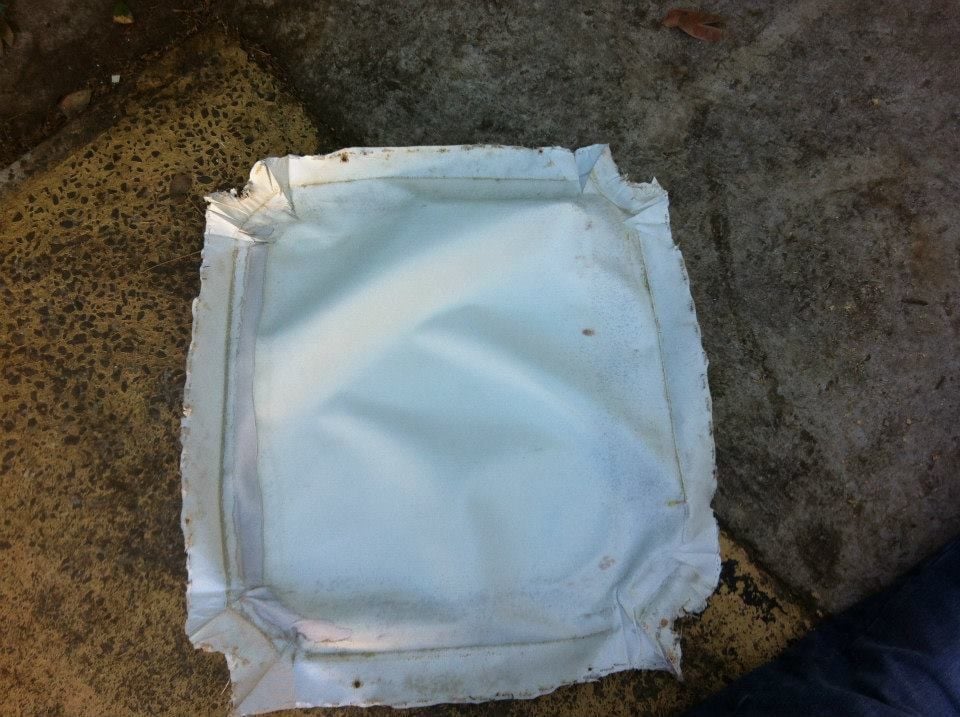
The material came away so easily.
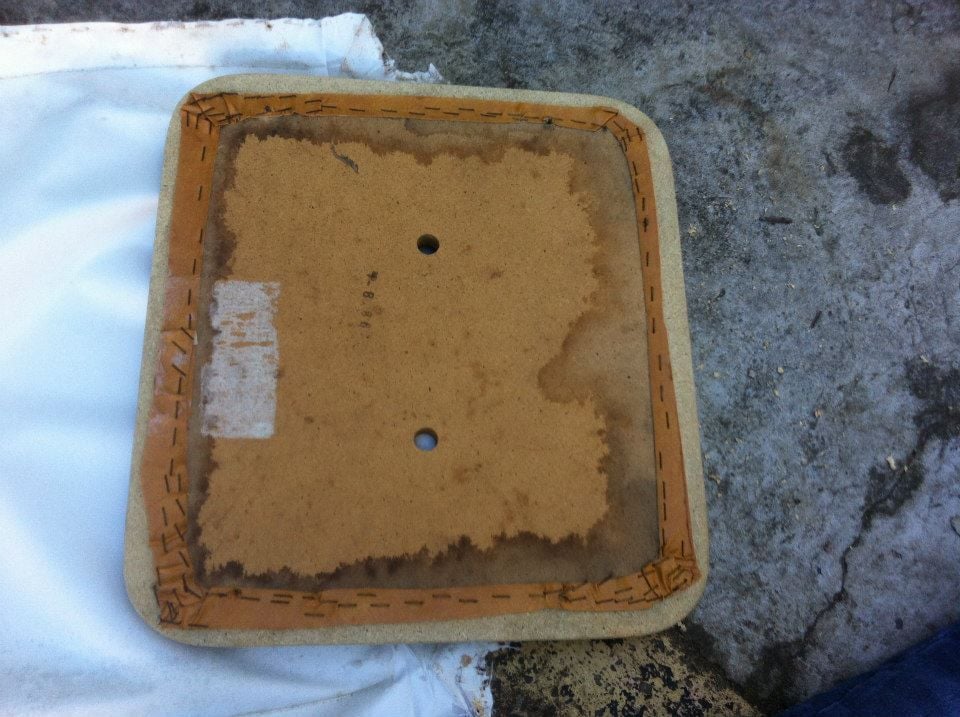
Note to self remember air holes in new timber to allow the cushion to be able to breathe.
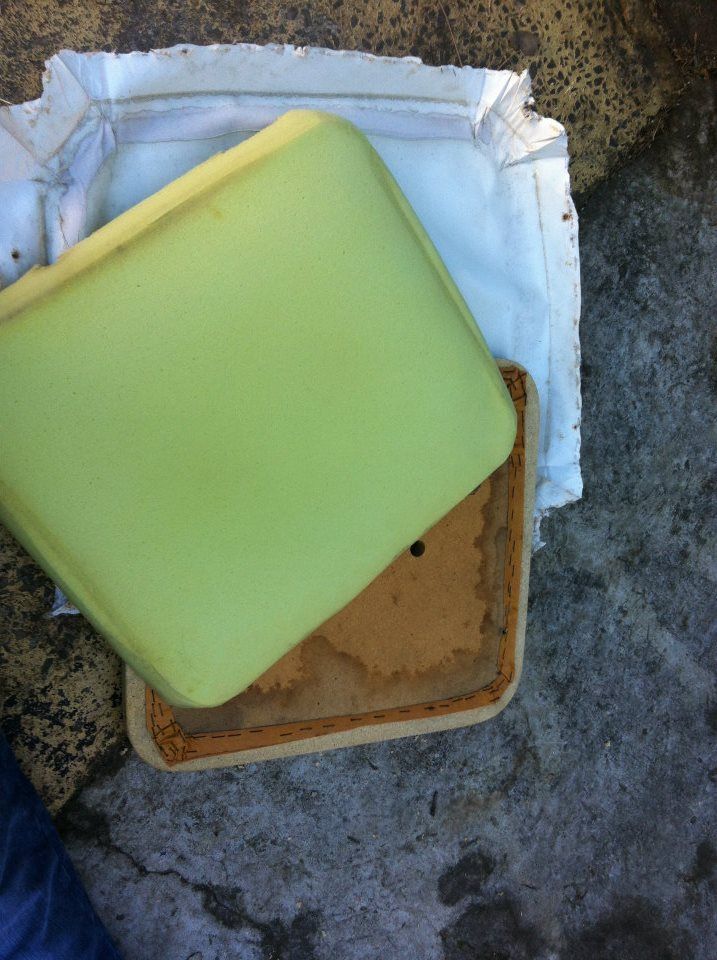
The seats looked like they had be reupholstered before. I really wanted to take them back to scratch so new timber was defiantly needed.
Step 4
Stripping down the old chairs so I could get rid of rust and old material. The metal was still solid. I had sourced the sponge from Clark rubber a few weeks before. (One reason I dismantled the chair earlier was to buy high density foam and get it cut to size)
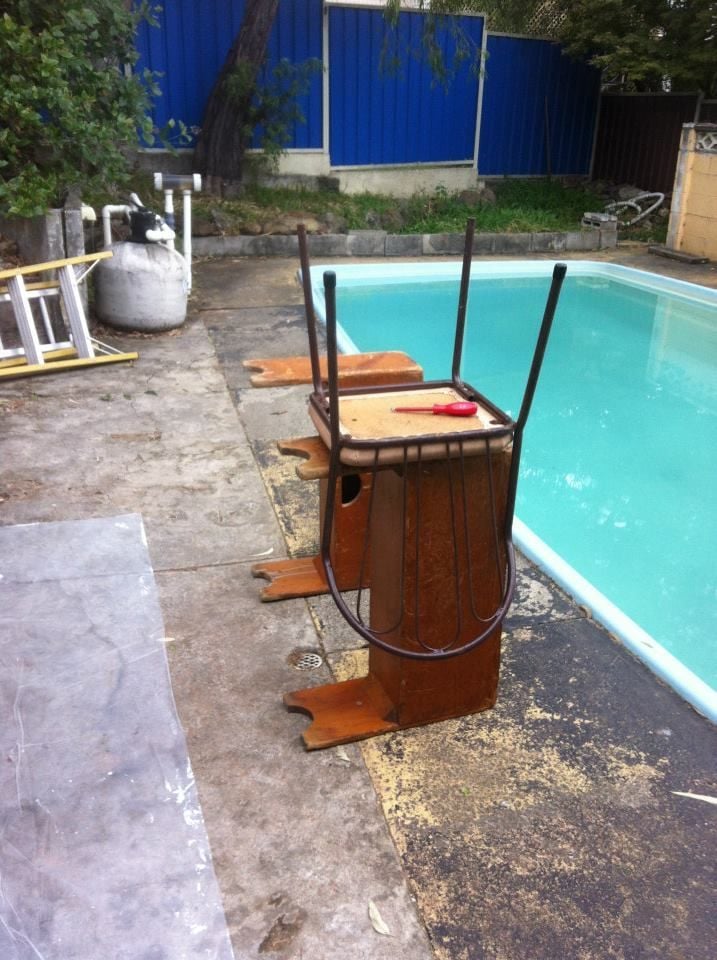
The seats came apart easily
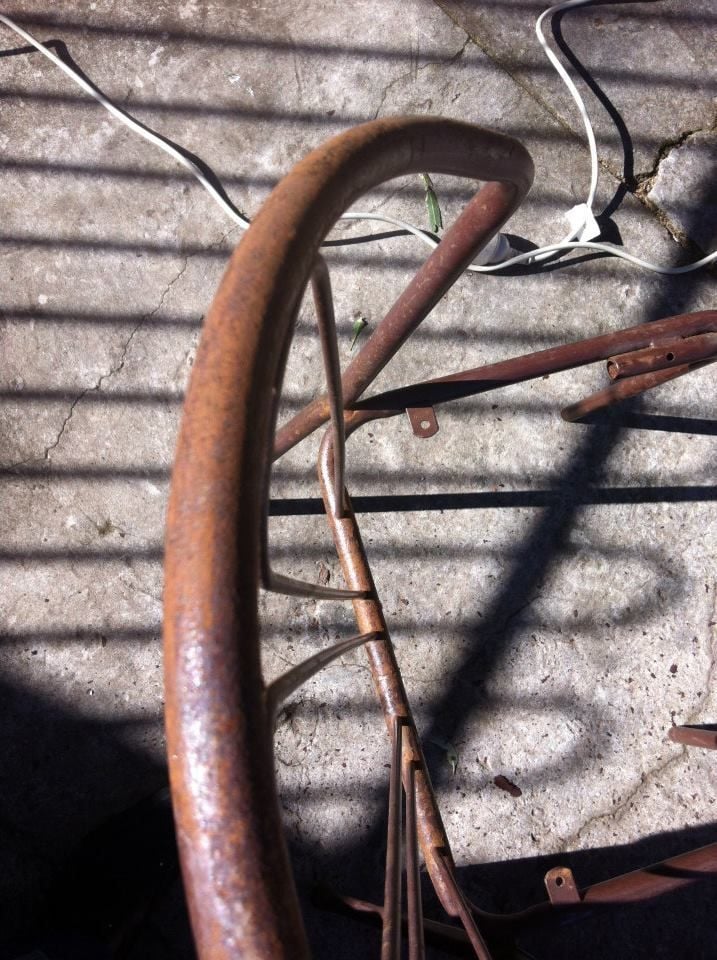
Tho the metal had a lot of surface rust that I had to scrub with a wire brush
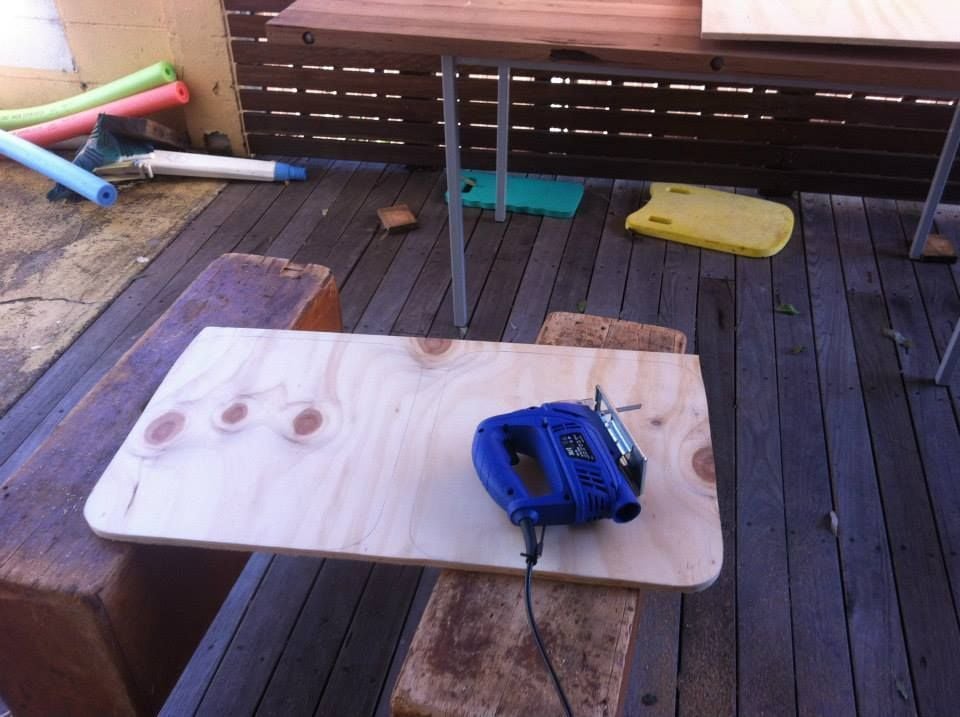
Used a cheap jigsaw to cut out the plywood I had bought.
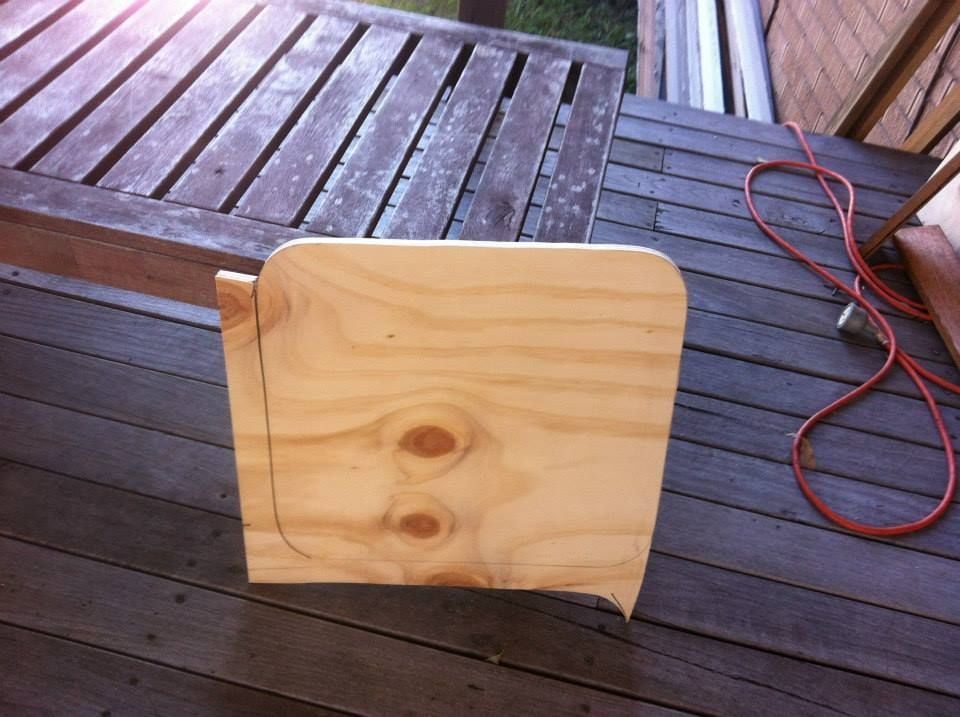
It was a lot easier then I expected to cut out all the shapes. Pretty much because i had the templates from the old seating.
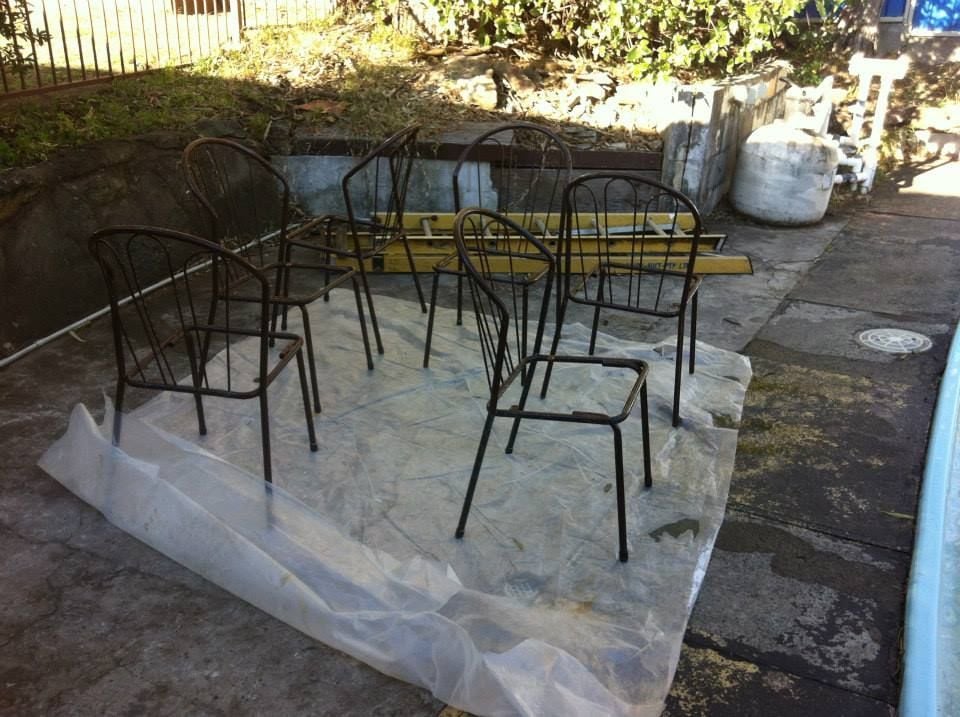
Scrubbing all the chair frames back, removing all the flaky paint.
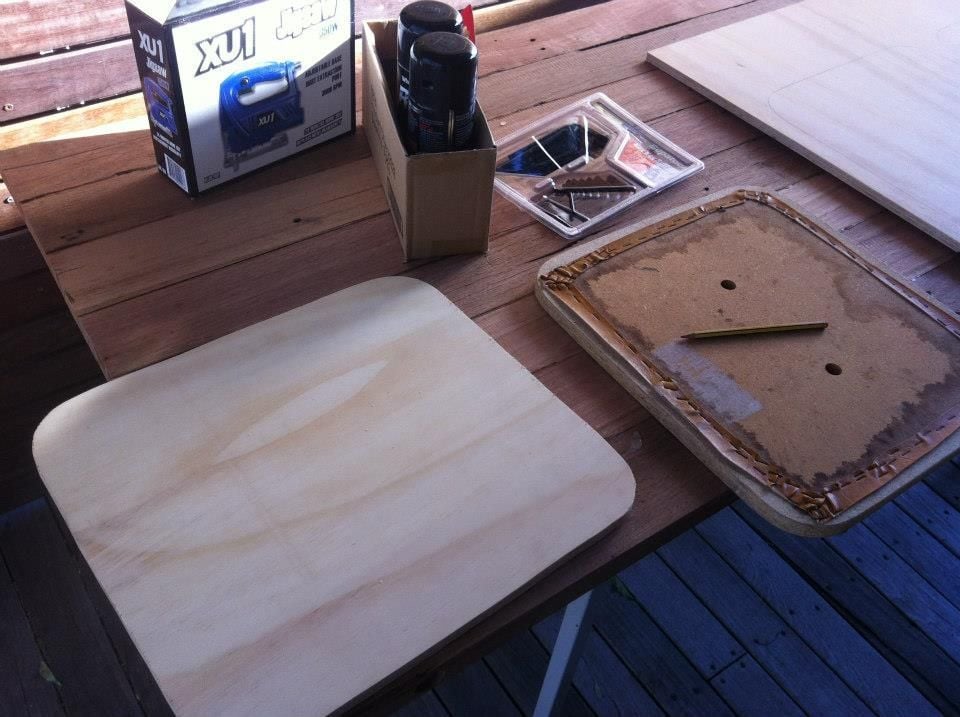
I was surprised at how the pieces were coming along.
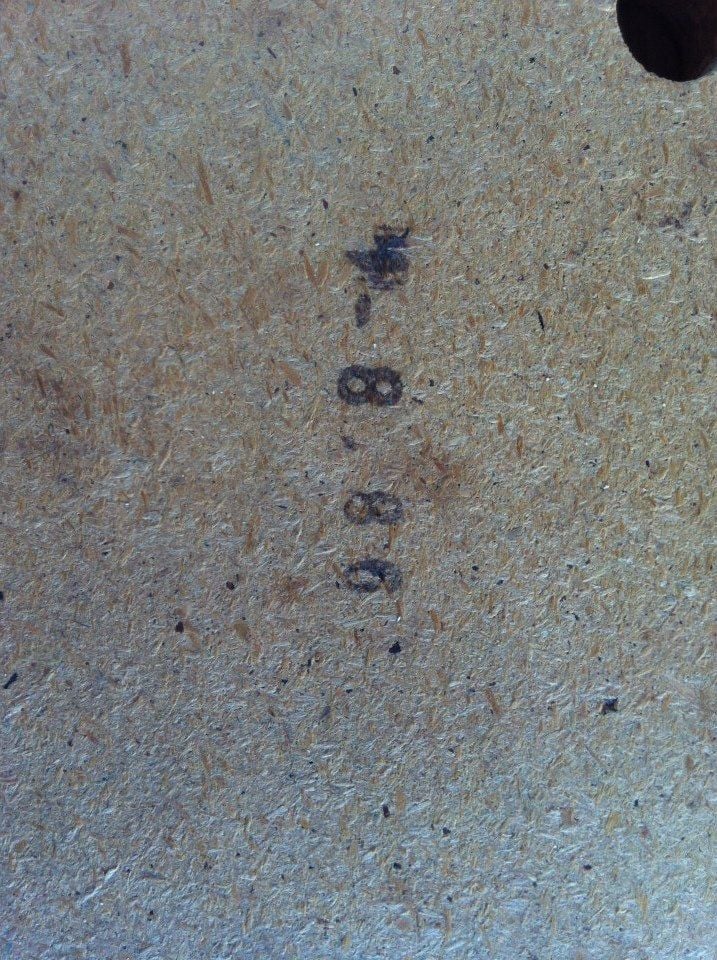
The chairs were originally made in 1986!
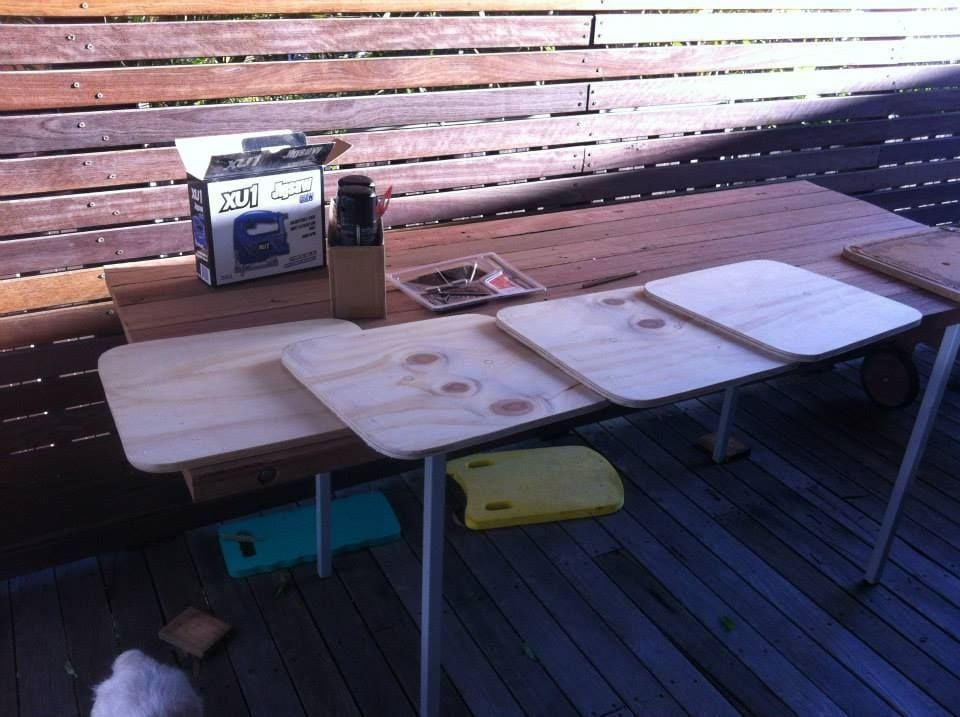
Everything getting cut out
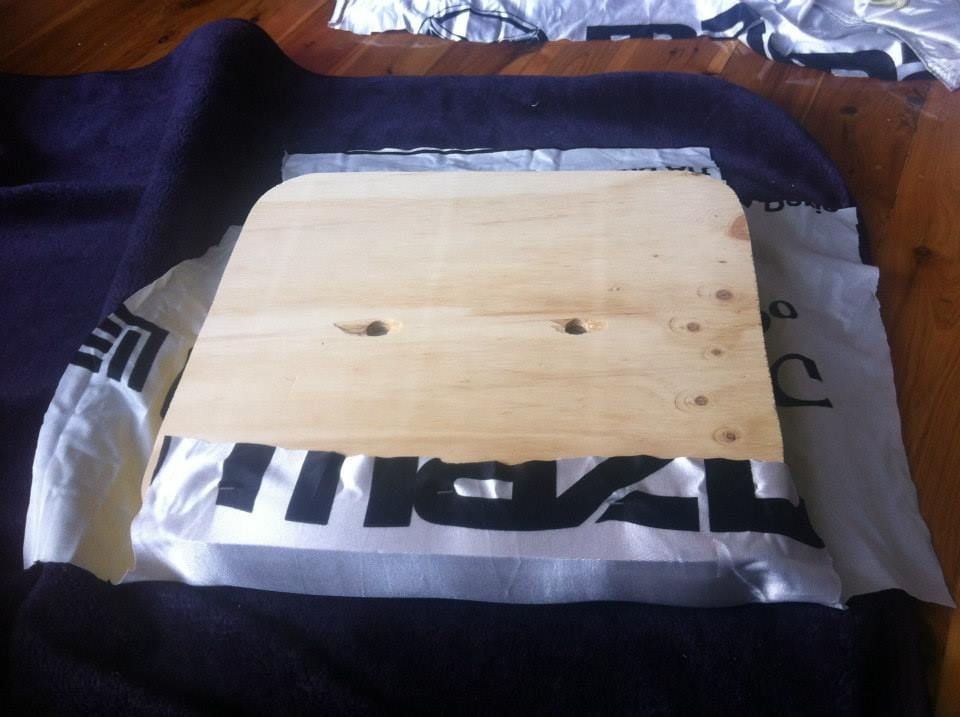
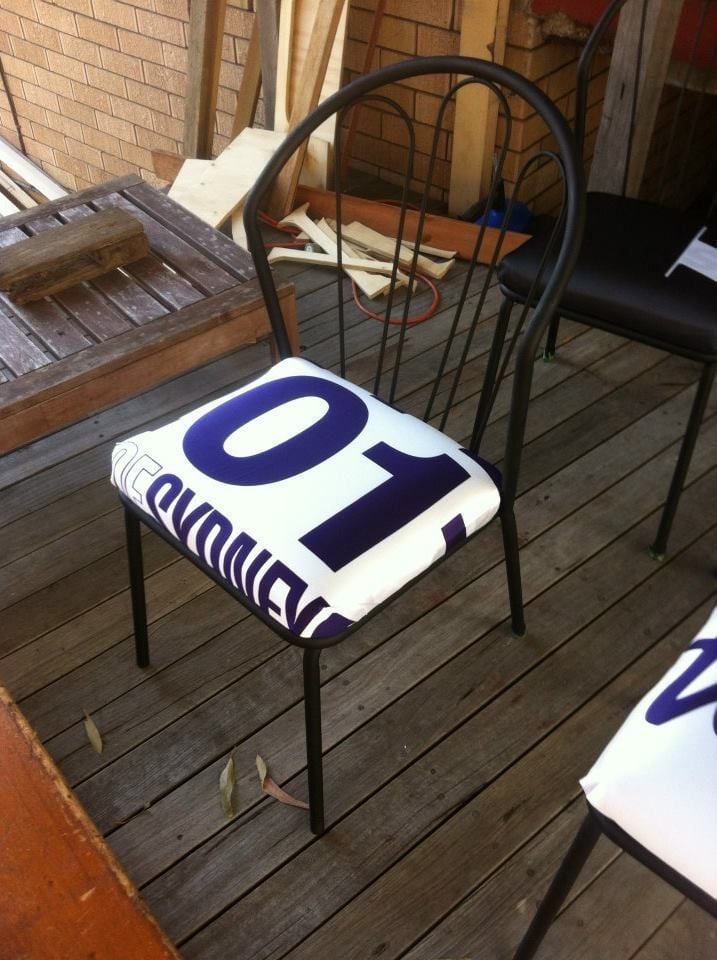
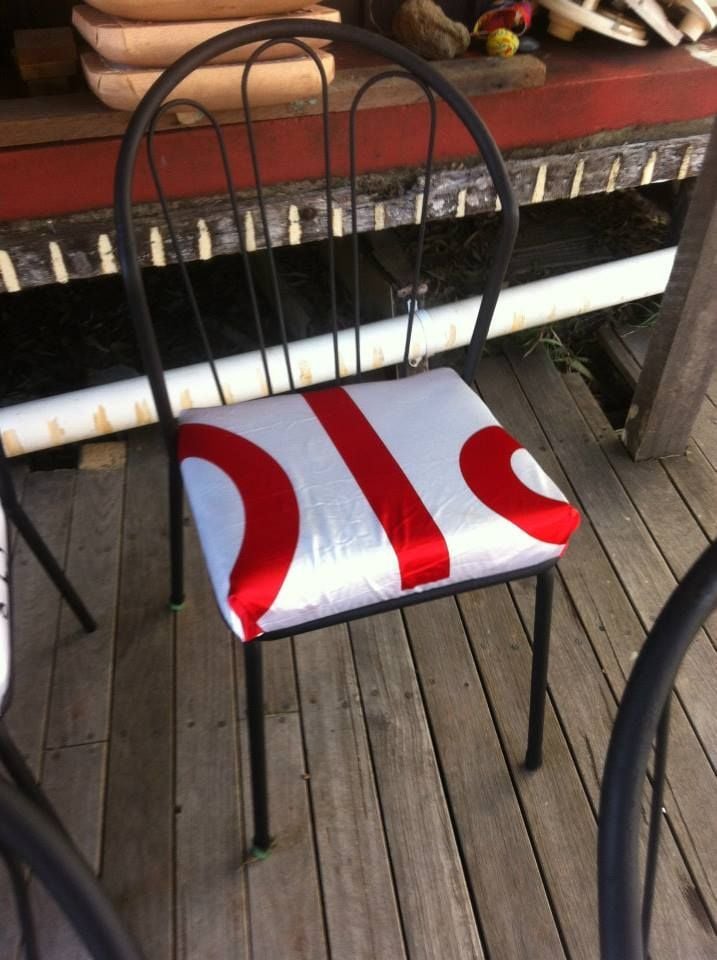
Time to reupholster. I had bought some ex advertising flags (The ones you see hanging on light posts in the city) from reverse Garbage. Cutting the material was a little fiddly as it was very strong. Patience paid off tho.
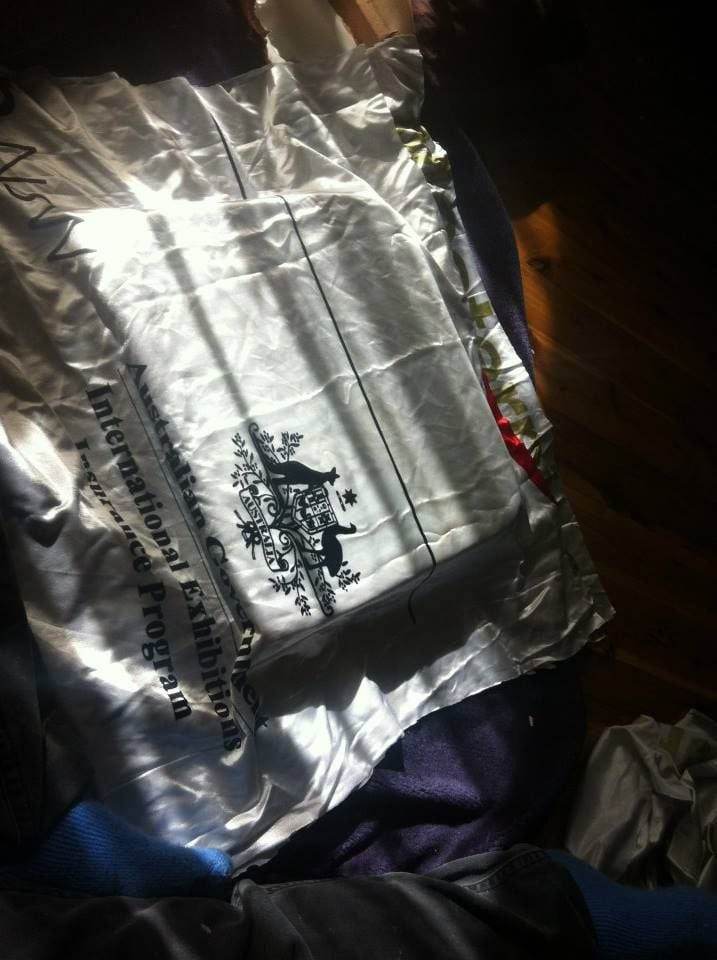
Working out the placement of the pictures. I didnt want the chairs to be exactly the same but wanted them to match.
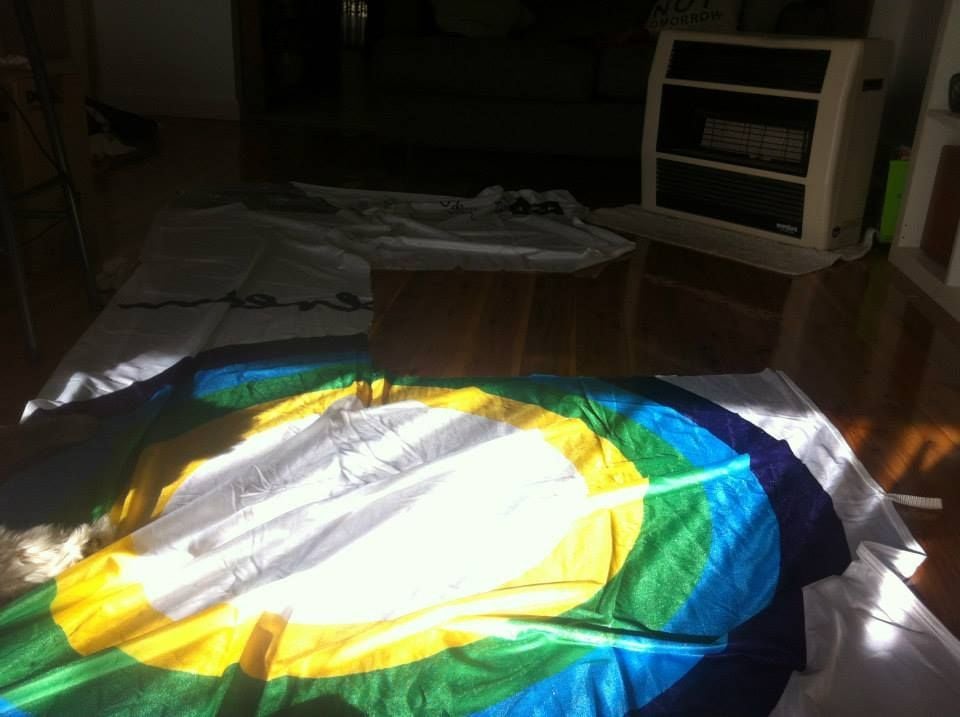
Intense coluring lol
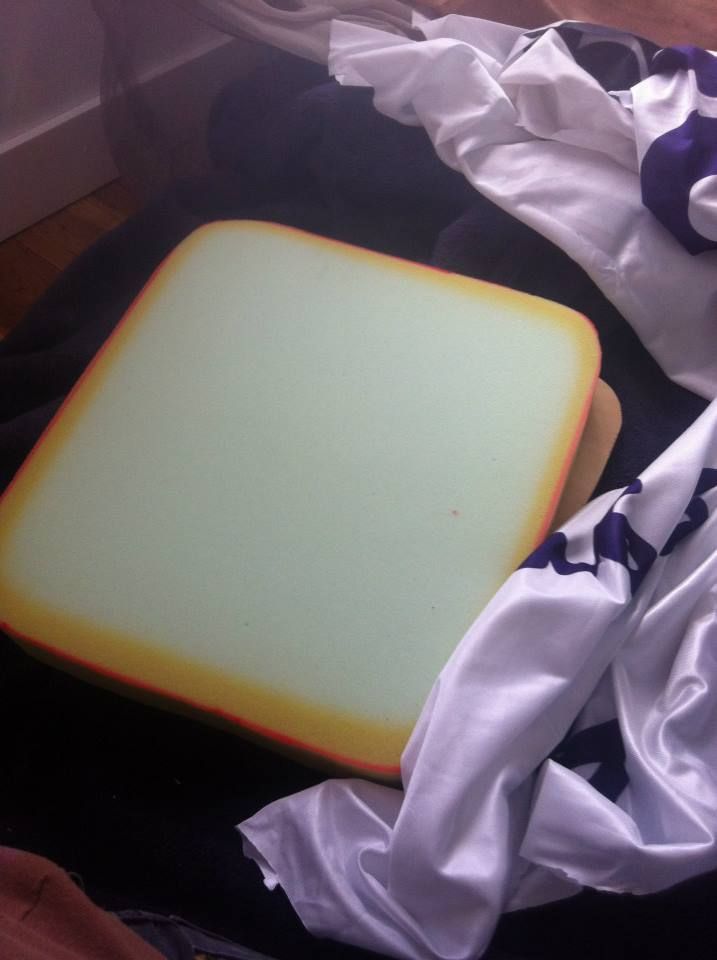
This foam had been cut maybe 3 weeks before. Note do not leave in the air and near the sun/heat as it will discolour. The texture still felt the same tho.
Step 5
I had to cover the seats twice. The flag material was too thin and you could see through it a little too easily. That said these have been used since 2014 and have cleaned them with upholstery cleaner twice due to sticky fingers and general food stains. They keep coming up like new even now.
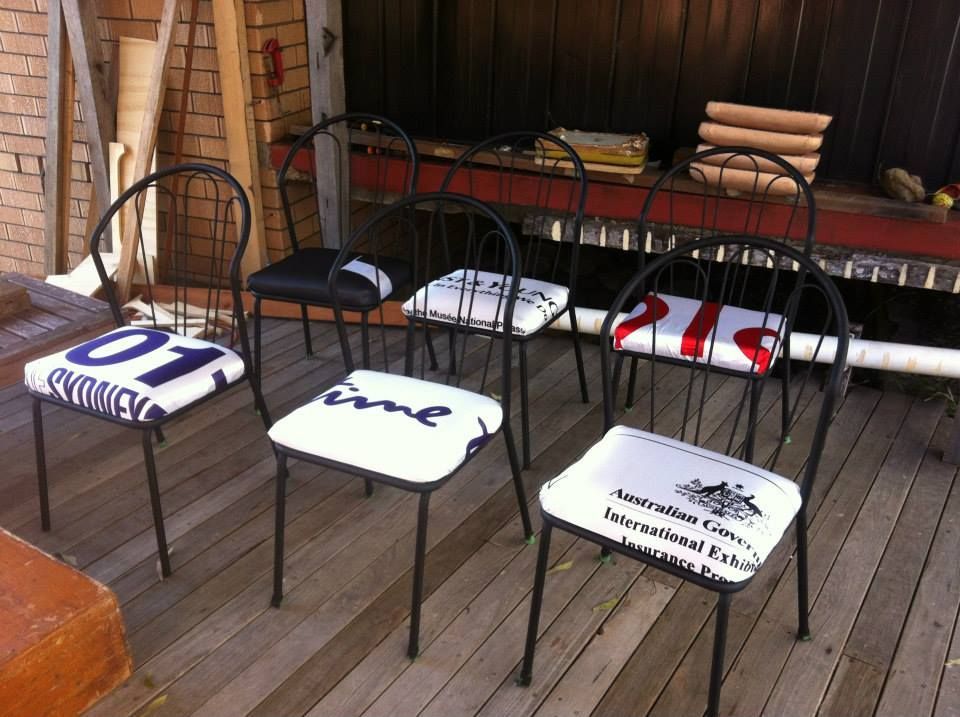
Very happy with how they came up. I even replaced the feet with your leg rubbers from bunnings.
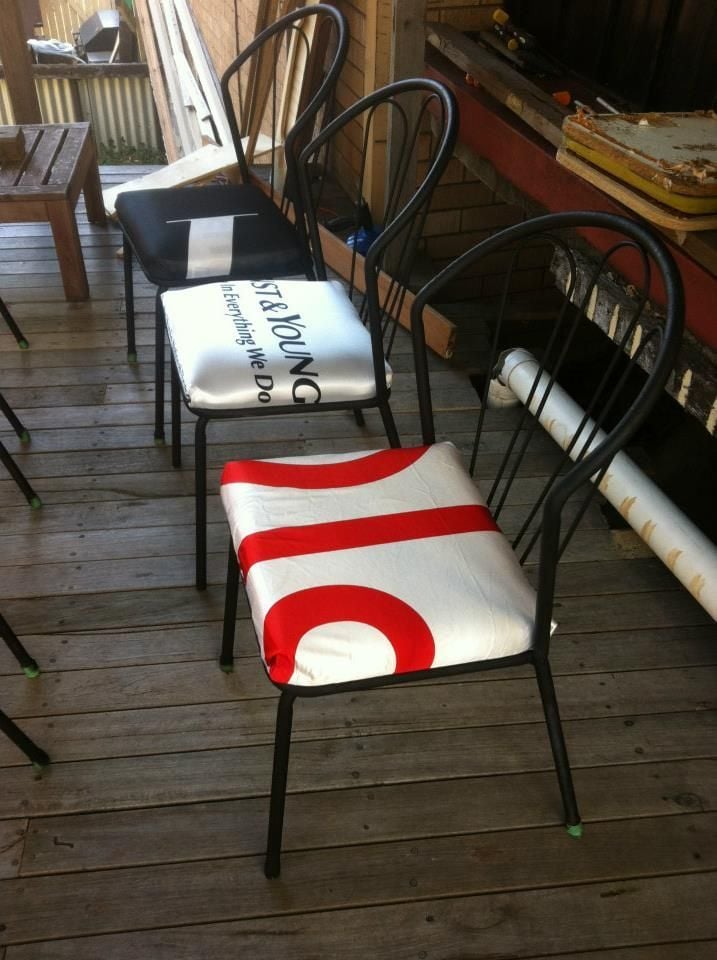
Sometimes I found it hard to get the right folds for the corners. This material had no real stretch. When stappling it down I found the pest way to do this wa s to get one edge done then turn it upside down and kneeel on it, this squished the foam down and allowed me a consistant straight line staple. Once I hopped off it the foam expanded and made for a nice rounded seat.
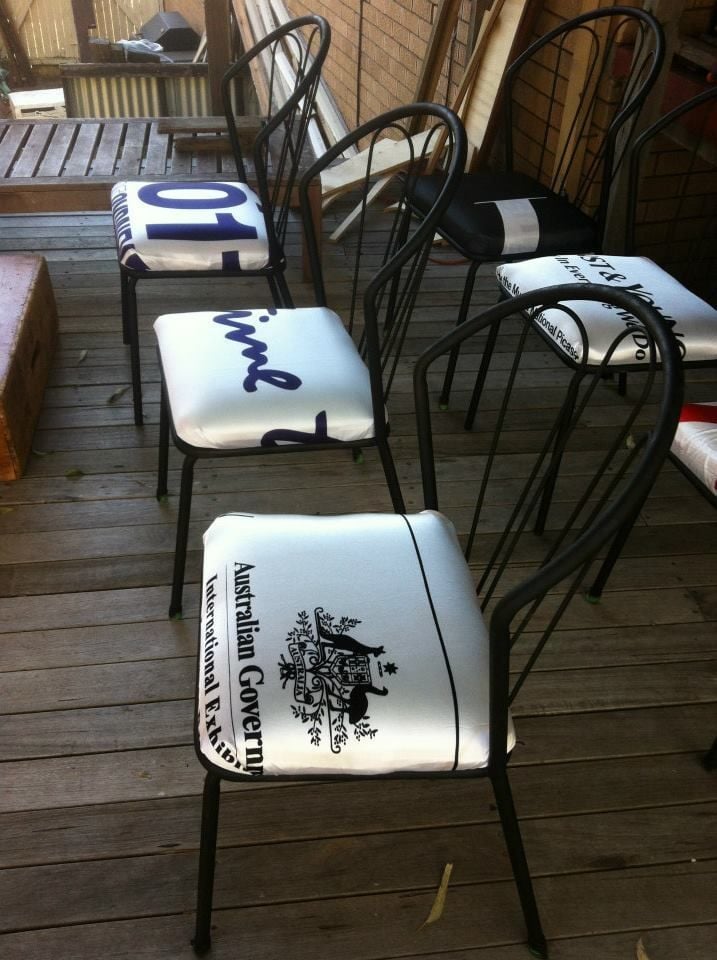
Love the reuse of material! It came up a dream!
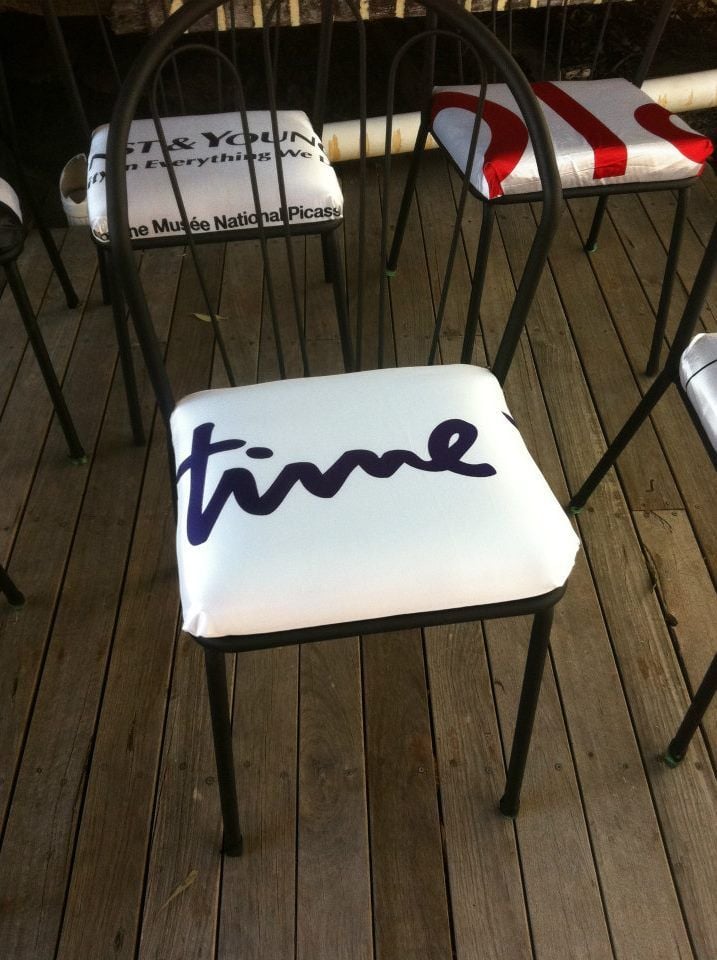
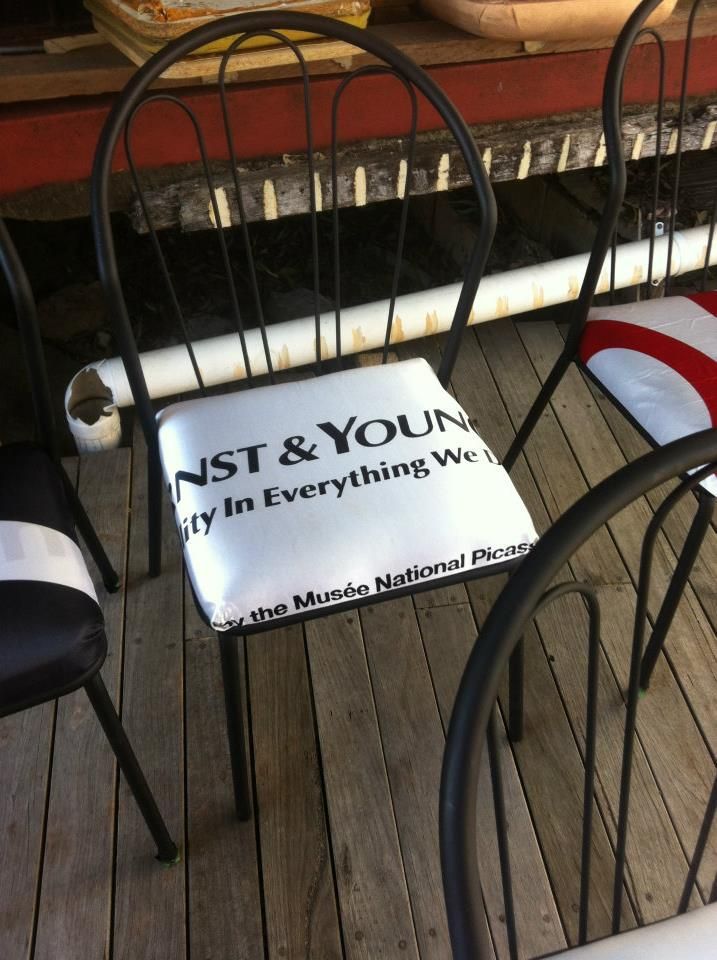
Step 6
The table needed to be stained with oil twice. The first coat soaked in reasonably fast and the second coat took a few days (4 days) I did it during winter so that may have been another reason it took so long.
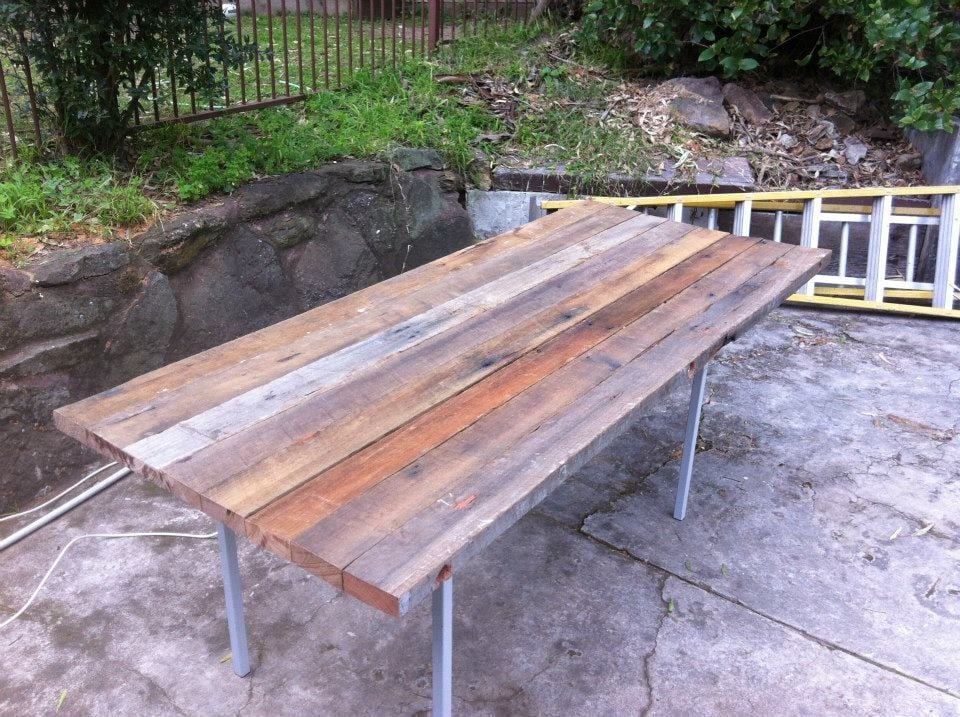
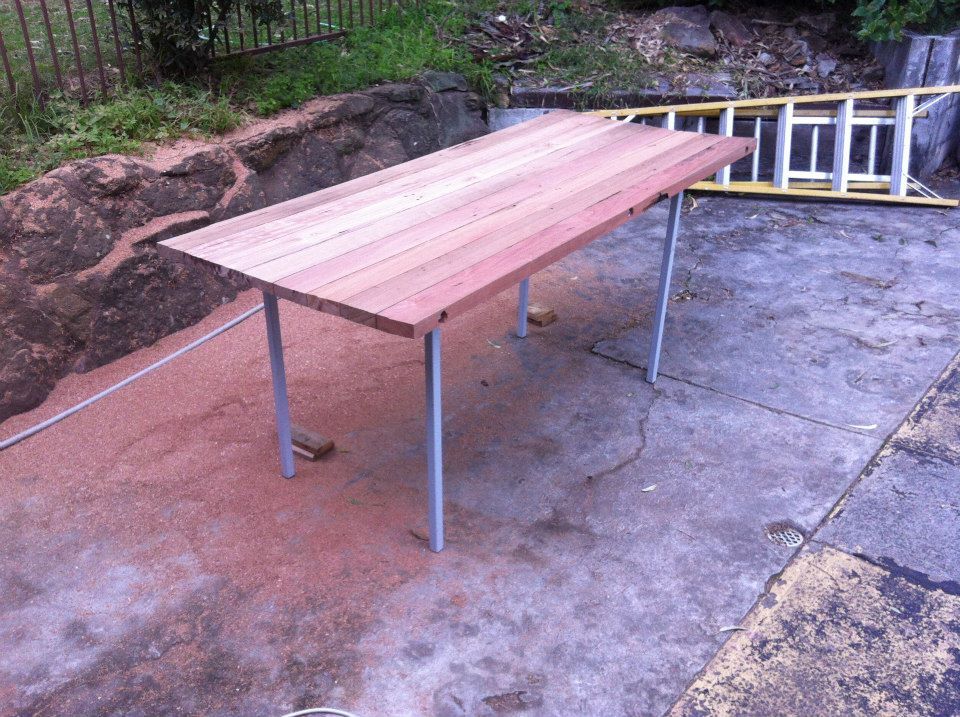
Still removing timber with the planner to make it "look" level
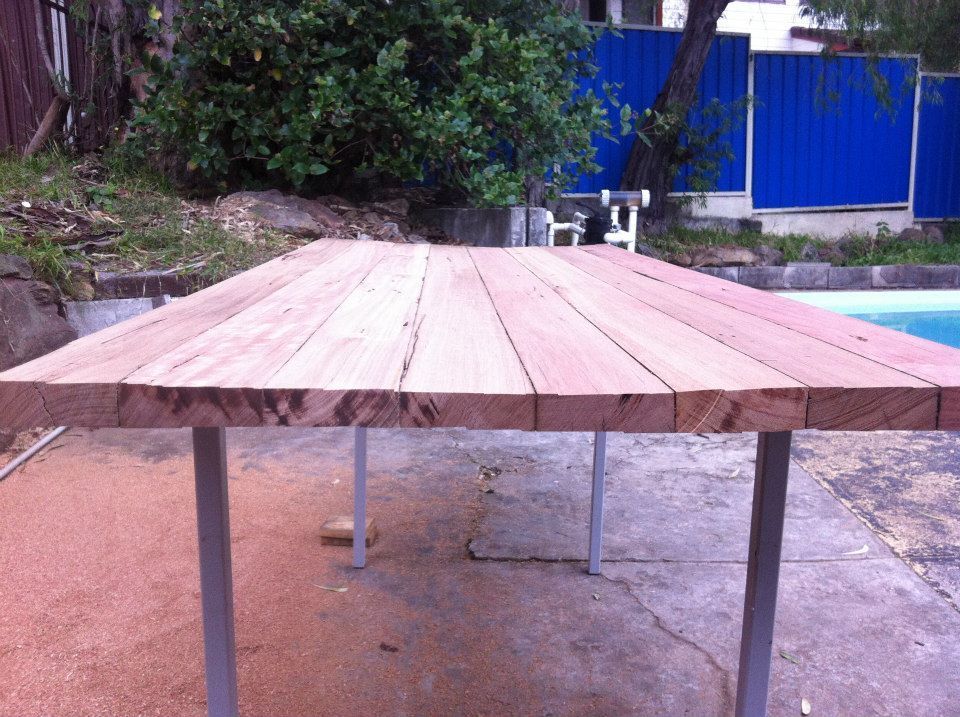
Fairly happy with the look. Now to fill in the cracks with PVC glue (epoxy wasnt such a big thing back in 2014 and I do not think I would be game enough. Tho it would look so cool today!)
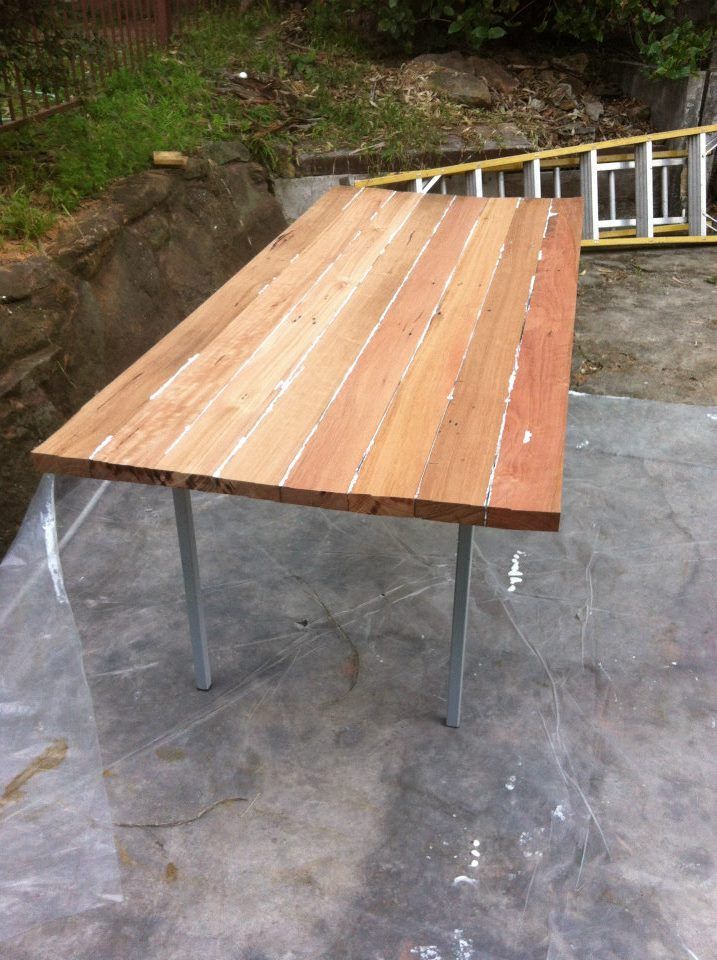
The Glue would dry clear-ish and also shrink a little. I sanded it lightly after this stage.
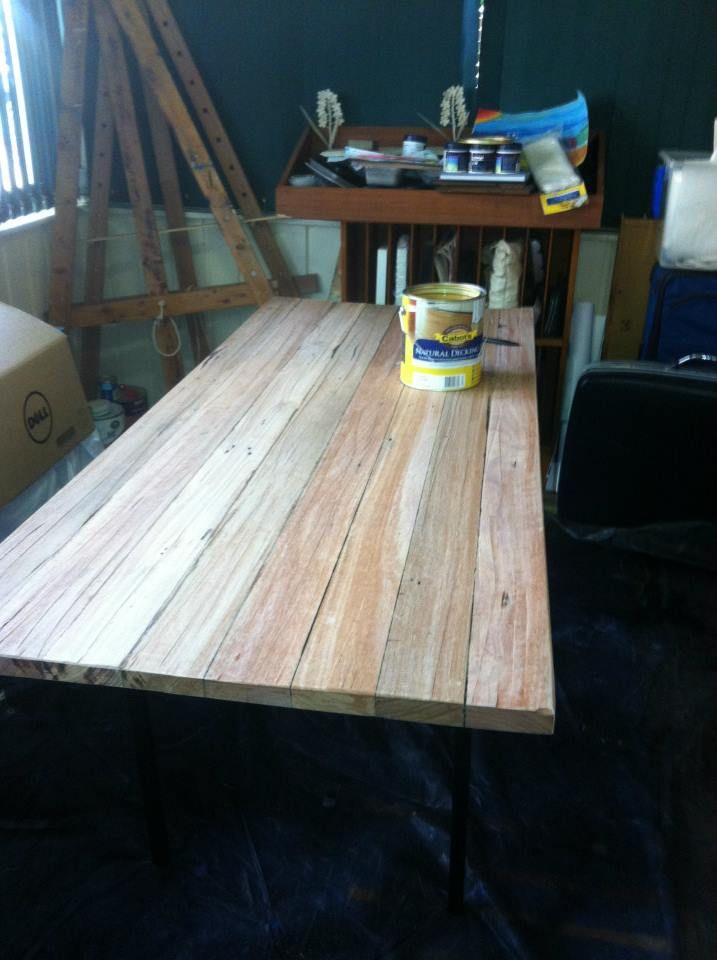
Time to oil the timber. I didnt use varnish, just decking oil. I know I did two coats and maybe a third?
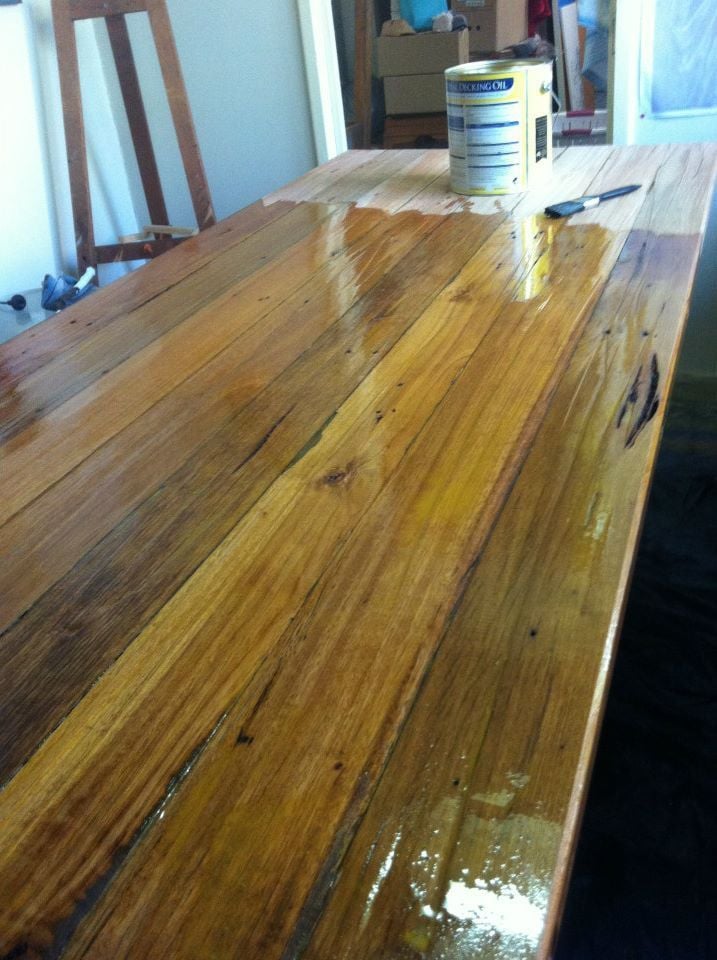
First coat soaked in easily, the second coat took around 4 days.
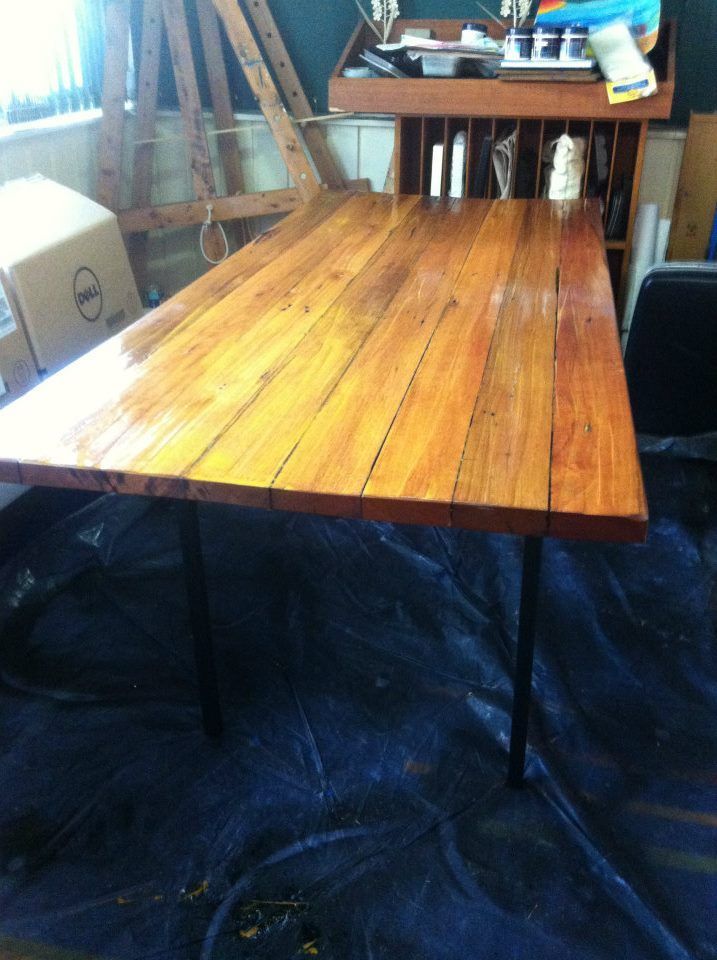
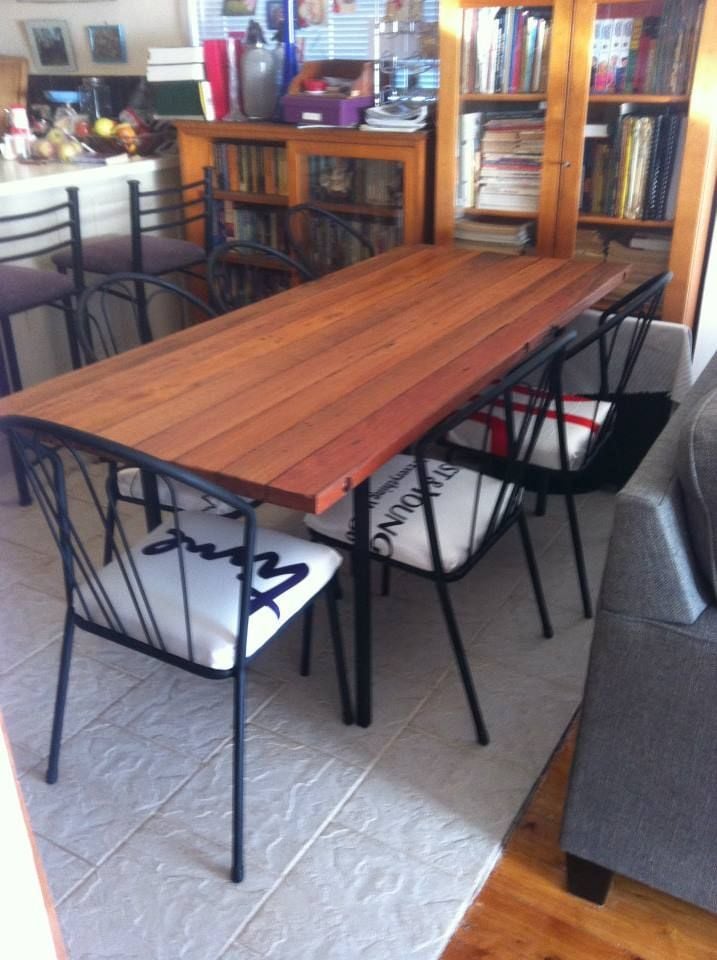
Final coats done and placed.
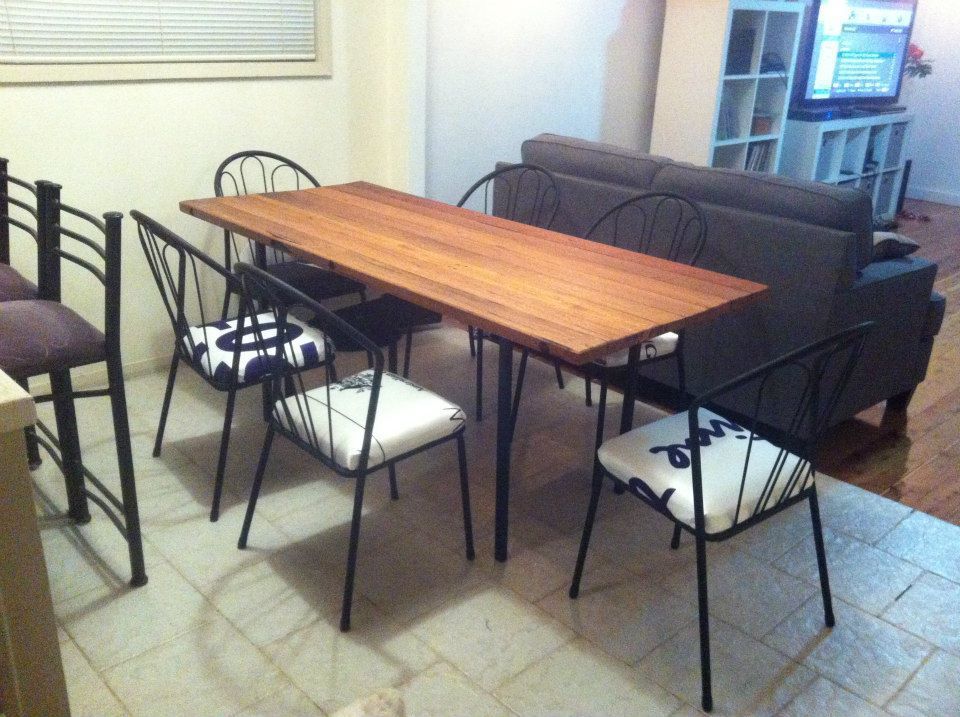
Really impressed with how the table has held up to various spills (didnt go through the table) and spills on the material (Plus drying towels over the chairs and the watermarks being transferred to the seat covers. They came out so easily with a little upholstery cleaner. I dried the seats in the sun and away they went!


