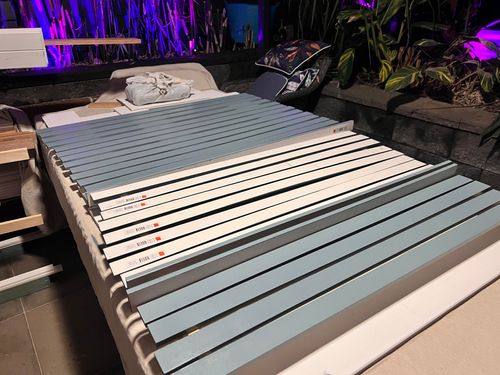
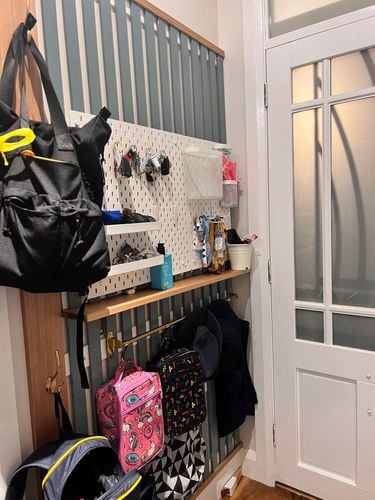
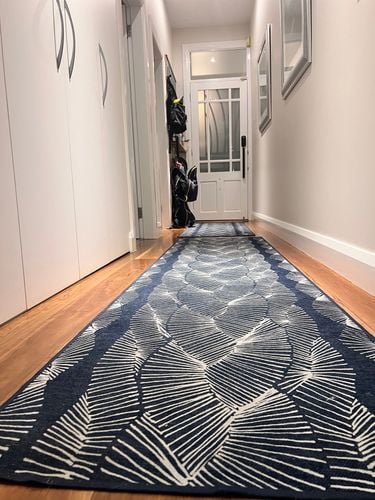
I have a very narrow hallway that doesn’t allow for a hall table or cabinet so I decided to make best use of the verticals storage I had. I used Tasmanian Oak for the shelf and to hang bag hooks from. I made a slatt wall in two panels , one above and one below the shelf to prevent bags from scuffing the wall. I went to ikea and got a couple of pegboards and the gold hanging rail with hooks to hang school hats , library bags etc. The pegboard holds keys, sunglasses , masks etc . I painted it with Porters Hampton Blue and finished the timber with Osmo.
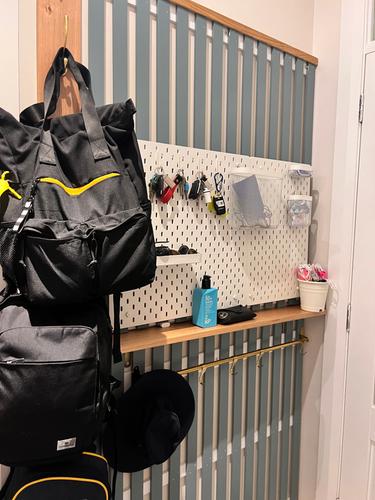
It’s been fantastic, the family now have a place for all the bags and bits and bobs you need to leave the house. I don’t loose my keys anymore! And it’s given a nice pop of colour to the hallway! Love the mix of Tasmanian Oak and Hampton Blue!
Materials
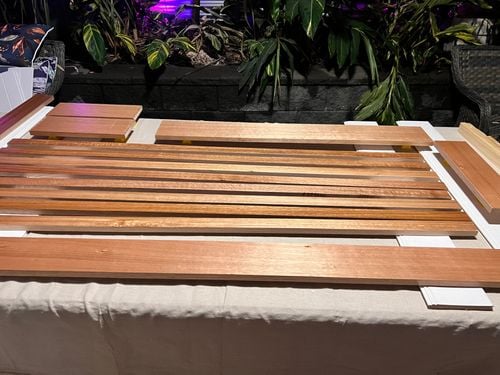
Tasmanian Oak DAR 135x19x 2.4 - verticals bag hanging
Tasmanian Oak DAR 90x19.1.8 shelf
Porta 42 x 11 x2.7 moulding for the slat wall
zenith 135mm polished brass round robe hook for vertical bag hanging
Shelf Brackets
Porters paints Hampton Blue
Osmo oil for finishing the treated pine
Tools
Bosch Compound Mitre Saw - however you could use hand saw or circular saw
Ryobi Nail gun
Bosch 12v Drill and Driver
18v Hammer Drill
Chamfer Plane
Bosch orbital sander
Measuring Tape
speed Square
Gorilla Glue
Spirit Level
Safety Gear
Steps
Step 1
Cut shelf and Vertical Hanging board to length
Step 2
Figure out the height of and width of your two slat panels. then based on the width of your moulding figure out the best spacing. I did 30mm between each of mine.
cut 6 pieces of 42x11 Porta moulding to the correct width of the slat panels.
cut the correct number of vertical pieces to suit your spacing
Step 3
Sand Tasmanian oak and put a chamfer on the edges. I sanded all mine first to 180 grit
figure out the placement of your hooks, and pre drill their holes
finish sanding to 240 grit and finish with the finish of your choice
when dry attach hooks
Step 4
Paint all your vertical slats with two coats of your chosen paint.
when dry lay out your three horizontals and then your vertical pieces evenly spaced.
to make it easier use a scrap piece of timber the width of your spacing to accurately space each slat then glue and attach to the horizontal pieces with a few Brad nails.
Step 5
Patch nail holes
sand lightly when filler is dry and apply final coat of paint.
Step 6
Attach shelf brackets to your wall and then attaché finished shelf to brackets
Step 7
Attach vertical hanging board to your wall with wall plugs to suit your wall. Mine was masonry so I used Ramset.
Step 8
Fit your top slat wall above the shelf and attach to wall with fixing to suit your wall
Then add the bottom slat wall and fix to wall.
Step 9
Drill holes for pegboard mounts into the wall between the slats and then attach the pegboard .
attache hanging rail and hooks to the bottom slat wall.


