Steps
Step 1
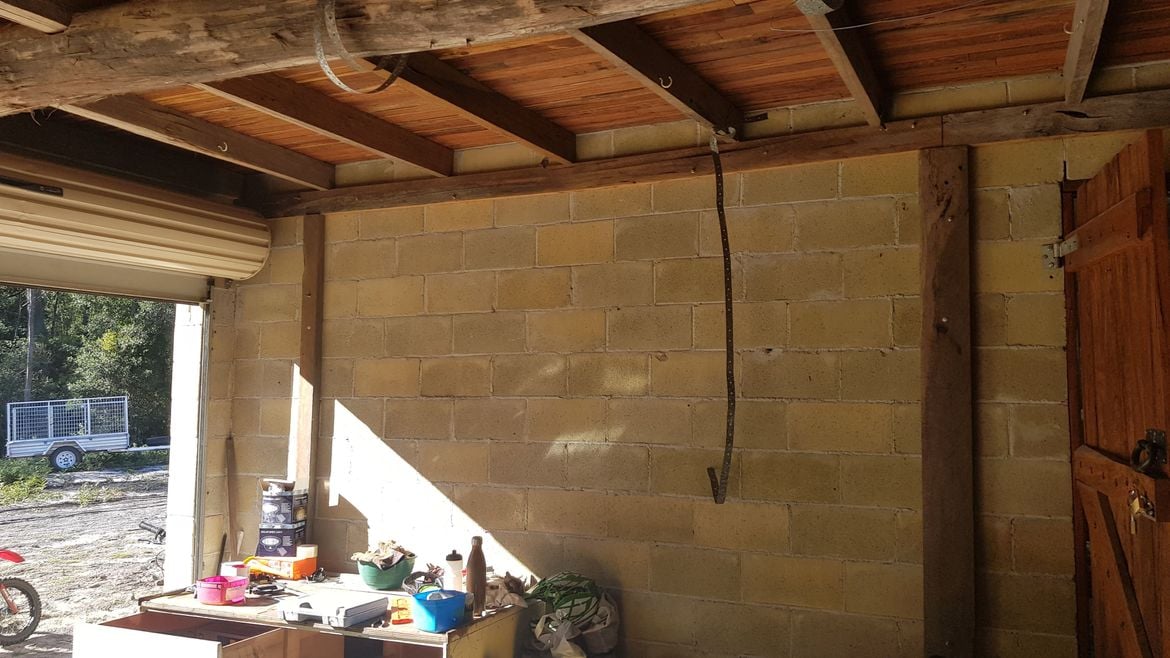
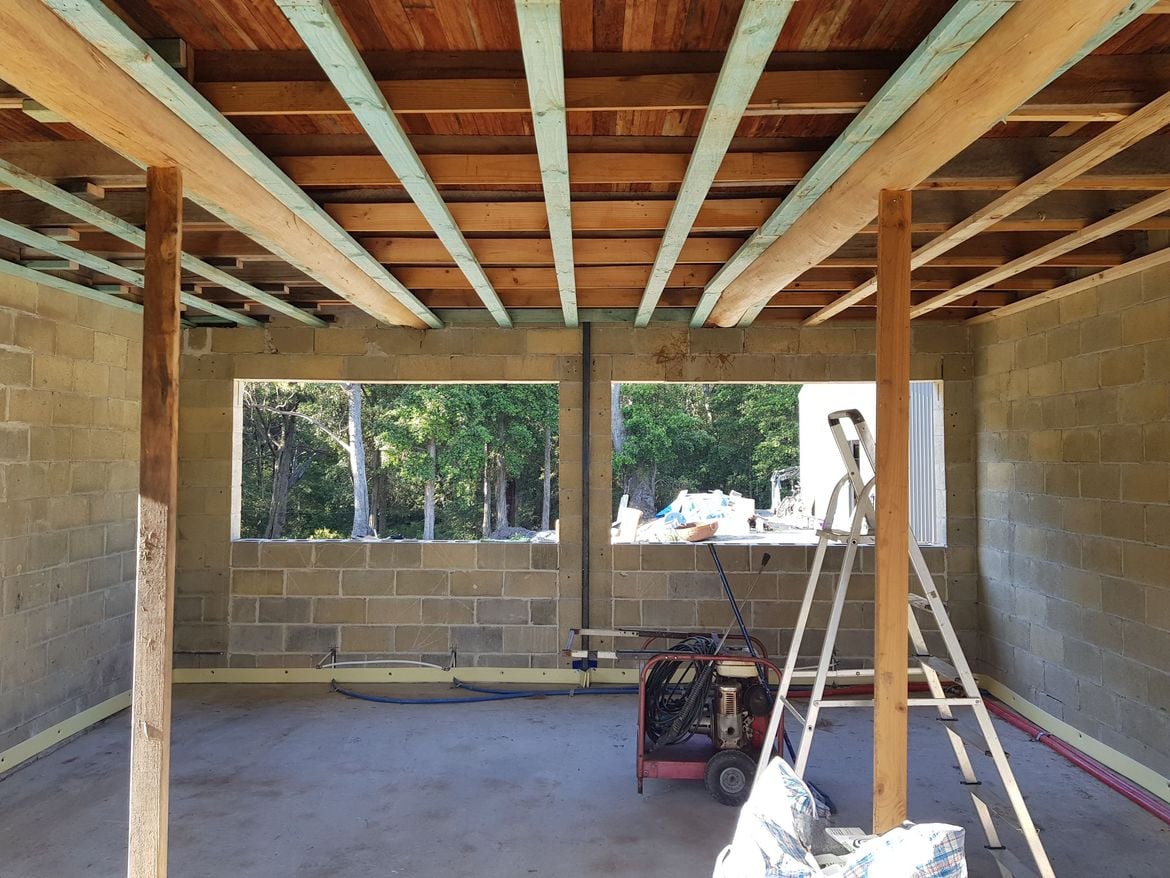
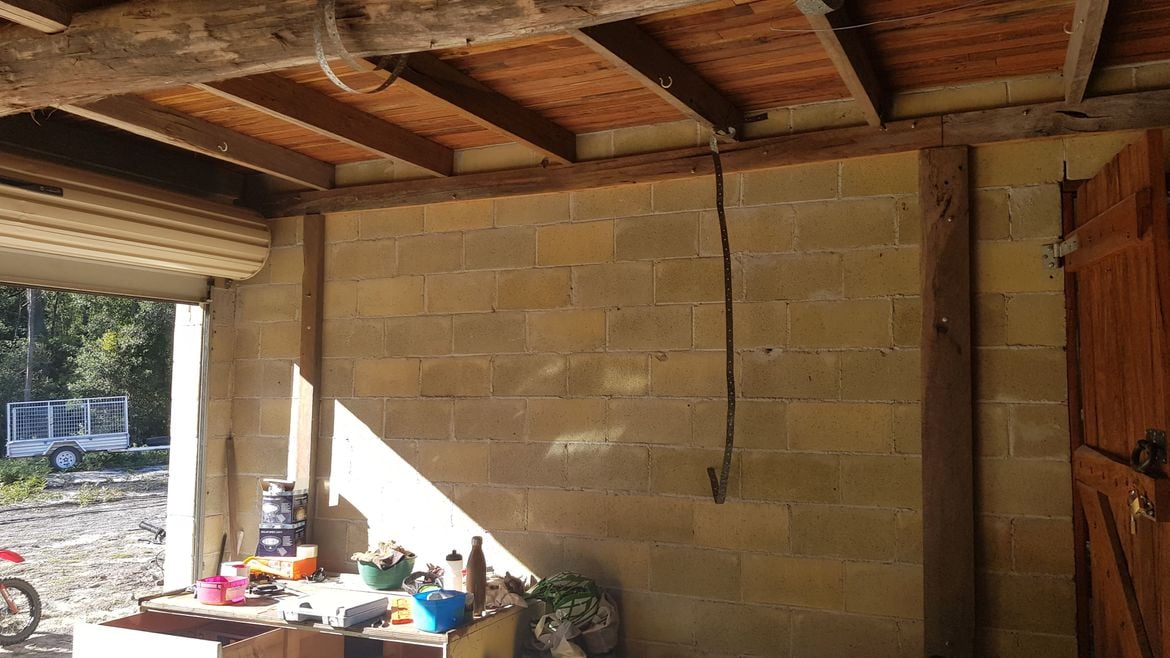
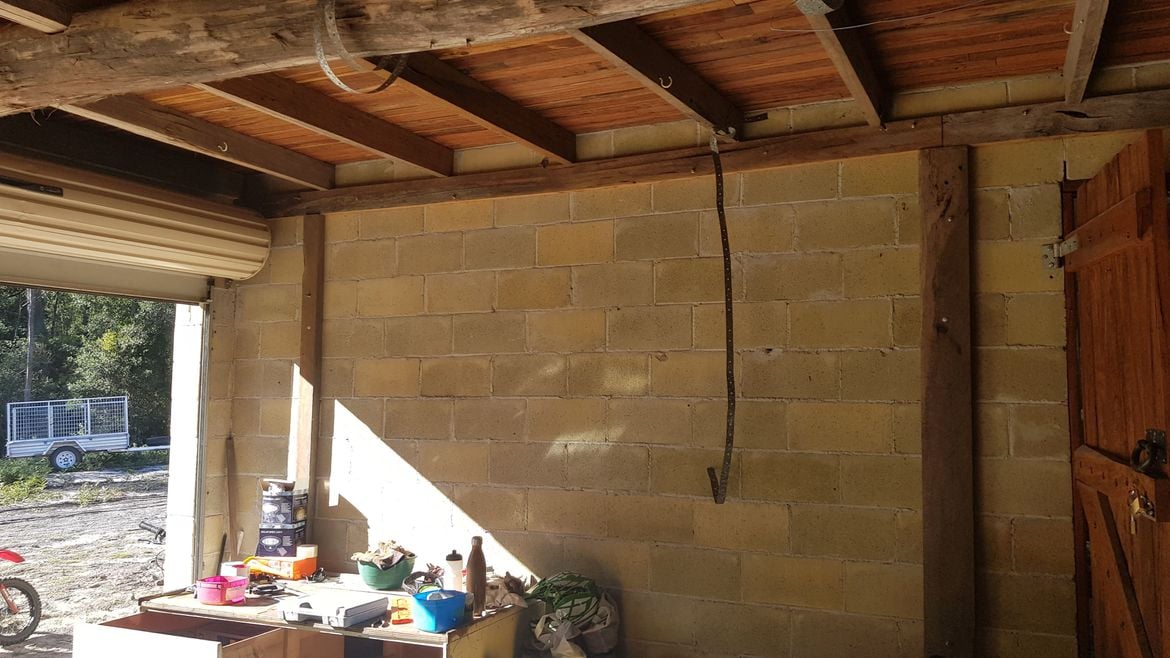
we remove the roller doors and infilled partially with recycled 200mm blocks/damp proof course and recycled off cuts of 200mm wide x 800mm long x 50mm thick sandstone to form a sill(from our local quarry).
Step 2
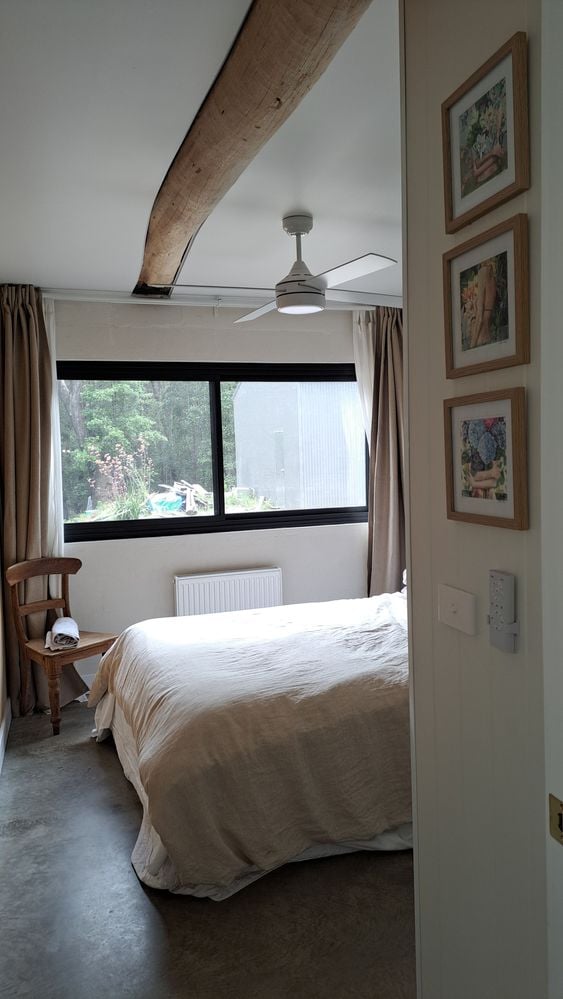
we water blasted the timber beams from a silver grey to a beautiful off white colour , and left uncoated in a raw finish.
As the existing floor joints to the loft above were milled on the property many years ago, we needed to added timber trimmers to fix the 90 x 35mm ceiling joints too.
We removed timber plates supporting the floor joists and chemset galvanised joist hangers to the blockwork to ensure a flush ceiling.
Step 3
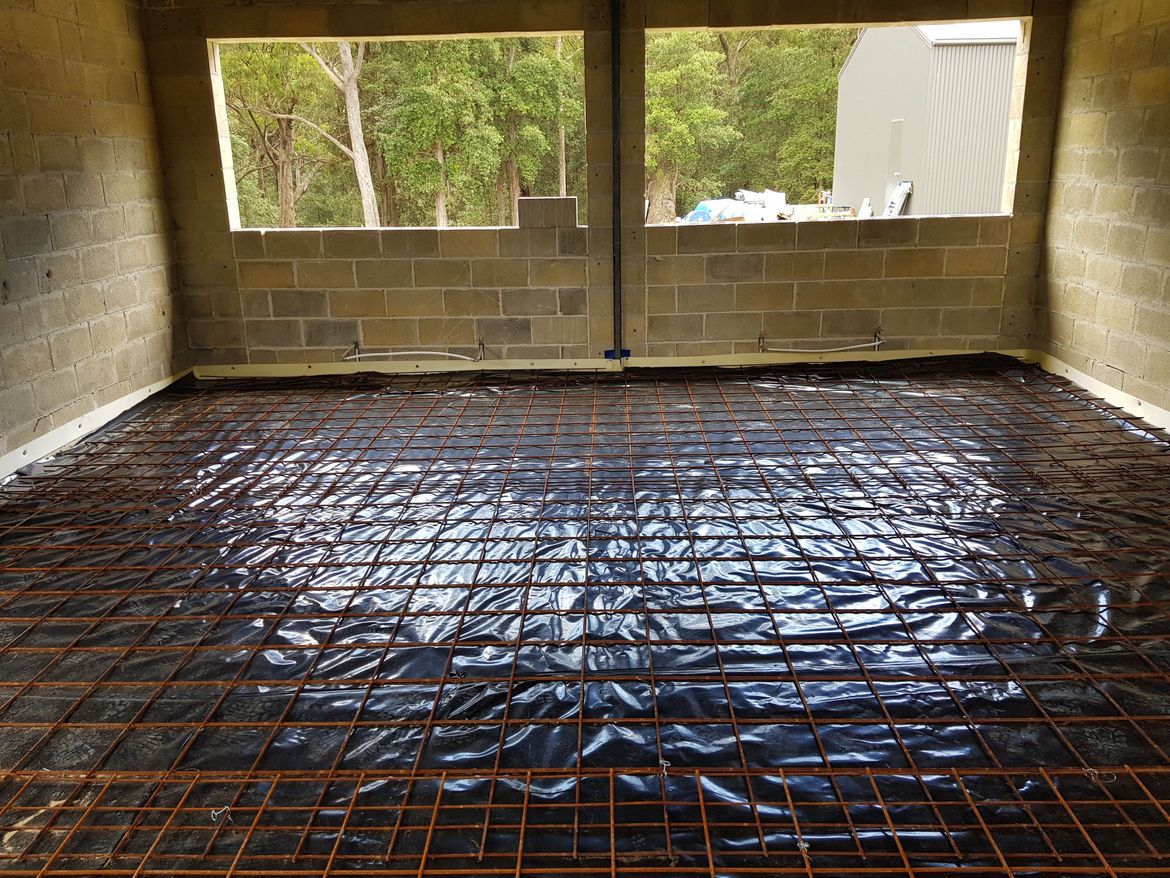
we placed 200 micon PVC sheet and termite protection to the wall perimeter before pouring and carefully curing a 100mm reinforced concrete slab. we then put down Ramboard temporary floor protection until polishing.
Step 4
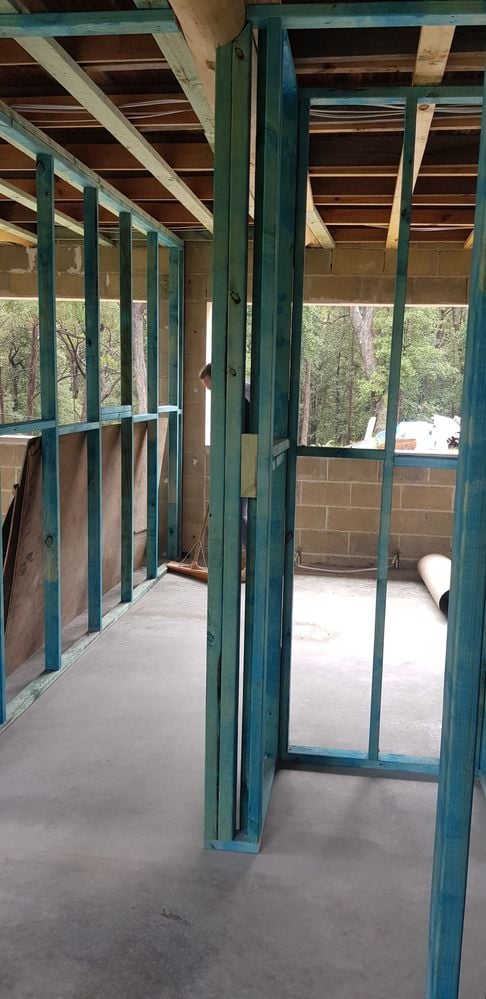
Before building the stud walls, we carefully laid out the positions of the 1200mm wide sheets of 9mm plywood and easycraft VJ board, to ensure 45mm studs where at all vertical joints. We also allowed for recesses in the walling for second hand cupboard shells to be placed, cutting down on the cost of custom built cupboards.
Step 5
before attaching wall panels, the floor was burnished/polished and then the ramboard was again placed over to protect it from damage. Double glazed windows were installed.
Step 6
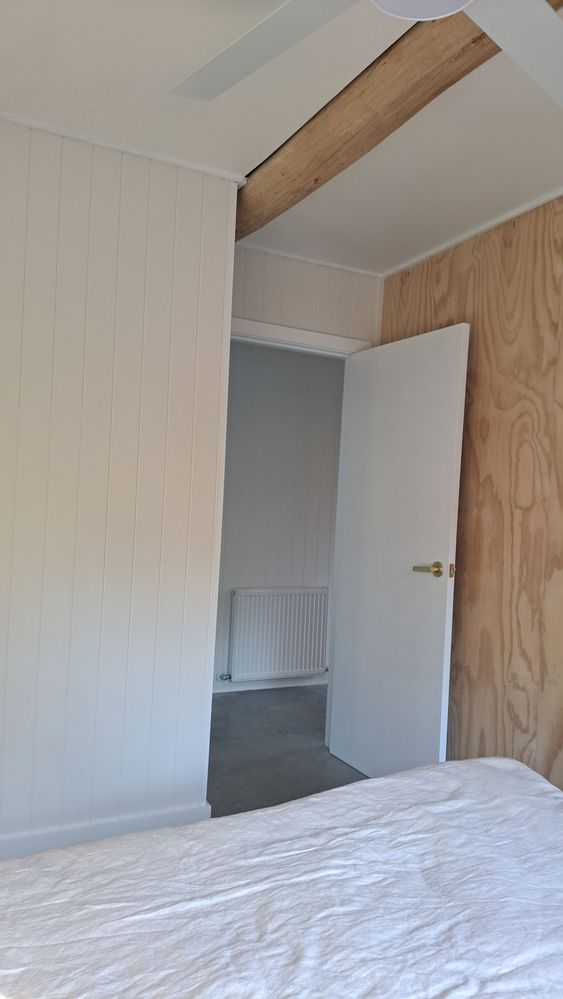
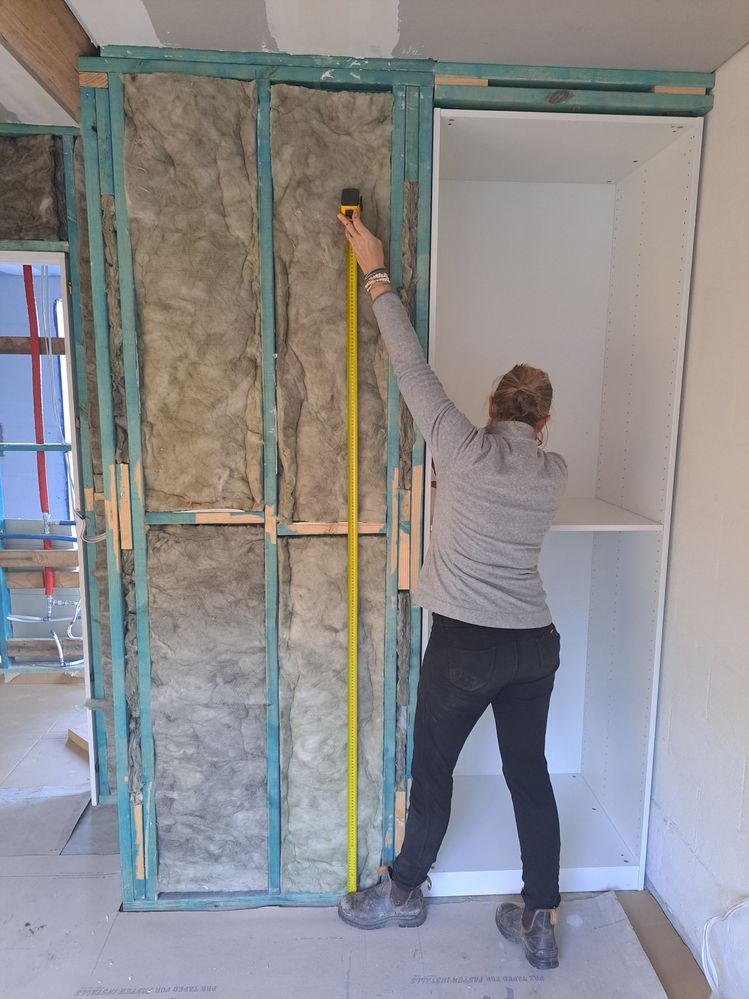
wall insulation was installed before nailing the plywood feature wall and VJ boards. the use of these wall materials removed plastering and cut our overall install by a few weeks.
Step 7
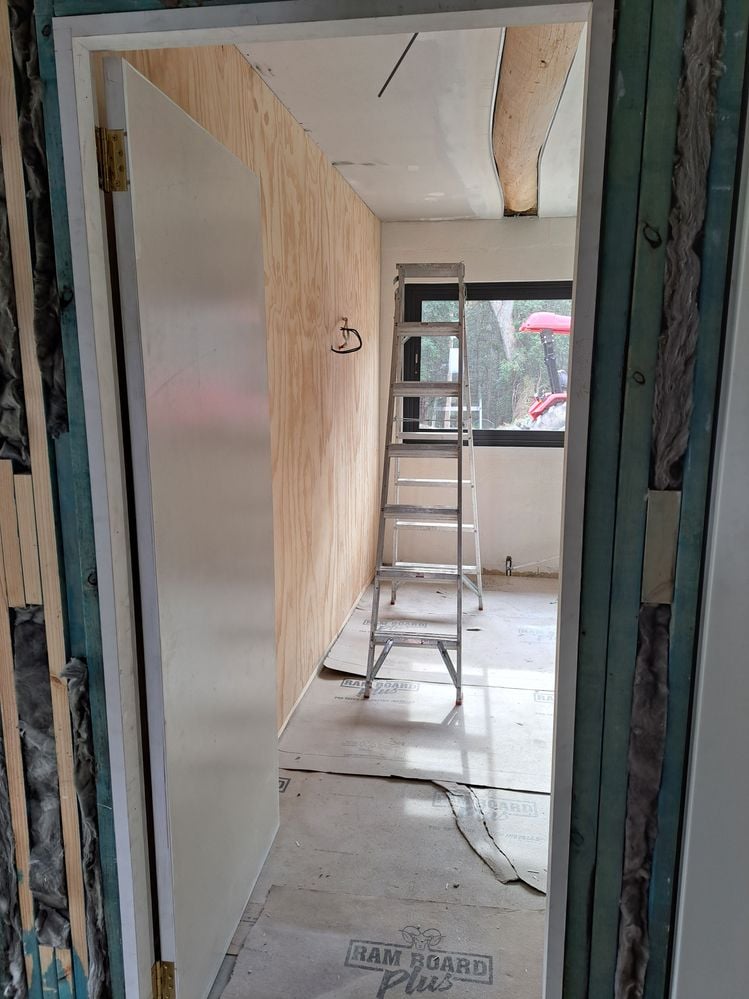
next well installed the plasterboard ceiling and the PVC shadowline beads each side of the exposed timber beam which in the end was quite simple. we then plastered the joints carefully to ensure the timber beam was the key feature of each room.
Step 8
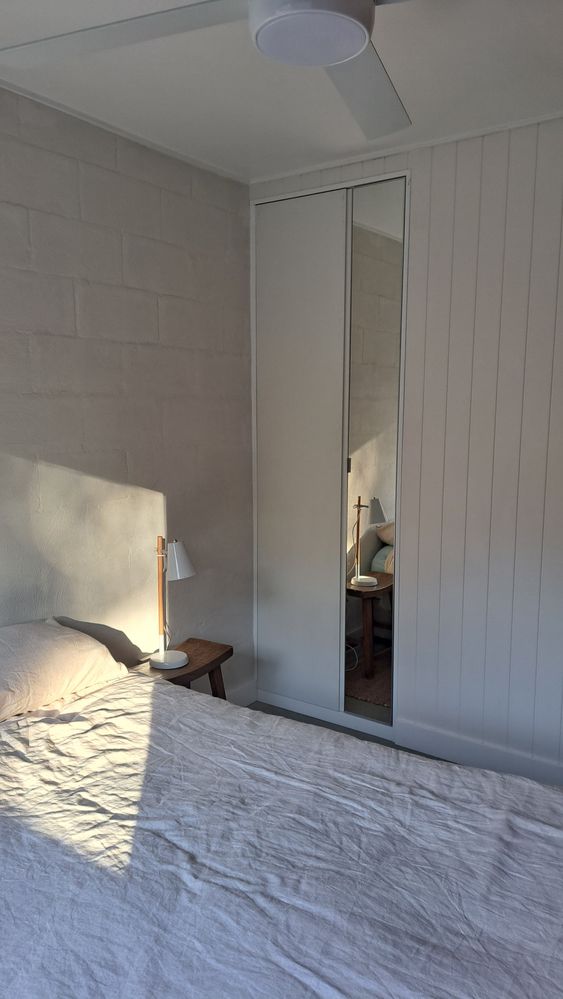
All exposed block walls were firstly cleaned with a brush, and then we applied dulux medium texture, USA antique white tint with a lambswool mit. The process was very simple and helped fill indentations and small holes in the blockwork. we applied 2 coats. For the plywood, we filled the nail holes with putty, lightly sanded and left the plywood with a raw finish.
Step 9
We attached second hand doors and mirror, and trimmed the cupboards with 18 x32mm white aluminium angle to provide a neat and clean finish with the VJ board. The angle was simply glued(no nails) to the VJ board.
Step 10
Finally we added;
- the queen bed,old timber stools/chair with second hand lamps
- white sheer + beige blockout curtains.
- connected the water heated radiators
- added an old timber tree branch (from our property) as a clothes rod inside the cupboards.