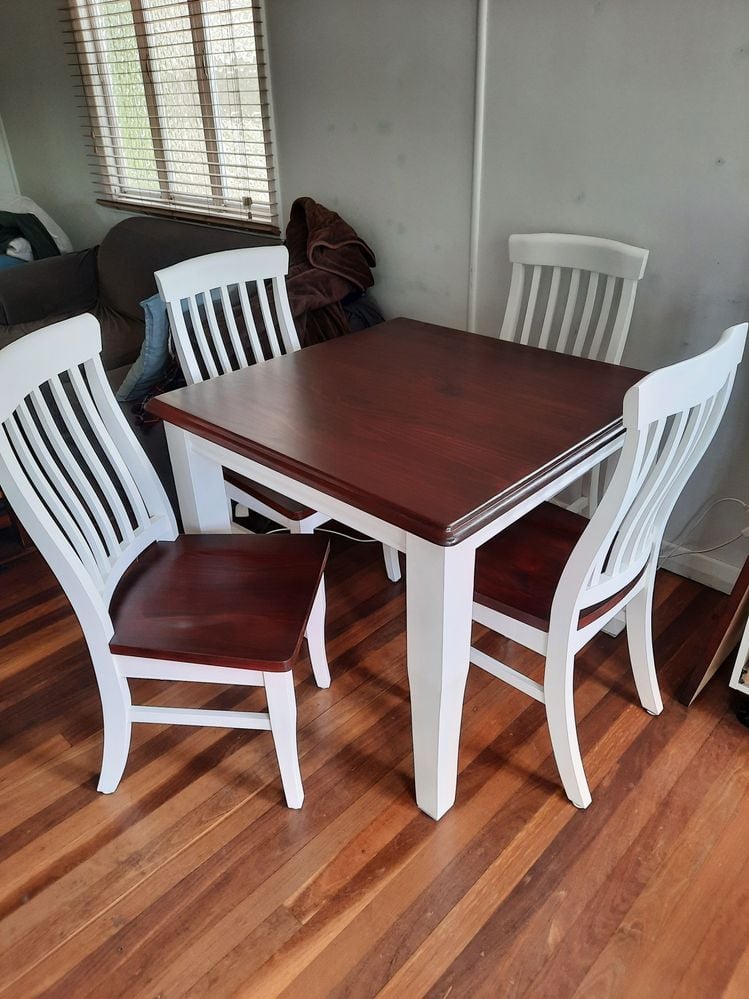
Steps
Step 1
We've had this table for a number of years and quite a few house moves. It's been neglected for a long time. I wasn't sure how well it would come up with a sand and varnish but had nothing to lose in trying.
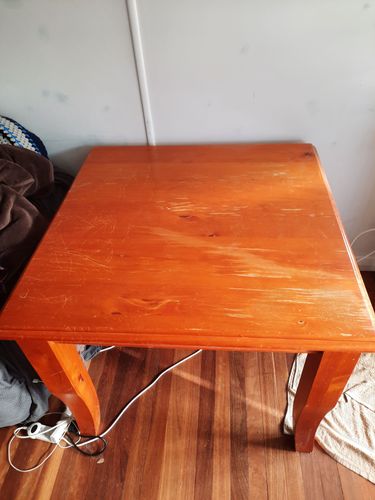
Step 2
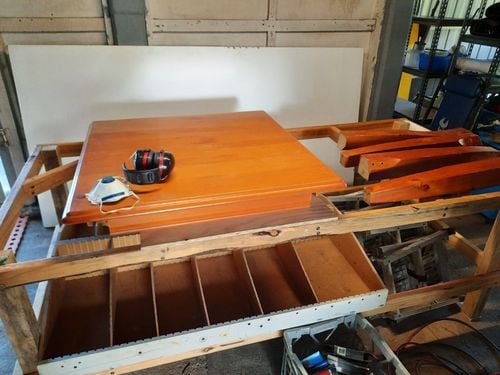
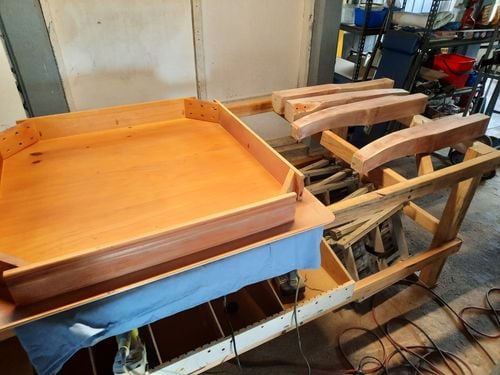
I didn't want a house full of dust so I took the table apart and took it downstairs to sand.
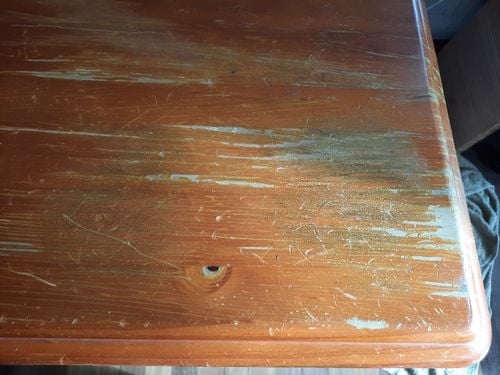
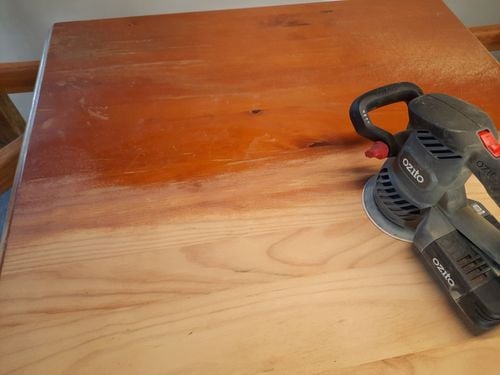
I started with 40g paper on an orbital sander until I was back to bare pine, then moved up to 120g to smooth the surface and finally 240g. I found the orbital awkward working on the edge of the table so used a 1/3 sheet sander for that. I only lightly sanded the legs as my plan was to paint them. I also had to fill the many scratches and teeth marks from when our dogs were puppies.
Step 3
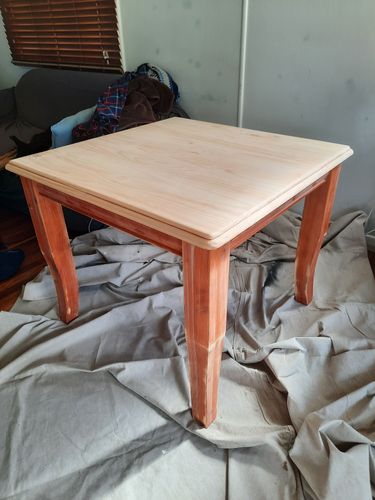
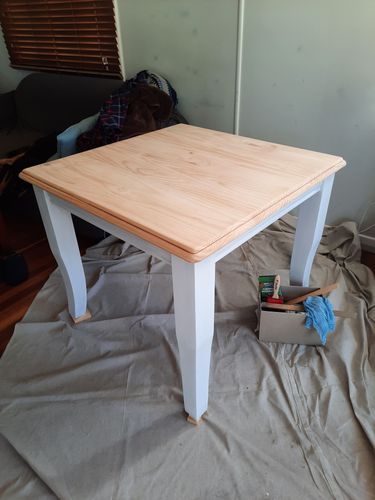
As I was working solo, I didn't want to man-handle the finished job so I reassembled the table upstairs on a drop cloth.
After wiping down the surfaces of dust etc, I did two coats of chalk paint, sanding lightly between coats and 3 coats of stain and varnish, also sanding lightly between coats. The first coat was diluted with turps per instructions on the can.
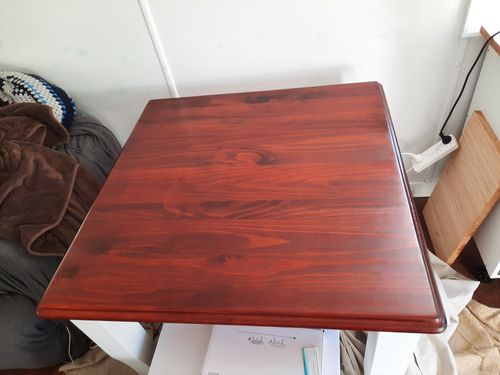
Step 4
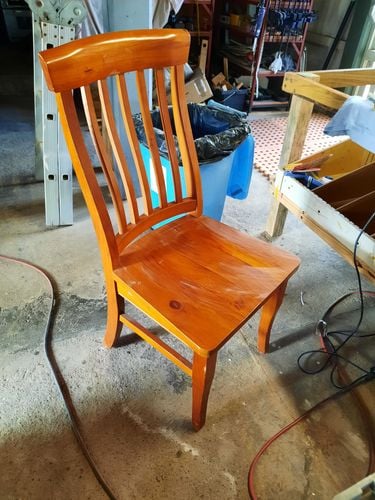
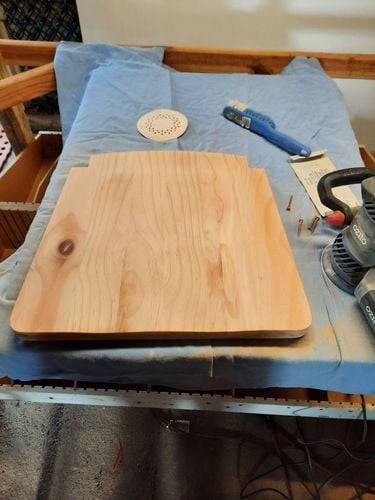
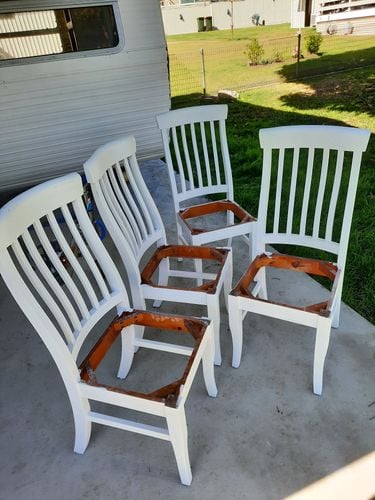
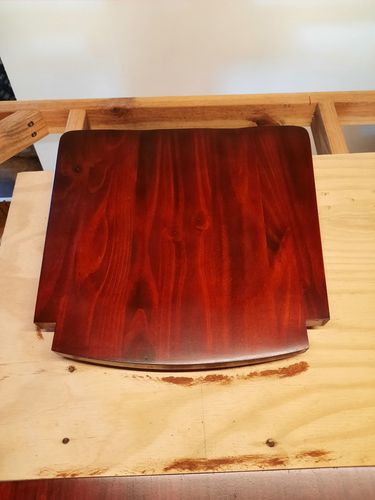
Being happy with how the table turned out, I dug the chairs out of the spare room (not being used as we don't really have a dining area yet).
I found these harder to paint because of all the nooks and crannies. I had heard that the spray cans of Chalk Paint didn't have very good coverage per can so having plenty of the Rustoleum paint left, I did my best to get two coats of paint on the chairs, sanding between coats, then sanded again and spray painted the final coat. Not being a paint expert, not sure this was right or not but time will tell.
Step 5
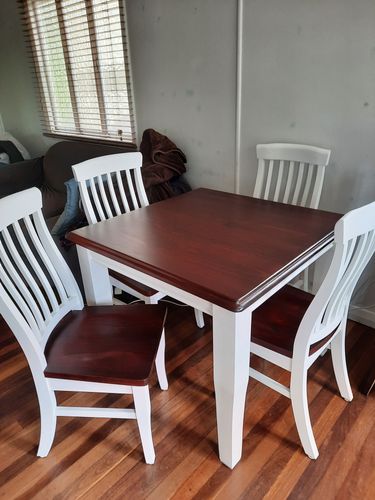
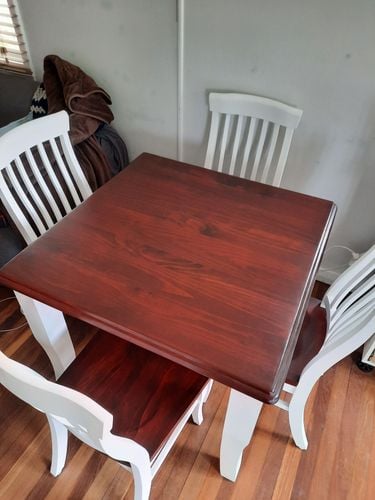
Before returning the dining table and chairs to service, I have given the chalk paint a coat of bees wax for protection.
Step 6
If I were to do this project again. I'm not sure I would opt for the chalk paint again, I think I'd go for a more hard wearing paint. No regrets though, sometimes you just have to trial things. I have to say, I'm now in love with my table setting!