Good Morning Workshop Community Friends. Hubby and I had a go at installing a floating laminate floor in the living room. We are DIY beginners. After reading other great posts about DIY flooring projects on here and getting helpful advice from the experts we had more confidence to try it ourselves and I would like to share it with you all.
I will share it with you in the steps below but I have to say that you need to follow the instructions from the flooring supplier as they may be different to another supplier.
We purchased our flooring from Bunnings, it had to be ordered through the Special Orders Desk and they were really helpful. It is Floor Select Laminate Flooring 8mm Syrah Oak.
As always please make sure you wear the appropriate protective gear.
Earmuffs for cutting the boards on the electric mitre saw and jigsaw , safety glasses, mask for the dust, even though we did our cuts outside we still wore masks. Gloves and mask for cutting the carpet and underlay removal.
Also keep in mind you are working on the floor so we had knee pads and a kneeling pad.
I will share this post about the floor and then I will share a new post about the full living room refresh 😃
Steps
Step 1
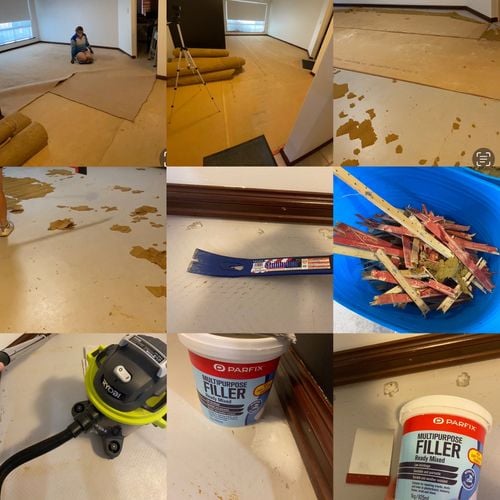
I cut the carpet into pieces and rolled them up so it was easy for me to remove and take outside and I did it for the underlay as well. I was really surprised how heavy carpet is !! Just keep that in mind so you can work safely. The underlay was stuck in a lot of areas so I used my floor scraper to remove it easily. I then removed the carpet tack strips, geez be careful with that and wear gloves. I removed the nails that held the strips onto the subfloor. Unfortunately as carefully as I could to remove them, chunks of concrete came off with the nails. At this stage the swear jar came out 🤭🤣
Filled the gouges with a multi purpose filler suitable for the job and it worked a treat. I had to use a grinder to cut a few nails at the base as the head do the nails snapped off. Then filled the gouges.
You have to really keep the subfloor clean and free from debris, so I kept vacuuming as needed.
Step 2
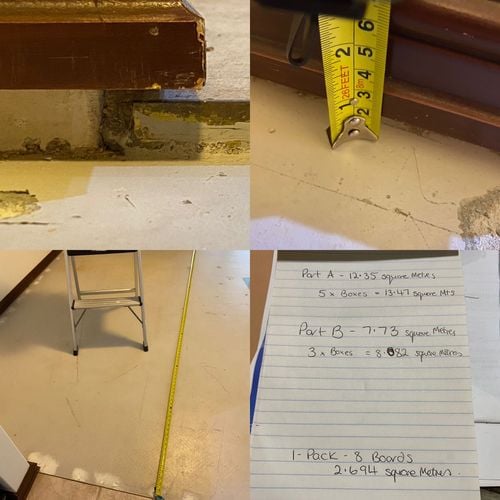
Once the subfloor was clean I was able to measure the floor area. Now because the room has different sizes of walls and a separate wall that acts as a hallway, I measured the room in two parts. Length x width to get the square metre measurements.
Please remember you need to allow for cutting, mistakes, ect so add approximately 10% to your total. We just ordered an extra pack of floor and it was enough.
Also you can see we decided to leave the skirting boards on as we had plenty of clearance for the floor and underlay.
Step 3
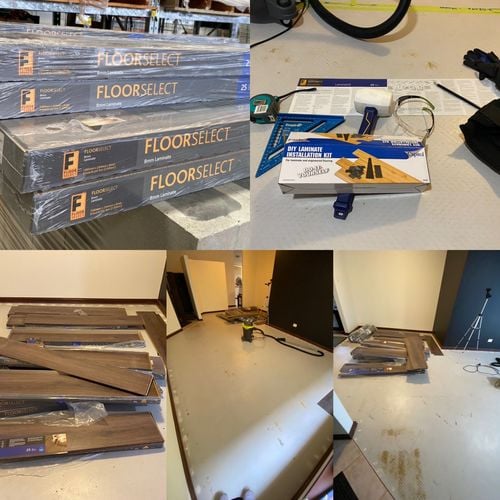
We went in store had a good look at the flooring displays, chose the floor and ordered. Once it arrived we went and picked it up. 10 packs we purchased, spot on with the measurements and allowing extra.
Now the instructions advise to place the floor in the room where it will go and allow for 48 hours to acclimatise. All good. After that I unpacked the boxes and mixed up the boards so there was no pattern repeating, it looks more random and natural when done.
Step 4
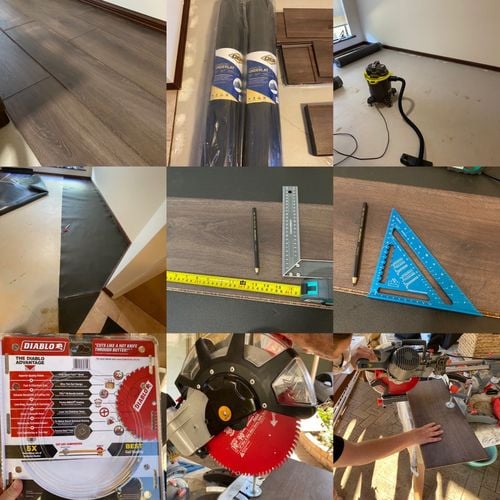
Have your cutting tools ready outside or in your shed. Have your measuring tools ready, I had the vacuum handy to keep the subfloor clean from debris or use a broom and dust pan.
Now we wanted a better quality cutting blade for laminate floors so we purchased a Diablo Pro Cutting Blade, it has a cleaner finish. That’s just what we wanted to do.
We chose to put down the QEP Acoustic Pro Underlay. It’s certainly well worth it. Cutting the noise right down when you walk on the floor. We followed the instructions which advised to do it but I believe you don’t have to as these boards have underlay attached to them.
Before you start, just lay a few boards down as a “dry layout “ to see how many you need for the rows, the random pattern and practice how to click them in as well. Remember that the joins must be all staggered.
Step 5
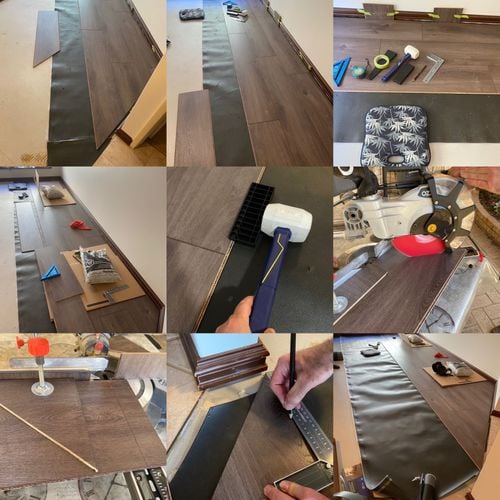
Now this is where hubby helped as I will honestly say that it was easier to have someone work with you together, especially as we are beginners. We found it easier to lay the underlay in sections and not all at once.
We worked from right to left and moved backwards if that makes sense.
I can’t say it enough, measure and measure again before you cut. We did and still made a few mistakes but learnt from it big time.
Step 6
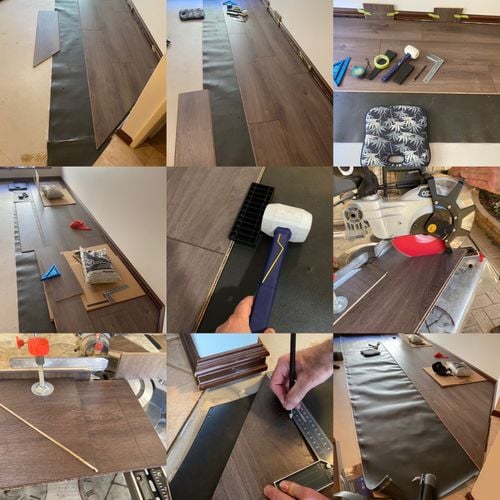
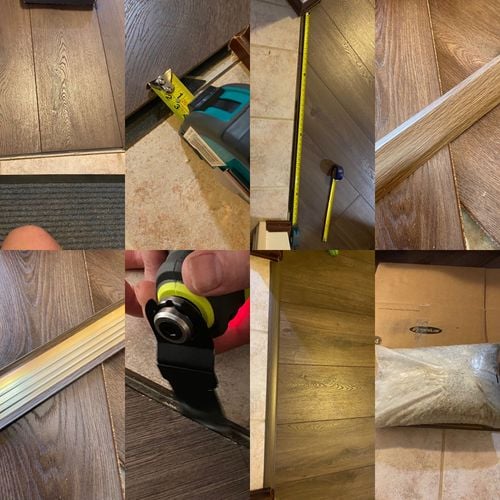
We used off cuts as the shims / wedges as we worked from the skirting boards. You must allow approximately 10mm clearance right around the floor to allow for expansion with the temperature changes. Once we had a few rows down we placed a couple of 20kg bags of blue metal we had in the shed to stop the floor moving as we knocked the boards together. That was really important. Make sure you use a rubber mallet, the block and the pull bar as you are going along.
Step 7
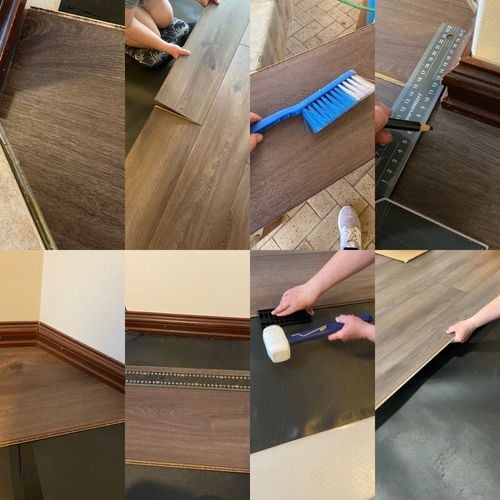
With every cut we made we brushed down every board before fitting it so that there was no sawdust or debris caught in the grooves. This can be a problem if you are trying to click the boards together and they don’t join up properly and you force them and the tounge / groove is damaged and the board is no good to use. Yeah it happened once and you realise how care you need to treat the boards.
Step 8
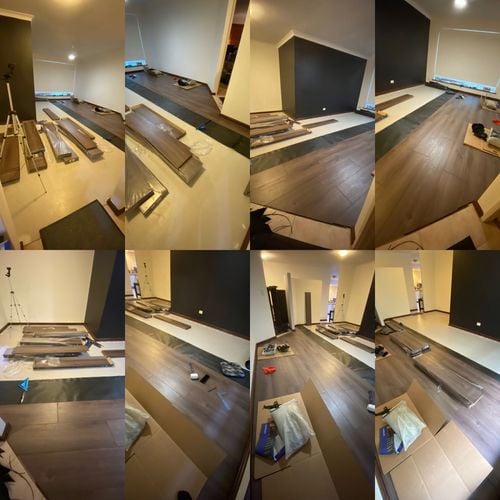
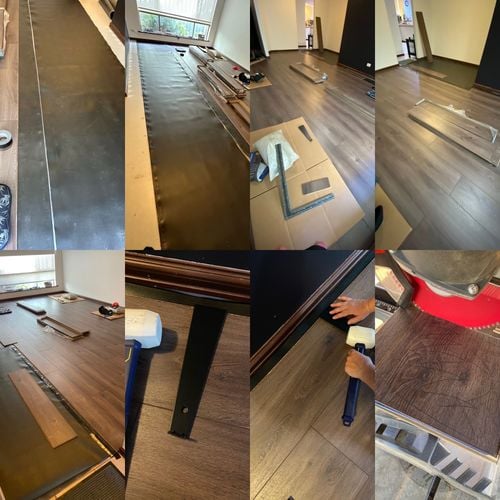
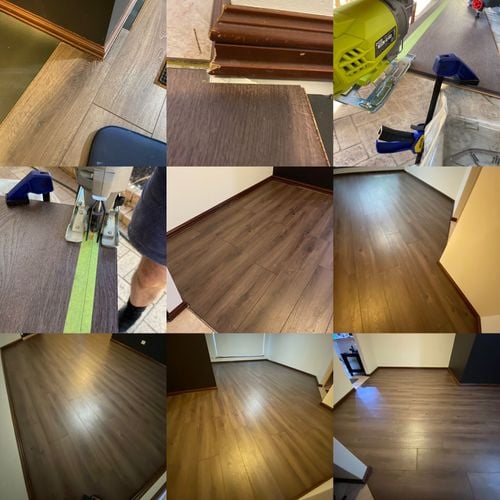
When it came to tricky cuts we used the jigsaw. Finally the floor is complete and it is time for the quads to hide the gap between the floor and skirting boards.
Please take your time, don’t rush it. It’s not a race and we still made a few mistakes. Been a massive learning experience and we know what to do if we progress throughout the house.
Step 9
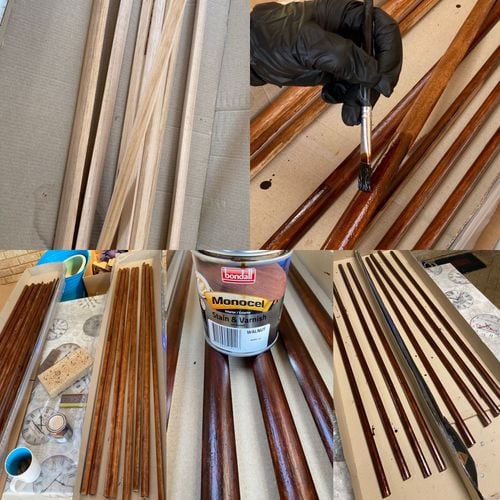
I purchased 15mm Tasmanian Oak Quads - Quarter Round. I gave them three coats of Walnut Stain. We knew we couldn’t perfectly match the skirting board colour but it was close enough.
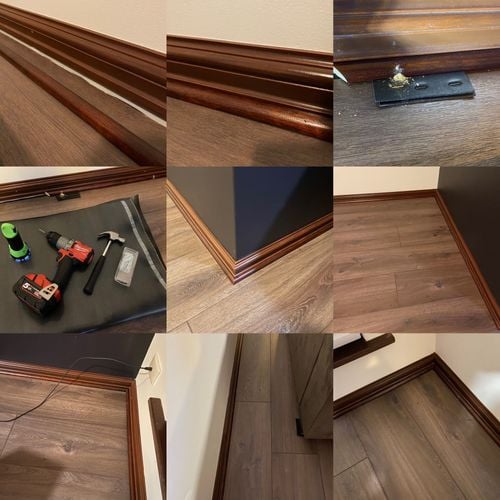
Hubby cut them to size and attached them to the skirting boards NOT the floor. He pre drilled the holes and nailed them in. He also attached the transition strips from tile to floor with construction adhesive and weighted it down over night. These two jobs were fiddly and more of a one person job so I started working in the shed which will be my next project.
Step 10
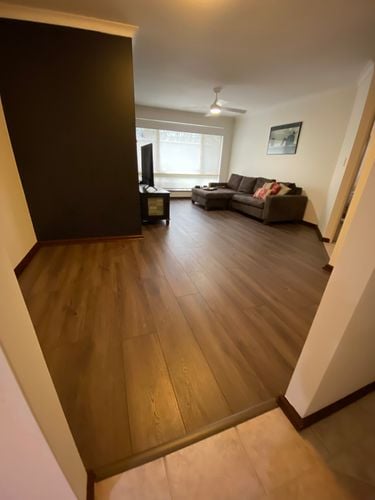
And there you go, so far so good. That’s how we installed our new flooring ! Thank you for having a look. I know the experts can definitely explain it better than me. But I tried. It’s all a new learning experience for me 😃 I’ll share the full living room refresh soon .


