Steps
Step 1
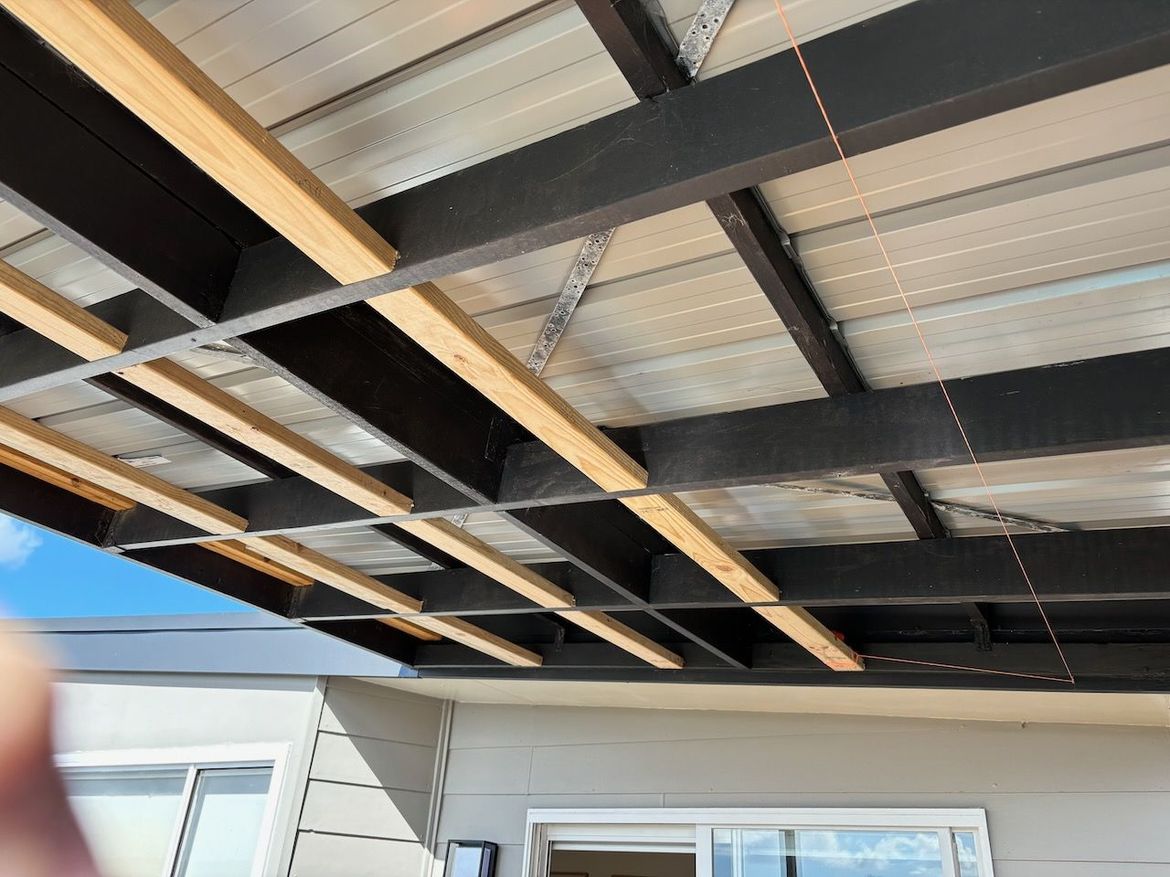
Step 1: Measure and mark out the centre line of 2700mm x 600mm within the roof space. Using a string line helps with this.
Step 2
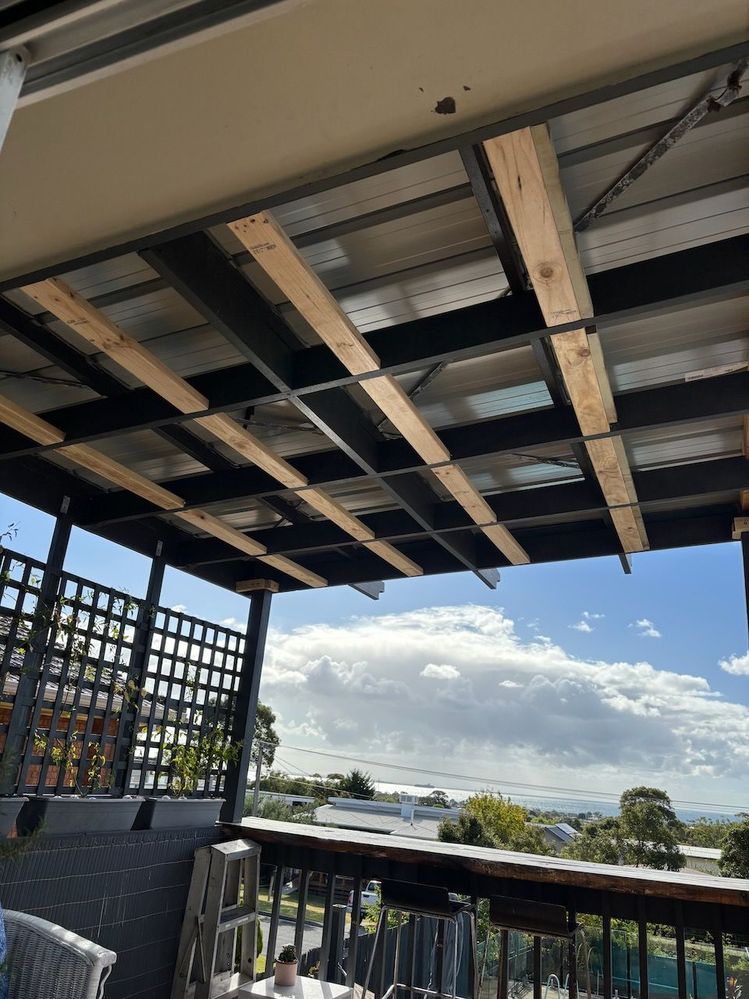
Step 2: Cut and fix the 90 x 35 pine as battens to the existing roof frame to that the feature panels will fit half-way on each batten. This allows for the next panel to the side or end can be fixed. I used a frame cut but you could use 75mm batten screws through pore-drilled 6mm holes
Step 3
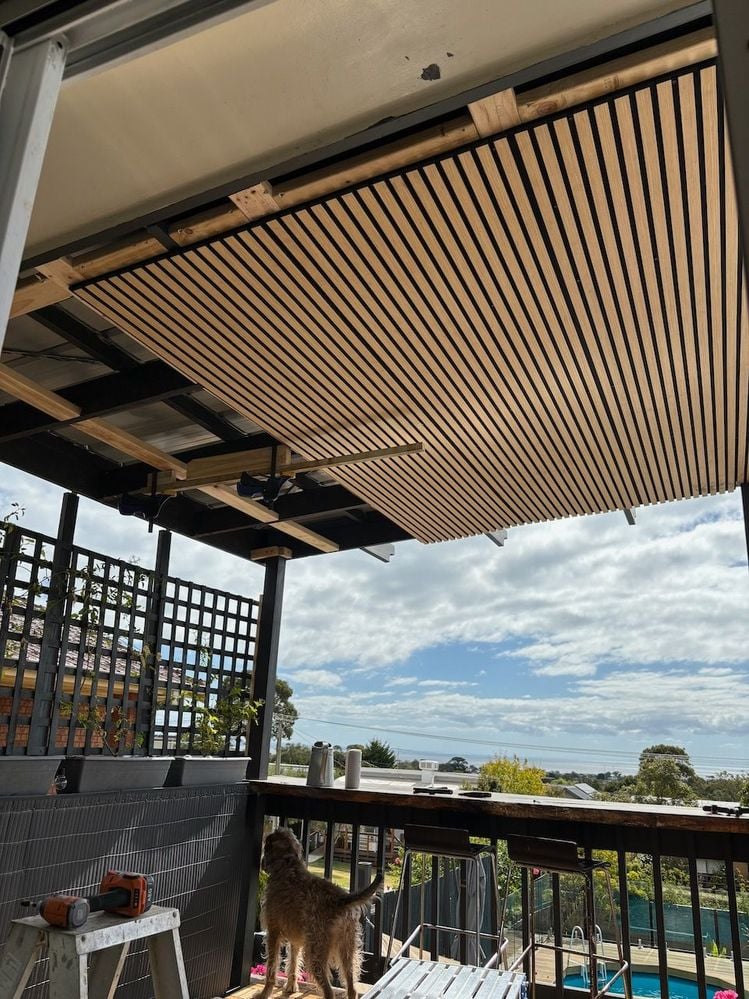
Step 3: I used off-cut of the pine and made offset blocks that I clamped to the battens. These were used to support the panels while they were being fixed in place by the black button head screws.
The black spacing between the timber panels is actually a sound-check material that compresses. so screws can easily be over-driven, hence using flat button heads. When driving the screws, you need to use your fingers to hold open wider the timber slats so the button heads can clear the edges and stop damage.
The panels are very flexible so having a platform ladder and a step ladder with two people are required, though I did manage to do this on my own. Not my first choice!
Step 4
Step 4: There will be cutting required, both end and by length. The straight edge clamped to the cutting line and a fine toothed blade was used on a circular saw. Taping the cutting line with blue painters tape will reduce any splintering. This was performed on a couple of saw horses.
Step 5
Step 5: as this product is internal and I had the edges of the panels exposed to the weather, I had made up at the local plumbing supplies 26mm (ID) x 15mm U shaped colourbond Chanel that I trimmed and fitted to all edges wand fixed with silicone.
Step 6
Step 6: I installed solar LED string lights (not seen in the photos) through every 2nd black Channel.