Steps
Step 1
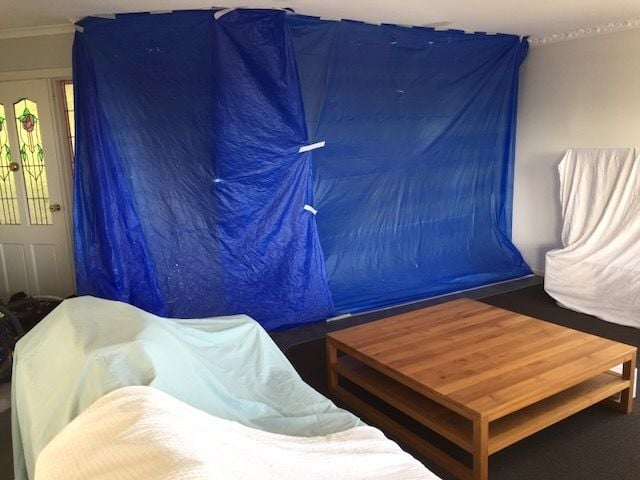
Tape up and seal the demolition work area top and bottom with drop sheets.
Step 2
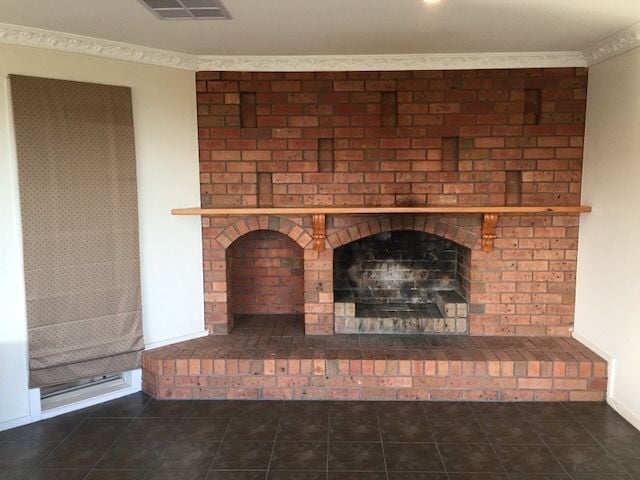
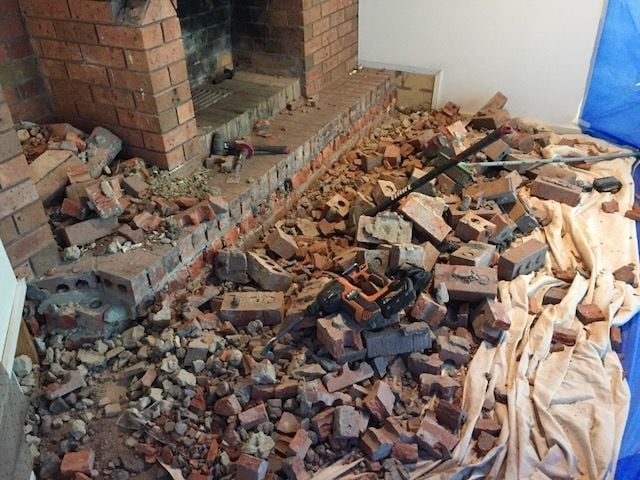
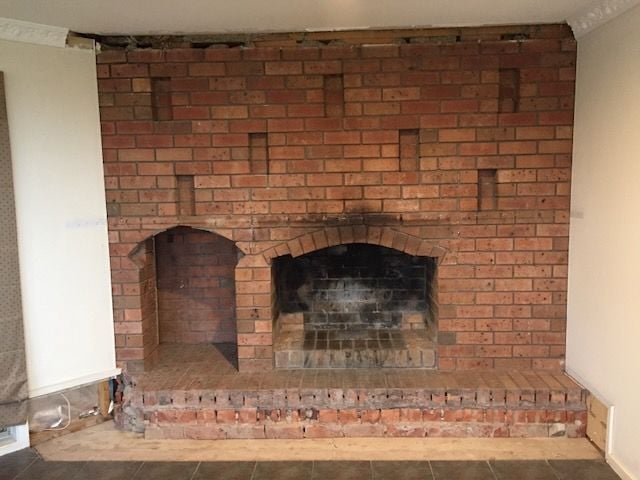
Remove the bricks from the original solid hearth Using the SDS hammer drill on stop rotation mode as well as hand chisels and a sledge hammer. The cross-strike pointed end of the Kango one is excellent in efficiency and reduced the vibration through my body compared to the standard flat faced ones. Full body PPE is a must during this process.
I then spent another day just in the cleanup
Step 3
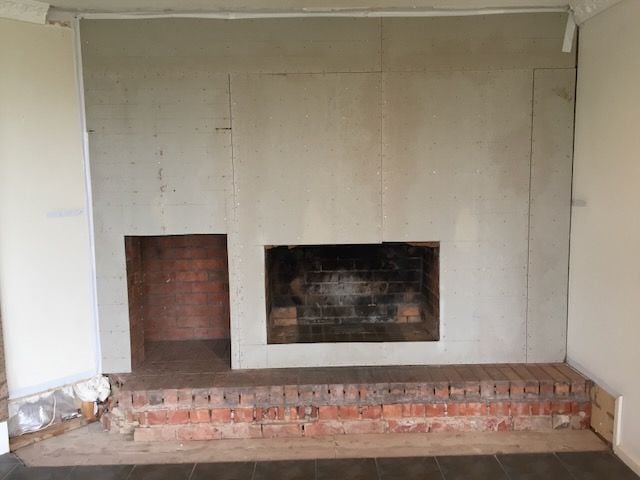
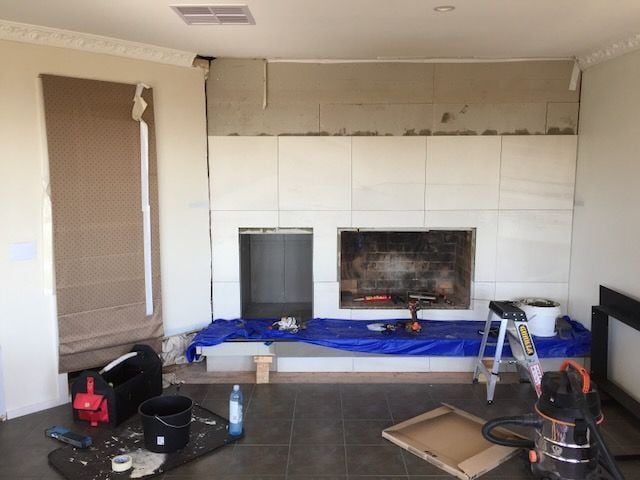
I used a combination of concrete nails and the heavy duty masonry adhesive to fix tile underlay to the brick wall taking the opportunity to change the shape of the both the fireplace and log store space to a more modern rectangular look.
Step 4
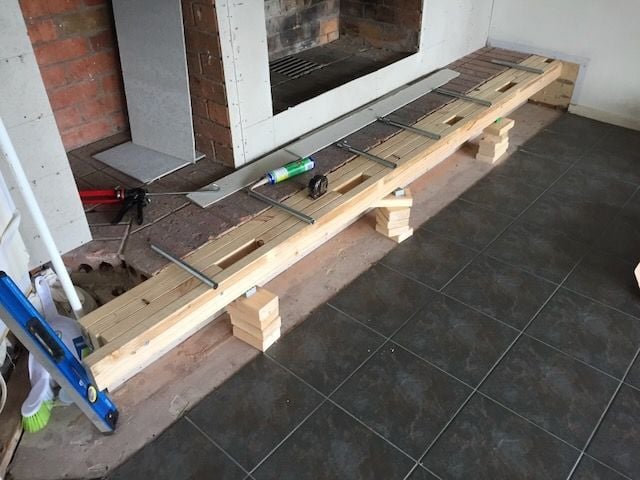
The hearth frame was made by packed together several layers of 90 x 45 pine with both liquid nails and bugle screws using the impact driver.
I used blocks to hold the hearth frame in place while I drilled 20mm holes through, scoring the bricks behind. This marked the spot for the 20mm masonry holes.
Using the landscaping adhesive in both the holes and on the rear of the frame, it was held back into position.
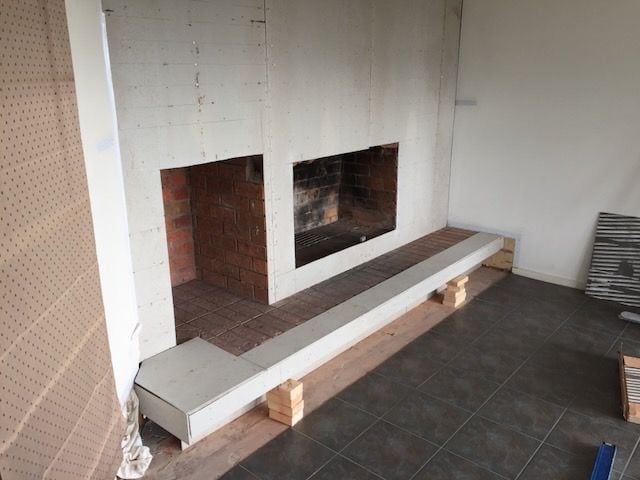
I then drove in the 19mm steep tubing which was cut to 440mm lengths with the angle grinder.
The frame was then covered in tile underlay fixed with the cement sheet nails and left for several days for the adhesives to fully cure.
Step 5
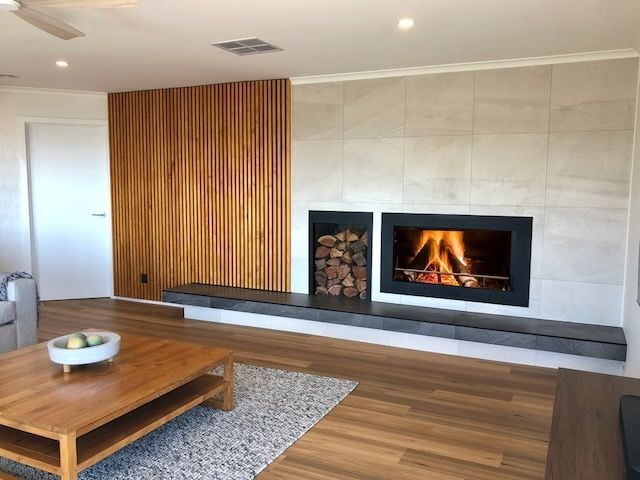
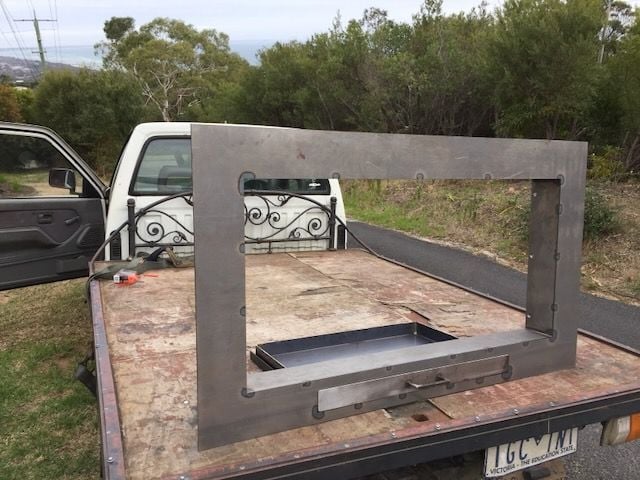
I then started with the wall tiles fixed with a heavy duty adhesive. I also had to use the SDS hammer drill in chisel mode to square of some of the insides of the fireplace internals ready for the steel plate inserts and the new custom facia with ash drawer that a very clever metal engineer mate of mine made up.
Step 6
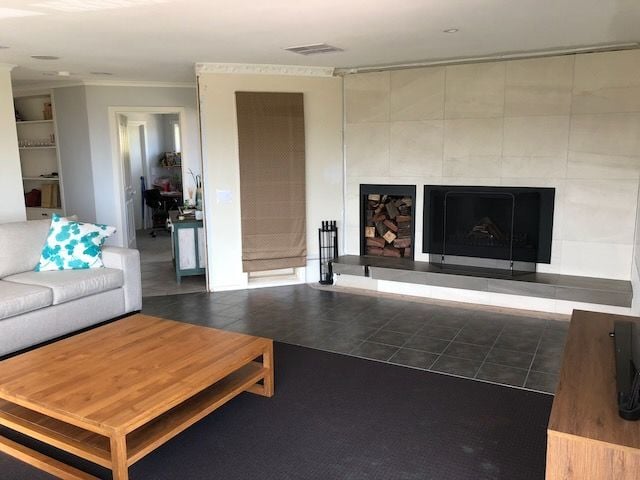
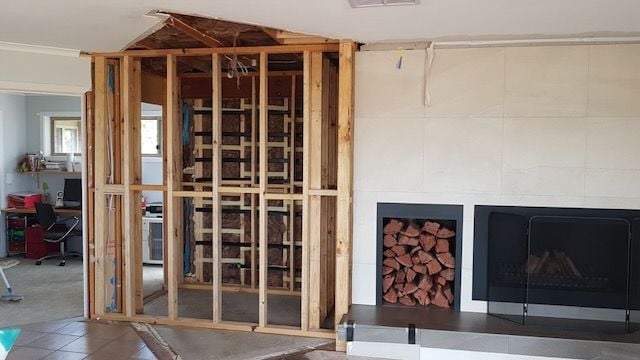
With stage 1 completed, it was time for stage II, which was to demolish the angled left hand wall and build a new straight one.
The space behind was originally the main entrance but at the back of the house. Any wonder I could never find my deliveries 😫. The new main "Front" entrance was another project yet to share.
The old entrance became a WIR for the bedroom that never had any storage, so two issues were resolved.
Step 7
Here's where my designs on the fly come in to effect, because now I thought the wall was going to need some bling. So, I decided to extend the floating hearth, which would have been a lot easier if I hadn't completed that end of the tiling!
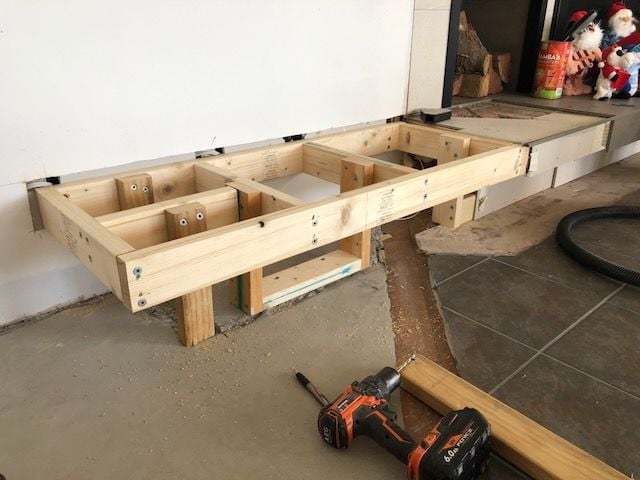
Step 8
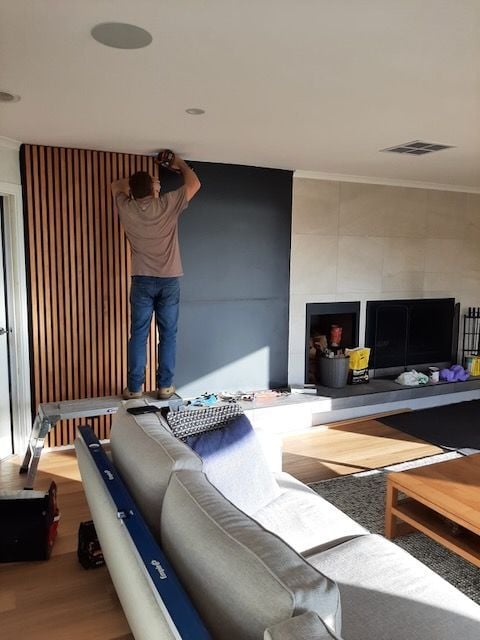
After painted the wall black, I used 38mm x 19mm pine to make a decorative feature wall. But this was before Bunnings brought out this product which would have been far cheaper and a job done in about 1hr! Pre-made acoustic panelling in 3 finishes, how good is that?
Now I'm looking for projects where I can use it. Check out my project "Alfresco Feature Ceiling Panelling".
I love feature lighting so I took the opportunity to install LED strip lighting that was disable under the hearth which you can see on in the 2nd photo.
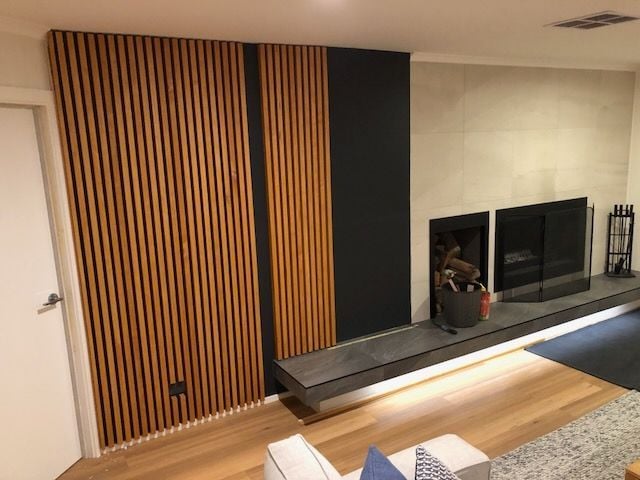
Step 9
There is some fast forwarding this photo as the floor has been done, but this was well after other walls in the living room were reconfigured and windows and doors changed over. Yep another project!