We bought a very dated 70's home with great potential but needing a LOT of work, because the challenge was to completely transform each closed in space into a continuous open flow that would also maximise the ocean views. There wasn't a wall that wasn't going to be impacted in some way.
When planning a full renovation to this scale, each room change impacts others so, there needs to be thought in to the order to which to do first. In most cases it requires temporary (which means months in real life) disruption to neighbouring rooms in order to complete the main project at hand.
In this case, the diving wall between the main bathroom and dining needed to be partially removed and rebuilt. A small diving wall to the kitchen also had to be modified, as that space was also being worked on.
So here is what it looked like and how we transformed it . . . . . . . .
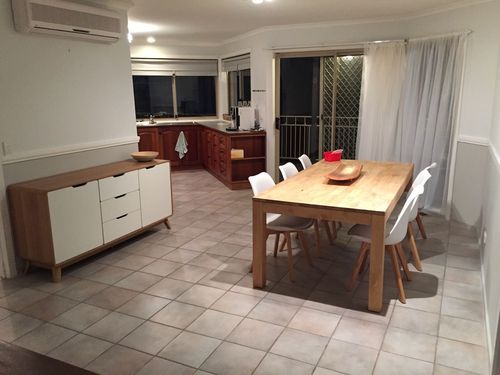
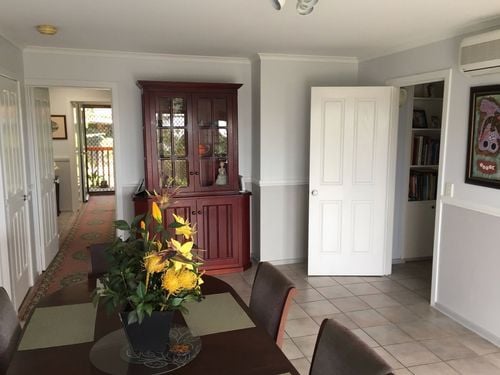
Steps
Step 1
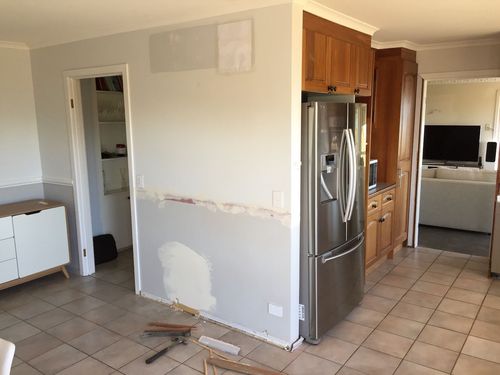
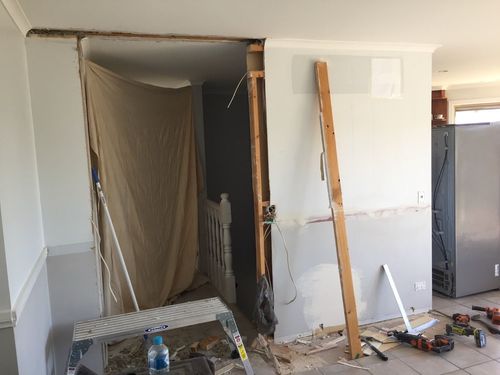
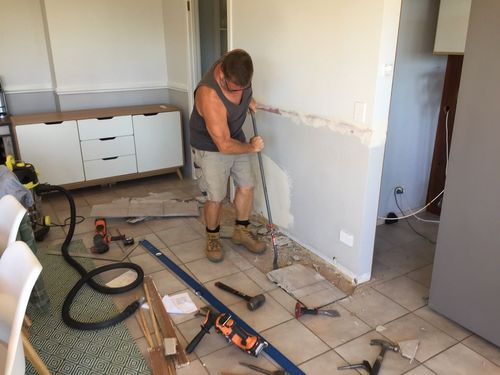
The first step was to hang drop sheets to protect the other rooms from debris as I needed to remove a section of the floor tiles back to the yellow tongue as I intended to extend the wall in to the dining room to make the kitchen bigger. I used a grinder with a diamond wheel to score a square section of 4 tiles and underlay and then pry them up as best as possible to reduce cleanup.
The split AC unit was disconnected by a plumber so I could remove it. I had already had both ducted heating and an Evap system installed.
There was a small linen closet that was half taken up by the original return air vent for the ducted heating. So I deleted that for just the vent. The top cavity space was then to be repurposed on the other side for the future WIR reno.
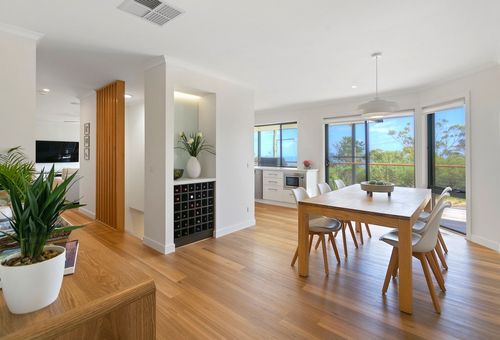
The headers above the doorways were removed and the openings taken to ceiling height to create the open flow between rooms and spaces.
Step 2
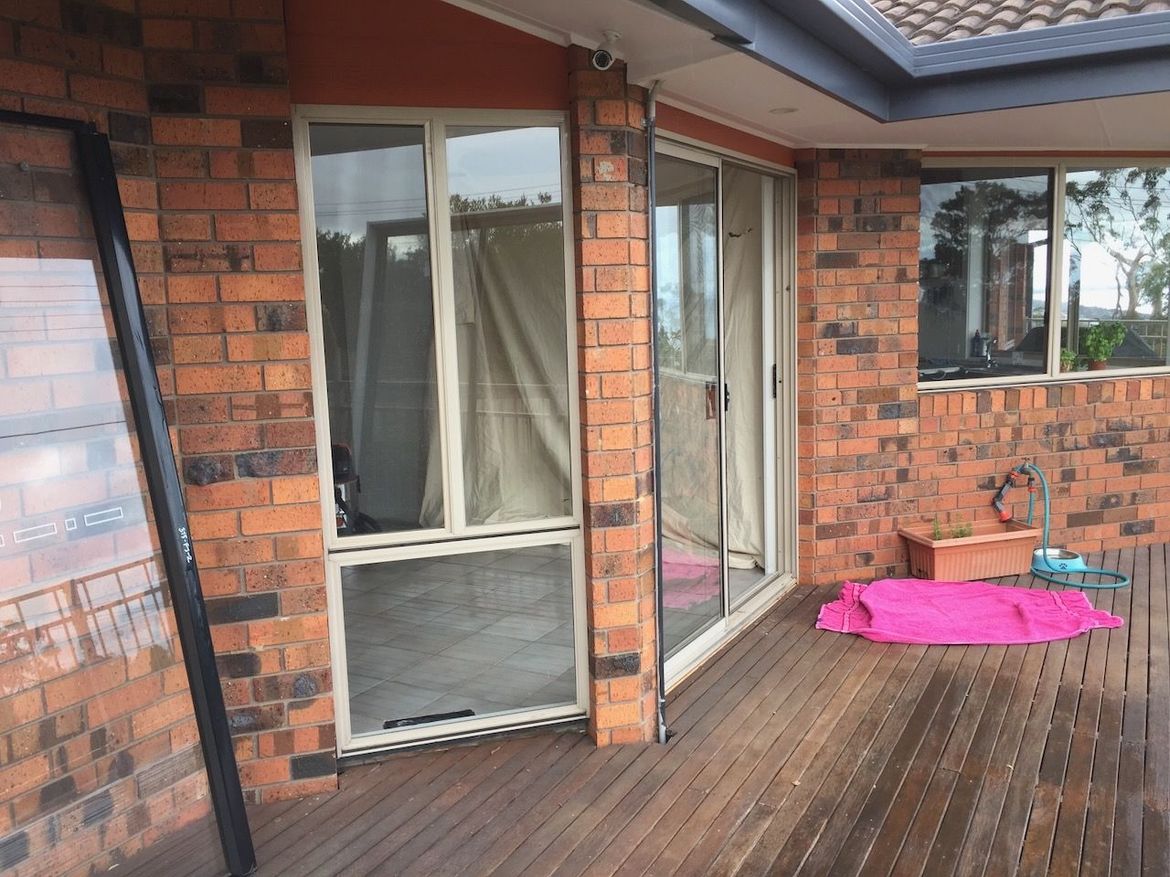
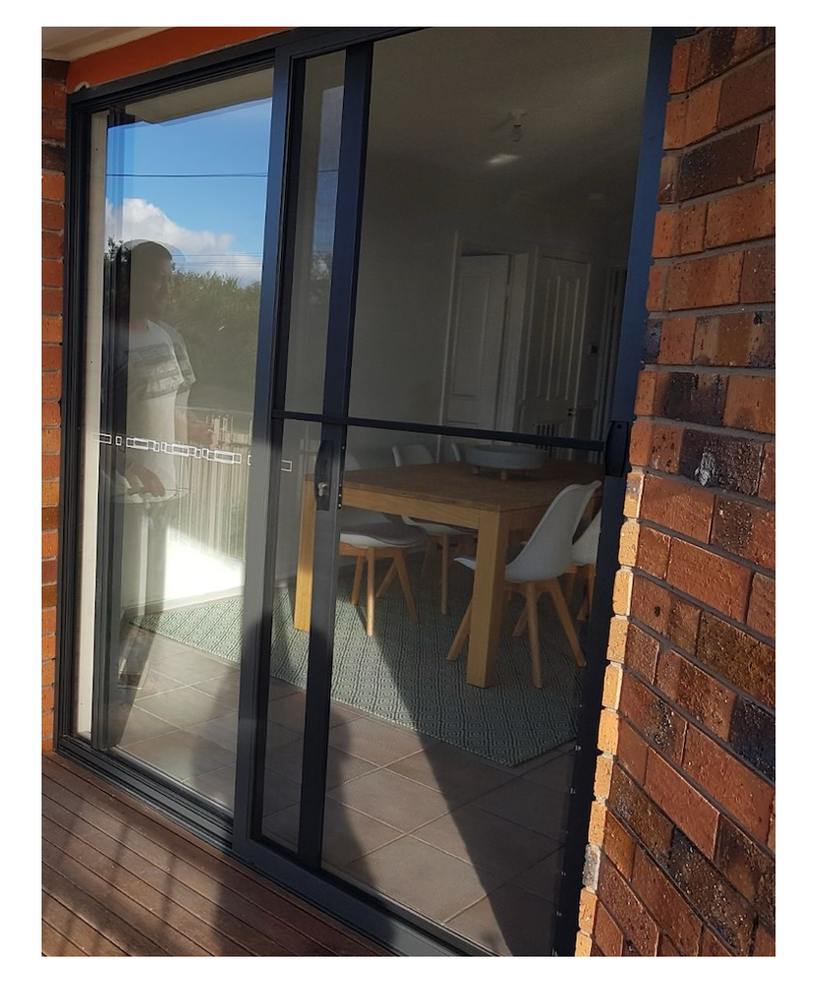
Next was to replace the old slide door and sliding widow with new colourbond finished ones and change the window to a more practical awning opening.
Step 3
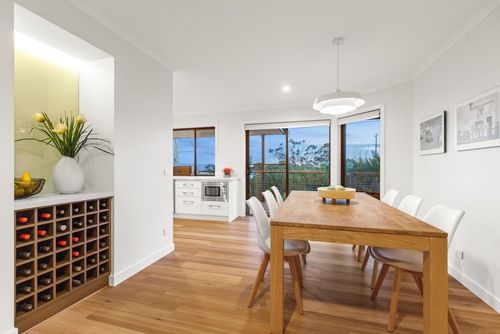
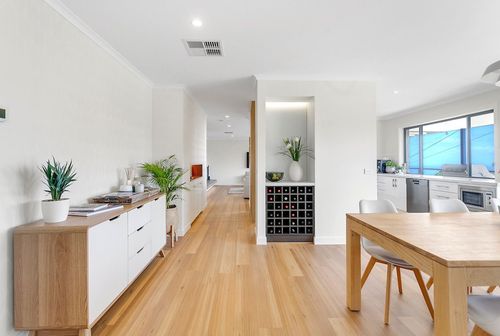
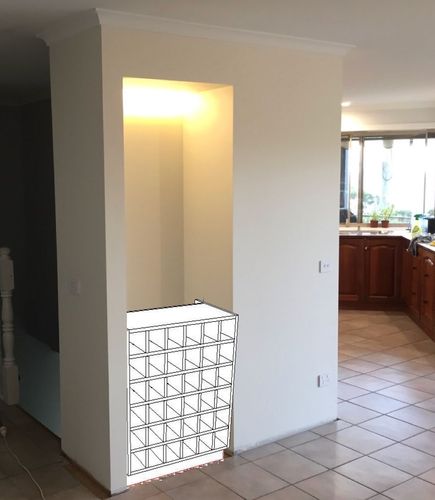
My wife and I love our red wines, so it was a no-brainer to include a wine rack and make a feature out of the space.
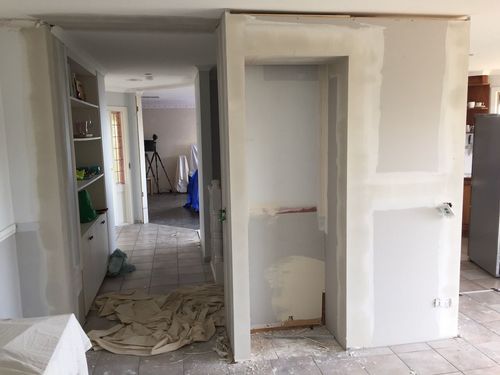
When I boxed out the new wall I incorporated a cavity which will have the wine rack on one side and provide the additional space required for our fridge on the kitchen on the other side.
Sparkies were called in do the rewire before I hung the plasterboard and stopped it up. I used a plasterer mate of mine to square set the cornices which I had removed and the external corners to get a real sharp finish outside my skillset.
Step 4
I bought timber veneered panels that I then used to build the wine rack.
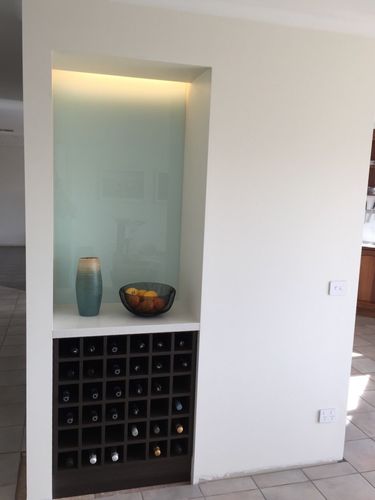
I love feature lighting so, an LED light strip was installed in the purpose built cavity above and connected to a TAPO smart plug being part of our smart home system. It was programmed to come on as a night light and set times am and pm.
I had pre ordered stone bench tops for the kitchen which I paid for long term storage to hold the rise price until I was ready for them. I lucked out and there was enough to have cut and polished to fit in my wine rack cavity.
I then installed a semi-translucent backing glass to enhance the lighting.
Step 5
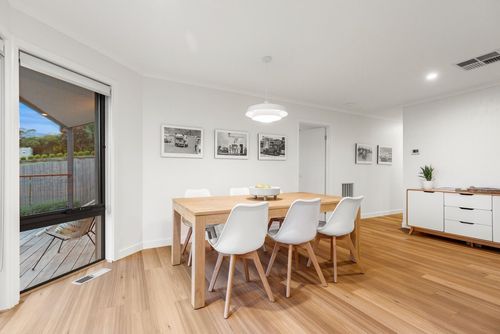
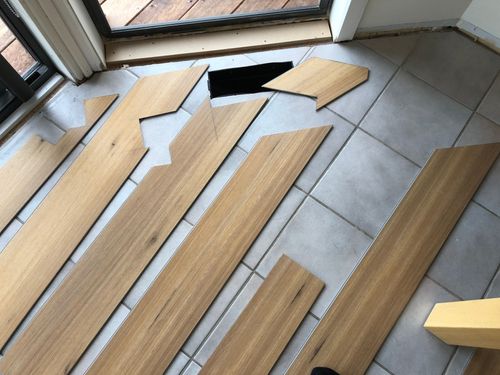
Next was to install the floating floorboards and skirting just to cover the dining area. Eventually it would extend around the kitchen and small top of stairs hall through in to the living space.
I chose a composite product with an integrated rubber underlay. These boards were mitre saw blade killers. As in very abrasive and dulled the blade very quickly and added additional unexpected replacement,ent costs.
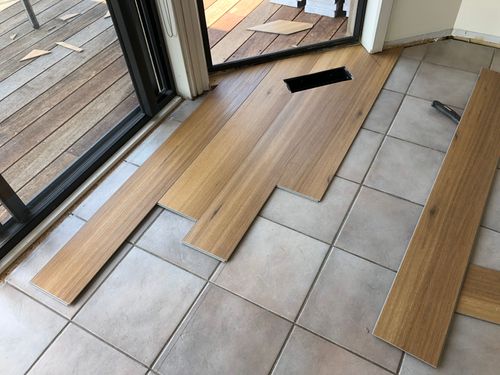
The challenge in laying these boards was it needed to be mm perfect in a 360deg path where 3 floor spaced meet the fourth and will click in to place with just a tape measure! Dining split throughout the kitchen and hall and then meeting up in the living room.
I used a 2400mm level to check for high spots in the tiles as I floated the floor directly on top. High spots were honed down with the grinder and a dual diamond cup disc.
You might be thinking why not lift all the tiles? Well they went throughout the entire top floor with exception of the 4 bedrooms. So they were staying!
Step 6
With the floor done, skirts and arcs were installed and painting finished the job.
The photos show sneak previews of the hallway and kitchen makeover projects yet to be shared.