It's a well accepted best practice to replace fascia board when wood rot (or damage) has been detected, fascia board neglect can lead to many other forms of structural damage however sometimes it may prove difficult OR cost prohibitive to remove the entire board, this repair was completed with a "best outcome" & "zero budget" mindset, so no "Better Homes & Gardens" level of finish here.
All materials used were already surplus, repurposed, recycled OR left over from previous projects.
Materials
Scrap surplus timber
PVA Wood Glue
Galvanized Timber screws
Builder's bog (2 part filler)
Cabot's Mission Brown exterior/decking paint
Flexovit course sandpaper
Tools
Ryobi Multitool
Ozito PXC 18v drill / driver (PH2 Philips driver bit)
GMC circular saw
Bosch orbital sander
Ozito heatgun
Steps
Step 1
Cut out the rot!
Multi-tools are magnificent for detailed cutting where care & precision are paramount, a chisel would also work nicely, keep cutting (and cutting) until you find viable timber. ![IMG_20240713_155734[1].jpg](https://us.v-cdn.net/6038643/uploads/migrated-attachments/33d14aca5428f718828241890a94cc18.jpg "IMG_20240713_155734[1].jpg")
Step 2
Putting together that Jigsaw
Cut a piece of scrap/surplus timber to fit the area you've removed from the Fascia Board, trying to keep as close to the exact size and dimensions as possible, many test fits will speed up the "sizing" process.
![IMG_20240713_164135[1].jpg](https://us.v-cdn.net/6038643/uploads/migrated-attachments/628977031a4d0e67122504b48ecf8e38.jpg "IMG_20240713_164135[1].jpg")
Step 3
Address any underlining issues
The very end of the underlying support timber had become softened/weakened, so PVA wood glue was added to harden up the timber, drying time is dependent on the weather but a heat gun can be used to speed up the process somewhat.
![IMG_20240713_161323[2].jpg](https://us.v-cdn.net/6038643/uploads/migrated-attachments/22eb019ec5211991bbac0e33fa0a8abb.jpg "IMG_20240713_161323[2].jpg")
Step 4
We all need a little support
Attaching another smaller piece of scrap wood will provide additional points to fix the new section in place, apply a generous application of PVA wood glue to all mating surfaces.
![IMG_20240713_164612[1].jpg](https://us.v-cdn.net/6038643/uploads/migrated-attachments/92f0669a944f6b77cdf13a08f91c46b5.jpg "IMG_20240713_164612[1].jpg")
Step 5
Screw it in & lock it down
Use galvanized wood screws of sufficient length to ensure superior fastening of the added on section, once secure begin reattaching the Fascia Board to underlying support timbers along with any roofing you have disturbed to complete the repair.
![IMG_20240713_165704[1].jpg](https://us.v-cdn.net/6038643/uploads/migrated-attachments/c8b9108bca40b26464a61bb88180f6e4.jpg "IMG_20240713_165704[1].jpg")
Step 6
Time for the finishing touches
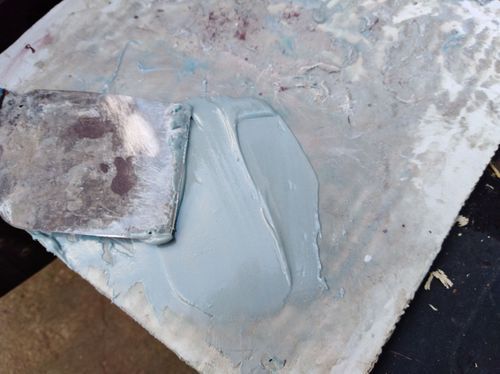
Builder's bog is now required to fill any gaps and uneven surfaces and to generally improve the surface finish, the quicker you want the filler to harden the more activator you add, mix to a consistent / uniform colour, cardboard is a good throw away surface to mix on but remember it absorbs moisture as well.
Step 7
Add, Sand & Repeat
Keep building layers and sanding until you reach a surface finish you can achieve an acceptably smooth result.
![IMG_20240713_175315[1].jpg](https://us.v-cdn.net/6038643/uploads/migrated-attachments/7597b1efa51824c20e14b4f8e7c3ac62.jpg "IMG_20240713_175315[1].jpg")
Step 8
Time to add a top coat
Apply exterior paint, allow to dry and apply a second coat, if extremely pressed for time a heat gun can be used to speed up the process but don't use it too close to the surface or it will boil and blister the paint requiring a recoat (after further sanding).
![IMG_20240720_165849[1].jpg](https://us.v-cdn.net/6038643/uploads/migrated-attachments/41447bcd7f1339de79032baa77477340.jpg "IMG_20240720_165849[1].jpg")


