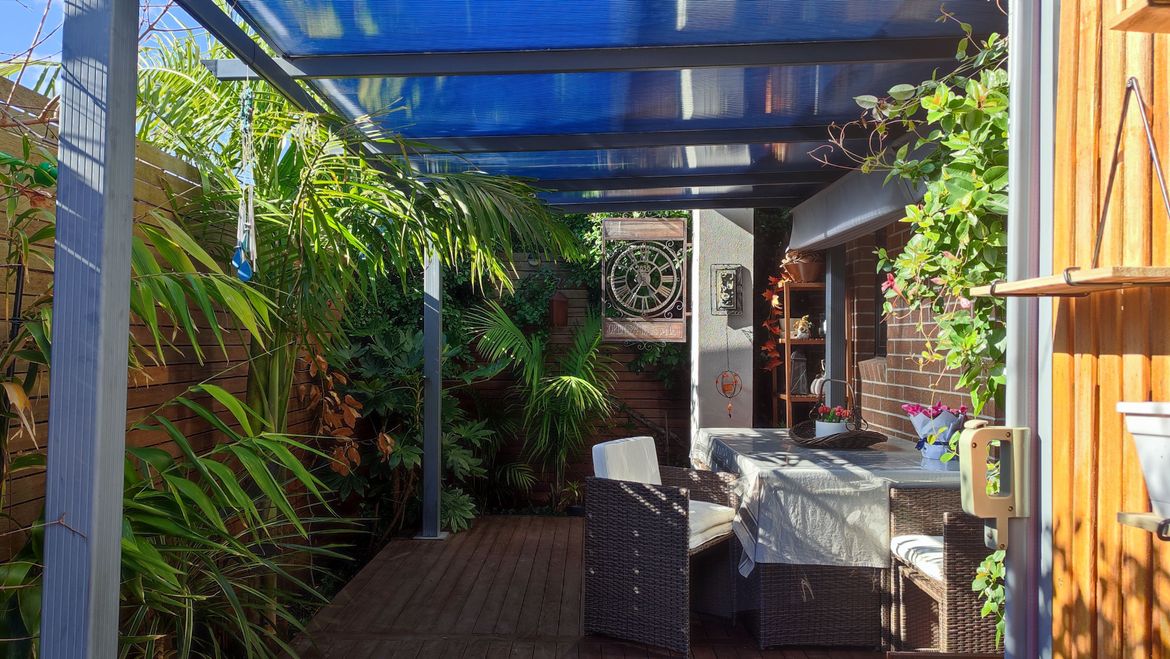
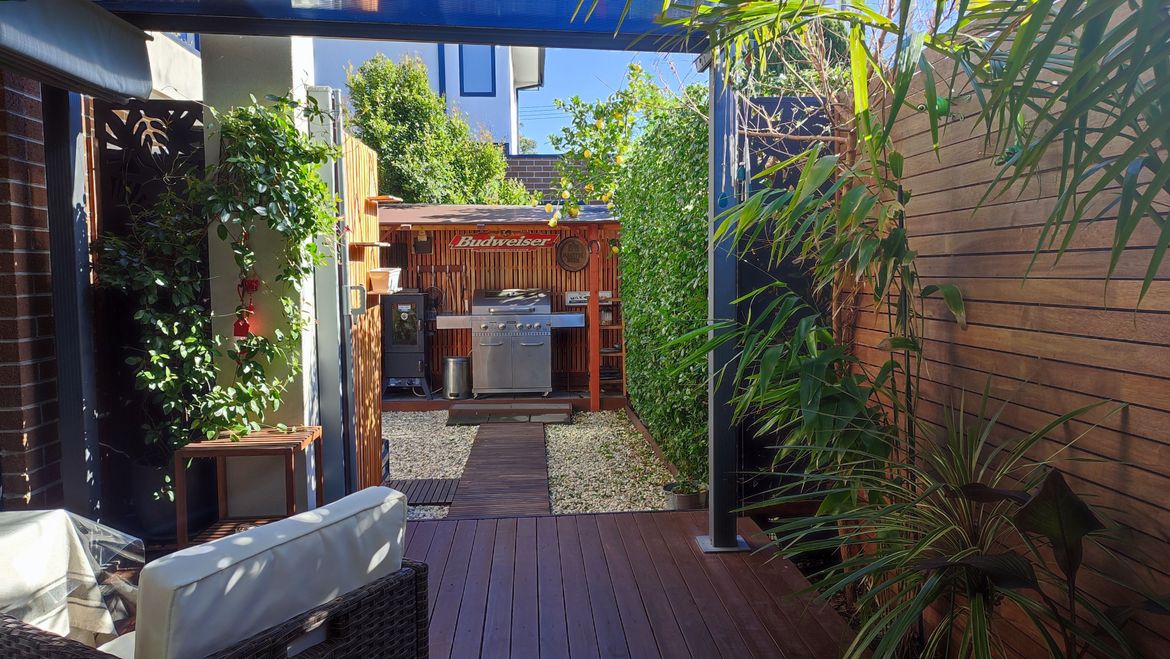
When we bought the house, it had a dull and narrow backyard with a few concrete tiles and some grass. We kept it like that for a few months, but it couldn’t really be utilized for anything, not even for sitting, since it was uncovered and the sun or rain was a problem. After a rain, the place was like a swamp. The initial plan was to install a deck and probably an umbrella or a sail for some protection from the sun and rain, but eventually, we went down the rabbit hole and ended up with a complete transformation.
Steps
Step 1
Due to my night shift job and the fact that we had just invested most of our savings into a new mortgage, I was short on time since I was able to work on the project during weekends and needed to save money at the same time. As a result, I had to cut a few corners. Some might perceive that I didn’t follow a “professional” approach to the decking and the rest of the project, but it worked for me. I ended up with a sturdy, weatherproof, and time-proof project while keeping the budget as low as possible. The project consisted of three stages: fence and rainwater tank dressing, deck construction, and BBQ area construction. I dressed the fence with edging merbau by screwing them onto the fence posts. After marking the two corners on the side opposite the wall and ensuring the deck would be square, I dug the holes for the stumps. I painted the stumps with bitumen and placed them in the soil. Instead of a string line, I used long pieces of framing timber to mark the exact desired height of the stumps and temporarily secured them with long screws to the wooden frame. This method worked better for me than a string line, as it helped me level the stumps and the deck immediately, providing a ready frame to work on. Once all the desired stumps and bearers were in place and at the desired depth, I secured the stumps with concrete, put the joists and paint all the timber with timber oil.
 The back yard before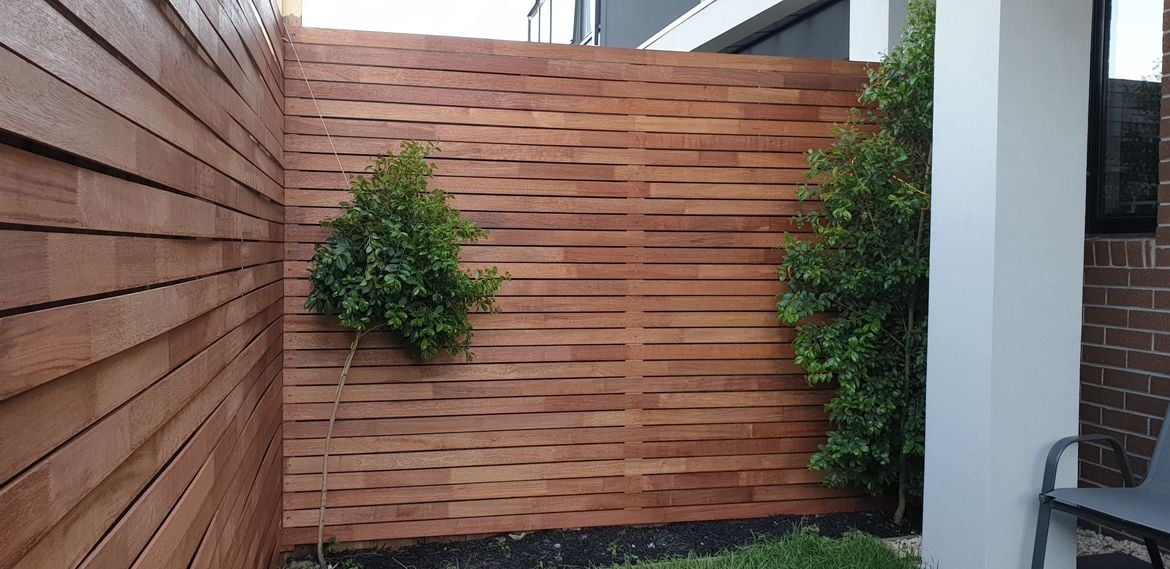
 Leveling
 First stage of deck framing
Step 2
I painted the finished deck with water-based merbau paint to make the deck waterproof and to give it the desired color finish.
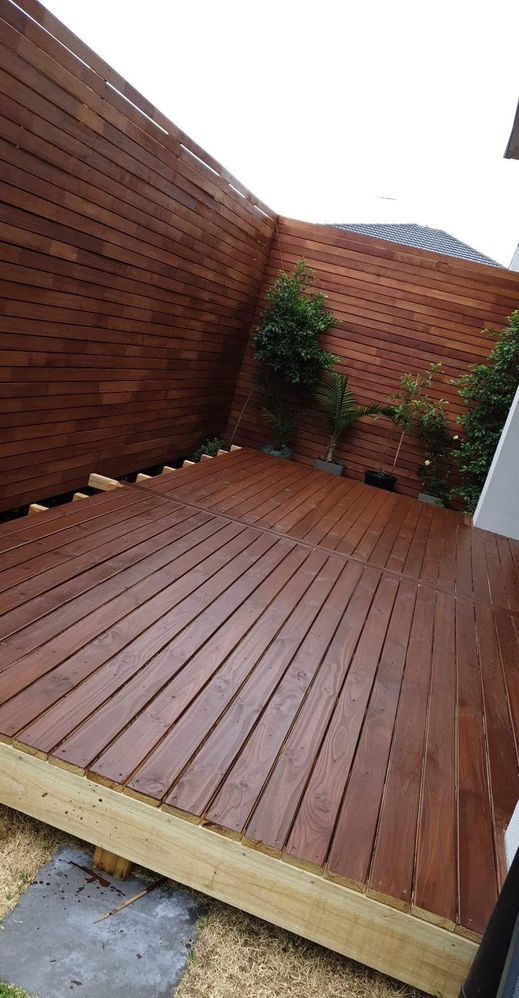
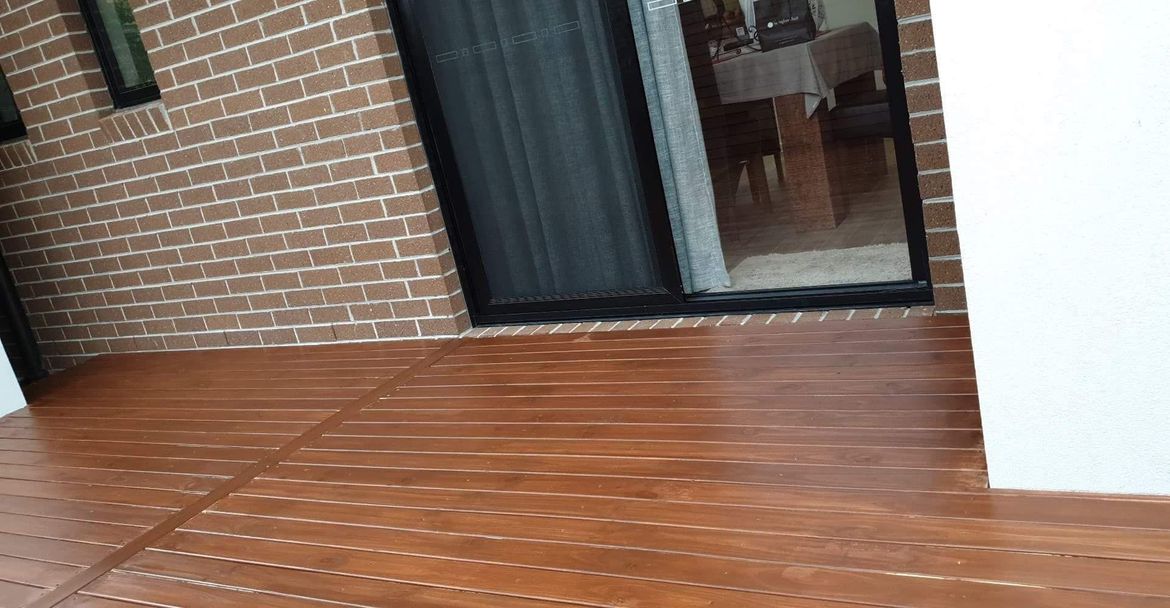
Step 3
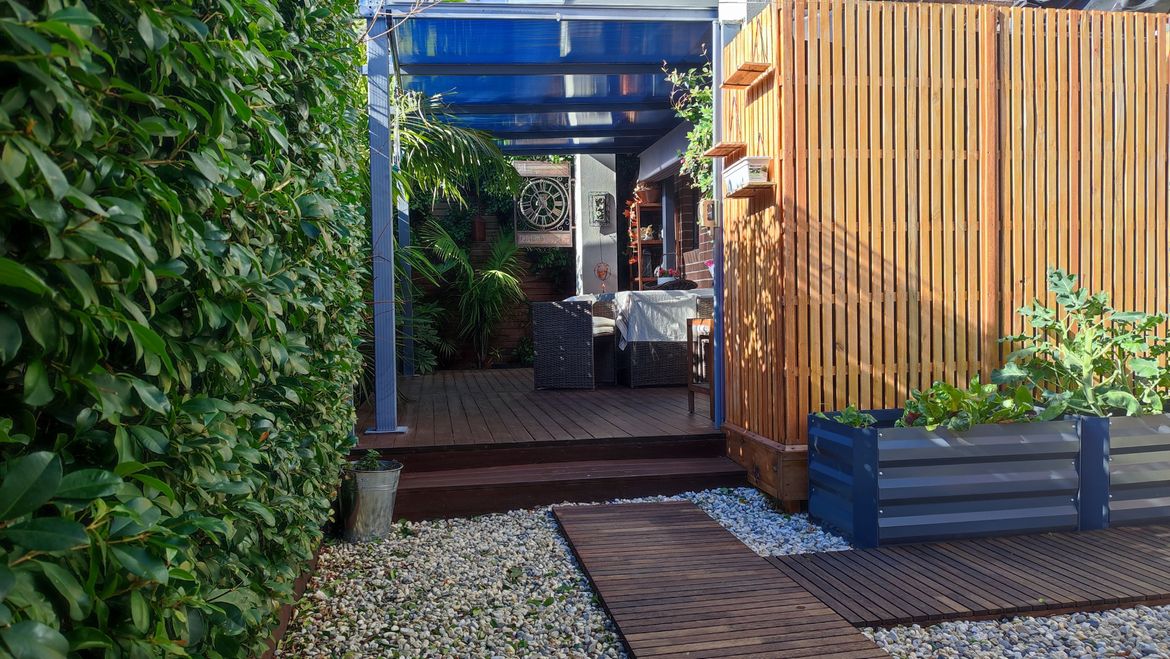
Then it was time for the installation of the pergola. I chose an aluminium semi-permanent pergola and added twin-wall polycarbonate sheets on top of it.
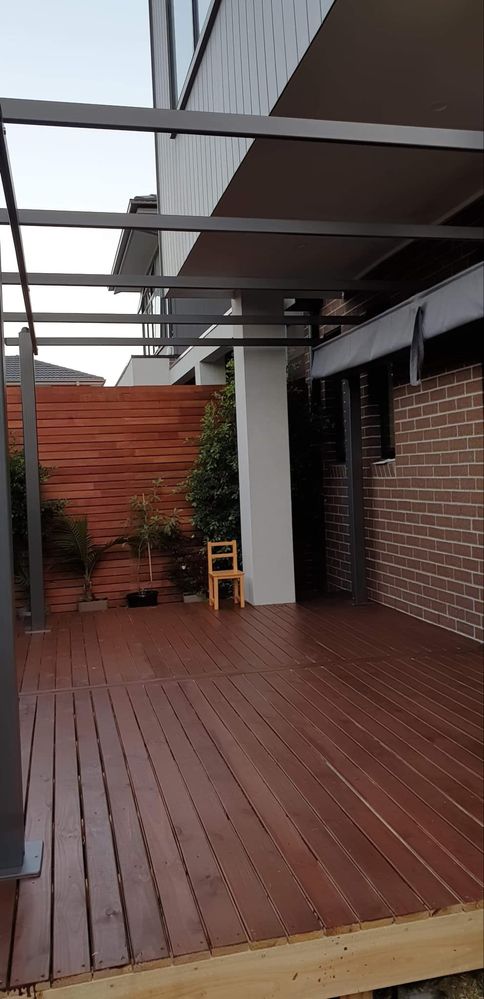
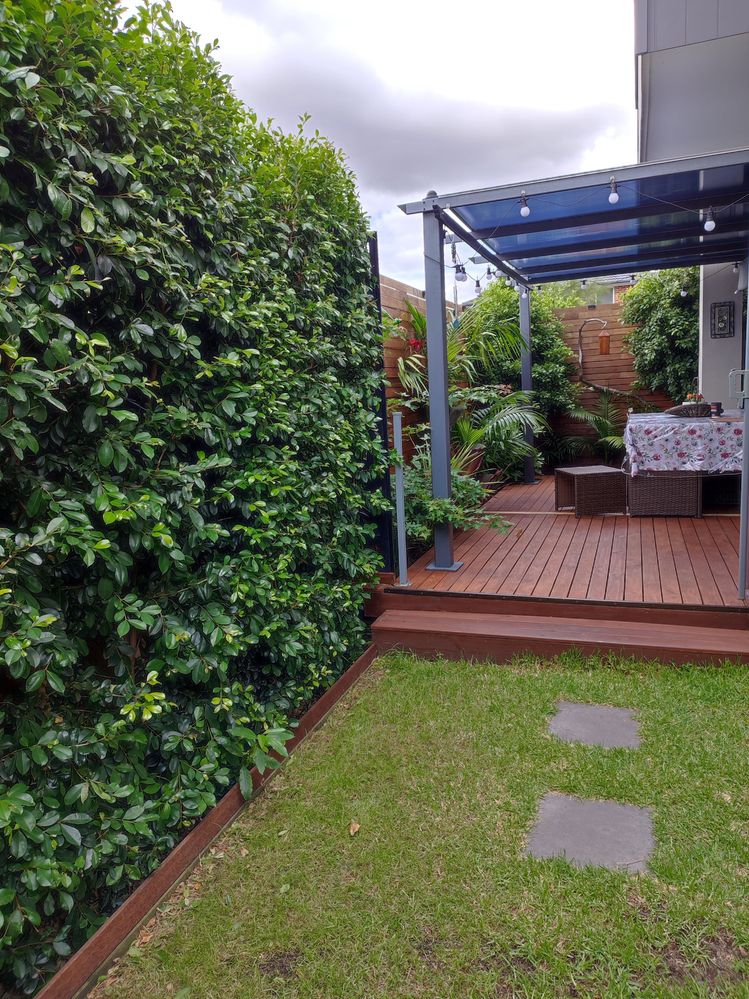
Step 4
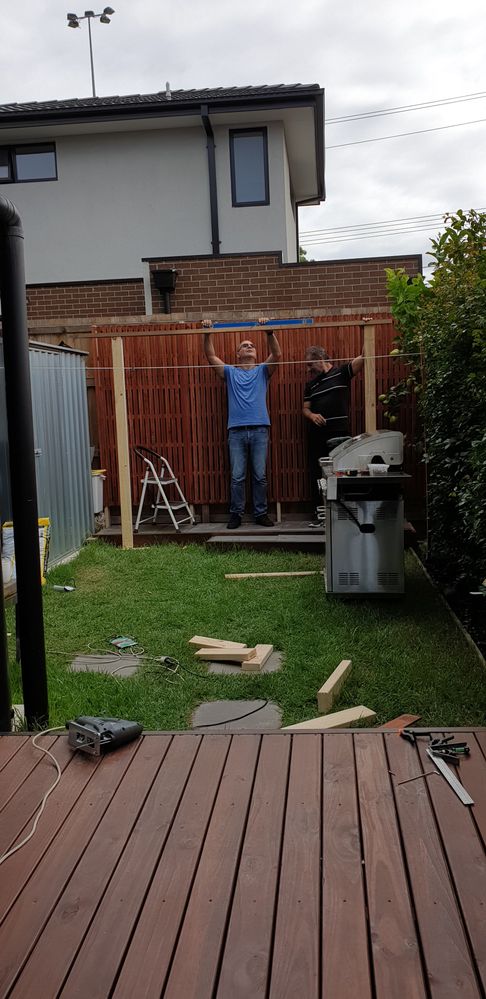
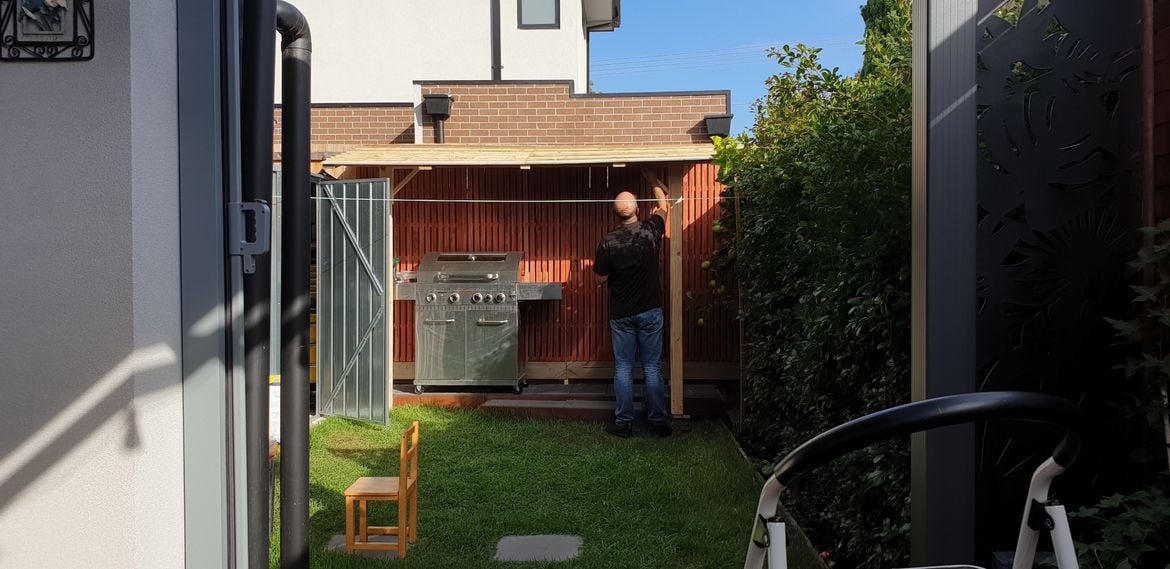
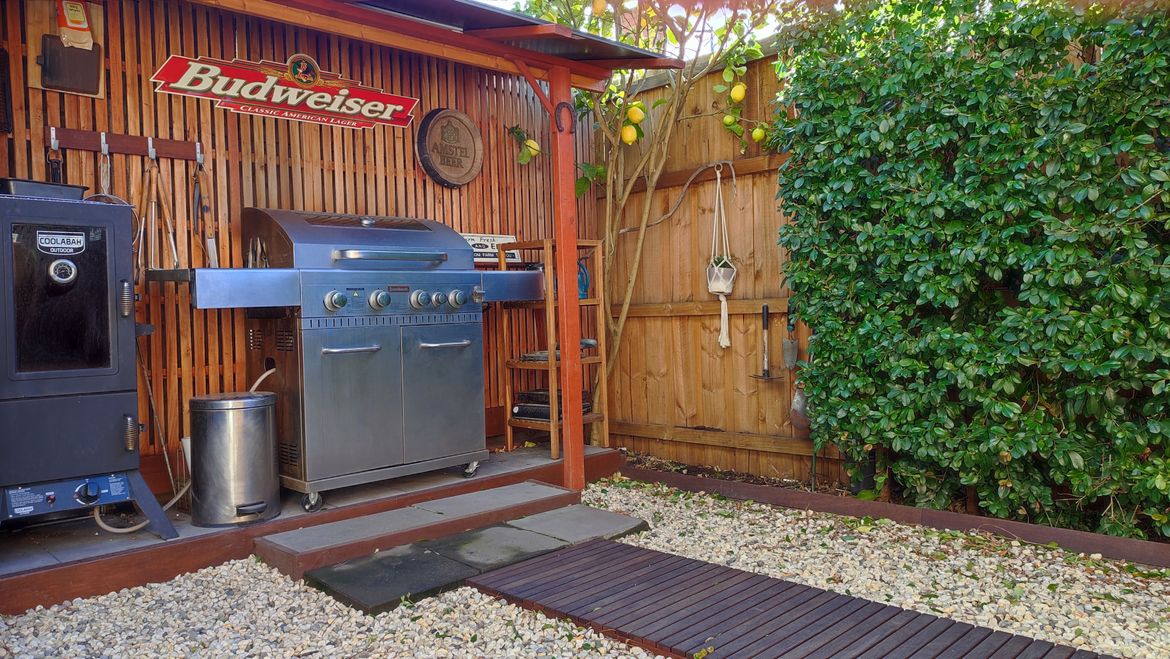
The next stage was the construction of the BBQ area and the screen for the rainwater tank. For the water tank and the back of the BBQ area, I used mahogany oriental timber lattice screens. When I finished with the base frame of the BBQ area, I laid concrete paving slabs as flooring. For the BBQ roof shelter, I initially used untreated pine slabs. However, I changed my mind later and replaced them with formply. Currently, I am in the process of finding some roof shingles to put on top of it.
Since I had grown tired of maintaining the lawn due to poor soil and rainwater, which made the backyard look like a swamp, I removed the lawn. I then laid tuscan pebbles and merbau garden fence panels to create a walking pavement.
Step 5
The entire project, from start to finish, took me a few months due to weather conditions and my available free time. However, in terms of actual work days, it took me around 6-7 days. The estimated total cost was around $3500. I’m quite happy with the result and, most importantly, my wife is happy too. And you know what they say about happy wives 🙂