Steps
Step 1
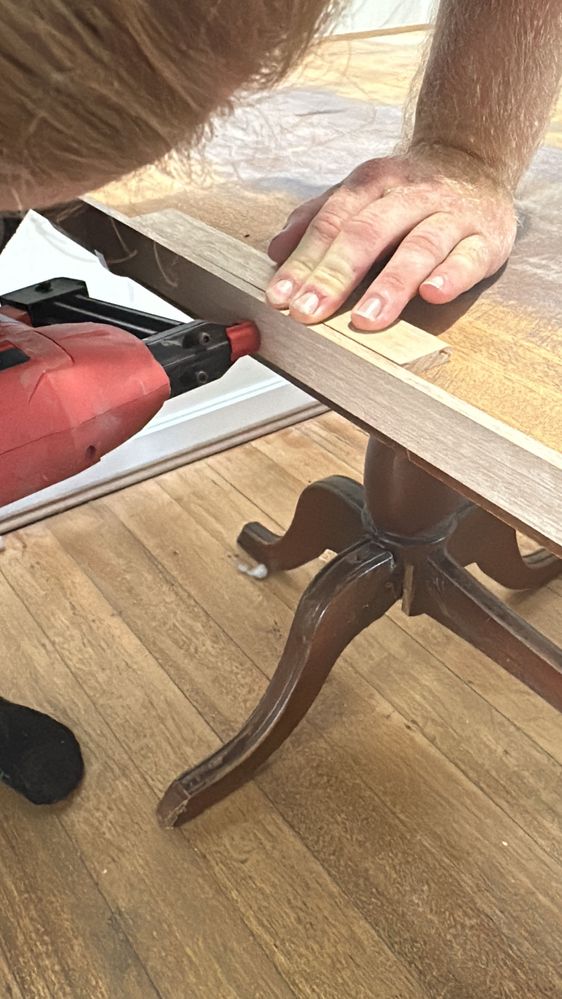
Add external trim and frame. Adding a frame is important to cap off the edges of the wood. Adding it before assembling the table top ensures a flush finish. As you can see we have used a template piece to ensure the correct height (8mm).
Use a nail gun or small nails to secure the trim to the surround of the table.
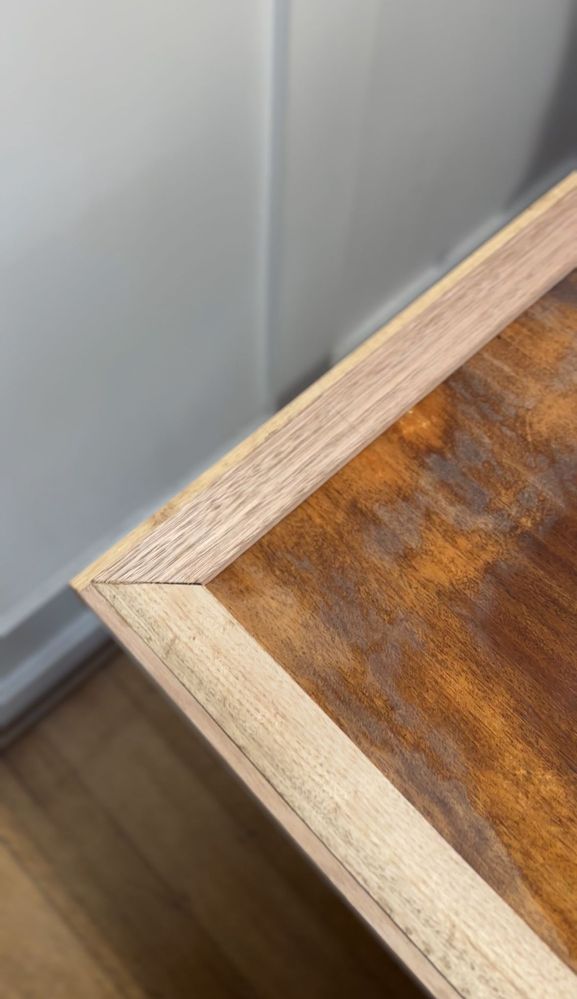
I wanted the picture frame look but you could just do the outer trim. If you like the picture frame, add the 45 degree mitred pieces the length and width of the table. Secure with wood glue.
Step 2
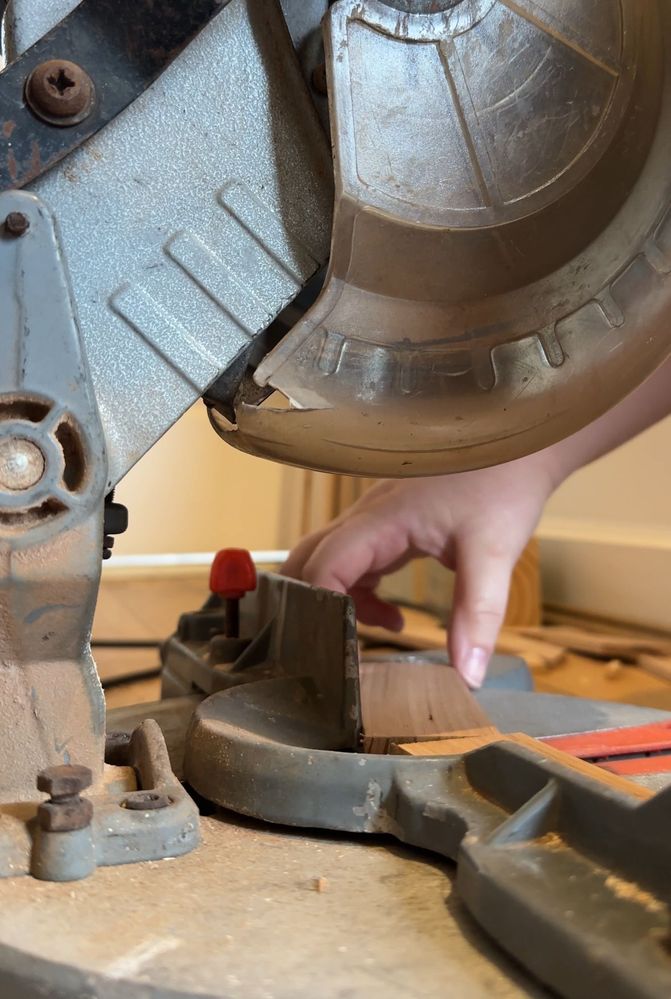
Measure and cut pieces.
Step 3
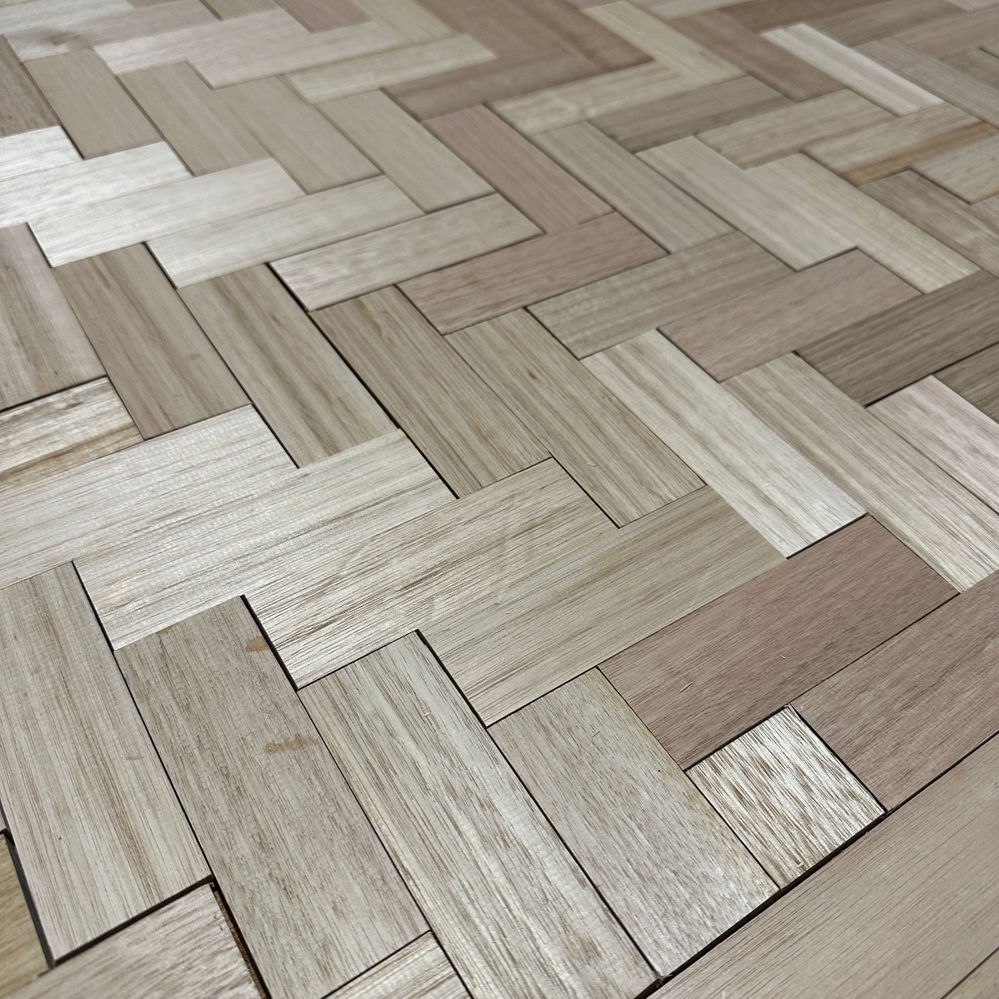
Lay out all the pieces in a pattern. I decided on 120mm pieces because I liked the tight look and pattern.
With Herringbone, the rule is multiples of the width (used 40mm pieces so measurements should be 80mm, 120mm, 160mm etc).
To work out how many pieces you need, work out the size of the table top in square centimetres (length x width, then divide that amount by the square cm of each piece).
There are templates online if you’re unsure. Filler prices of 80mm x 40mm and 40mm x 40mm were needed for this pattern. (Yes, it’s a lot of pieces!)
Step 4
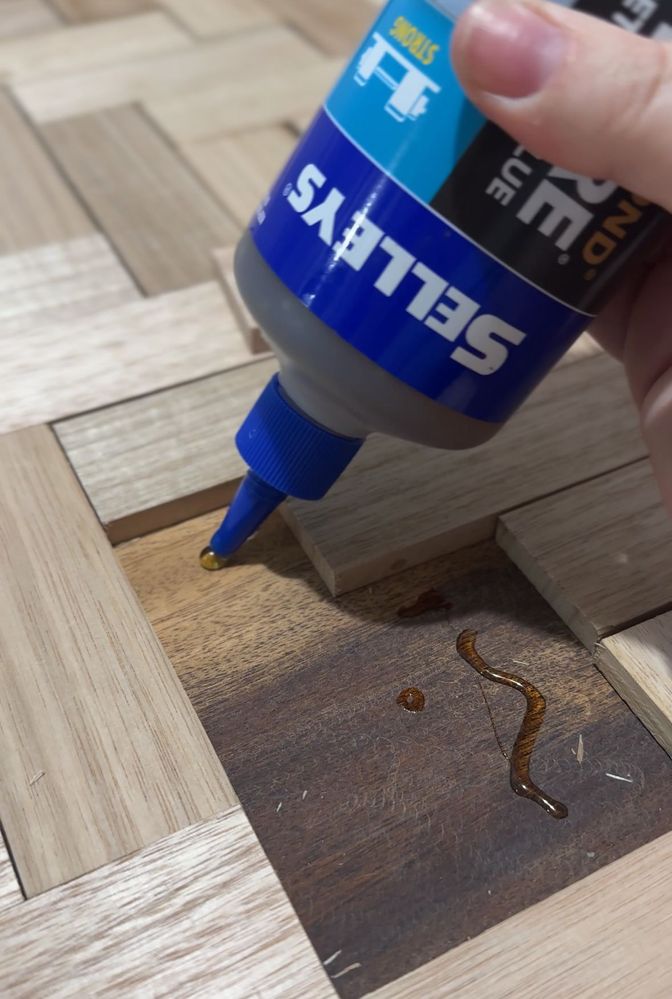
Glue all the pieces down.
Add glue, press down piece, lift piece up and then press down again.
The glue will foam and expand, that is normal, which is why you only need a few drops.
Step 5
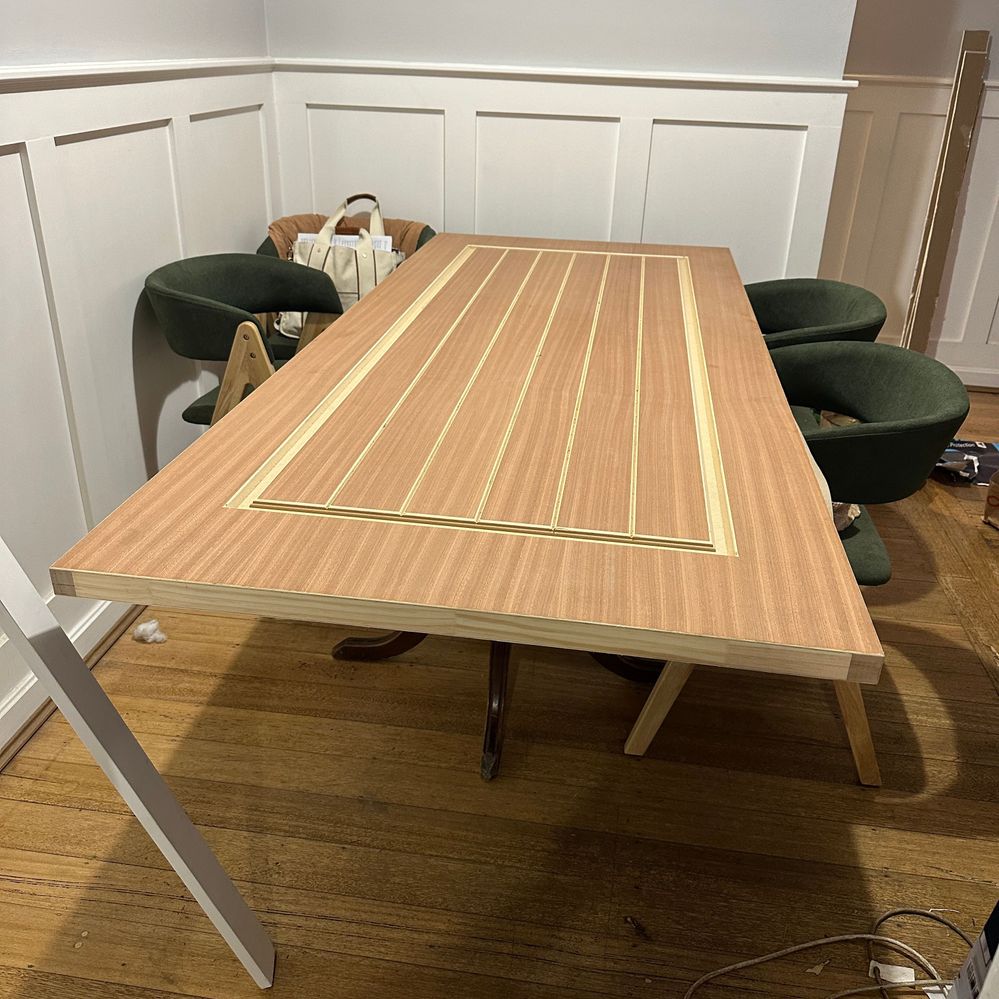
Weigh down and let it sit overnight. We had a heavy door on hand but you just need to add a few heavy things on the pieces to make sure they don’t pop up. This is probably not essential but I wasn’t taking any chances.
Step 6
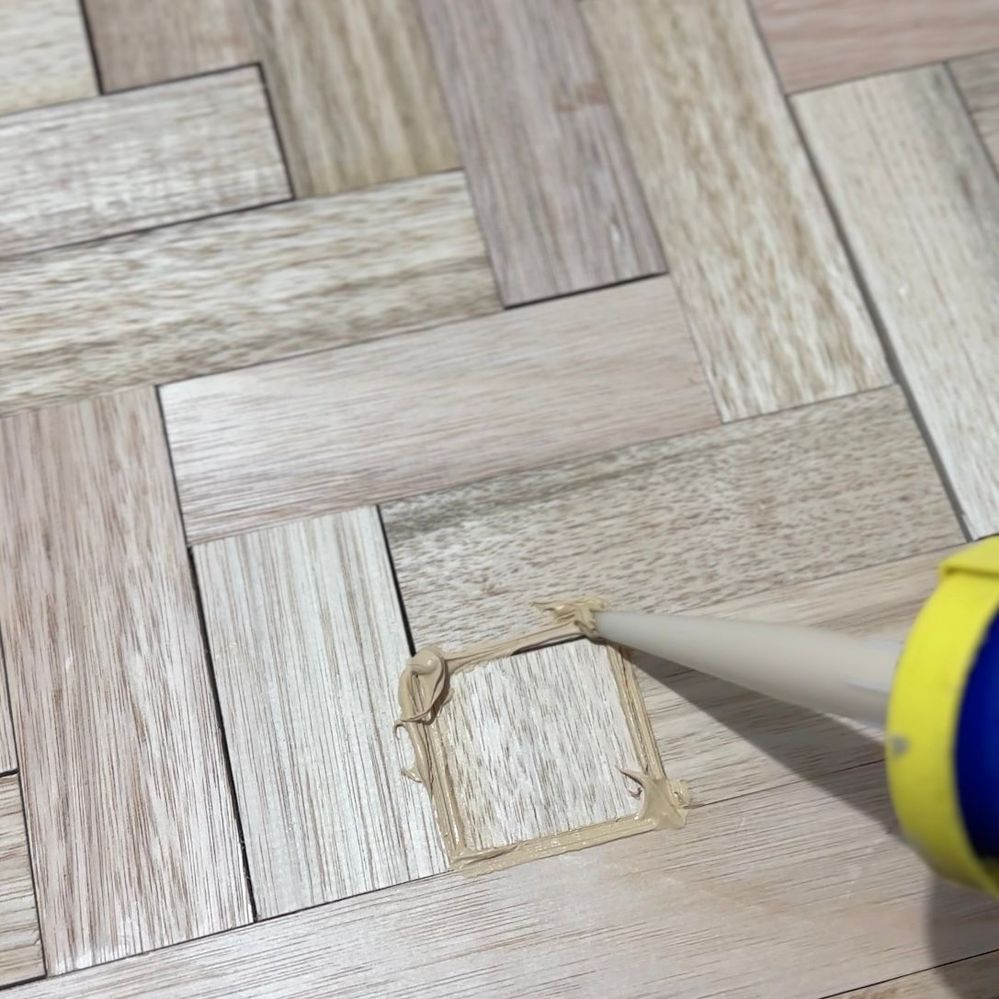
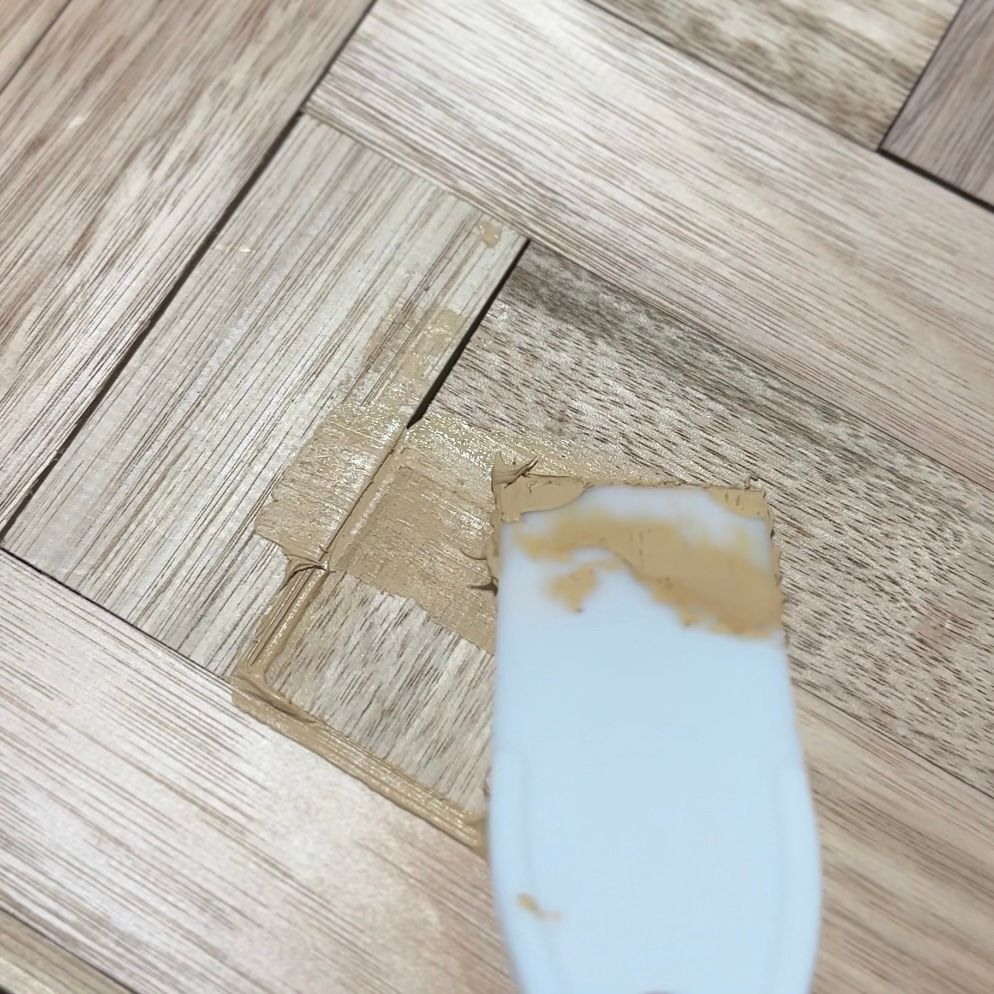
Fill gaps with silicone filler. Scrape clean and wipe with a wet cloth.
Step 7
Sand the entire table using a belt sander with 80 grit to take the top layer off. It was quick but not precise.
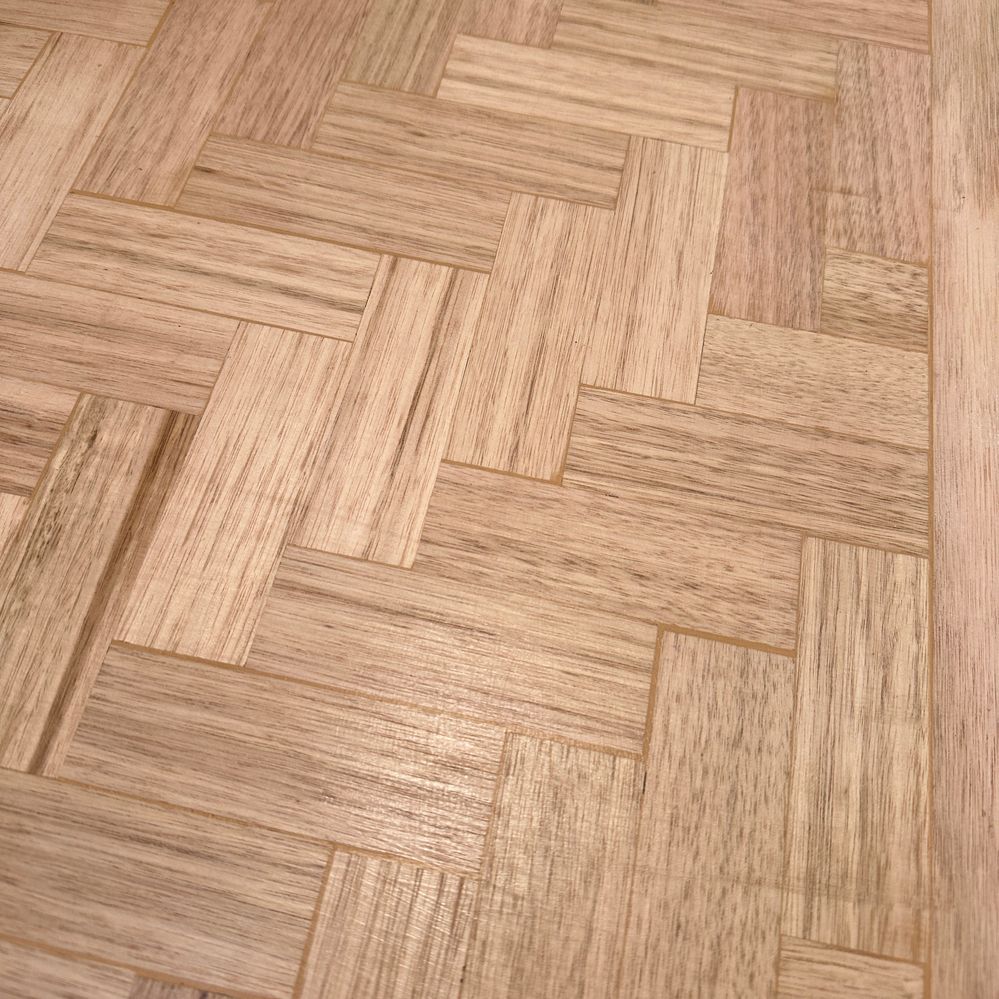
Step 8
Refill silicone tube in caulking gun if needed and give a light sand. If there are any pin holes or gaps you missed it’s time to fill them, then sand with the orbital sander. Used 120 grit then finished with 240 grit.
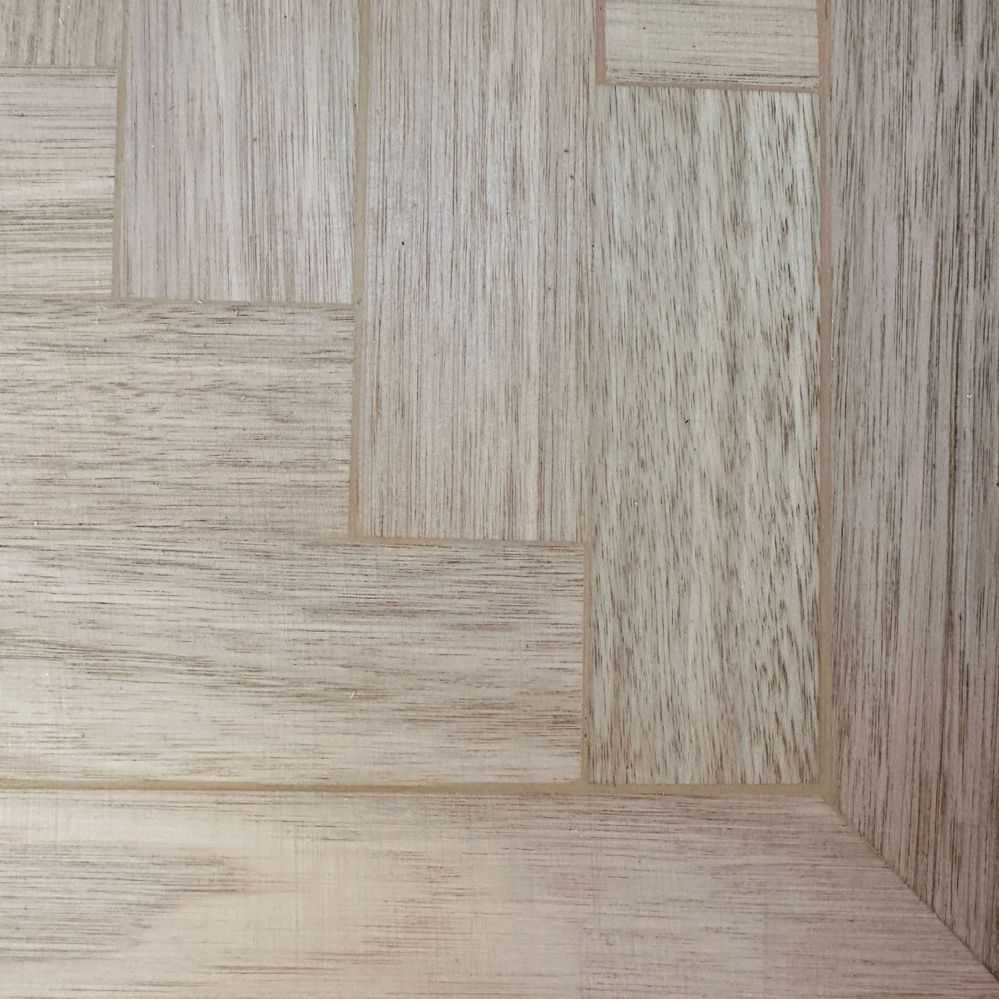
Step 9
Paint legs. Lightly sand to remove shine, prep with any undercoat / primer then paint.
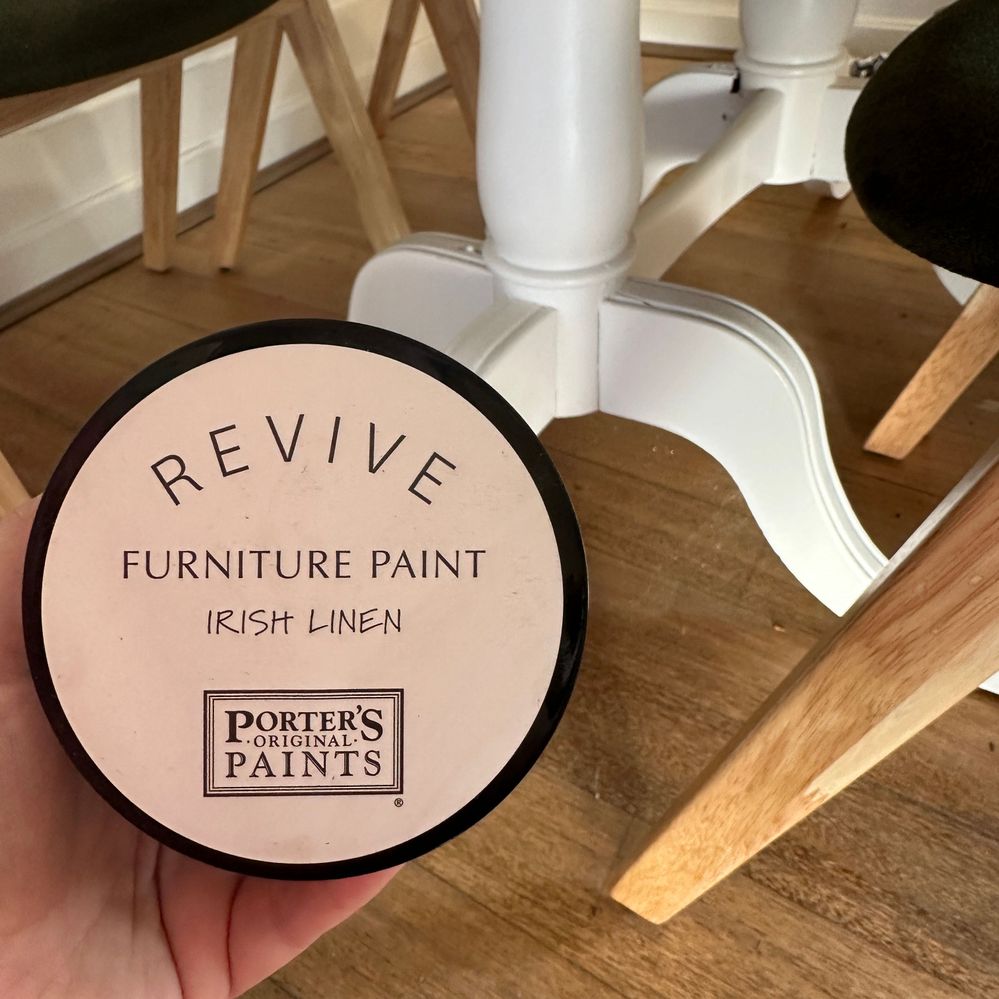
Step 10
Coat with Cabots. Lightly sand (240 grit) between coats.
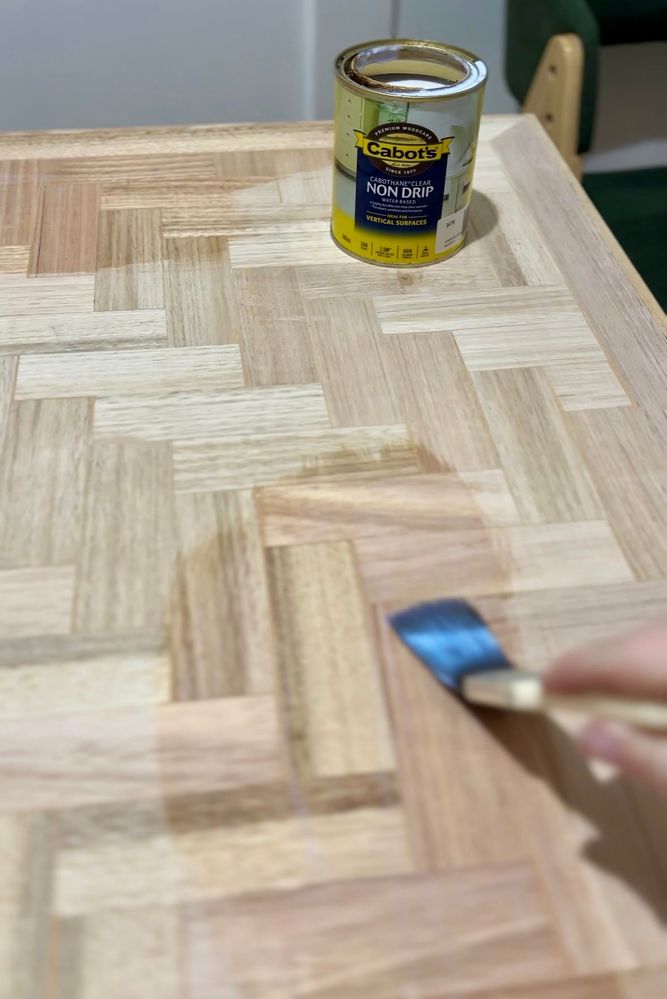
Tools and materials
Materials used in the project:
Tools used in the project:


