Steps
Step 1
As I geared up to cut the slab into manageable pieces with a demolition saw, I quickly discovered it was three times thicker than I had anticipated—definitely not a straightforward DIY job.
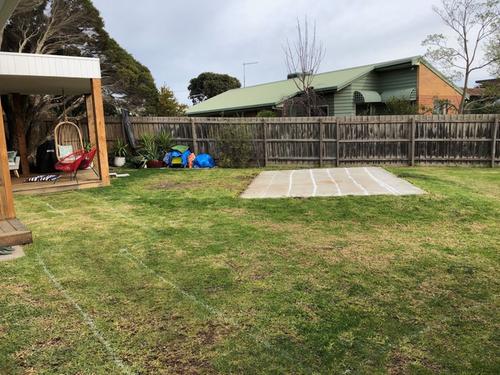
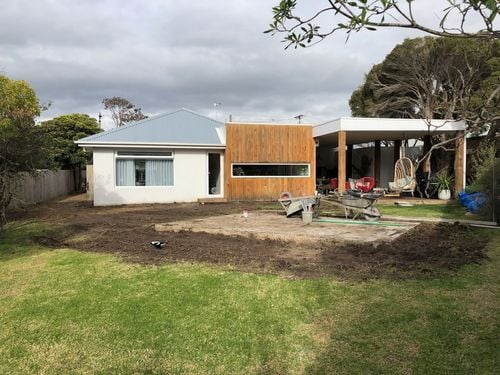
To make matters worse, I had already blocked off access for any heavy machinery, so I was stuck with a massive 6m x 6m slab smack in the middle of the backyard.
After a few months of head-scratching (and a bit of frustration), I finally decided to turn the problem into a feature—by building a raised vegetable garden right on top of it.
Step 2
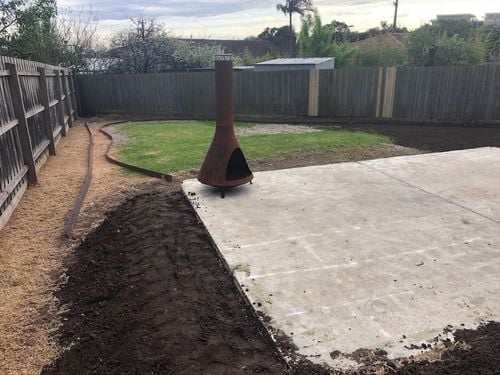
I stumbled across this flued fire pit on clearance at Bunnings and knew right away I wanted it to be the centrepiece of the space.
I moved it around to a few different spots before finally landing on an overall layout that felt right. I’m not one to draw up plans—most of my designs live in my head, with a few chalk markings on the slab to help visualize how it all might come together.
Step 3
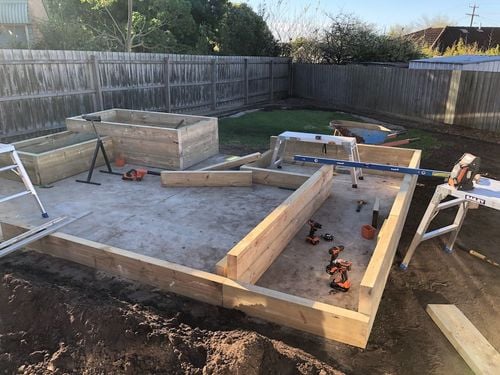
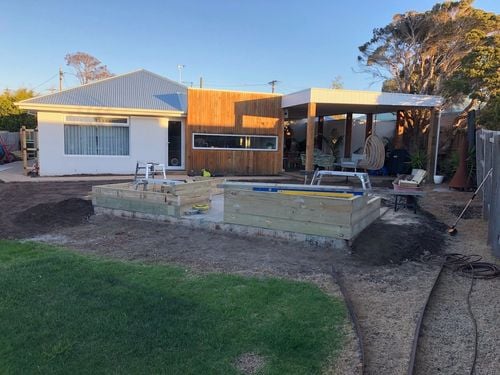
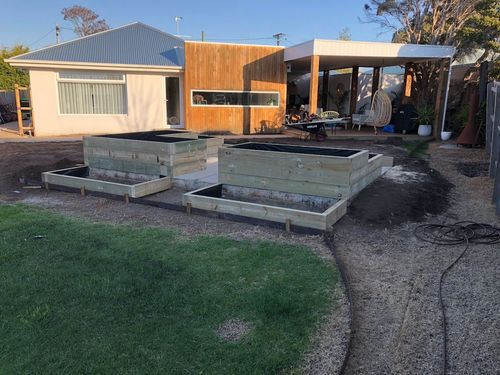
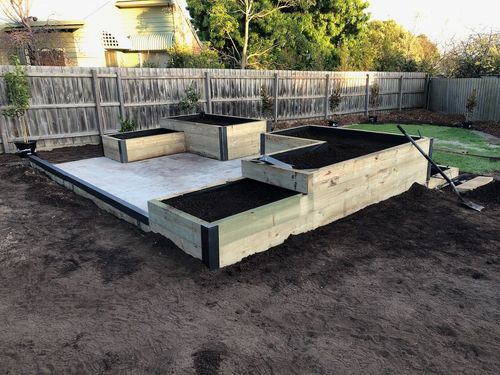
I ordered around 25 sleepers in a mix of lengths from 1.8m to 3m, all at 75mm thick. I went with 75mm instead of 50mm, as they’re less prone to warping or shrinking over time and tend to hold their shape better. To get clean cross cuts in a single pass, I used a 10" mitre saw instead of a circular saw.
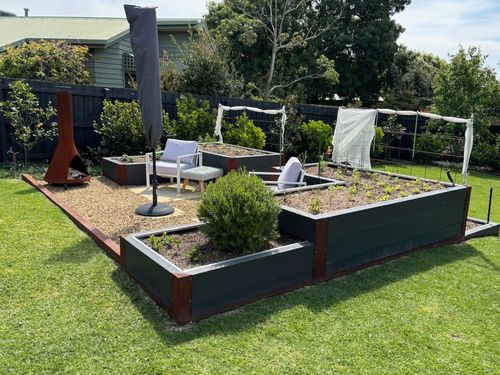
For scale, the box in the top left measures 2400mm by 1m. I pre-drilled the outer sleepers and secured each joint with 120mm batten screws.
Step 4
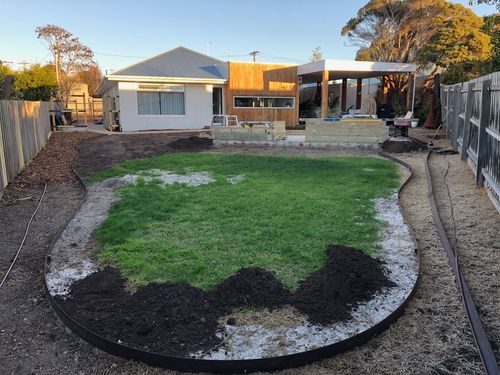
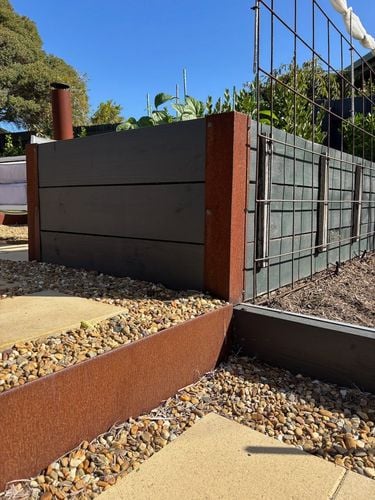
To get the most value out of the landscaping delivery, I also included 6m lengths of 100mm steel edging to define the new fence-line garden beds.
I also attached some of the edging to the base of the veggie garden sleepers to shield them from damage caused by the line trimmer.
Step 5
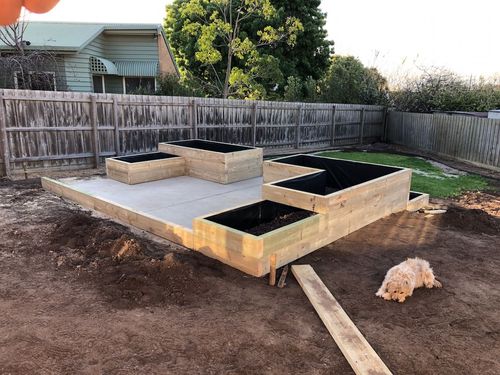
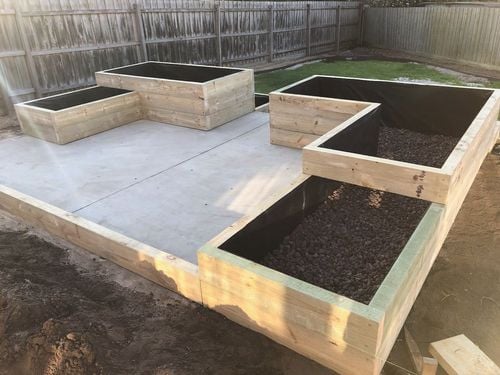
With zero help from the on-site forelady, I lined the inside of each garden bed with a double layer of builder’s plastic. This helps extend the life of the sleepers and prevents water and debris from seeping out between the layers.
I secured the plastic with galvanized T-50 staples using a cordless stapler. To allow for drainage and further protect the timber, I drilled multiple 16mm holes along the bottom sleepers so excess moisture could escape.
I also ran low-voltage cabling for future wall lights, along with irrigation tubing to the corners of all four beds.
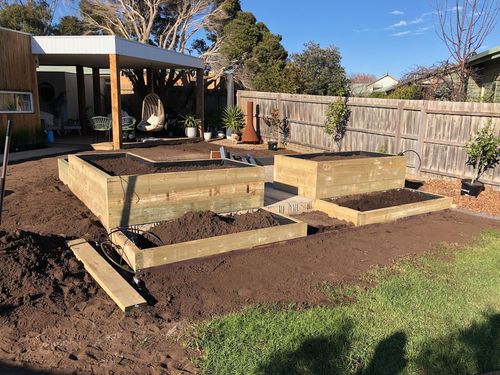
While I originally planned to build proper wicking beds, I ended up filling the bottom third with volcanic rock for drainage, then topped them off with screened, compost-rich vegetable soil.
This was one of those physically punishing, beer-worthy jobs—filling each wheelbarrow from the nature strip, hauling it around the house, pushing it up a ramp, and tipping it into the beds. Tough work, but totally worth it.
Step 6
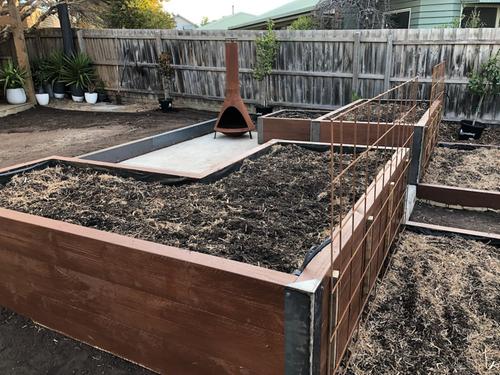
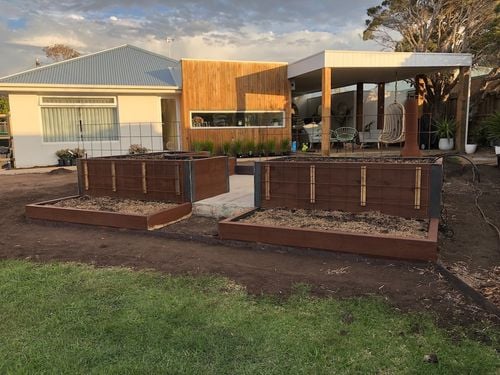
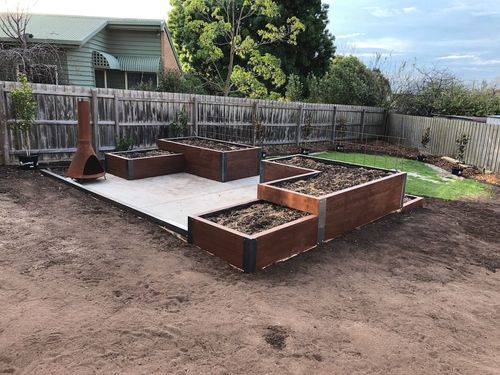
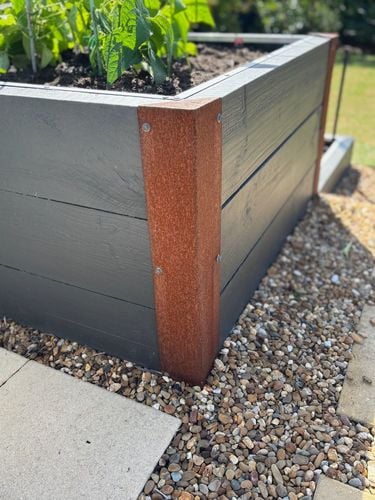
I wanted to steer clear of the typical vertical sleepers that conceal the corner and length joins, opting for something a bit more unique. So, I created cardboard templates for custom-made flashings out of Coreten rusting steel, which an old engineering friend of mine kindly fabricated.
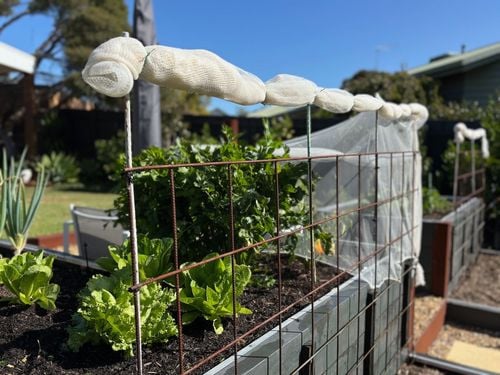
Next up was installing reo mesh on the back walls for my grafted tomatoes to climb on. I then stained the sleepers, but in hindsight, I regretted the choice— they turned out a dull, old mission brown color that didn’t quite match what I had envisioned.
Step 7
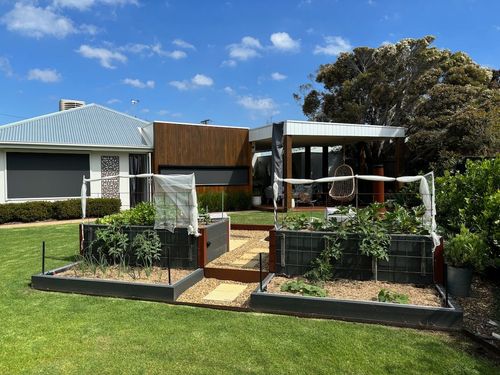
Unhappy with the color of the sleepers and the plain concrete base, I spent several weeks weighing my options to improve the space. In the end, I decided to paint the sleepers Monument to match the neighbouring fences, mortar in a few pavers, and fill the rest with 15mm Ovens River pebbles for a more earthy look.
Step 8
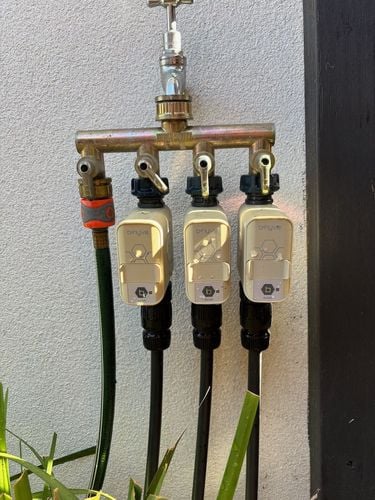
I installed Orbit smart tap timers with a Wi-Fi hub to manage watering, ensuring that the system doesn’t run on windy or rain-predicted days. One timer is dedicated to the veggie garden, while the other three control the lawn and garden beds.
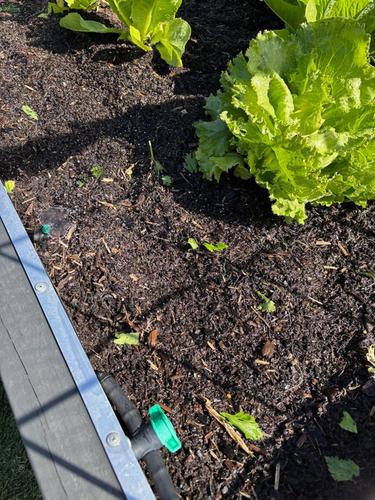
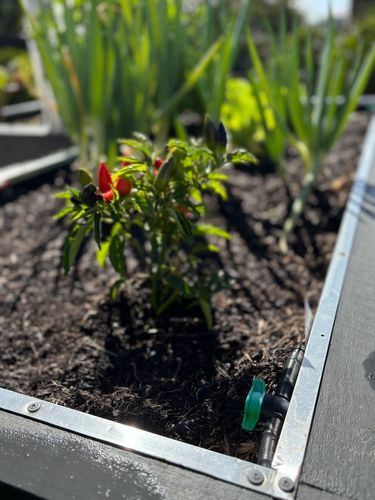
Each of the four veggie beds has a master tap valve that regulates various sprayers, each with its own pressure tap. This setup gives me full control over how much, or how little, each bed or area gets watered, depending on what’s planted and the time of year.
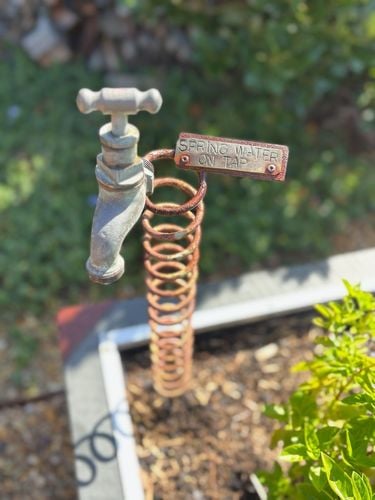
To stay hydrated on those long gardening days, I also installed a natural spring-water tap—definitely a lifesaver! 🙄
Unfortunately, the tops of the plastic liners didn’t hold up well and started to look messy. To fix this, I added aluminium equal-side strips to tidy things up.
Step 9
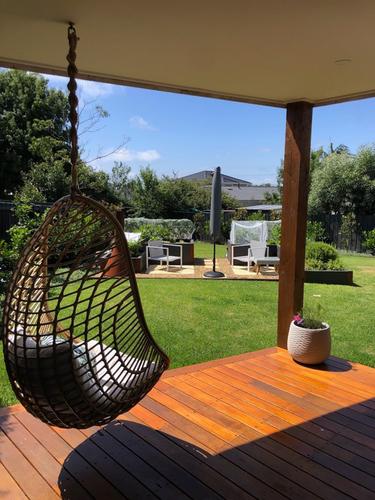
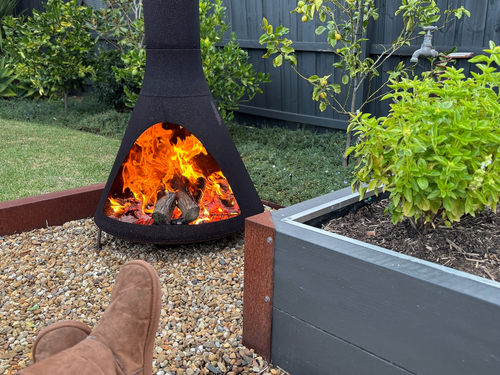
Over a year has passed, and the Coreten has developed a beautiful rust patina, while the bare concrete slab has truly transformed into a backyard conversation piece.
Step 10
And we've managed to grow far more veggies than the two of us can handle, so our friends and neighbours have been enjoying the fruits... er, veggies... of our labor.