Steps
Step 1
I cleared off as much of the old grass as I could—a truly back-breaking effort. Armed with a shovel and a wheelbarrow, I managed to remove nearly all of the visible turf, laying the groundwork for a lower-maintenance, plant-filled garden.
Step 2
I leveled the surface, then laid two overlapping layers of weed mat. I secured the edges—where most weeds tend to emerge—by stapling the mat to the existing wooden edging.
Step 3
I cut openings in the weed mat where each plant would go, then dug appropriately sized holes for my new specimens.
Step 4
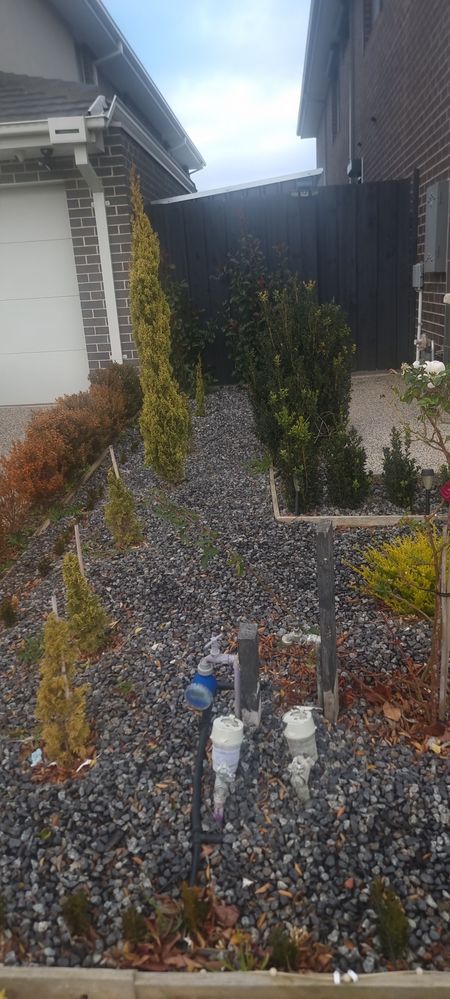
I installed the irrigation system next. First, I laid out the main pipes, connecting them with the appropriate fittings and joiners. I gave the English box its own drip-line, then fitted every other plant with inline “Veryflow” drippers to ensure consistent, low-volume watering.
 I hooked the sprinkler lines up to an automatic tap timer, ensuring the system waters on a set schedule without any manual intervention.
Step 5
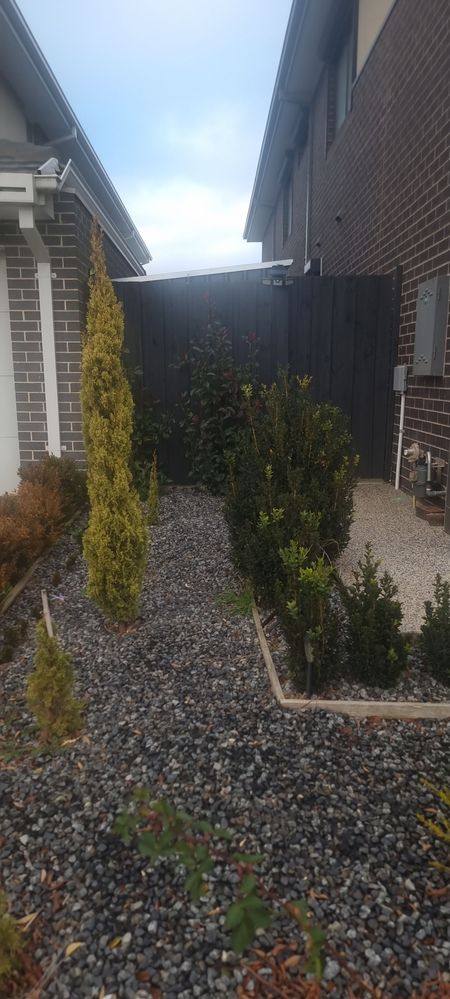
Next, I placed each plant into its prepared hole, backfilled with soil, gently firmed around the roots, and gave them a thorough watering to help them settle in.
Step 6
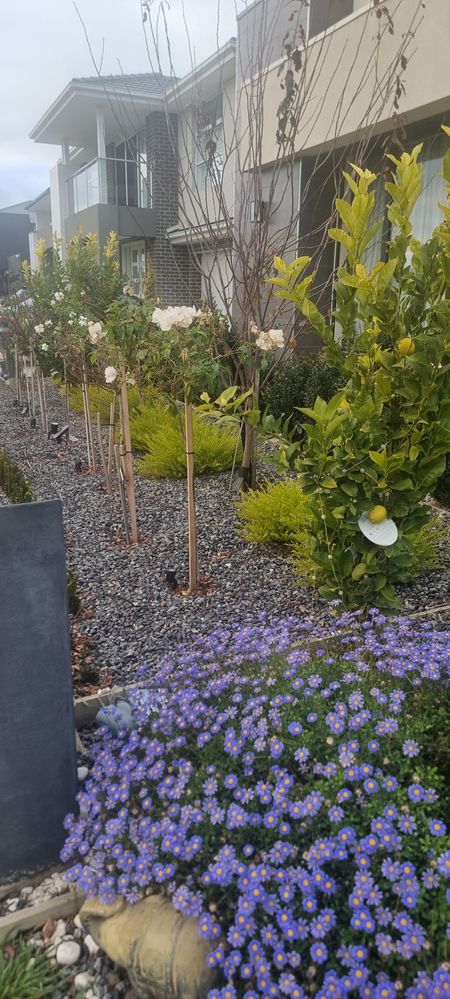
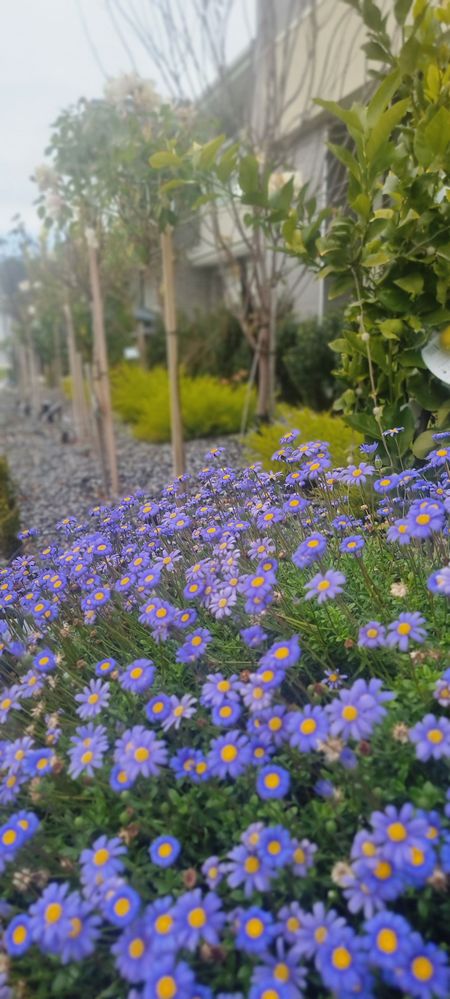
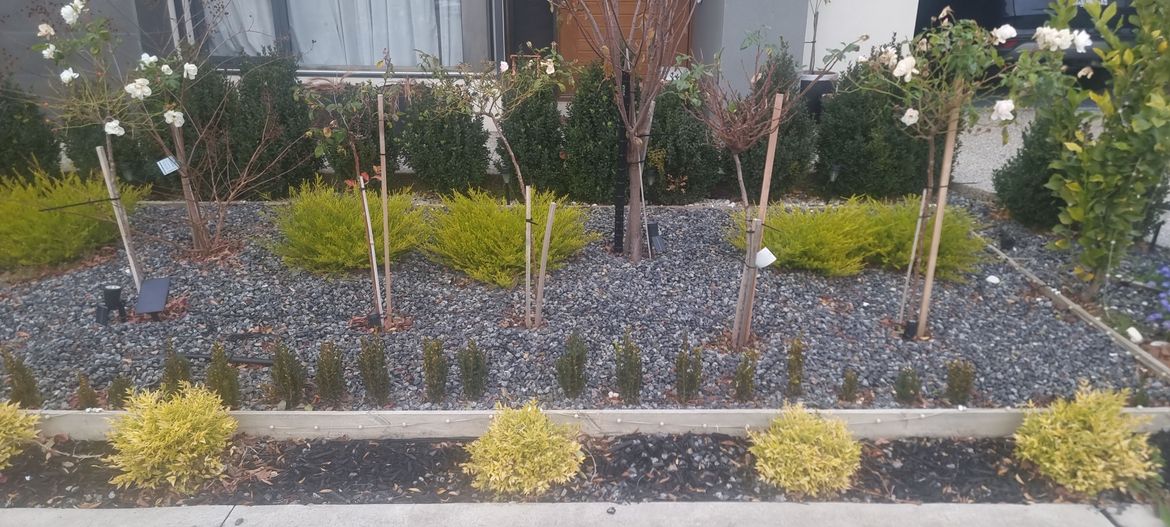
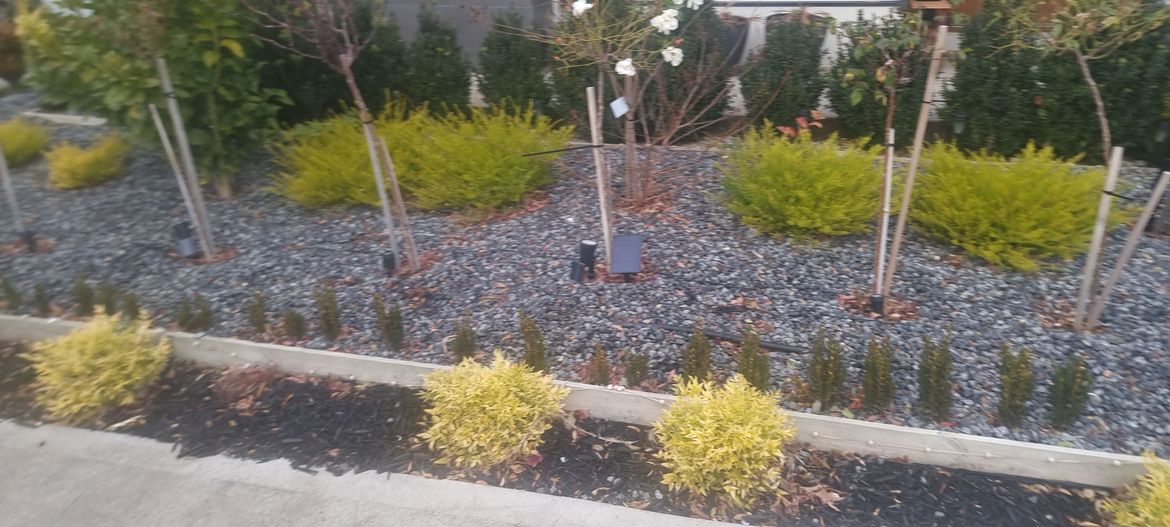
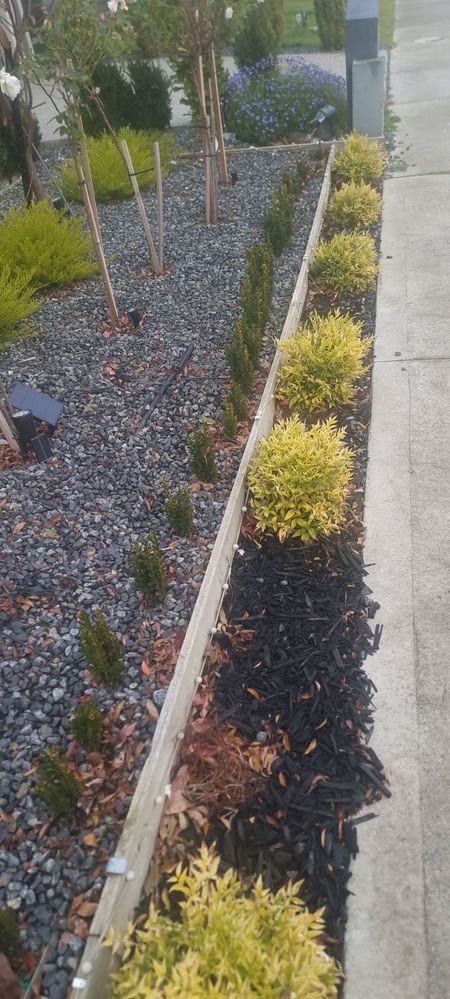
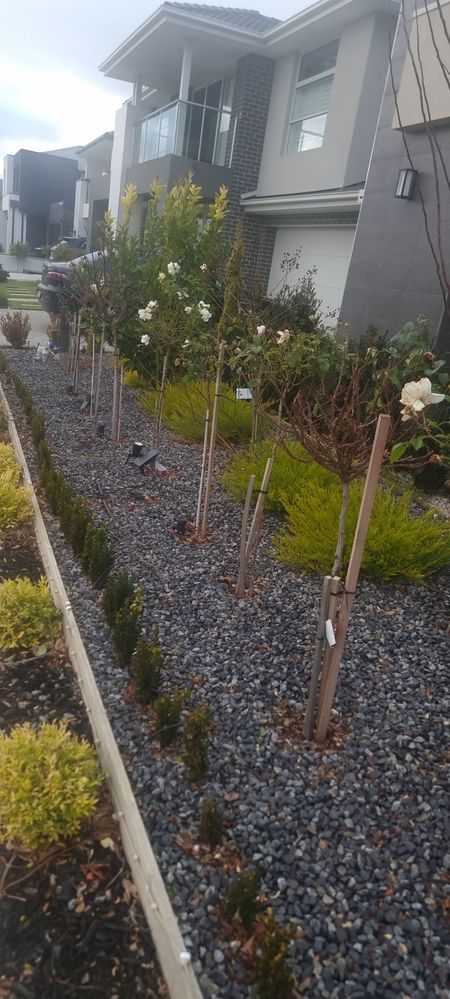
Finally, I covered the entire area with decorative stones and a layer of mulch, sealing in moisture and giving the garden a polished, low-maintenance finish.
Step 7