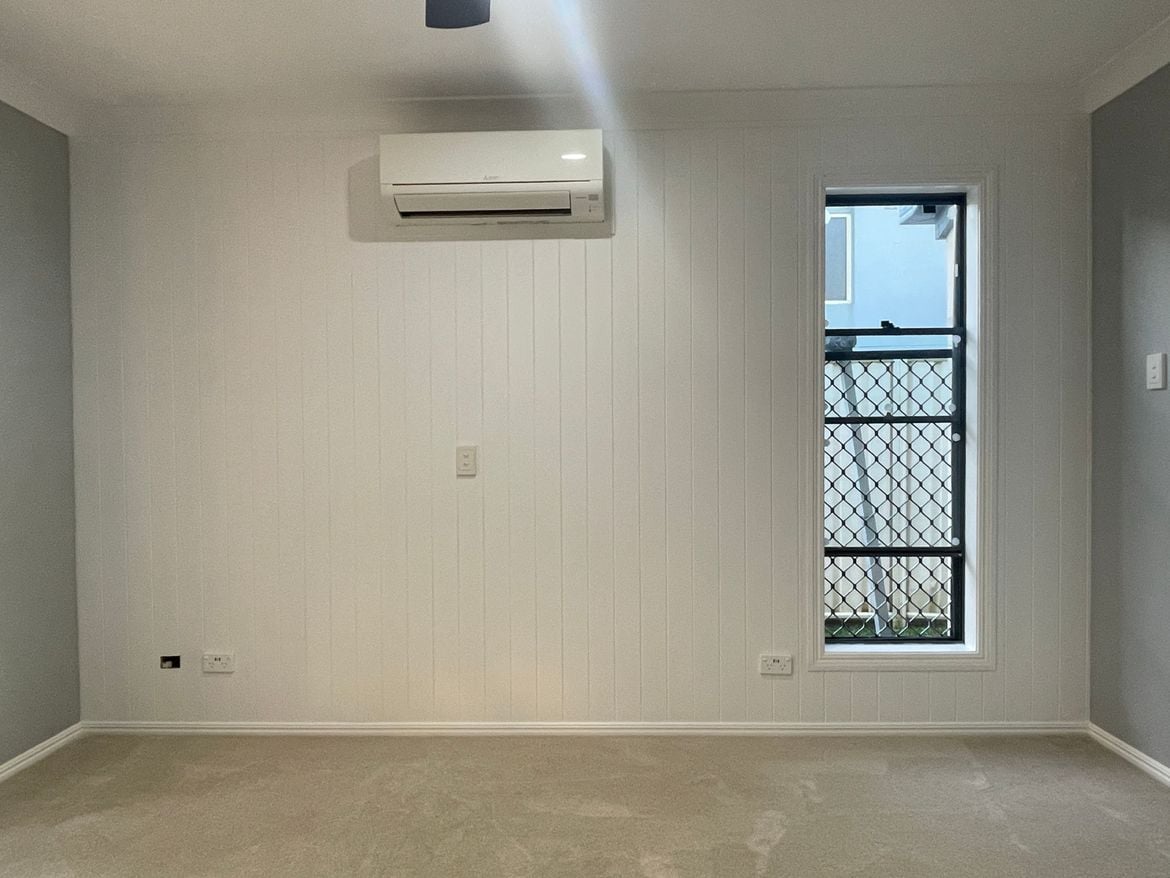
Hi all,
Firstly thanks to all Bunnings members and DIY experts.
This was one of the project we wanted to do. We recently finished our ensuite renovation and it made us to do this project. I am writing here what we did, what obstacles we went through, what should have been done and so on , but not in any particular order.
I believe in sharing not just the good side of the project, but also the bad side of the project, so that people know what are involved. After all, we are all learning from one another and from one another's mistake.
Very first time, but very happy with result. I think I will do far better in another wall. Main thing is my wife is happy, that all matters.
P.S. I will keep editing this post, if I remember anything ( just in case i have forgotten now)
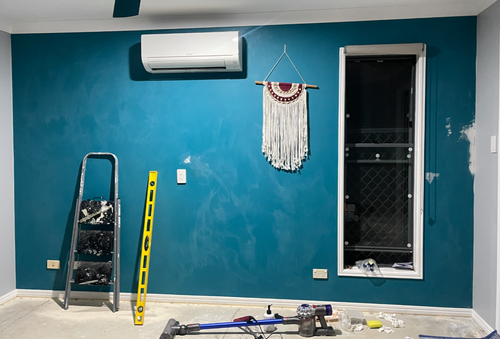
Before
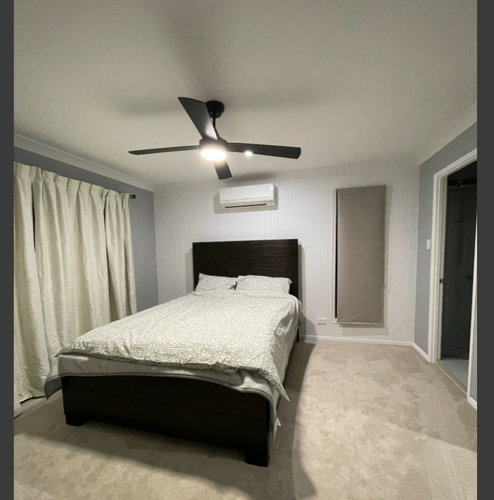
After (Half complete bedroom setup)
Steps
Step 1
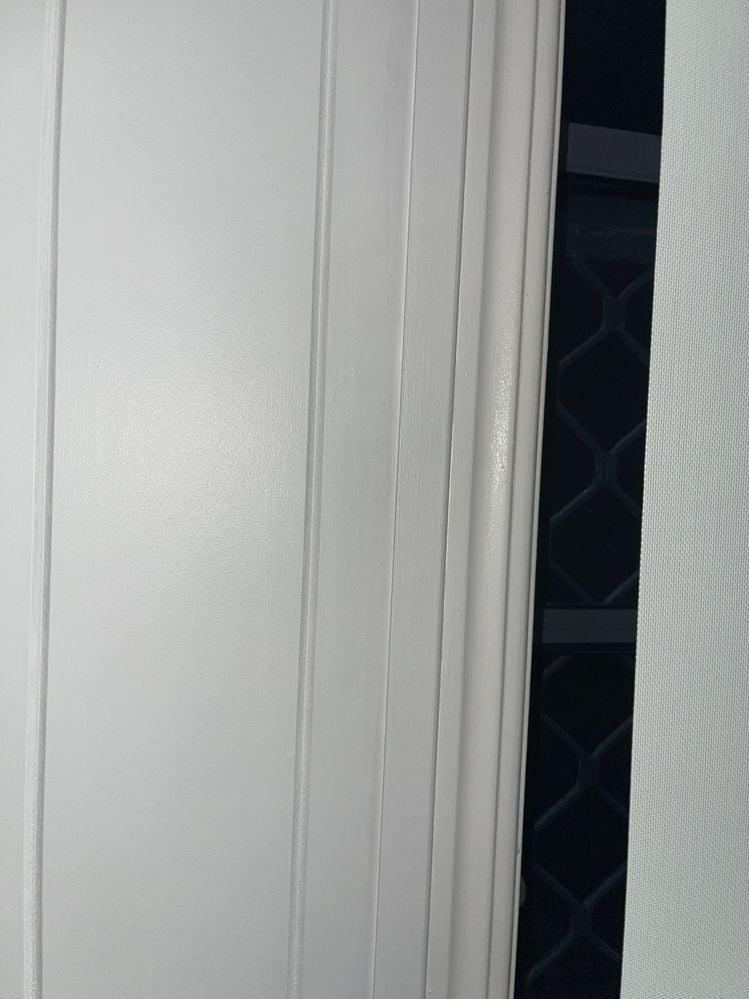
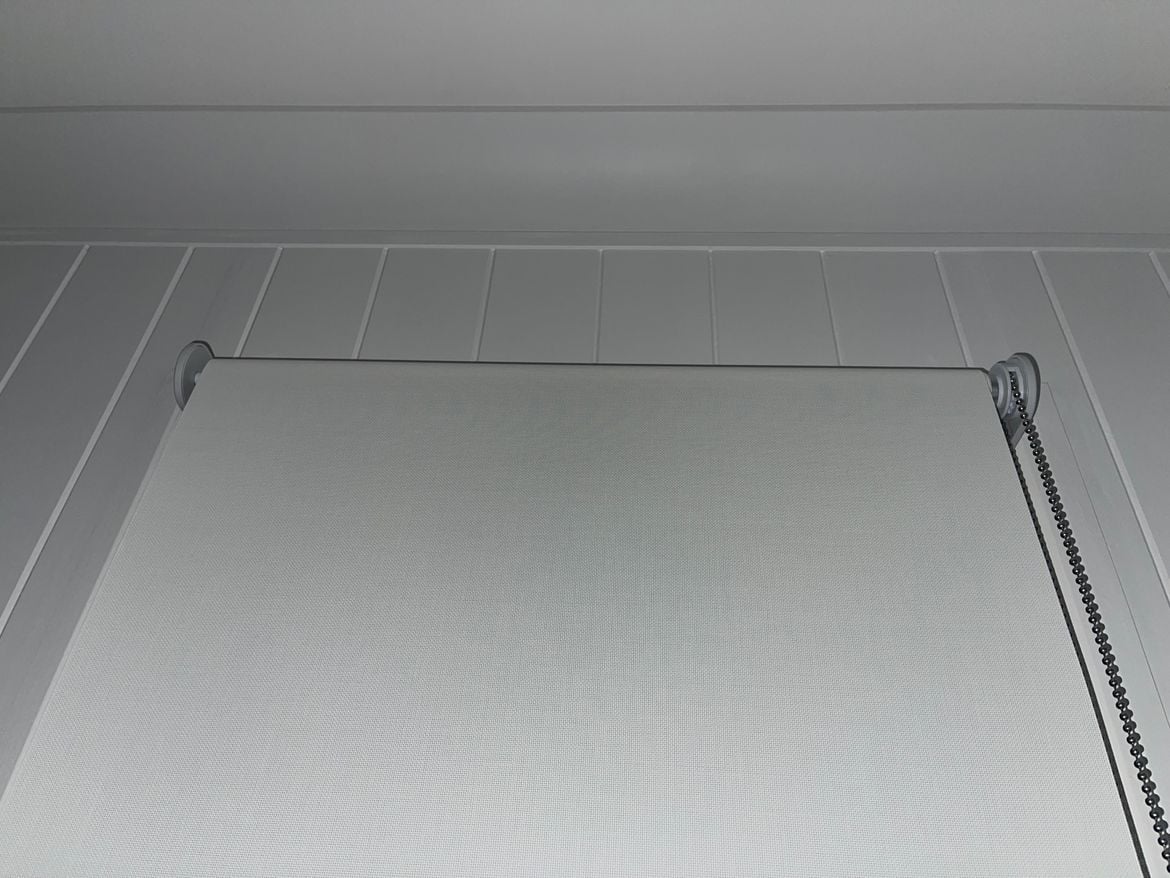
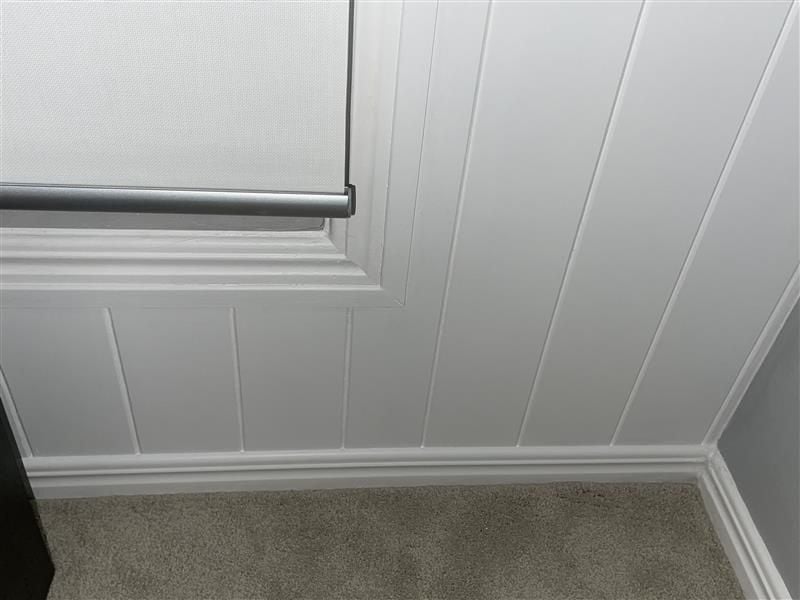
Parfix ( https://www.bunnings.com.au/parfix-1kg-ready-to-use-multipurpose-filler_p1210322) is very handy on fixing the gaps on the top and bottom of the window frame. I first put some No More Gaps on those gaps and let it dry for sometime. After that, I put this Parfix. Left it dry for overnight. This item is sandable and paitable. Filling the whole gap with Parfix was not possible because it was hard to insert the filling all the way in. Once dried and sanded and painted, it was not really visible (seriously). Very very close inspection will make them visible.
Try to cut the panel from back side. This gives a clean cut from the front. However, it might be some extra work on finding the right spots for wall switches, sockets, corners of the window frame etc. Need to be careful on this.
I left 3-5mm gap on either side of the corners and also 5-10 mm gap on the top.
Before doing anywork, I found out the studs and mark on the floor (with pen as well as sticky tap).
I made one timber (thinkness 11mm) available all the time to sit the panel on it before attached on the existing wall. This way I tried to get consistent gap at the bottom as well as at the top. However, this is not always possible because the wall is not always perfect. hence, timber (moulding) comes into play to hide those imperfections.
I got one 2.4mm timber from Bunnings ( to make a guide) for Circular saw. The Panels are long hence, need to have proper setup so that cicular saw or jigsaw do not run out of the marks.
While cutting the holes for wall sockets, I started from small, and it has to be smaller than the sockets actual size, otherwise the new switches will sit inside, no good. I tried to cut one thick paper (for template).
Skirting is handy to hide the gaps at the bottom surface.
I only came to know that No-more-gaps silicon application is needed in the groove where new panel and old panel gets joined
The panel I used has spacing of 100mm in between two lines. I came to a time ( while putting the panel around windows frame in tiling style) when I could not match the 100mm spacing because I had already messed up thing. However, if the cuts are placed nicely, people will not even notice the gapping. At two columns, the gaps are 80mm between lines but no one ever noticed. But, gaps < 70mm start to get noticed.
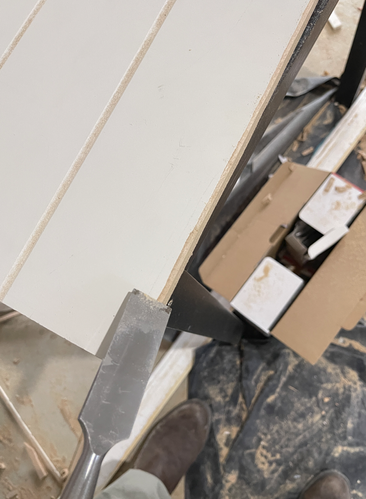
If there comes a time when two sharp edges from newly cut panels are meeting but there needs to be a groove, this can be achieved by running a sharp chisel on the join. I tried at one place and it worked (not perfect but imperfections are hidden on white color 🙂
Gaps were fixed in following pictures.
Step 2
Lesson Learned
- Panelling is always time consuming where there are a lot of stuffs on the wall, like switches, AC unit, window.
- I should not have tried filling very big gap around window frame and around the cornices with No More Gap. They are very time consuming and not a tidy job.
- I should have tried cutting the panel as close to the window frame (to get smallest gap possible).
- I should have used another spare panel instead of using a panel and breaking the panel in various sizes (that resulted in a tiling style) to fill the gaps. I tried to save another panel to use in another space. However, the result ultimately came good (with lesson learned)
- I should have planned around AC unit. Take the AC unit out first and install the panel underneath. I found a solution later, but I may have some difficulty when the AC unit fail and if I needed to remove in future. However, if I have learned to install from scratch, I will have some sort of alternative in future ( I believe)
Step 3
Galleries (Before, During, After, not in any particular order)
 Timbering around AC unit (closing the gaps)
 Application and sanding with Parfix
 Groove painting first
 Gaps around windows. The joining column is 80mm
 Gaps around windows
 gaps around AC unit
 Moulding
 Cuts for wall socket
 About to install first panel
 Template
 template
 Overall
Step 4
I hope this helps.
I replaced old carpet with new carpet and changed curtains. Everything looks really nice. We are happy with overall outcome.