Steps
Step 1
Assessing the Old Fence
We began with a proper inspection. Years of weather, termites and general wear had left the timber posts wobbly and the sleepers decaying. The pest inspector’s verdict was blunt: the fence could come down in the next strong wind. Not only was it an eyesore, it was a safety risk for both properties. We could, quite literally, push the fence over with little force if we wanted to, and our child could move the sleepers and often ended up in our neigbours yard.
 The Old Fence
Step 2
Deciding on a New Design
Once we committed to replacing the fence, the next step was deciding exactly what to build it from. Our old fence had been almost entirely timber – timber posts, timber sleepers, timber rails and palings – and while timber has its advantages, the experience of watching ours decay convinced us to take a different route.
All-Timber Construction
-
Pros:
-
More affordable upfront, as treated pine posts and sleepers cost less than steel and concrete.
-
Easier to cut and work with, making installation quicker.
-
Has a warm, traditional look that blends naturally with most gardens.
-
Cons:
-
Timber posts are vulnerable to rot, termites, and ground moisture, even when treated. Over time, the structural integrity weakens, particularly at the base where moisture sits.
-
Timber sleepers can warp, crack, or bow as they weather, leading to gaps and misalignment.
-
Maintenance is ongoing – staining, sealing, and occasional repairs are needed to prolong life.
-
Average lifespan before major repairs or replacement is often 10–15 years, less in damp or termite-prone areas.
Concrete and Galvanised Steel with Timber Panels (Our Choice)
-
Pros:
-
Strength and longevity: Galvanised steel posts won’t rot or attract termites, and they can last 50+ years if properly installed. Concrete sleepers are impervious to moisture and insect damage, and they won’t warp or bow.
-
Low maintenance: No need to stain, seal, or regularly treat the base structure. The only timber exposed is in the panels above ground level.
-
Structural stability: Steel posts and concrete sleepers form a rigid foundation that resists movement from soil expansion, heavy winds, or impacts.
-
Customisation: By keeping the panels timber, we still retained the warm, natural look of wood above the base. This way, the fence blends with the yard while benefiting from a far stronger core.
-
Resale value: Potential buyers see a low-maintenance, long-life fence as a premium feature.
-
Cons:
-
Higher upfront cost – steel, concrete, and the extra labour to install them is more expensive than a basic timber build.
-
Installation is heavier work – concrete sleepers weigh significantly more than timber ones, and getting them into place requires more muscle and care.
-
Once installed, the structure is very permanent – moving or adjusting the fence later is a major job.
We deliberately avoided Colorbond. While it’s marketed as a low-maintenance, long-life option, I’ve seen too many fences where dogs or children have simply run into it and dented or damaged the sheets. Once dented, it’s difficult to repair and the look is compromised. The combination of steel posts, concrete sleepers, and timber panels offered us the perfect middle ground – rock-solid durability at the base, with a warm, natural finish on top.
Step 3
Navigating Neighbour Negotiations
If you’ve ever replaced a boundary fence, you’ll know the process can be as much about diplomacy as DIY. In our case, working with the neighbour (who is a landlord who doesn't live there) was a challenge:
-
They insisted on having the “good side” of the fence facing their property.
-
They were reluctant to agree to concrete and steel, preferring cheaper timber posts.
-
They argued that a new fence wouldn’t match their other ageing, rotting fences, and might even reduce their property’s value.
That last point simply isn’t true. A sturdy, well-built fence generally adds value by improving privacy, security and visual appeal – all things buyers look for. Matching a new fence to deteriorating ones next door would only drag down the overall look of both properties. Rather than meet in the middle and settle for a fence that wouldn’t last, we decided to invest in quality. This meant:
It did mean paying more upfront, and more than our neigbour, and more for the sleepers (even though their land is higher), but it’s a cost we see as an investment – one that will save us replacing the fence again for decades. Ultimately, we live here, they don't.
Step 4
The Build
The installation took three days from start to finish:
Day 1 – Removal and Preparation
-
The old fence was dismantled and removed.
-
We discovered the adjoining fence (not being replaced) was so unstable it could collapse, so we tied its rotting post to our concrete pillar with rope to keep it upright.
-
While setting out the line, we discovered the boundary was wrong. What should have been a straight line was crooked, and lazily patched together when these houses were built. After checking our property plan, we found the neighbour had lost land, and we had lost land to the neighbour in front of them. We decided to correct this to the proper boundary, restoring about 500 mm of land to our neighbour. We would gain land back from the next neigbour during the next build, and would ensure a straight line down our property.
-
Holes were dug for the new posts, cutting through a lot of clay and even bedrock in places.
- Galvanised H-posts were set into the holes with concrete and left to cure overnight.
Day 2 – Structural Installation
-
Concrete sleepers were installed along the base.
-
To further secure them, concrete was poured into the gap between each sleeper and the H-posts, locking them solidly in place.
Day 3 – Completing the Fence
-
Timber panels, rails, and palings were installed above the sleepers.
-
The fence was built in a stepped configuration to follow the natural slope of the land, ensuring a neat and even look.
 Fixing the Property Line
Step 5
The Finished Fence
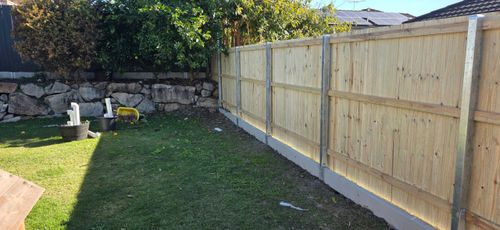
The transformation is striking. Where the old fence leaned, sagged, and left gaps wide enough to see straight through, the new fence stands tall, solid, and precise along the true boundary line. The fresh timber panels, supported by galvanised steel posts and anchored by concrete sleepers, give the yard an immediate lift in appearance.
From our side, the finish is clean and uniform, with the warm tones of the timber complementing the natural surroundings. The stepped configuration means the fence follows the land’s contours rather than cutting across them awkwardly, which adds to its polished look. Every sleeper is set perfectly level, and the posts are dead straight – small details, but they make a big difference when you’re looking along the full 10.5 metres.
The structure itself feels unshakeable. The combination of concrete-filled H-posts, heavy-duty sleepers, and tightly secured palings means there’s no movement when you lean or push against it. You can tell straight away that this is a fence built to outlast decades of weather and wear. Privacy has gone from almost non-existent to absolute; you can now relax in the yard without the sense of being overlooked. It’s also pet and child-friendly, with no gaps to squeeze through or weak panels to knock over. I'll paint it in the future once the wood settles.
Step 6
Final Thoughts
Replacing a fence might seem like a straightforward job, but this project reinforced for us that it’s about much more than just putting up a new boundary. It’s about making the right choices for the long term, even if that means paying more or having uncomfortable conversations with neighbours.
By investing in quality materials – concrete sleepers, galvanised steel posts, and well-treated timber – we’ve created a fence that’s not only strong now but will remain strong in twenty years. The concrete infill between sleepers and posts adds an extra layer of stability, making the base as solid as the panels above. The corrected boundary line means everything is legally and structurally sound, removing any future disputes and actually giving one neighbour back a strip of land they’d lost.
A well-built fence improves property value in ways that go beyond appearance. It boosts security, protects pets and children, increases privacy, and reduces the need for costly repairs or replacements. It also sets a higher standard for the street, encouraging others to maintain or improve their own fences.
For us, this project wasn’t just about replacing something that had failed – it was about building something we could rely on for decades, with the peace of mind that comes from knowing it’s been done properly from the ground up. Every time I look at it, I know we made the right decision.
 Plus the Kid loves it