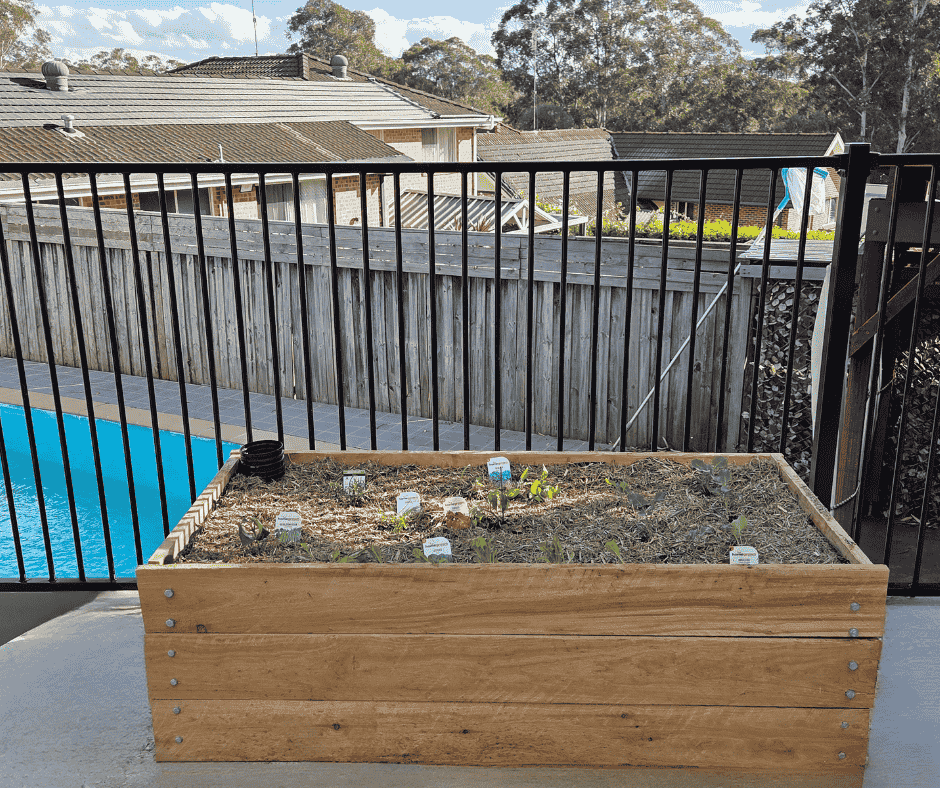
A durable Cypress Pine raised wicking garden bed with a built-in water reservoir to keep soil constantly moist from below - ideal for growing vegetables.

The project
I wanted to share my experience with wicking beds after creating my first one earlier this year. As someone who struggled with Sydney’s weather, I love them as they make the most annoying parts of gardening a breeze.
The advantages:
- Water savings: Only refill the reservoir every 10-14 days (vs. daily watering before)
- Healthier plants: No more wilted greens during heatwaves – the self-watering really works!
- Fewer weeds: The mulch layer, plus less surface moisture, keeps them at bay.
I used untreated Cypress Pine for mine (no chemicals near veggies).
For anyone considering them, the only con I found was in weather we've been having with so much rain, I used a small outlet pipe that could get clogged sometimes. I have now used a wider pipe and lowered it into the reservoir a bit to stop debris getting into the pipe.
Steps
Step 1
Cut the timber to the size you would like the bed. I used three 150mm width pieces for a 450mm height of bed, which is ideal for even wicking.
Step 2
Use the L brackets and bolts to create your garden bed. Drill a hole in the side of the bed 200mm from the bottom and insert outlet pipe.
Step 3
Use food-grade liner to line the bed and create the water reservoir. Insert the Ag pipe in to the bottom of the garden bed after cutting lots of holes for water so get out. Leave one end of the Ag pipe over the top of the bed. Load in scoria rock 200mm high in the bottom of the liner on top of the Ag pipe. Cover the rock and Ag pipe in the geo textile (ensuring that one of the Ag pipe is still out the top of the bed).
Step 4
Fill in with soil on top of the geo textile to the top of the bed still leaving the Ag pipe poking out the top. This will become where you put in the water.
Step 5
Plant all the fruit and veg you want and ensure you keep filling the reservoir with water every couple of weeks.
Tools and materials
Materials used in the project:
Tools used in the project:
[article footer]
More inspiration for your wicking bed project
Bunnings Workshop member Maursie used corrugated iron to build a wicking raised garden bed.

Experienced community member Adam_W used composite boards to clad his raised wicking garden bed with Ekodeck. Adam also created a helpful guide How to build a wicking garden bed.

Get more ideas from our Top 10 most popular raised garden beds.
[article footer]