Treated Pine sleepers, pavers and pebbles transformed an untidy grassed area into a functional pathway for the side of the house.

The project
Needed to create a pathway down one side of our house. This area is mostly shaded by a neighbouring garage, so the grass didn't grow very well. It's a narrow sloping area, so was often slippery, untidy, and a pain to mow.
The solution was to put down a stepped path and create some small garden beds to make the area more useful. This particular side of the house is used often and seen from our family room, so a more permanent solution was desired as opposed to simply laying a basic gravel path. I also wanted to keep the slope and not have to create raised steps, but at the same time needed to ensure everything stayed in its place because this area can be affected by heavy rain runoff.
Steps
Step 1
Remove all of the grass and weeds. Laid temporary weed mat to help kill off the weeds.

Step 2
Level the ground, cut and position the sleeper slabs.

Step 3
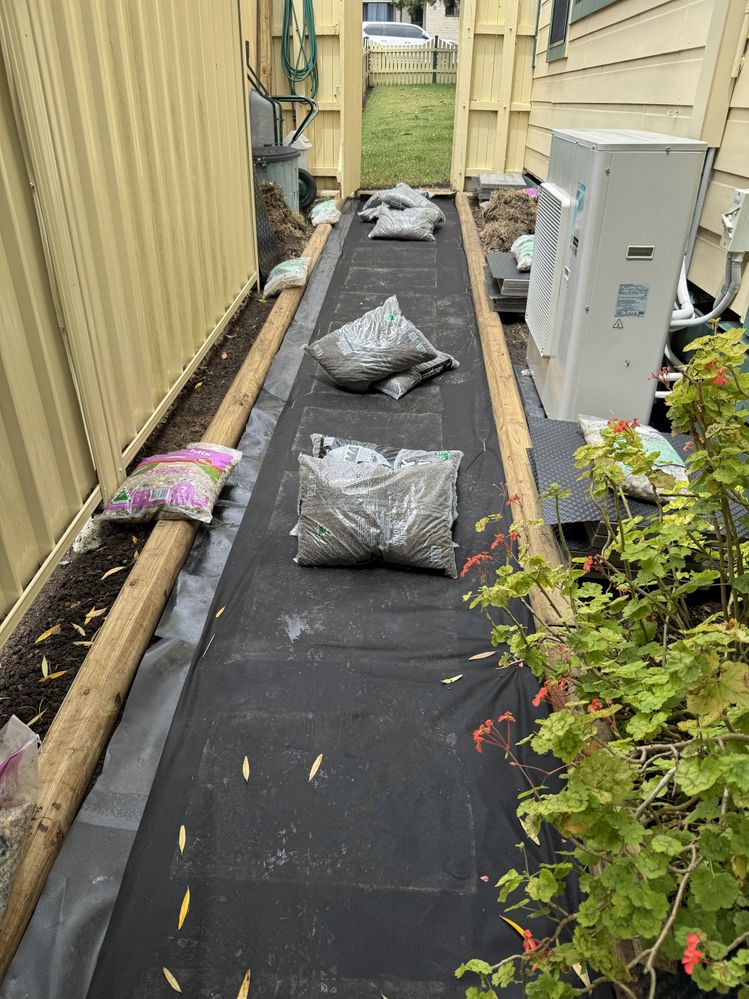
Place weed mat down, overlap, and use steel pegs to retain.
Step 4
Level out the ground with some form of road base or scoria, ready for pavers to be laid.
Step 5
Create small concrete pads for pavers to rest on.

The key is to space out pavers evenly and align.
Step 6
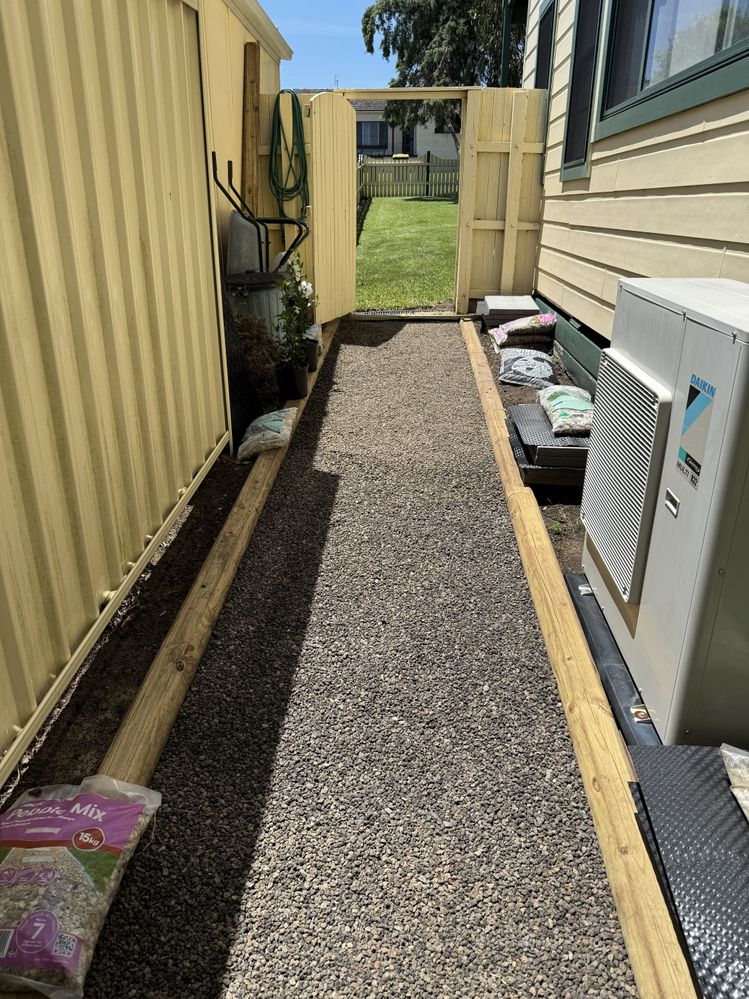
Cut and put down the pebble lock material, then backfill with pebbles.

As this is a sloping side which gets a lot of rain water runoff, pebble locking was needed.
Step 7
Finally apply a glue (cover the pavers when doing it) to keep everything in its place.

Tools and materials
Materials used in the project:
Tools used in the project:
More inspiration for your paving project
Bunnings Workshop member Yorky88 used charcoal-coloured paving and river pebbles for low-maintenance side access paving.

Bunnings Workshop community manager Jason used railway sleepers and stones to create a sideway path featuring bluestone rounds.

Get more inspiration from our collection of 10 paths and paving ideas and 6 garden path and walkway ideas.