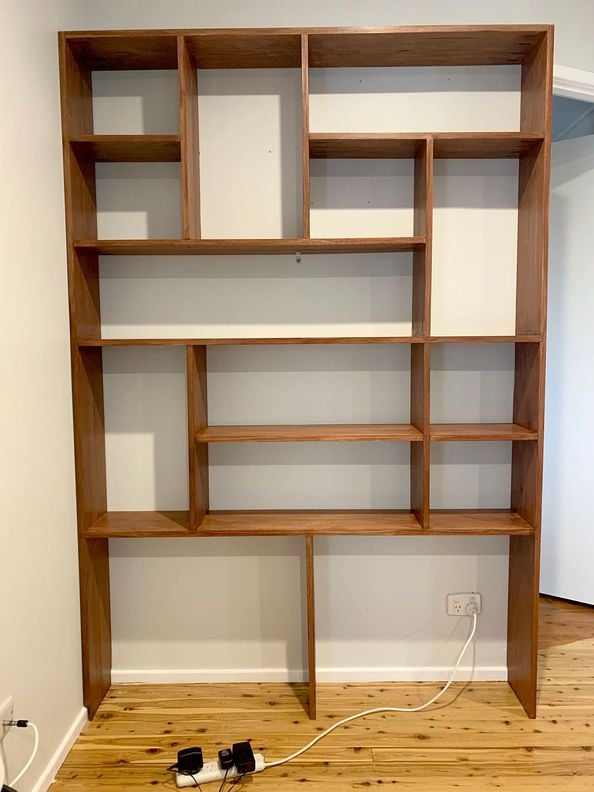
I've had some nice comments about a custom midcentury modern shelving unit I've made, so I thought I'd post some pics here, along with steps about how I made them. Here's the unit, in all its glory:
Here are the tools I used:
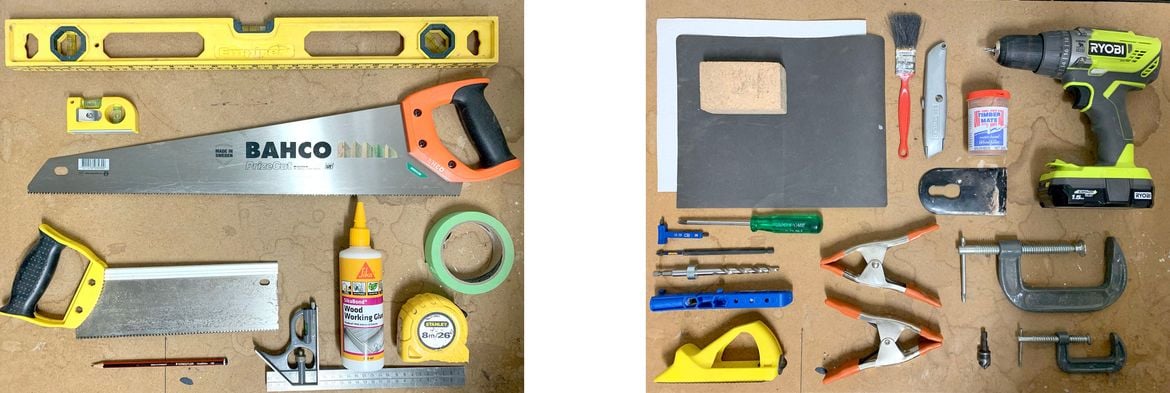
Missing from these pics are a herd of clamps that I used (side question: what IS the collective noun for clamps...?). I wanted these shelves to be narrower than a lot of store-bought shelving, yet wide enough to accommodate books (obviously). Bunnings had some lush Tasmanian Oak planks that were 110mm wide, so I thought I'd glue and clamp these together to make planks that were 220mm wide.
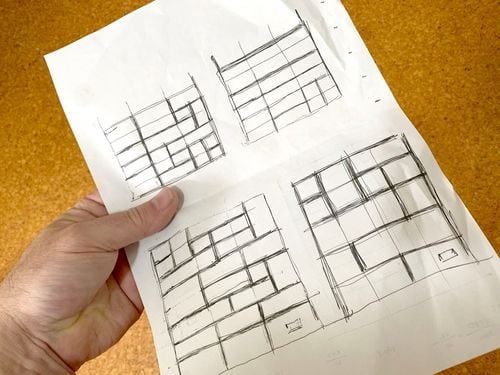
The layout of the shelving unit can adapt to any space you have. I found it useful to measure up the shelving area (1450mm 1500mm for me, plus the area beneath), and then map out a grid of 4 'units' wide 5 'units' high. Anything more than that, and it'll get way too complicated to make. Once you have this grid, you can play around with various layouts for how to break up the shelving verticals and horizontals.
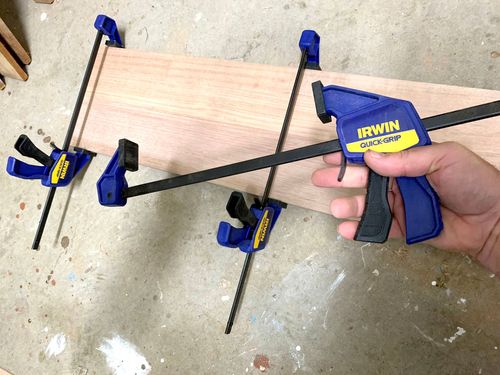
The first step of construction was to glue and clamp the 110mm planks into 220mm-width planks. This took a while, especially the planing and sanding of various parts of it to ensure the joins were as seamless as possible. If I were to do this again, I'd just get planks that were the right width to start with. Live and learn!
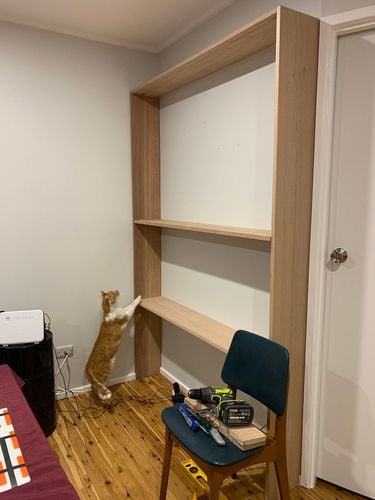
The second construction step was to connect the sides and three full-width cross pieces, to establish a strong frame. This was also the time to ensure a snug fit in the space I wanted the unit to occupy, as well as making sure corners were square and everything was level. Here you can see Albert the cat doing his initial inspection:
I used a Kreg pocket hole jig to attach the top, middle and bottom lengths to the sides, so that there were no screw holes on the outside. The pocket holes are actually the hero of this dish; the jig is so satisfying to use, and the result looks great every time!
Once this initial frame was done, add the internal vertical and horizontal pieces, according to your design. I worked my way from the bottom up, cutting, gluing and screwing each piece. I attached the verticals first (the two you see below are 580mm each), and then the horizontals. Precision is so important at this point. I used a handsaw and did my best to keep the saw cuts at 90 degrees. If anyone is feeling generous, you could buy me a drop saw; that would make the cuts so much better, and the job so much easier!
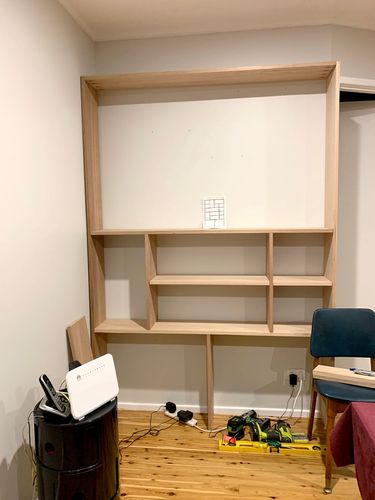
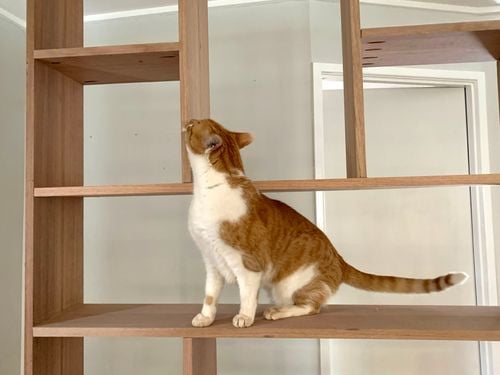
You can see some of the nice pocket holes in the image above. Wherever I knew I needed more rigidity, I did 4 holes, otherwise it was just two per join. At this point, all the construction was done, and everything looked good, and fit nice and snug. I filled and sanded holes and various - ahem - minor misalignments in the joins, ready for staining.
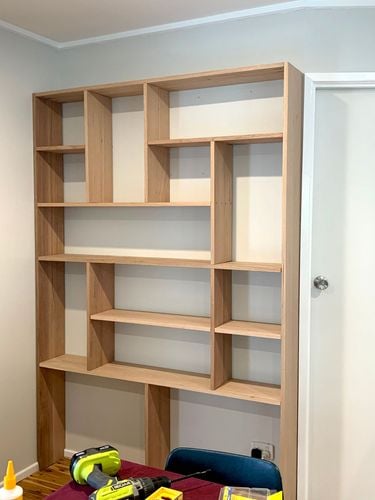
Depending on your taste and the style of your room, you could just lacquer this puppy, and be done. Tasmanian Oak has a beautiful rosy tint to it that goes with a lot of choices of décor. All the other furniture in our living room, however, is a darker teak colour, so I used a Cabot's water-based cedar stain and varnish to make it match:

The final step was to anchor the unit to the wall with an L-bracket, which you can just see in the first photo. Anchoring the unit is crucial for safety and stability. After that, we were finally able to bring a whole lot of books out, that we've had stuffed away in boxes for ages, and have them on display. An all-round satisfying result!
So, what do you think? Have you tried something similar? Any advice for how to do it better?