Difficulty: Intermediate
Tiling can be a great option for creating an attractive and low-maintenance entry or outdoor area.
The slip-resistance ratings you are most likely to encounter in Australia are P-value and R-value. In both cases, the higher the number the greater the degree of slip resistance.
Bear in mind that the tiles with the most slip resistance have coarser surfaces, so they collect more dirt and grime – and remember that you have to keep them clean to maintain their slip resistance.
Sponsored Post
Step 1
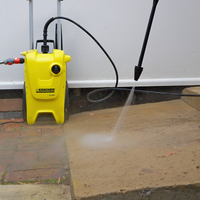
Thoroughly clean the area so that the tile cement will stick properly. Pressure cleaning is ideal, but heavily soiled areas should also be pre-cleaned with a product such as 30-Seconds Outdoor Cleaner.
Step 2
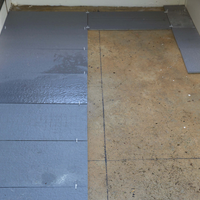
With your straight-edge or long level as a guide, use a pencil to mark a large grid with centre lines across your work area. Now try a few different tile layouts, using the marked lines to keep your tiles aligned.
In our case running our 600mm x 300mm tiles side-to-side made the area feel bigger. We made sure that our first tile, at the small step, was a full one, and we kept the cut tiles against the walls.
Tip: It’s important to allow enough tile overhang on a step. You need to allow for the thickness of the tile that will be used as kick-plate on the step face (riser), the tile cement beneath that face tile and a drip-lip of about 5mm on your top tile. You might find it easier and get better results if you install the face tiles first.
Step 3
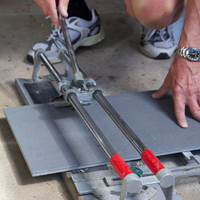
After you’ve decided on your layout, measure and mark your tiles for cuts. A tile cutter is an easy way to do this and gives you a professional finish. You can buy or hire a cutter, but make sure it’s big enough and has the right cutting wheels for the tiles you’re using.
Step 4
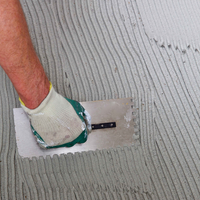
Use the mixing paddle fitted to your drill to mix a batch of tile adhesive in a bucket. The adhesive sets reasonably quickly, so don’t make big batches and run your drill at a low speed. Starting from a corner or wall, use the notched trowel to spread adhesive evenly over an area of a size that you can reach across to position your tiles.
Step 5
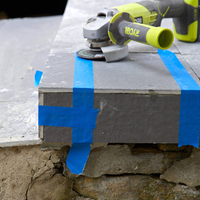
Lay tiles, starting at the furthest edge and working towards yourself. Check each tile with your level as you lay it. Spread new sections of bedding adhesive as needed. You can use exterior-grade painter’s tape to hold fiddly side tiles in place until the bedding adhesive sets. Painter’s tape won’t leave sticky residue on tiles. Use tile spacers standing on end at all corner joints. Spacers should never be laid down in corner joints as they are difficult to remove once the adhesive has set and they cannot be left in place and grouted over.

Step 6
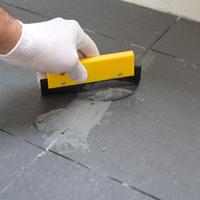
Do not walk on the tiles until the adhesive has set. Once it has set, mix up grout and then use your squeegee to work it into all gaps, removing excess as you go. When the grout has set use a scrubbing brush to remove loose material before applying an acid wash mixed following the rates recommended on the label.
Step 7
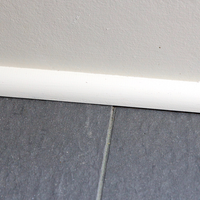
For a professional touch, add trim (a smaller version of the skirting in a house) to hide the join between the tile and the wall. We used quarter-round or “quad”. For exterior use any trim must be H3 treated and painted on all sides before installing. Touch up any nail holes with suitable filler and paint afterwards.