Firstly, shout out to @Baggs for his own workbench project that inspired parts of this build and his advice.
Problem
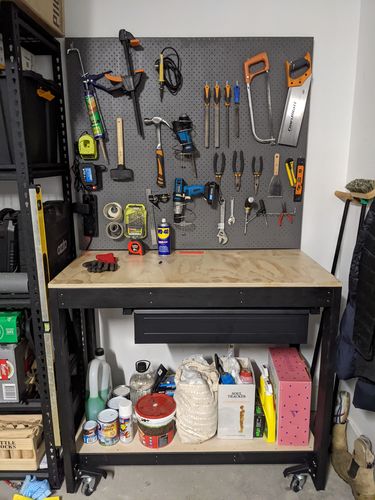
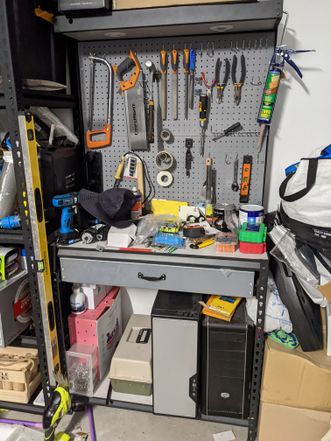
With a single car garage and a small townhouse, storage space is always at a premium, and my old compact workbench didn't have enough storage for the many tools and fixings etc I've accumulated. The bench had only a 7mm MDF top meaning it wasn't suitable for mounting a vice either. I also didn't have a work surface for larger pieces of wood etc so I wanted a mobile bench I could wheel into the middle of the garage when I needed to cut or work on something longer.
Solution
The goal of the project was to create a larger, mobile, sturdy bench which could eventually have a vice mounted and have the same storage (shelf and drawer). Peg board would be wall-mounted.
I came up with the following designs based off this 1200x596x18mm Pine Ply as the benchtop and 90x35mm MGP10 as the main structure:

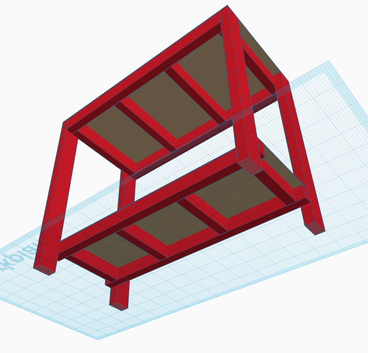
I used an online CAD tool to make the designs so I could get the Bunnings Cut-Shop to cut all the pieces for me to the millimetre so construction would be a breeze.
Construction
Including detailed shots of the process for anyone else like me who doesn't have a great work area for projects like these. I was quite afraid of constructing the frame pieces without a work surface, bracing system etc to keep things square, but it worked out great with my hacky methods.
1. Put together bench-top frame using the benchtop as a base to help keep things square. Used an extra piece of the 90x35 and two f-clamps to keep the joint square and tight as I pre-drilled and drove in two bugel-head screws per joint.

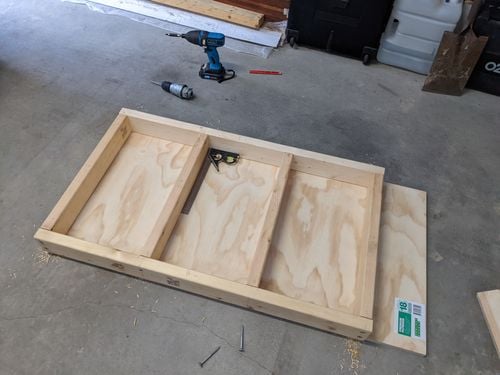
Had put together the entire top frame before I realised the cut-shop had cut the two edge-pieces too short! First D'oh! moment and another trip back to Bunnings 😀
2. Top frame re-assembled with correct side lengths, I now lay the bench perpendicular to the ground and screwed two of the legs on with a single bugel-head so I could square things up later.
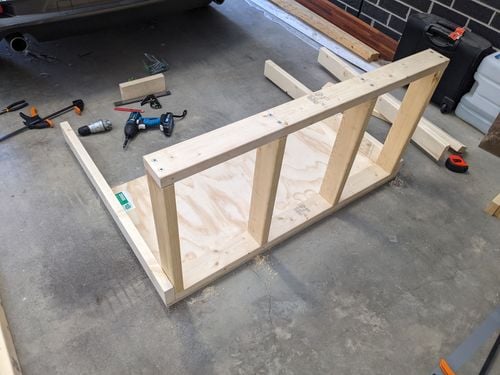
3. Attached the side of the bottom shelf frame using a spare piece of the same timber as a spacer from the bottom of the legs for a small amount of ground clearance.
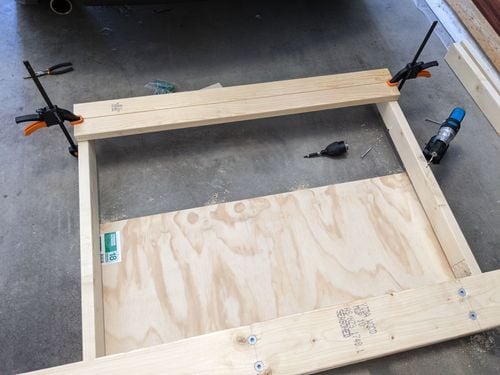
4. This step worried me but it worked perfectly. Stood the table up and held the other two legs on using the f-clamps so I could drill and screw bugel-head screws in to fix on the other two legs.
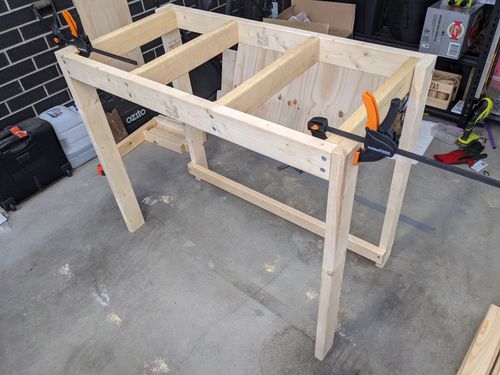
5. Safety inspector surveyed the work and gave the tick of approval.
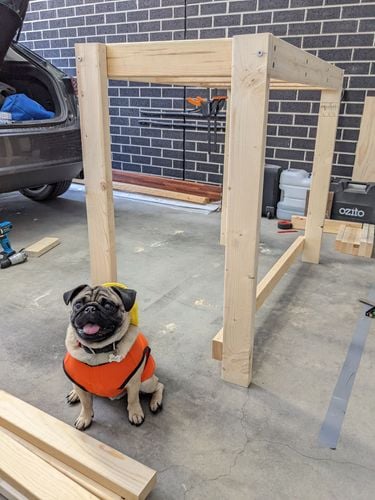
6. Using spare pieces and off-cuts again to ensure the right ground clearance, I assembled the bottom frame using 2 bugel-heads per joint. I decided to construct the bottom frame from 70x35mm MGP10 just to save weight, but you could use 90x35 as well. I then checked square on everything and fixed the top frame to the top of the legs with an extra screw.

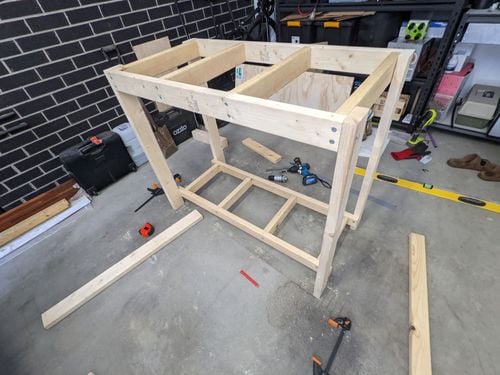
7. To make the top of the frame more seamless in the end, I added an extra piece of 90x35 between the top legs and screwed it in with normal timber screws.
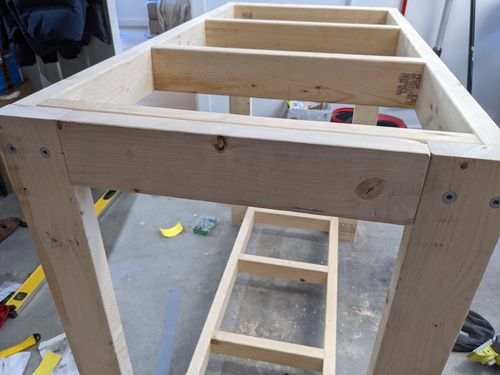
8. Prepped and painted the legs.
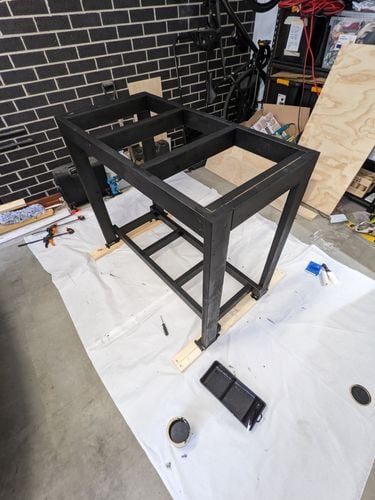
9. Ruled guidelines and screwed on the benchtop. I didn't know if the ply was prone to splitting so to be safe I pre-drilled the ply. After this was done, I sanded and varnished the top.

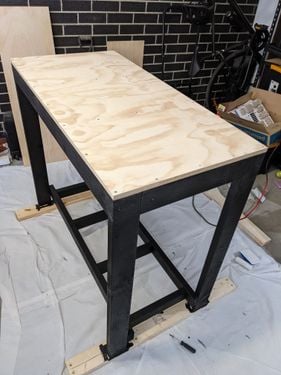
For reference, to get to this point took me less than a day. I only did a single coat of paint on the legs so I was able to come back to it in the evening and fit the top then apply the first coat of varnish on the same day, then I had to put a couple more coats on later.
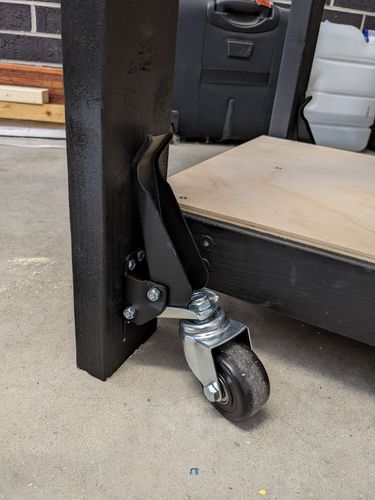
10. Finally, I fit my castors, which I purchased online as I wasn't able to find lift-away castors at Bunnings. @Bunnings maybe one to add to your inventory?

Finished product
This was the final bench by itself, but the last thing was to add a drawer. I had to look around, it needed to be a sturdy drawer that hung from the runners so the runners could be attached to the underside of the top frame.
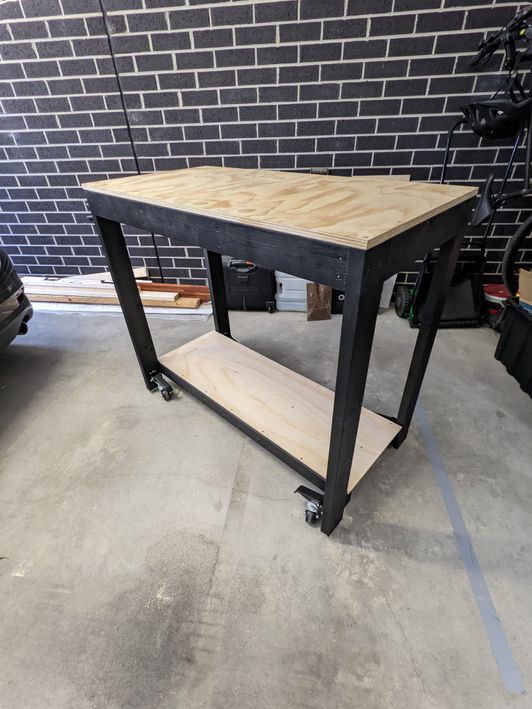
I found the drawer I wanted from another shop which I won't mention here, and fitted it, here's the new setup: