The Bunnings Workshop community can help with your home improvement projects.
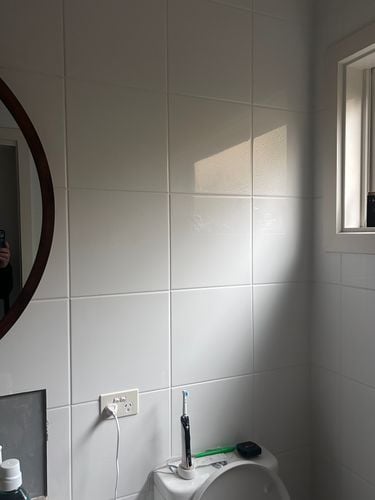
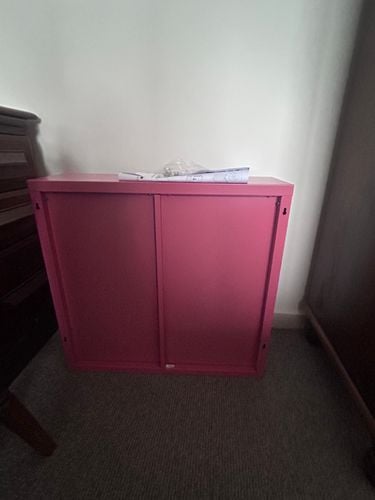
Hi, I need to put up a small metal cabinet. Its probably 800mm x 800mm by 120mm deep.
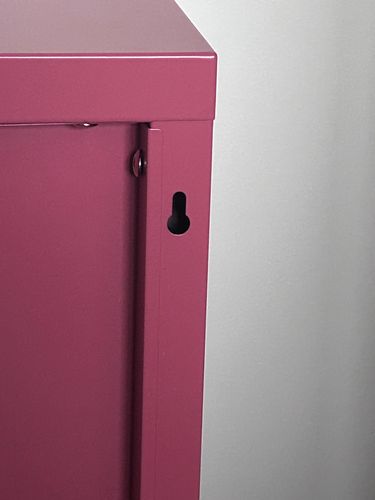
Based on where it needs to go it is unlikely I will find a stud. I know that these tiles are on a cement sheet product. The back of the cabinet has 4 small slots to enable the cabinet to be lifted above. The kit comes with a template so you are clearly limited to drilling as per template
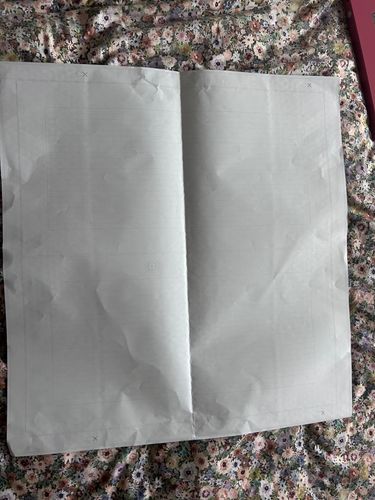
the screws and then slide down into place
Solved! See most helpful response
Hi @Pedro462,
Drilling through the tiles themselves isn’t an issue. You can use a diamond-tipped or spade tile drill bit to get through safely without cracking the tile. The real challenge is mounting your cabinet securely on a cement sheet with tiles when there are likely no studs in the right positions. Standard spring toggles are designed to tighten against a solid backing, and they don’t leave an exposed screw head that your cabinet slots can hook onto. Plastic plugs aren’t ideal either, as they’re meant for solid masonry, not a thin cement sheet behind tiles.
A more reliable solution is to locate any timber studs, then pre-drill the tiles and install a timber brace spanning the studs. You can then screw into this timber brace, providing a solid surface to hang your cabinet from. If studs can’t be found or detected through the cement sheet and tiles, one workaround is to use a hollow wall spring toggle, adding a secondary washer and nut. You would place the nut and washer slightly down the bolt, insert the toggle, and as you tighten it, the washer and nut act as a “head” against the tile while the toggle pulls against the back of the cement sheet. This creates a secure mounting point with an exposed screw head that fits the cabinet’s slots. Similar to these Ramset Spring Toggle With Round Cup Hooks, though the hook might be too large to fit into those cabinets' slots.
It’s a tricky setup, mainly because of the hollow wall behind the tiles, so any solution will need to carefully balance security with compatibility with your cabinet’s mounting slots. Let me tag @Nailbag to see if he has any thoughts.
Please let me know if you have any questions.
Mitchell
Hi @Pedro462
Unfortunately finding studs behind a tiled wall is 100% a lucky strike as there is no sensors that would work. So this is how I do it and by chance several times today.
After decades of trying different products, these Diablo bits have been the best which I only discovered early last year. There are not cheap, but they last. They do an excellent job of making a very clean cut without walking off the mark.
You don't have to have one of these, but it does help to start an accurate position. bathroom furniture is very unforgiving in being the slightest bit off. So, without one just start very slow and stop when you have gone through the tile and reached the cement sheet. I like to switch to a multi-material bit to get through the next layers to protect my tile bit in case I strike a nail etc. Its important to anticipate the breakthrough one you get through the cement sheet, tile adhesive and possibly plasterboard. So, don't apply max pressure. A masonry bit will also work just don't use hammer.
With those holes made use these Ramset universal anchors. They do a heavier duty one if you need. Use a small washer under the screw-head and drive it in until tight. The system will allow you to unscrew it slightly without compromising the grip and you only want .5mm anyway to lock the cabinet keyholes in place.
It's going to be a challenging project as 4 x keyhole mounts are very unforgiving. Plus the weight of the cabinet. I would put a box underneath to give your arms a rest.
I would also consider only using the top keyholes. Once fitted, pull the lower part of the cabinet out enough to squeeze in some silicone which once set will bond the cabinet to the wall nicely. I use silicone all the time for things like this and works are treat
Nailbag
Thanks heaps, most helpful.
Hi @Nailbag. Again thanks for the detailed information. I will probably get the larger size of the Ramset Universal Anchors but was wondering how the small spikes go getting through the drilled hole as obviously the tile has no give and was wondering if they snap off? I assume they are required to stop the plastic anchor from rotating when putting in the screw?
These are the universal plugs and if you increase the size of the photo you will see the spikes
Hi @Pedro462,
They will squish as you tap the plug into the hole. Provided you use the correct 6mm drill bit, they'll fit in fine.
Mitchell
Thanks for the information. Appreciated
Workshop is a friendly place to learn, get ideas and find inspiration for your home improvement projects
We would love to help with your project.
Join the Bunnings Workshop community today to ask questions and get advice.