The Bunnings Workshop community can help with your home improvement projects.
Hi all,
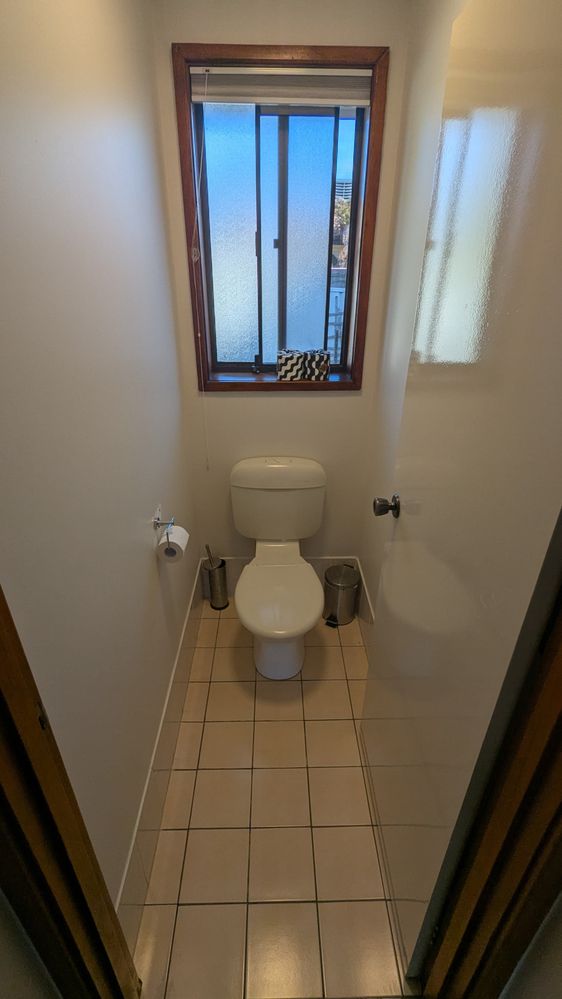
Planning to do a small toilet renovation (toilet is separate to bathroom). Initially, we wanted to just remove the old tiles (tiles are just on floor and one layer of skirting tiles) and remove the old toilet and replace with new tiles and new toilet. However, an asbestos assessor has found asbestos containing materials beneath the floor tiles. We know that we will need to get a professional asbestos remover to demolish the whole toilet room. Once that is done, what is the process of rebuilding the toilet room? Some questions I have are:
1. What needs to go above the subfloor? From past experience, when asbestos demolishers remove everything, all that remains is the timber frame and joists (i.e., you can see directly to the dirt under your house).
2. Can the floor just be special floor-specific particleboard? Does the cement sheeting go above this particle board? Or can we use specific cement sheeting as the structural floor underneath the tiles? Which tradesperson should we engage for this?
3. Which tradesperson can I engage to do each part of the job? Plumber, tiler, and plaster are easy, but who is qualified to re-install the floor that goes underneath the tiles?
4. What order should this all be done in (i.e., what order should I engage the trades)?
The thing I am most confused about is the floor... If I have missed anything, please do let me know! Attached is a photo of our toilet for reference. We want to keep the layout and style the same. We just want to replace the tiles (old tiles are drummy and some are loose) and replace the toilet, but asbestos has made this job bigger than originally planned!
Hi @samwaw,
Welcome to the Bunnings Workshop community, it is wonderful to have you with us.
For your flooring, you have two main options. The first is to install particleboard flooring, such as YELLOWtongue with Tile Underlay on top. The second is to use a structural fibre cement flooring product such as Scyon Secura Interior Flooring. In terms of cost, the Yellowtongue with tile underlay will be a bit cheaper, but it would be a bit more labour-intensive, and you would have an additional 6mm of material height that would need to be considered.
A qualified carpenter or builder should complete the flooring installation, as they’ll ensure the new floor meets structural standards and is properly supported.
In terms of trade coordination, you’ll start with a licensed asbestos remover first, followed by a carpenter or builder to reinstate the floor structure. Then comes the plumber for rough-in work, a tiler, and finally the plumber again for toilet installation. Make sure each trade is aware of the overall plan so timing can be aligned properly—especially for tasks like tiling, which require curing time.
There is no strict requirement for WCs to be waterproofed under National Construction Code Part 10.2.5 Wet area waterproofing - other areas, but if you wanted to protect the new renovation, it would be worthwhile considering waterproofing the floor and wall junctions. If you wanted to do this, you should engage a waterproofer after the plumber has roughed in. Your tiler may be experienced in this work, so they could probably also help.
Allow me to tag our experienced members @R4addZ, @Nailbag and @Dave-1 to see if they have any advice they can offer.
Let me know what you think and if you have further questions, please don't hesitate to ask.
Jacob
Hi @samwaw
I can’t think of anything other than what @JacobZ has outlined very well.
To simplify the project from your end, you could get a few quotes from a plumber or builder who specialise in bathroom renovations. They tend to have the other trades on hand to provide a single point of contact and faster turn key solution if you're not doing the work yourself.
Nailbag
Good Afternoon @samwaw
Due to teh complexity of the problem and the steps needing to be sorted it may be easier to engage a builder who uses a set of trades at easy reach. Otherwise your strip down and rebuild could enhd up with a lot longer time frame. It also means if theer is any issue you have one point of contact to deal with.
Have you managed any reno of an area that has required scheduling various trades? If you have then why not comes to mind. I think it would be a deep end first time managing a job if you are not use to the various steps needed. @JacobZ 's steps are a very good set of steps that you can follow.
Dave
Workshop is a friendly place to learn, get ideas and find inspiration for your home improvement projects
We would love to help with your project.
Join the Bunnings Workshop community today to ask questions and get advice.