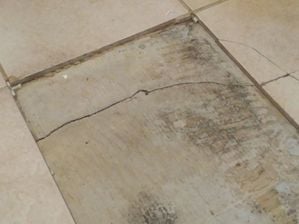
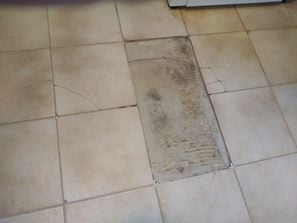
Our house is over 30 years old. Over the last 10-15 years there has been some cracking/breakage of the floor tiles in our laundry adjacent to the washing machine. Although the floor under the washing machine has extra joists, the front loader machine does vibrate at times which has likely contributed to the tile issue. Also the glue used between the tiles and the cement sheet underlay has failed (at least under the tiles I have removed and under adjacent cracked tiles) and no longer bonding the tiles to the underlay.
Refer the attached photos of the damage.
I have enough spare tiles to replace those that are cracked and broken. As can be seen from the photos the cement sheet below the cracked tiles area has cracked also. I am proposing to remove the broken tiles, repair the cement sheet, and lay the spare tiles. Hopefully I can get some further life out of the tile floor. I would prefer to not have to replace the whole floor.
I am a bit unsure how I go about this:
My questions are:
- I presume I should fix the cracked cement sheet to the particle board flooring? What do I use for this?
- Do I attempt to remove the old dried and uneven failed tile cement? If so what do I use?
- I presume once I have fixed down the cement sheet, I should level the cement sheet in the area I will be re-tiling? If so what do I use as a filling agent for this?
- I presume that once I have a firm and level area for re-tiling I follow normal tiling practice with respect to cement and grout?
- Are there anything else I should consider?