The Bunnings Workshop community can help with your home improvement projects.
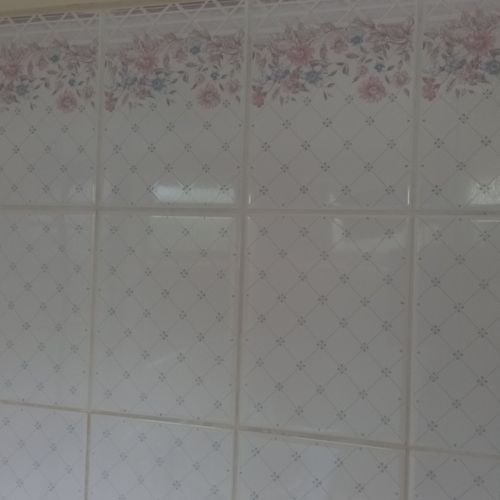
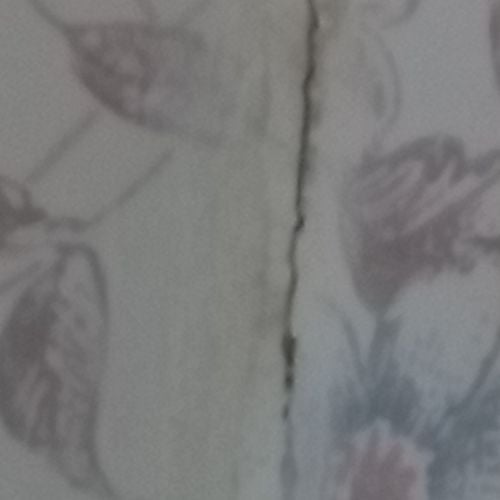
We are planning to paint tiles white in our bathroom and shower and im wanting some advice. What type of grout preparation is needed apart from wiping with methylated spirits? Do the glossy tiles need sanding? Is additional grouting required where original grout has cracked?
Hi @cazza12,
Welcome to the Bunnings Workshop community, it is fantastic to have you with us.
While tile paint will be water-resistant, it is not waterproof in the same way as the rubberised waterproofing membrane that sits beneath your tiles. It is not intended to be fully waterproof, so I wouldn't really worry about that too much.
The preparation instructions vary from product to product, so it is best to have a look at the instructions for your specific product.
If, for example, you are using the Dulux 1L Renovation Range Primer and Dulux Renovation Range Tiles & Benchtops Gloss White, the instructions can be found here and here.
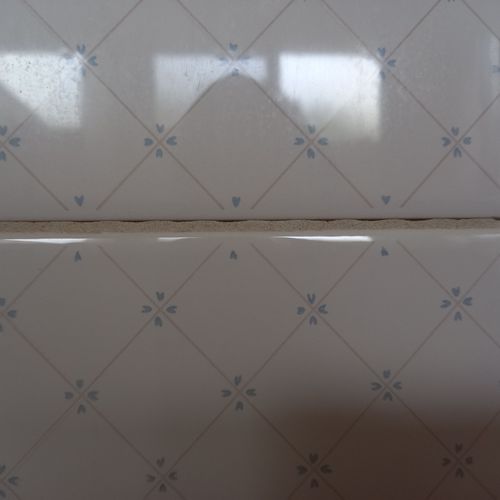
For the grout line shown in image 2, it would be worthwhile to scrape it out using a Grout Saw, to create some room for new grout to adhere, then topping it up with some Dunlop Ready-To-Go Coloured Grout. Allow it to fully cure before following the preparation steps shown in the product's instructions.
If you are using the Dulux Renovations range of paints, you will have to start by fully removing the silicone from the corners, as paint will not adhere to it. This can be done using Selleys Sealant Remover and a Caulk & Sealant Remover. They then recommend using 400 Grit Sandpaper to ensure all silicone has been removed.
They also recommend sanding with the same 400-grit sandpaper to remove the glossiness and achieve a dull finish.
After this, you should thoroughly clean the tile surface using Selleys Rapid Mould Killer, then wash it down well with clean water.
They then recommend washing the tile and grout with Sugar Soap, using a toothbrush to ensure you thoroughly clean the grout lines.
Once this has been done, you can proceed to follow the application steps shown in How To Paint Tiles.
When the paint has fully cured, you can replace the silicone that was removed at the beginning. Check out How To Silicone a Gap for some guidance on this process.
There is a bit to it, but each step needs to be followed to achieve a great result.
Let me know if you have any further questions.
Jacob
Workshop is a friendly place to learn, get ideas and find inspiration for your home improvement projects
We would love to help with your project.
Join the Bunnings Workshop community today to ask questions and get advice.