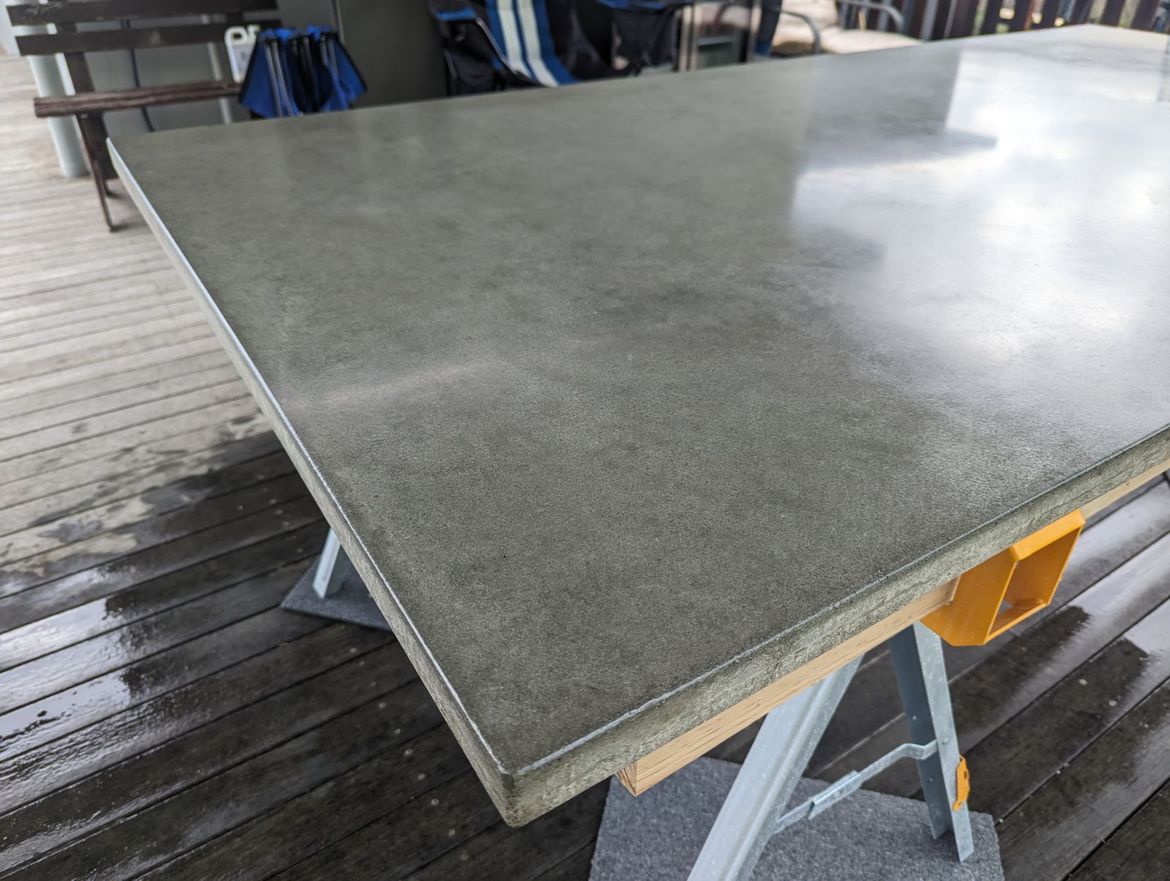
A tabletop made of reinforced concrete.
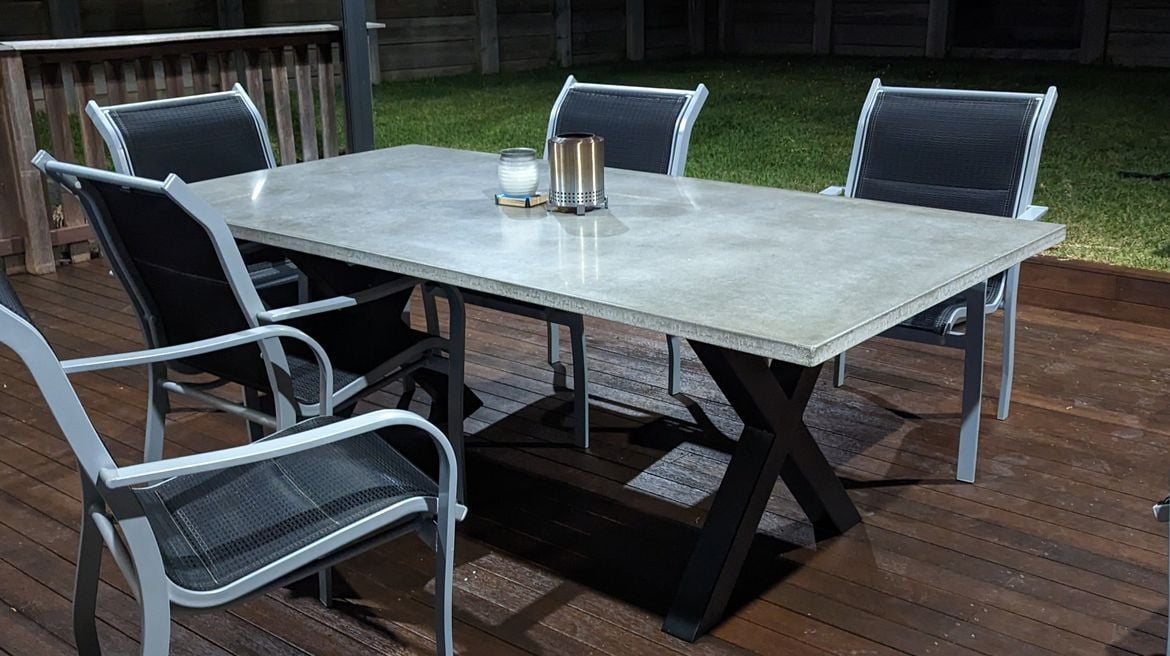
The project
I did a bit of research to find suitable materials for this project, which was to make a concrete top for my table. Here's a quick overview that others can hopefully find useful.
To make the form, I used this melamine. This is the concrete I used and this is the reomesh. I used WD-40 water protective silicone to ensure no sticking to the form. This is the silicone I used for rounding the corners of the form. I used this silicone scraper set for rounding the silicone in the form.
I cut the pieces of melamine and I made it so the concrete will be 40mm thick. The size was 2 x 1m. I needed 8 bags of concrete for this size.
Then I screwed the sides on. Then I ran a thin bead of the silicone around the edges and rounded them using the scraper set. This meant the corners of the tabletop would be nicely rounded.
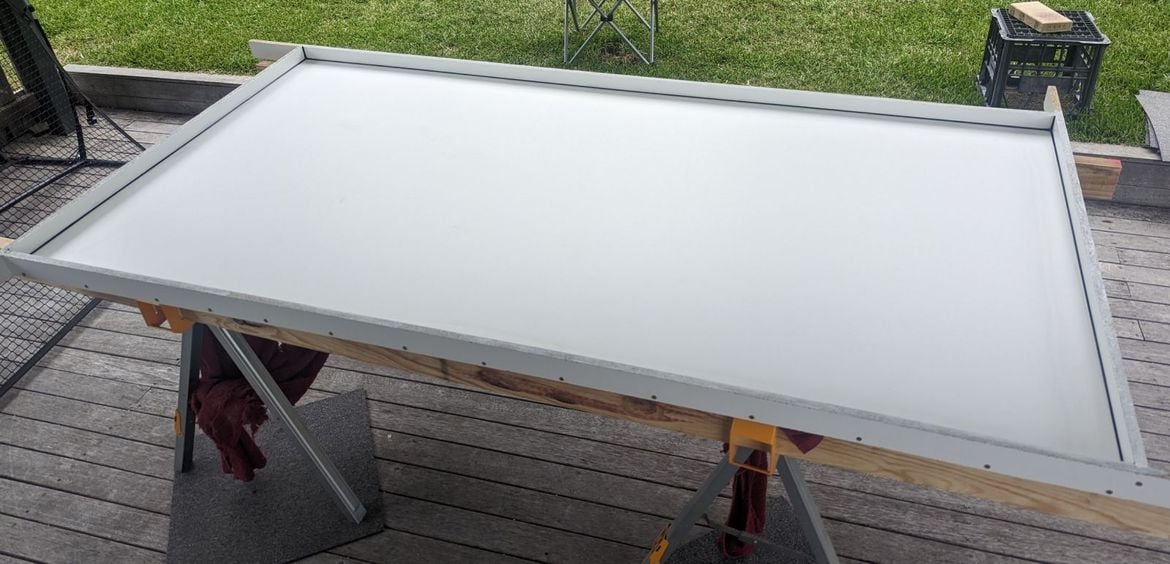
Prior to adding the concrete, ensure the melamine is clean, then spray all over using the silicone spray.
Mix up the concrete according to the instructions on the bags. I had to add an extra couple of hundred mls of water to what it said to get it a nice consistency. Fill the form up ½ to ¾ with concrete. I left the edges a bit longer so it was easy to grab onto to pull them off later.
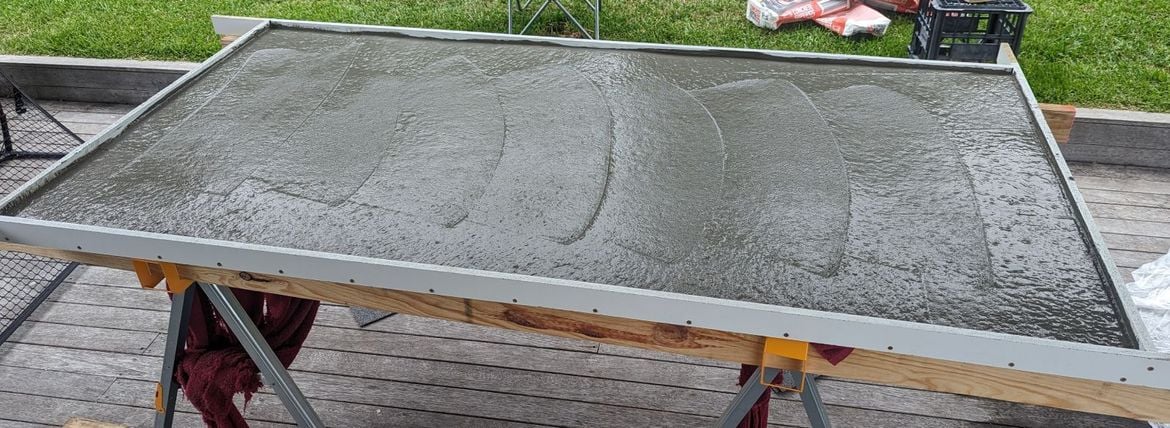
Then you'll want to vibrate it a lot on the sides and bottom. I used a reciprocating saw with no blade in it and ran it around the sides and underneath for about half an hour. You will see all the bubbles coming up. But otherwise, you can use a rubber mallet, or even a hammer. You may have to do it longer to get good results.
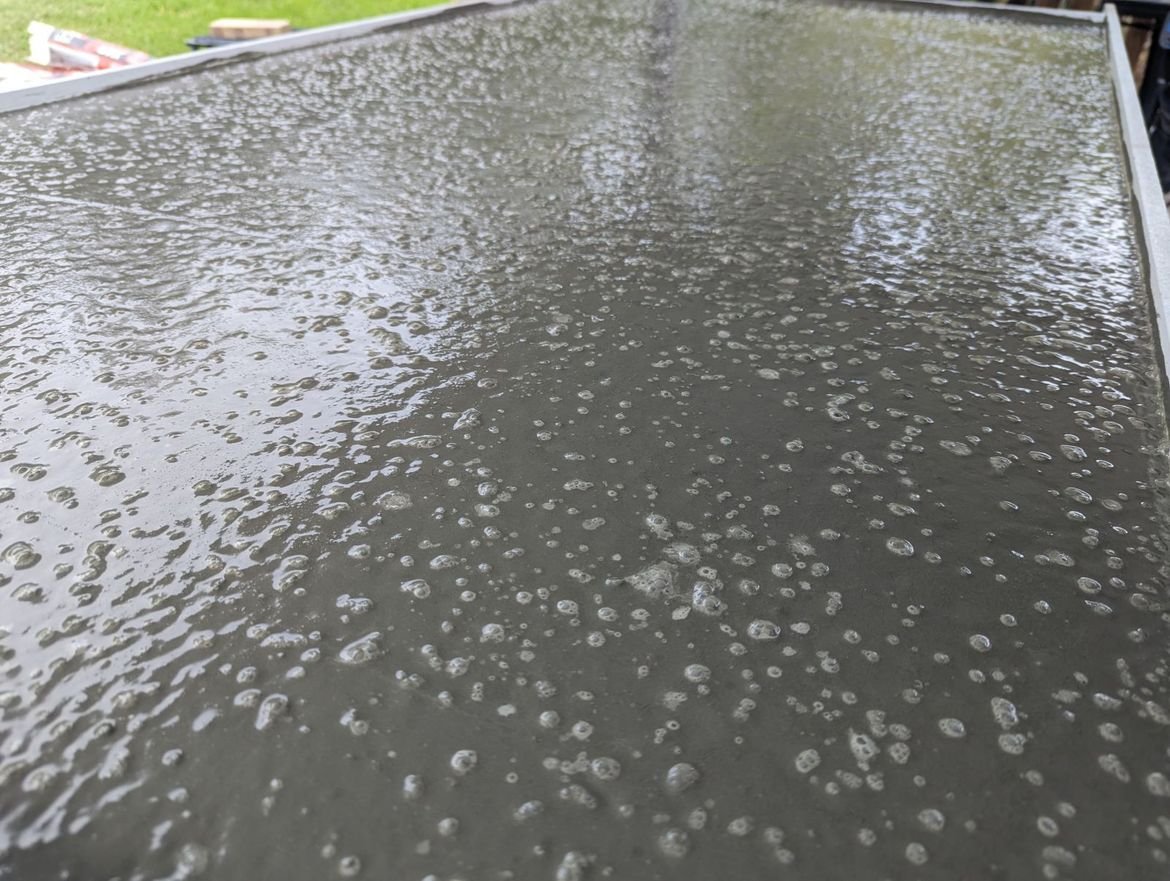
Then add the reomesh. I needed slightly more than just the one sheet for the length, so I cut a bit off another sheet I already had. Then fill up with the remainder of the concrete. After that, vibrate again for as long as there's still bubbles coming up. I smoothed the surface a few times and vibrated again. I did probably 45 mins or so of vibrating.
Then that's it for the casting. Just smooth the surface as much as you want (it will be the bottom once you flip it, so it doesn't matter too much). Cover it with plastic so it dries slowly. It might need a light spray each day for a couple of days. Then put the plastic back on.
Remove the sides and flip it and remove the top. The sides and top came off super easy. Then I wet it down and used 240-grit wet and dry to sand it, then 400-grit for final wet sanding. After that I sealed it using penetrating sealer. I used a microfibre cloth and poured it onto the table and just rubbed it round as much as the table would take before it wasn't soaking in any more. I'm super happy with how it turned out. It's really strong and doesn't have any flex when you lift it from the two ends.