The Bunnings Workshop community can help with your home improvement projects.
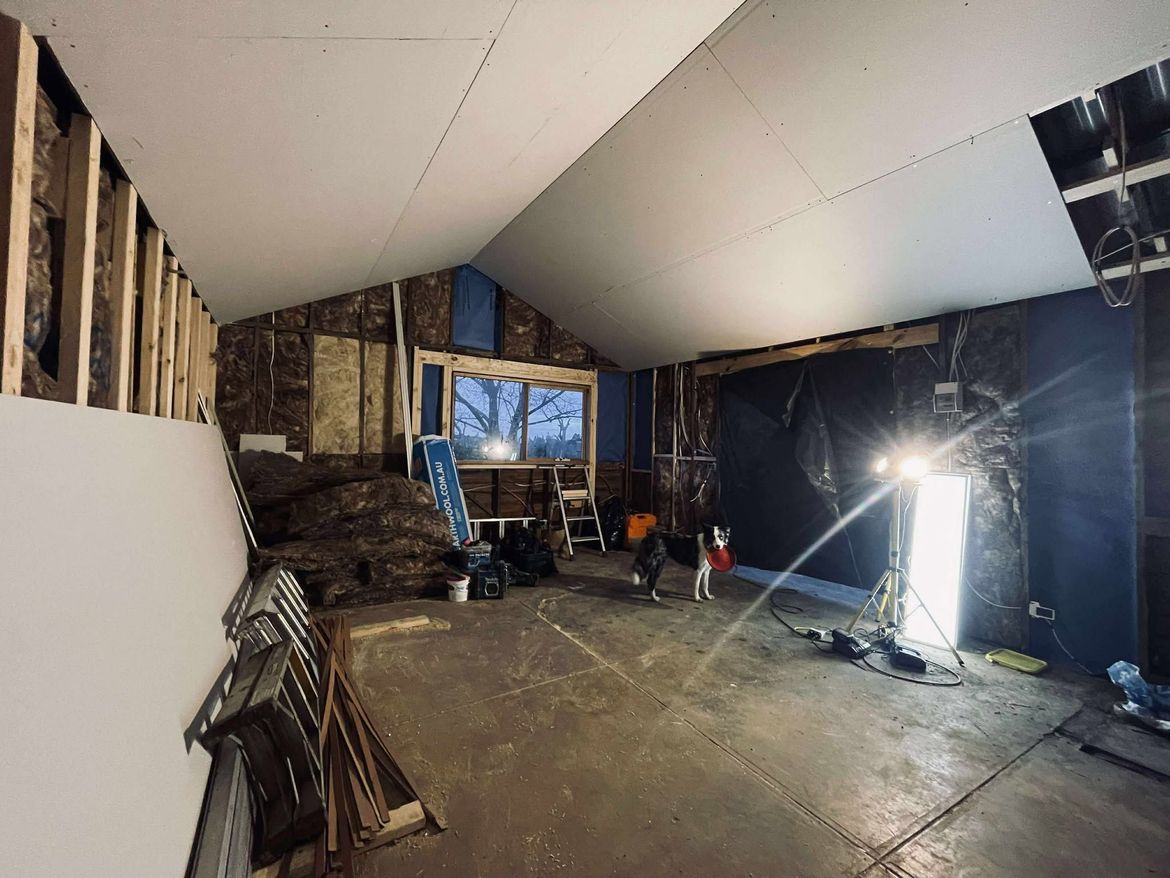
We're currently in the process of converting an old external and detached garage (built in the 50's - timber fame with cladding) into a liveable space. The original concrete slab is relatively uneven, but not extremely so - approximately 18mm drop into the corners and general uneveness across the top, especially where there are joins in the slab.
The slab height is at the same level as the path / ground around the garage, so any additional sub-floor and flooring structure will add a step as you enter.
Seeking advice on what would be the best option to install even flooring (preference is for timber laminate or vinyl instead of tiles) and if there is any way to help to insulate from the concrete slab itself, without adding a significant height / step at the entrance?
The options we're currently considering are:
1. Using a levelling compound to achieve a flat surface and lay laminate or vinyl planks (would minimise the step however there would still be a 'lip' at the door entrance. No insulation so concerned that this would be too cold?
2. Levelling compound combined with some kind of insulation (XPS foam boards?) also beneath a subfloor and laminate/plank - not sure how effective this would be in improving insulation / comfort, whilst would also have a step at the entrance (would likely need to introduce some kind of ramp?)
3. Timber batten subfloor with insulation between the battens, then particle board and laminate/plank - same issue as option 2 with a step issue that may require ramp. Not sure what the best option would be for insulation material for this scenario?
We have double doors installed - they open outwards so just trying to find the best solution that doesn't create a trip hazard but also (ideally) improves comfort/insulation for the floor itself.
Welcome to the Bunnings Workshop community @Pete78. It's brilliant to have you join us and many thanks for your question on flooring.
When it comes to retrofitting insulation over an old concrete slab, the main challenge is that any effective insulation layer will add thickness and therefore impact your doorway height. If you want meaningful insulation, you’ll likely need to accept either a small step or a ramp transition at the entrance to remove the trip hazard. Most slab-on-ground homes aren’t built with insulation directly under the flooring, so it’s quite common to simply level the slab and lay flooring directly over it. This won’t stop some cold transfer, but it’s the simplest and lowest-profile option.
If comfort is a concern, adding a timber or particleboard layer over the slab can help reduce the cold feel, since timber doesn’t transfer temperature the same way as concrete. Insulation batts or foam boards between battens will work even better, but they will raise the floor and you’ll need to design around that height change. Otherwise, self-levelling compound followed by laminate or vinyl planks is perfectly workable, and you can always soften the floor with rugs in high-use areas. Ultimately, the choice comes down to whether you want to prioritise thermal comfort (and accept a step or ramp at the doorway) or minimise the floor height build-up and keep a flush transition.
Have you insulated all walls and the ceiling with the highest-rated batts possible? Ensuring those areas have the highest R-rated insulation possible would be far more beneficial than insulating the floor. This will ensure that any heating you run in the room works as efficiently as possible.
Please let me know if you have any questions.
Mitchell
Workshop is a friendly place to learn, get ideas and find inspiration for your home improvement projects
We would love to help with your project.
Join the Bunnings Workshop community today to ask questions and get advice.