The Bunnings Workshop community can help with your home improvement projects.
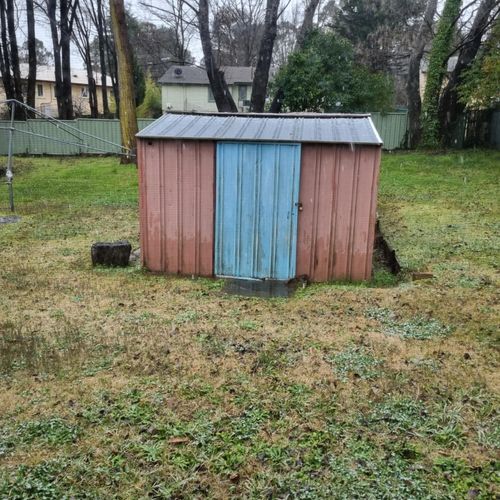
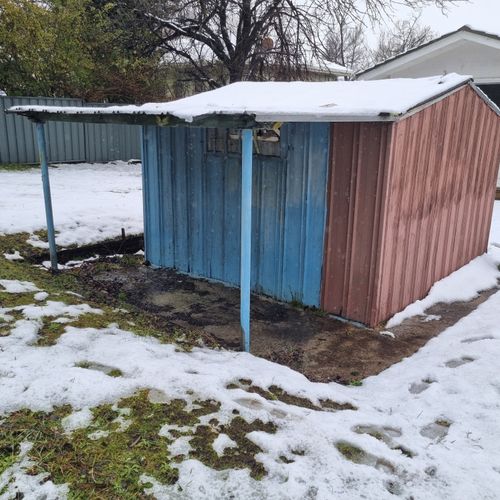
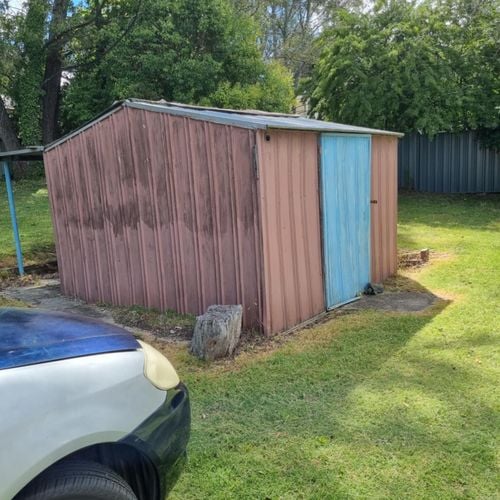
Hi, I am planning to clean around and paint the shed behind my house. (I didn't put it up, it was here when I bought the house five years ago but I have been too busy too improve it). Whenever it rains it gets water and mud all through the bottom of the shed. Normally about 1cm high. Although it's annoying I could live with it and just put everything in the shed on top of plastic boxes and rubber mats if needed, but I'm worried the metal will eventually rust? Is there some way I can waterproof it to stop it filling with water when in rains? I haven't tried anything yet and planning to clean the surrounding area from debris, which might help slightly but I'm sure water will still run in along the ground. I don't want to add more concrete as I may eventually want to remove the shed entirely. Just thought if there is an easy way to waterproof it it would be better to do this prior to painting. Thanks!!
Hello @sharonmc
Welcome to the Bunnings Workshop community. It's sensational to have you join us, and thanks for sharing your question about your shed.
If it was just the occasional dampness, then sealing the edge of the shed would be still a good option. However, since over centimetre of water is flooding the inside of the shed tells me that the cement base has settled down or the surrounding area has risen to an extent that water now pools in this lower section. I propose increasing the height of your shed (50mm) by placing a new slab above it. Here is a handy guide that will help - How to pour a concrete slab by @tom_builds.
This will solve the flooding problems, and you can then properly seal the edge of the shed to prevent water from coming in. This will also prevent the sides of the shed from being immersed in water, thereby preventing it from rusting out too early. Here is handy guide that will help - How to waterproof a shed floor.
Let me call on our experienced members @Dave-1 and @Nailbag for their recommendations.
If you need further assistance, please let us know.
Eric
Hi @sharonmc
As the shed is lower on several sides than the surrounding ground the first thing is to do is dig away the soil that surrounds it about 50mm lower than the slab floor. You would then need to run an ag pipe system around the slab and then away from the shed to take low lying water away. But you may find this not necessary for a garden shed.
If you clean the edge where the walls meet the slab, then apply a Sika silicon sealant along the joint, this will prevent water seeping under the walls internally.
Nailbag.
Afternoon @sharonmc
After a cleanup around the shed I would hose the area and see where the water pools on the concrete slab, thats your low point and as @Nailbag has mentioned you may want to install drainage to keep the area drier.
If you are thinking of removing the shed down the track, how about placing pavers inside the shed to raise the height by 40mm, Im not sure how your shed is attached to the slab (it really needs to be in case of wind) but if it isnt then you could also put the whole lot on pavers to raise it (no concrete to shift later on)
Dave
Hi All,
thank you very much! excuse the late reply, I didn't realize anyone had replied.
that all sounds great!
I'm not sure how it's held down but I assume the poles at the back go into the concrete and it's probably held on other sides in a similar way too. I tried to move it just now and no movement at all. (If it was easy to move I would probably remove it and change the location since it's not the best looking shed at the moment, and right in the middle of the garden, but I think it will be harder/more expensive to remove than to fix, and it is good to have storage).
Pavers sounds like a great idea, I'll probably go with that (depending on how much they cost, will have a look). There's concrete right round the shed so if I make the inside of the shed higher I imagine when it rains water will sit on the concrete and it will disappear within a day or two unless it's very wet.
Do you think I would also need to waterproof the bottom part of the shed (that goes below the paver height) to prevent rust? I don't see any rust on the walls of the shed and it's been 5 years now so it's doing quite well so far, there might be some on the roof.
I guess the other option (as suggested) would be to dig a drain around the outside of the concrete......I think I could get away with just using pavers and not digging a drain, would that work? Or is the suggestion to do both?
I'll definitely be cleaning it and adding a silicon sealant around all the edges as suggested.
Thanks,
Sharon
Hello @sharonmc
Raising the inside flooring level of the shed is a good idea. I don't think it will be necessary to waterproof the bottom part of the shed as it drains out pretty quickly. However, I would suggest adding an extra coating of protection by spraying the bottom side of the shed both inside and outside with White Knight 300g Cold Gal Silver Rust Guard Spray Paint. This should add an extra layer of protection and prevent any immediate rusting of the sides. My best suggestion is to clean the bottom edge of the shed very well before you spray it with galvanized spray.
Digging a drain would be so beneficial to your shed as it eliminates the possibility of water pooling in that area. It will prevent flooding and reduce the exposure of the bottom of your shed and base from rainwater.
If you have any other questions we can help with, please let us know.
Eric
Afternoon @sharonmc
I really like the Rust guard spray that @EricL has mentioned. That goes towards a longer solve then to leave it as is.
I wouldnt worry about the silicone either, the water builds up anbd flows in. The pavers will raise it high enough hopefully. The drain is also a good thing, In fact I would probarly start with one then the paving depending on where you can drain the water to.
Dave
thanks very much! ok will use the rust guard after cleaning, that sounds great.
I'm not too sure about my drain digging skills since I've never done it and only have one shovel, one pick-axe and not many other tools but I'll see how it goes. If I can improve the shed and it looks better I'll upload some photos (though might be a few months before I can start unfortunately).
thanks!
Sharon
Evening @sharonmc
A shovel and a pick-axe is all you need to start. The way you have described the excess water over the concrete slab by 1cm will mean the pavers (keep an eye out on facebook market place for free pavers and move fast when you see them as they generally go like hot potatoes) are around 4cm thick so it will be better even without the drain.
Dave
Workshop is a friendly place to learn, get ideas and find inspiration for your home improvement projects
We would love to help with your project.
Join the Bunnings Workshop community today to ask questions and get advice.