The Bunnings Workshop community can help with your home improvement projects.
Hi,
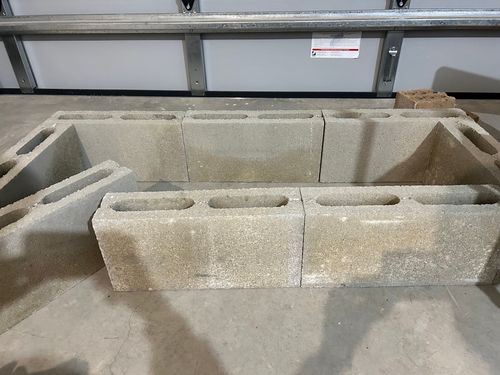
I’m looking for some advice on how I can build a garden bed using the masonry blocks shown.
This will be at the front of our house which has clay soil.
What will I need to join the bricks together? What base will I need to stop the bricks from shifting in the soil? Will I need drainage.
Thank you in advance!
Solved! See most helpful response
Hello @paultang23
Welcome to the Bunnings Workshop community. It's sensational to have you join us, and thanks for sharing your question about your garden bed.
Building a garden bed with the masonry blocks you’ve shown is a practical and attractive choice, especially for a clay soil front yard. To start with the base, it's essential to create a level and stable foundation so the blocks won’t shift or settle unevenly over time. Since clay soil can expand and contract with moisture, you should dig down about 100 mm to 150 mm and fill that trench with a layer of compacted crushed rock or road base. This will help distribute weight evenly and reduce movement. On top of that, add a thin layer of sand to fine-tune the levelling before laying your blocks.
To join the masonry blocks together, you have two good options depending on whether you want the bed to be permanent or semi-permanent. For a long-lasting, fixed garden bed, you can use landscape construction adhesive specifically formulated for masonry, applying it between each course of blocks. This avoids the need for mortar while still securing the blocks. If you prefer to keep things more flexible or temporary, you could simply dry-stack the blocks, but if you go this route, make sure they interlock tightly and consider adding metal corner brackets or spikes for extra reinforcement.
Drainage is also important, especially in a clay soil setting where water tends to accumulate. You’ll want to avoid water pooling inside the bed which can lead to root rot or poor plant performance. A simple fix is to line the bottom with a coarse gravel layer before adding your garden mix. Also, you might want to use a geotextile fabric over the gravel to prevent soil from clogging the drainage layer. If your design has solid walls on all sides, you could also drill a few weep holes into the bottom course of blocks to allow excess water to escape. Taking these steps will ensure your garden bed remains stable, well-drained, and ready to support healthy plant growth over time.
If you have any other questions we can help with, please let us know.
Eric
Hi Eric,
This is the progress so far. The blocks have been joined with mortar.
I’m looking to render the blocks to create an off white look garden bed. The plants will sit behind those blocks.
Any tips on the next steps to render and products to use? ![]()
Thanka again,
Paul
Hello @paultang23
You are making excellent progress, I suggest using the Dunlop 20kg Multipurpose Acrylic Render to cover the blocks.
Here is a handy step-by-step guide: How To Render
Once the render has fully cured you can then paint the outside with exterior paint.
If you have any other questions we can help with, please let us know.
Eric
Workshop is a friendly place to learn, get ideas and find inspiration for your home improvement projects
We would love to help with your project.
Join the Bunnings Workshop community today to ask questions and get advice.