Workshop
Ask a question

The Bunnings Workshop community can help with your home improvement projects.

How to improve soil drainage and reduce compaction?

olitim85
Getting Established

How to improve soil drainage and reduce compaction?

In the backyard we have areas of soil (topped with some sort of topping), that is very compacted and not at all loose. 

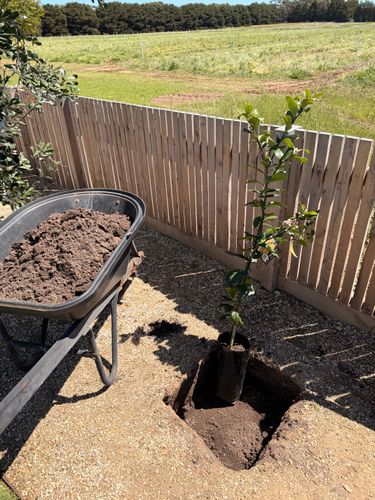
I have recently dug large holes for two citrus trees that I have planted but the surrounding earth is hard and not friable. I would like to know the best way to loosen this soil and to minimise disturbing the citrus roots. Picture attached shows the hole dug for the citrus showing hard sandy/silty soil. 

Is installing some in ground worm farms a good idea to help this? 
IMG_1694.jpeg

EricL
Bunnings Team Member

Re: Improve the soil/drainage/reduce compaction

Hello @olitim85 


It looks like your soil is quite compacted and sandy with a layer of crushed topping (possibly decomposed granite or compacted gravel) over it. That kind of surface often becomes hard and water-repellent over time, which makes it tricky for roots and air to move freely. You’ve done a great job digging a clean planting hole for the citrus, and you’re right to think about improving the surrounding soil without disturbing those new roots.


I suggest the following steps. Around the tree, gently loosen the top few centimetres of soil with a garden fork just enough to break the surface crust, not deep enough to damage any roots. Then spread a thick layer (five to ten centimetres) of organic mulch such as composted bark, straw, or sugar cane mulch, keeping it a few centimetres away from the trunk. Over time, earthworms and microorganisms will naturally pull that organic material down into the soil, improving its structure and drainage.


Installing in-ground worm farms will absolutely help in this situation. Place them just beyond the drip line of the tree rather than right beside it. Worm activity will draw moisture and nutrients through the soil while gently aerating it. You can make simple worm towers from pieces of PVC pipe with side holes, half-buried and topped with a removable cap for adding kitchen scraps.


If the topping layer is particularly dense, consider gradually replacing a small section around each tree with a looser organic mulch zone. This will let water soak in and stop the ground from baking hard again. You could also water occasionally with a seaweed solution it helps stimulate root growth and encourages beneficial soil life that naturally breaks down compaction.


With consistent mulching, worm activity, and steady watering, your soil will soften over the coming months. The key is patience let nature do the heavy lifting, and your citrus will thank you with stronger growth and better drainage all around.


If you need further assistance, please let us know.


Eric


See something interesting? Give it the thumbs up!

Why join the Bunnings Workshop community?

Workshop is a friendly place to learn, get ideas and find inspiration for your home improvement projects