Steps
Step 1
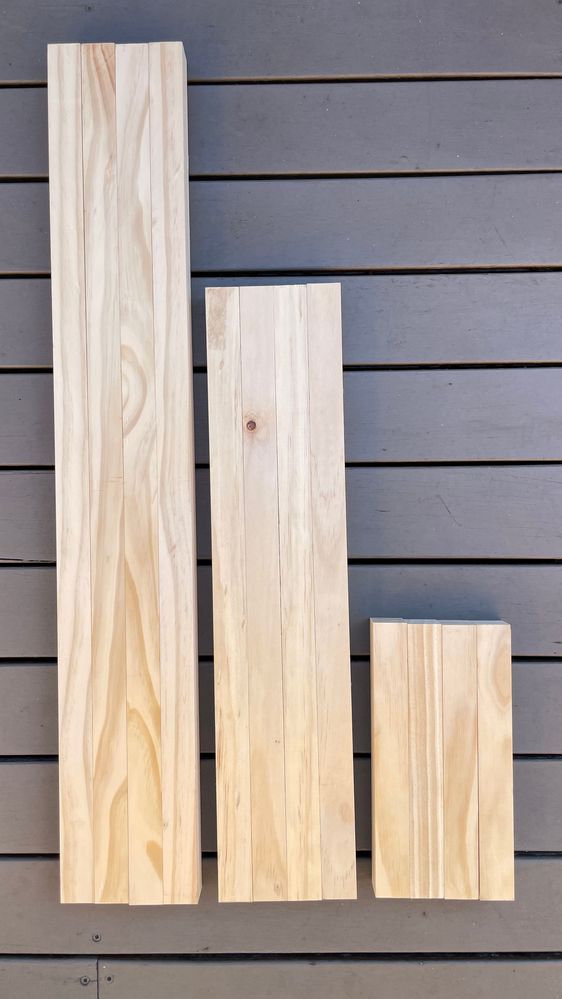
Cut the 30x30 DAR Pine to length. My table measures 600mm wide x 300mm deep by 760mm high so my cut list was:
4 x 760mm
4 x 540 mm
4 x 240mm
Step 2
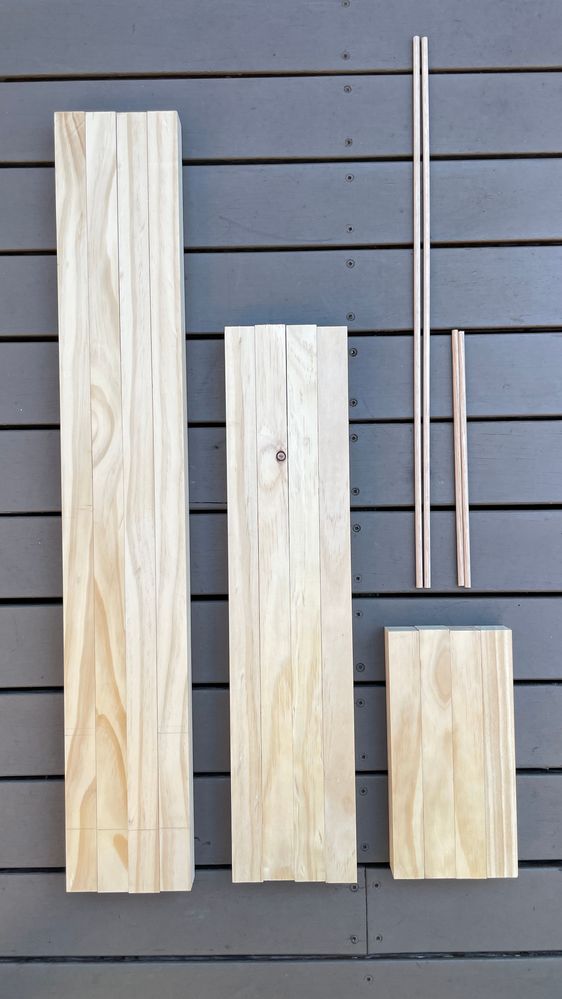
Cut the 6mm dowel to length. These fit inside the legs so I added 10mm to each end which will insert into holes drilled into the legs. My cut list was:
2 x 560mm
2 x 260mm
Spray with gold spray paint to mimic metal, or otherwise you could stain the same colour as the table.
Step 3
Drill pocket holes in both ends, on the underside, of each 540mm and 240mm piece.
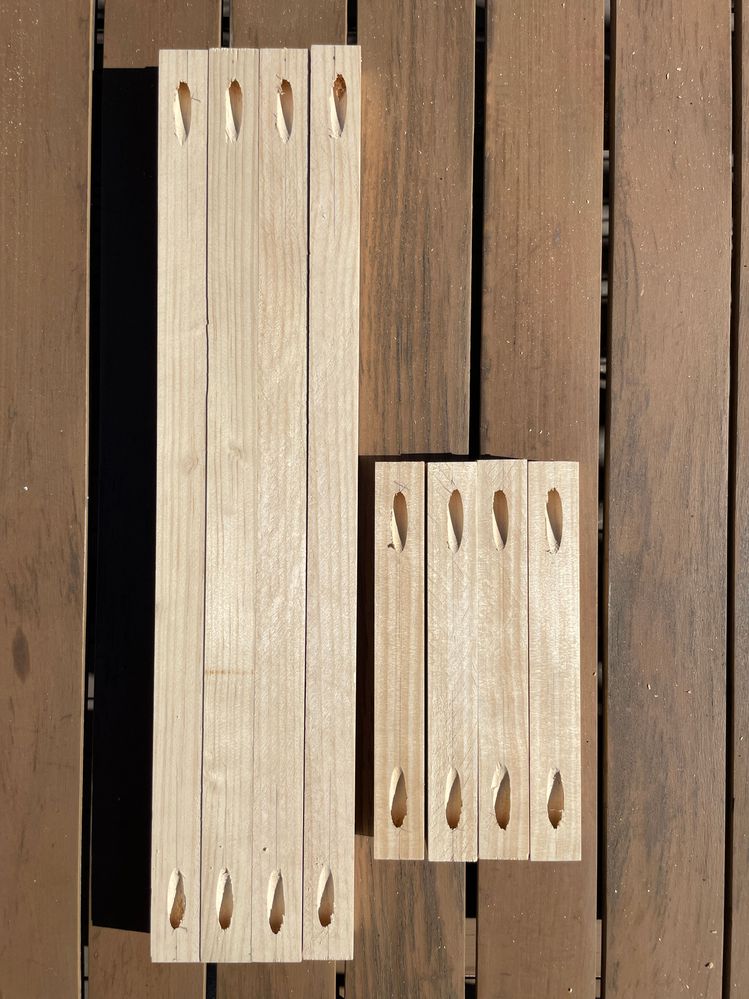
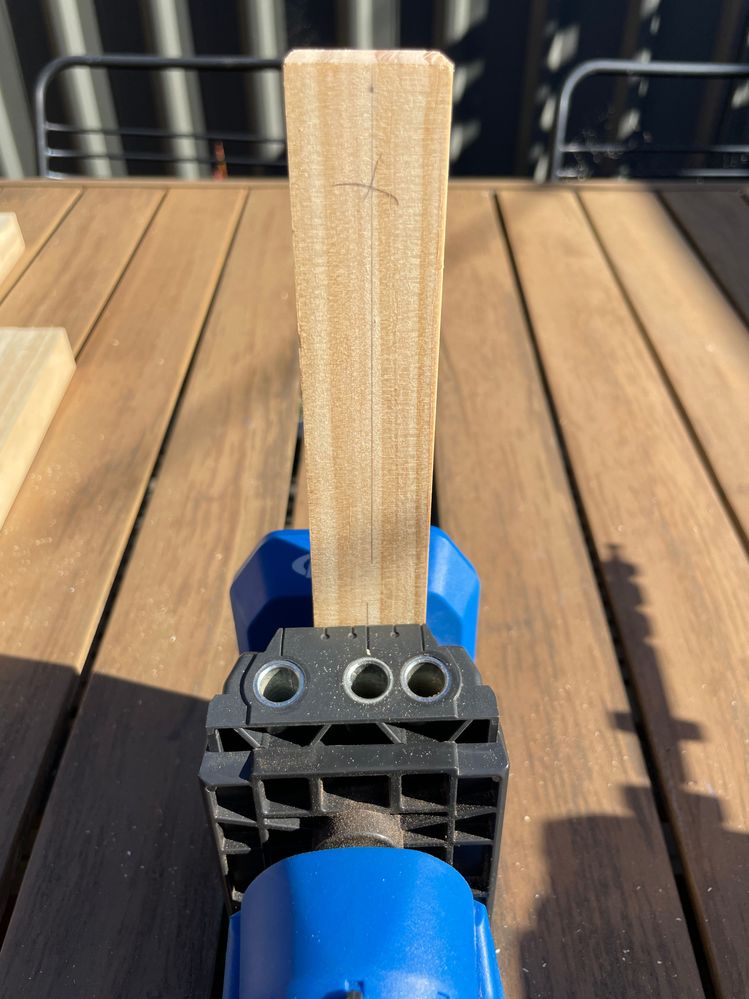
Step 4
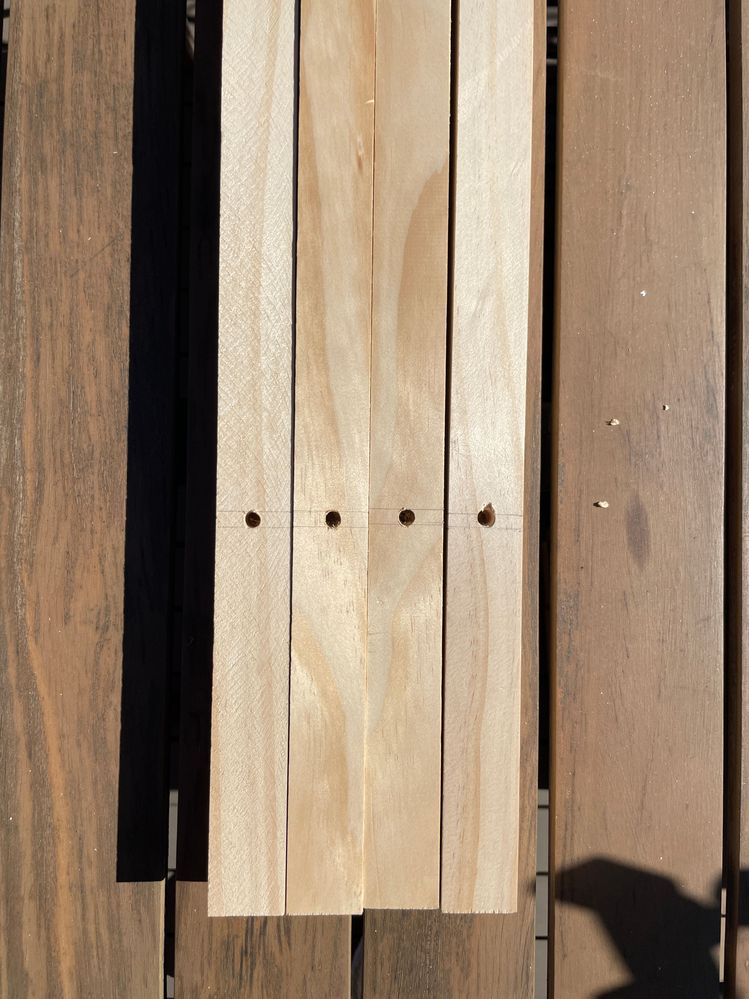
Using a 6.5mm bit, drill holes in the 760mm pieces where your dowel (shelf-rail) will insert.
I drilled 150mm up from the base. TIP: Mark your drill bit with tape so you don’t drill all the way through (only go about half way). Each leg should have a hole on two adjacent faces.
Step 5
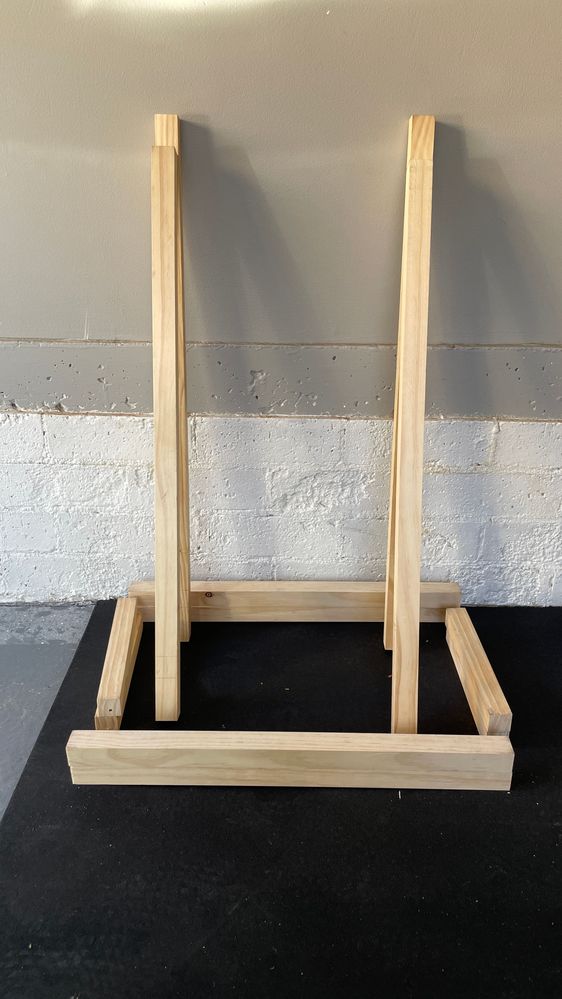
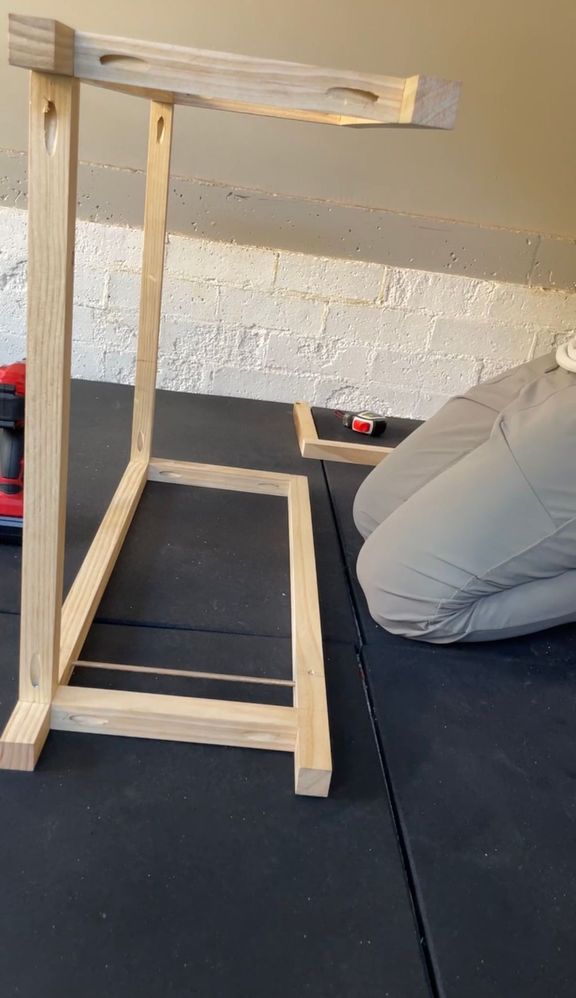
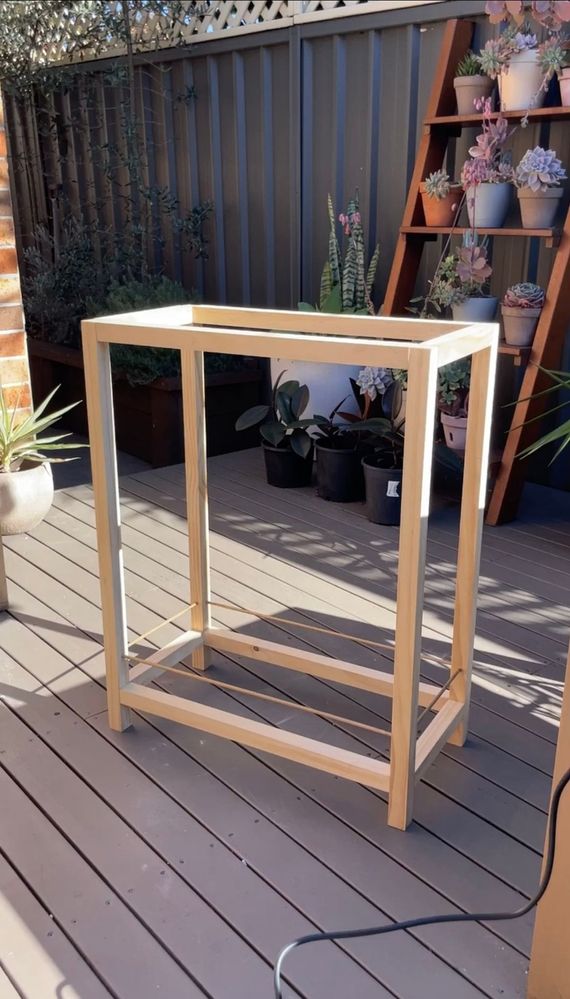
Assemble table using 1 ¼ inch pocket hole screws and wood glue. Insert your dowels as you assemble.
Step 6
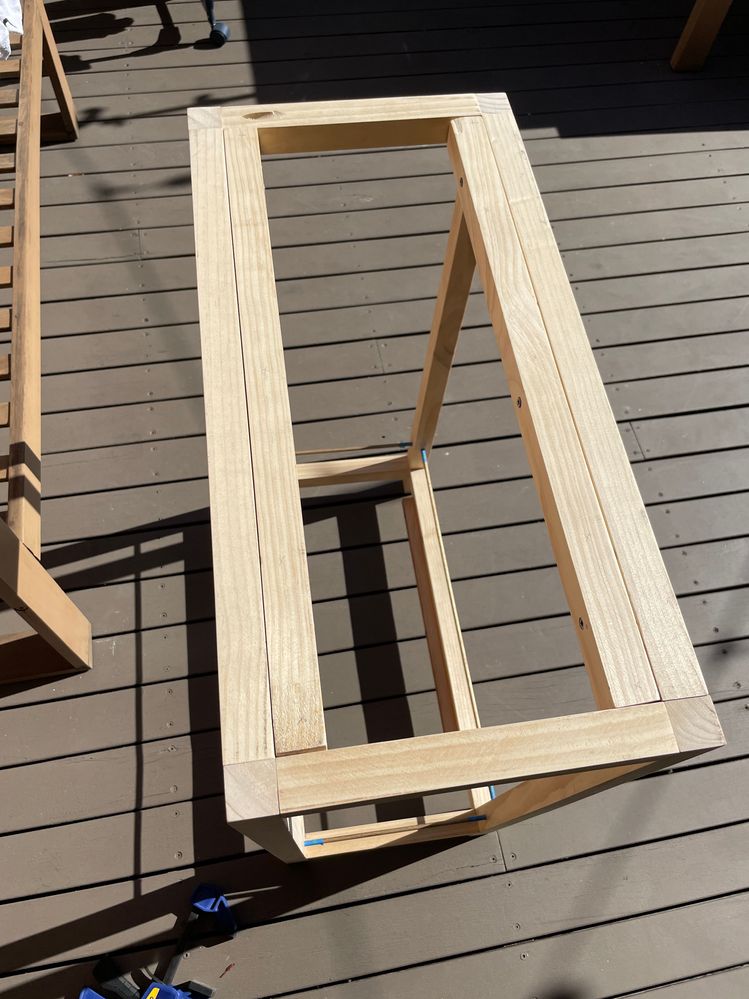
The stemware hanger I bought was not long enough to attach to the front and back edge so I added
extra 30x30 x 540mm pieces (secured with wood glue and 50mm screws) to the inside to have something to attach the hangers to.
I also found the hangers a bit too yellow so spray painted them with the same spray paint used on the dowel shelf rails.
Step 7
Cut your SpecRite panel top to fit. Sand, stain, seal and secure with wood glue and 40mm screws from the underside. I used Cabot's Matt Clear Polyurethane to seal the top.
Step 8
Give the table a good sand and stain with your choice of colour. I had leftover Cabot's sample pots so went with a mixture of Classic Walnut and Mission Brown.
Step 9
You could also use the SpecRite panel for your bottom shelf. Cut the panel to fit and add supports for it to sit on so the shelf is flush with the edges. Secure with wood glue and screws.
However…
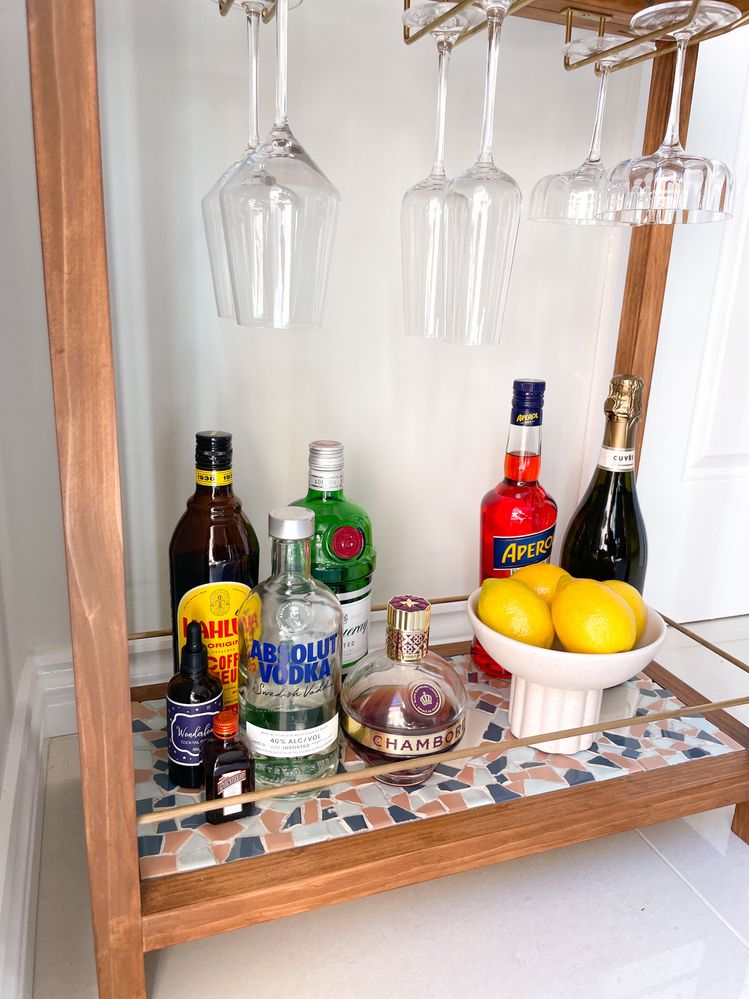
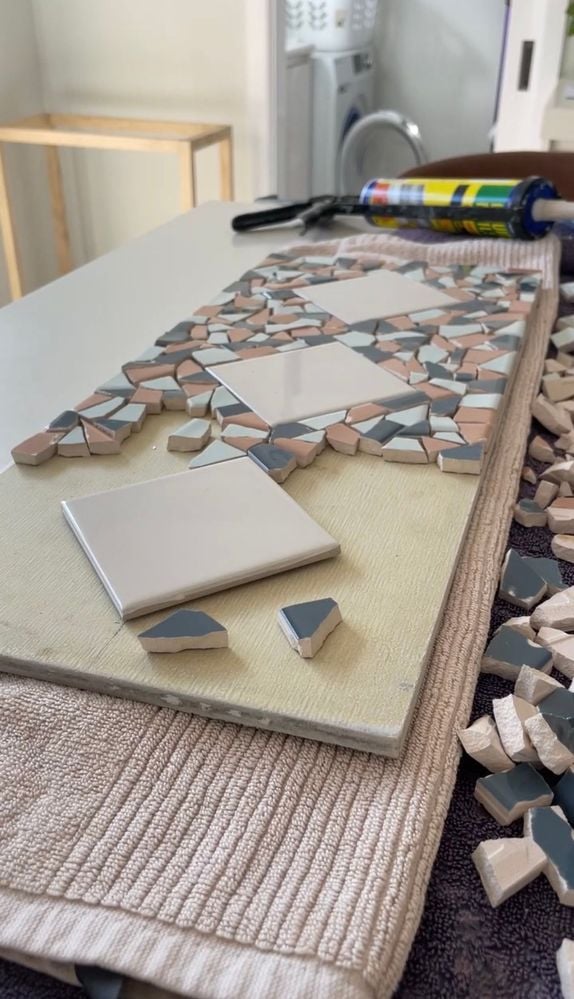
I decided to take it a step further and try my hand at a mosaic shelf to add some fun and colour. I love that Bunnings sell a lot of their tiles by the piece which was perfect for this project. I placed a towel over the top and using a hammer cracked the tiles into small pieces, then used a tile nipper to make even smaller bits.
Apply each piece to villaboard using a small amount of liquid nails. I worked in small sections, laying out the design first to make sure it fit together.
Mix up your grout and apply over the mosaic, wiping off with a damp sponge.
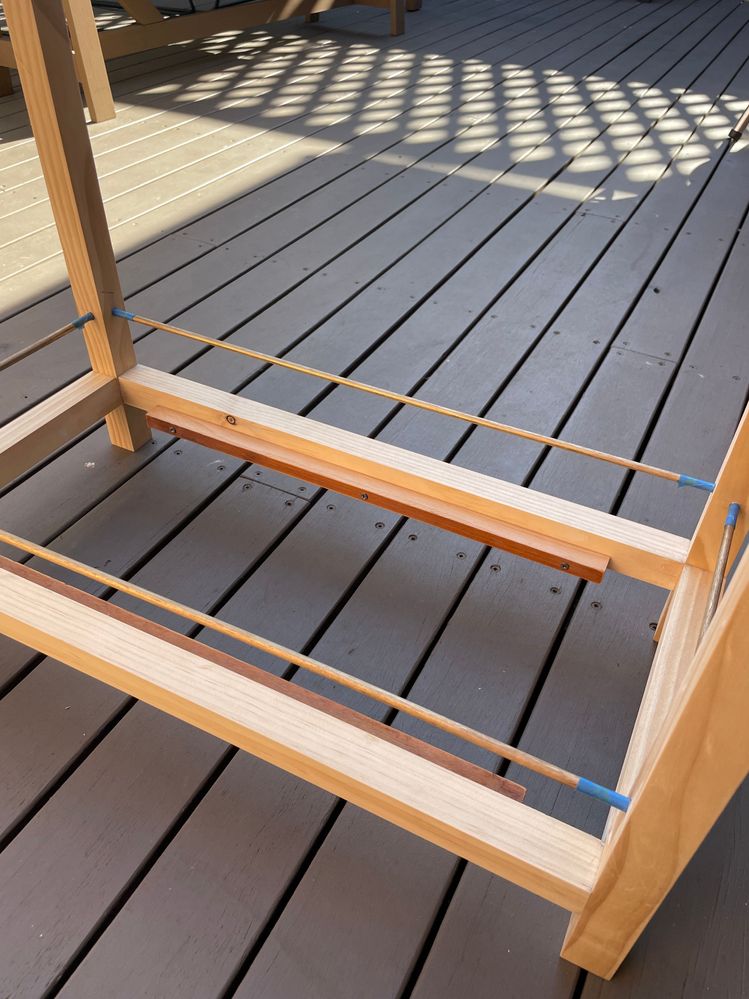
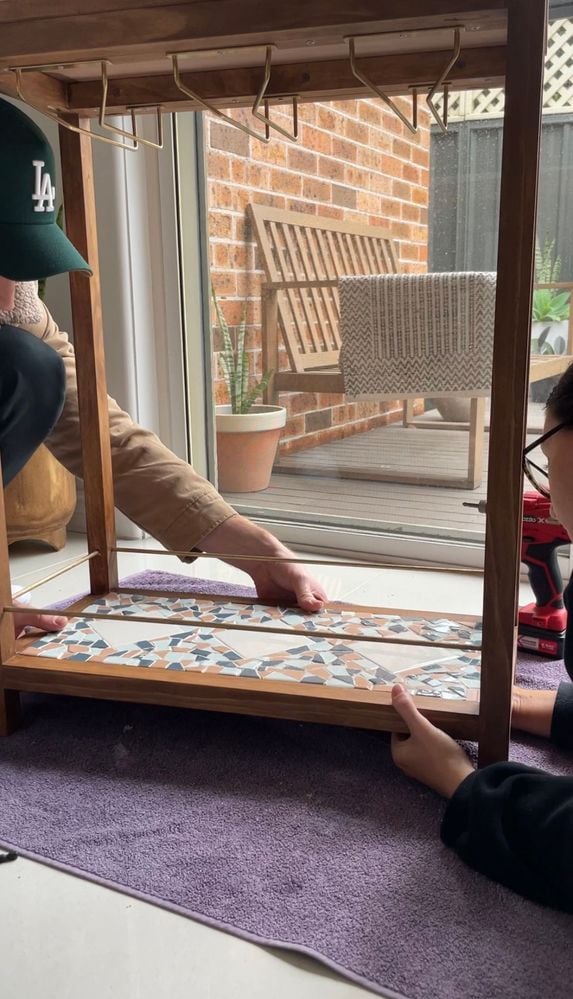
I used some timber offcuts to make supports for the shelf to sit on, and attached at a height that made the mosaic flush with the edges of the table.
Step 10
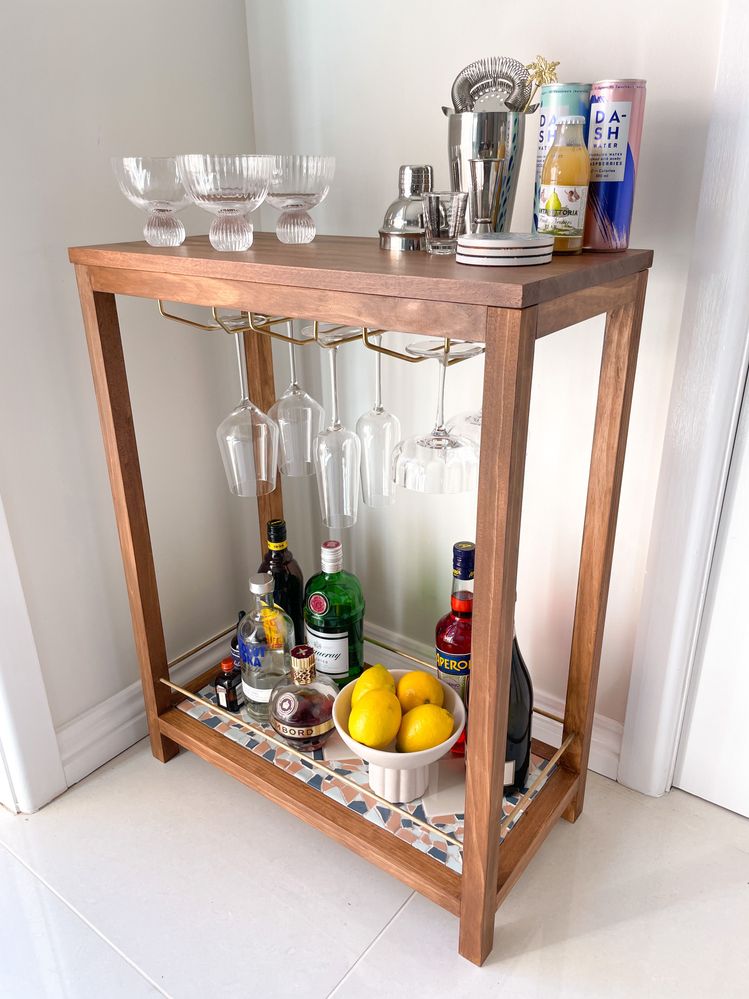
I love how this table turned out, and looks fantastic displayed with our favourite cocktail ingredients, glasses and accessories!