Workshop
Ask a question

The Bunnings Workshop community can help with your home improvement projects.

Can H3 be made safe for indoor use?

Jason_s
Just Starting Out

Can H3 be made safe for indoor use?

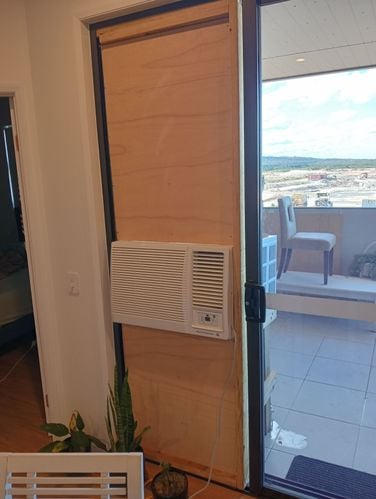
1000019319.jpg

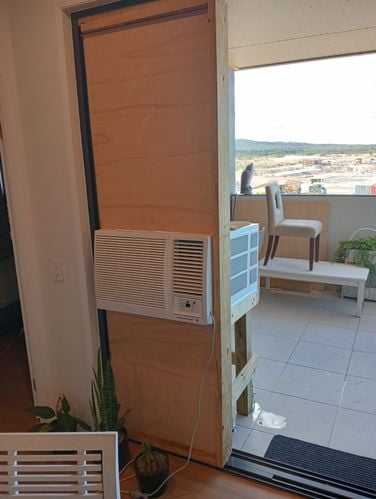
1000019318.jpg

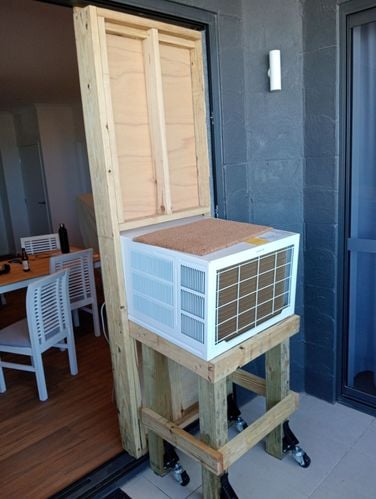
1000019317.jpg

 So I've built this wall frame for my window box air conditioner that sits in my sliding door tracts but can be moved out whenever I want to lock up. I did this because my real estate wouldn't let me put a split system in and I can't stand how terrible portable air conditioners are. 


The issue is I've used H3 and H4 treated wood as the backside of the unit is at risk of getting wet as it is on my balcony. The posts it sits on that are outside are pine fence posts CCA H4. The rest of the build is pine treated H3 with the exception of the plywood which I believe is untreated which makes up the wall face, which means some of the H3 pine is inside the house on the front of the unit.


I've read online the H3 shouldn't be used indoors as the treatment can be carcinogenic and is toxic for indoor air quality. Indoor air quality is very important to me (I have an air purifier in each room of the house). 


Is this project salvagable? Is their anyway I can still safely use this by painting or varnishing the wood to seal in the treatment and prevent off-gassing? Quite worried about this. 


Thanks in advance! 

AlanM52
Amassing an Audience

Re: Can H3 be made safe for indoor use?

Hi @Jason_s,


Summary first:

You will need to replace the H3 on the inside.

I also consider the project is salvageable.

I like creative ideas... well done.


Treating H3 for internal use in a sleeping/living space will not entirely prevent off-gassing.

You are also concerned with air quality so replace any treated timber on the inside with untreated.

I am proposing to treat all the outside timber and then cover the base frame with Flute Board.

I would have used brake castors on the back pair.


Cheers


MitchellMc
Bunnings Team Member

Re: Can H3 be made safe for indoor use?

Welcome to the Bunnings Workshop community @Jason_s. It's brilliant to have you join us, and many thanks for your question about treated timber.

You can make the project safe to use indoors. Modern H3-treated pine is typically treated with LOSP, ACQ, or Copper Azole, which are arsenic- and chromium-free and considered low-toxicity options once dry. If the timber has fully dried and no solvent smell remains, there’s minimal risk to indoor air quality. To be extra cautious, you can seal any exposed surfaces with a few coats of interior-grade paint, varnish, or polyurethane, which will further prevent any potential off-gassing or contact. H4 CCA-treated timber is something you'd not want to use inside or for surfaces with which you make constant contact, such as a bench.


If you were to change the timber, you could use H2-treated, which is a standard treatment for internal studwork. However, if you wanted to get away from any treatment at all, it would need to be untreated pine


Let me tag @robchin to see if he has any thoughts.

Please let me know if you have any questions.

Mitchell
 

See something interesting? Give it the thumbs up!
SSyed
Just Starting Out

Re: Can H3 be made safe for indoor use?

Hi @Jason_s I’m part of the Bunnings Compliance & Risk team, working on building products. Really appreciate you sharing your DIY project – I’ve been following the thread and the pics you posted.


As @MitchellMc mentioned, H3/H4 treated timber is chemically treated, so it’s not ideal for indoor use or areas with prolonged contact. If you’re set on using it, the safest option is to coat it with a compatible paint and fully clad it, so it’s sealed inside and out. Alternatively, untreated timber could work since you’ve got that balcony and eave overhang for some cover.
I feel that air purifiers won’t filter out those chemicals, so I wouldn’t rely on that. And make sure you’re wearing proper PPE when handling treated timber.
On a side note – depending on where the location is, your setup might affect the spaces insulation integrity. Glazing is part of the thermal envelope, so adding some insulation could help keep the space comfortable.
Hope this helps! 👍

Why join the Bunnings Workshop community?

Workshop is a friendly place to learn, get ideas and find inspiration for your home improvement projects