Hi there,
After some advice as to the best way to approach a few DIY projects. Mum is doing some renovations at her house, and we've managed to strip out a room, that we intent to repaint and put down a laminate floor. There are three issues I'd like some advice on best approach to dealing with - detailed below. Just really after what approach to take, what products are best used to address the issue etc 🙂 Sorry if they are basic questions - I enjoy doing DIY around the home but a bit of a novice on these sorts of issues, so any guidance that can be provided with be very much appreciated.
1) Crack in ceiling plaster
There is a bad join/crack in the ceiling plaster that we would like to attempt to repair as best as possible prior to repainting of the ceiling. It must be 20 years + since the ceiling was originally put in, so its not unexpected, and it has been like this for a long time (5 years + I think) without getting worse. What is the best approach to patching this up (noting it'll never be perfect of course). Would using something like a shave hook to widen/even out the crack, and then filling with some form of ceiling plaster repair material be the best way to try and tidy it up prior to painting?
 Best approach to addressing this crack in the ceiling plaster.
2) Damage to plasterboard at floor level
In one part of the room at floor level there is some damage to the plasterboard - large enough that it won't be covered up eventually when skirting board goes back on. Again - just after some recommendations of approach to fixing this.
Would something like this effectively do the job - https://www.bunnings.com.au/hyde-wall-ceiling-plaster-patch-wet-set-contractor-roll_p0730001 or am I better off getting one of those kits that comes with a small square of plasterboard/gyprock, and cutting the area to be larger to fit it effectively - i.e. something like this: https://www.bunnings.com.au/gyprock-csr-1-5kg-diy-rapid-plaster-repair-kit_p0730662 It doesn't need to be a super tidy job - most of it should be hidden behind skirting board eventually, so looking for what's the easiest way to get it sorted out.
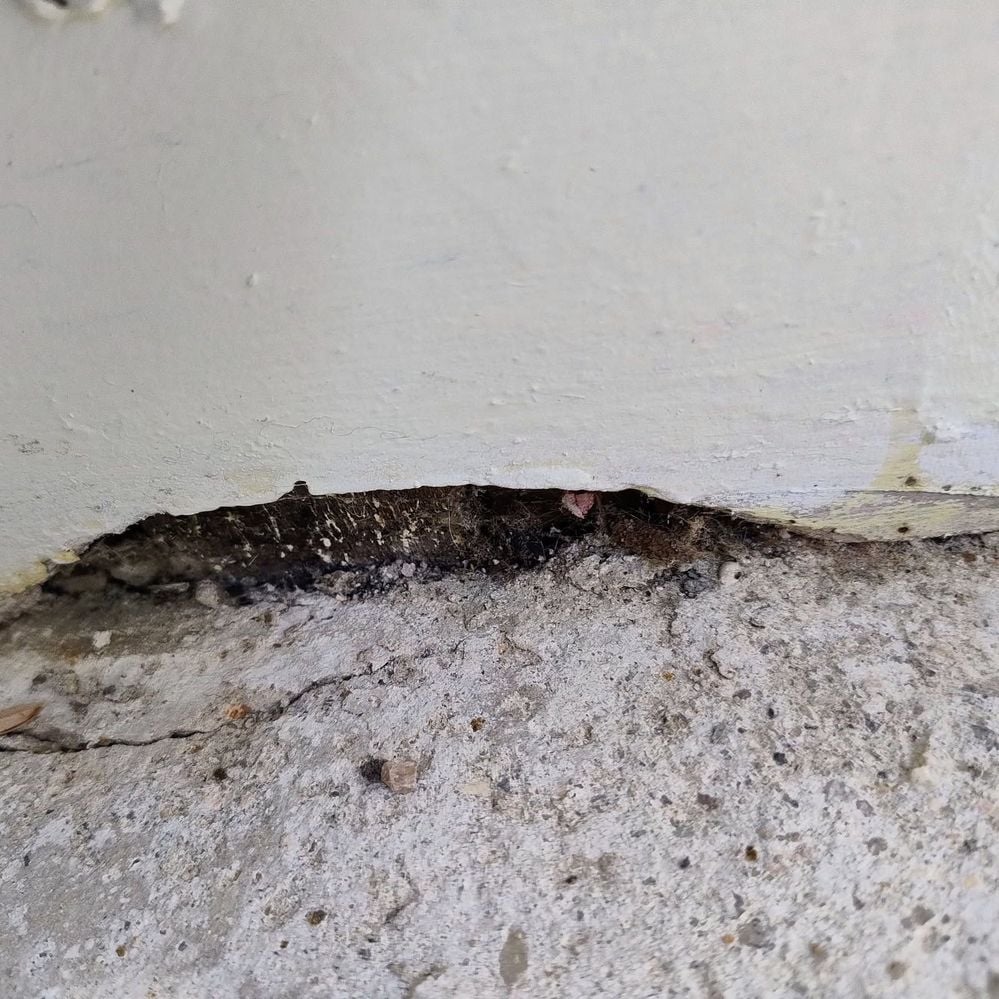
3) Gap filling
The overall concrete floor is fairly level, but will need some floor levelling work done to get it ready to then put underlay down for the laminate floor to go in. However, on one wall these is a very decent sized gap that we need to find a way to fill/address prior to any attempt to use levelling concrete etc. We do have a builder coming in to do work in the kitchen next door (other side of the wall in question), and he will help with doing the levelling concrete, but was hoping we can address this gap prior to that. Its a pretty decent sized hole, so it may not be an easy fix and we might need to get the builder onto it as well - but wondering what approach would be best for this - in particular what product (maybe a foam filler of some form?) would be best for filling the gap. Recognise it might not be possible to really effectively fill the gap, or seek to prevent future further movement, but just be happy to get it to a point in which levelling compound can go effectively on top without disappearing down the hole ha! 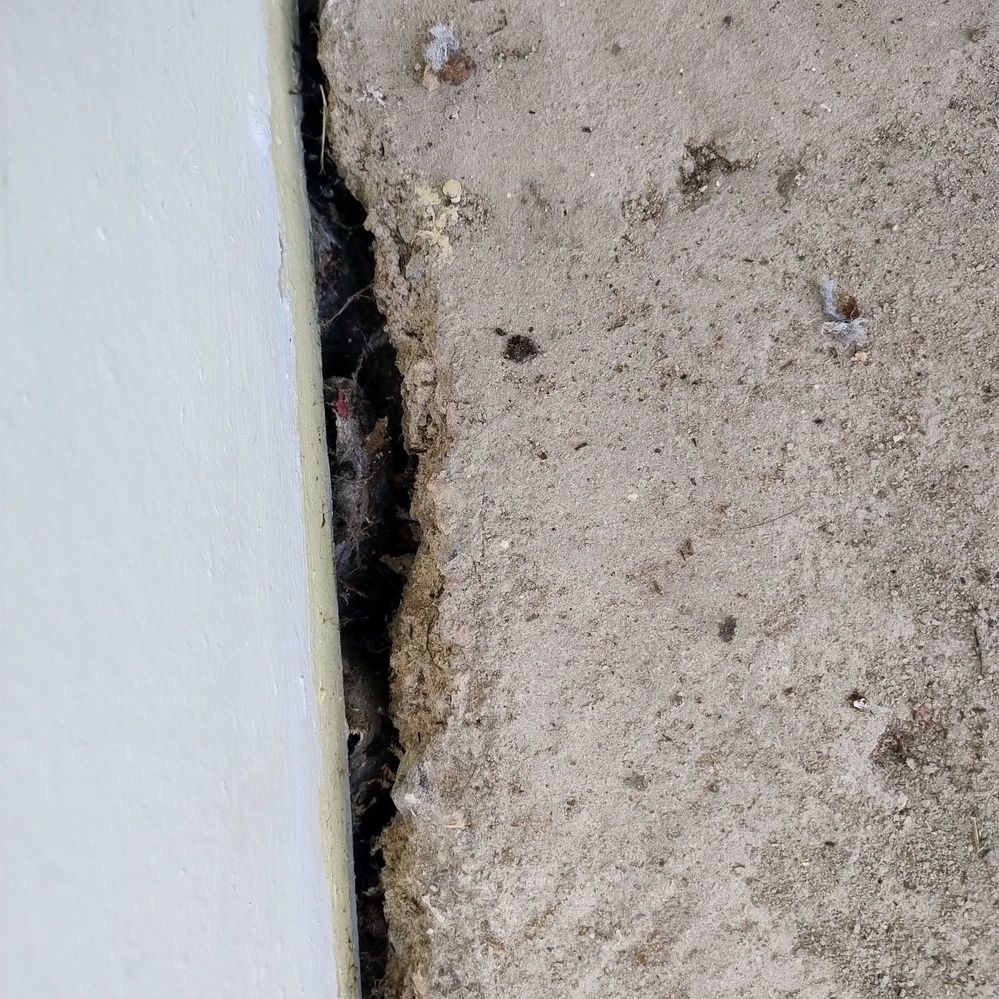
Really appreciate any kind guidance people that I can be given - I enjoy getting stuck in and giving things a go, but just need a little guidance as to best approach!

