Workshop
Ask a question

The Bunnings Workshop community can help with your home improvement projects.

How to flush a solid brick painted wall with a gyprock wall?

Tim0
Just Starting Out

How to flush a solid brick painted wall with a gyprock wall?

I've got a double brick home and have built a stud wall in the dining room to create another bedroom. However, now at the point where I'm a bit stuck.


The gap between the painted solid wall and the gyprock needs to be filled (per picture) and I'm not confident I can just use the Gyprock multi purpose compound. There are also the internal corners (not pictured) that need to be filled (one side of the corner being the solid wall, and the other side being the plasterboard).


1. Can I simply use the gyprock multi-purpose joint compound or do I need to follow another process (or use another product first - someone mentioned Bondcrete but I'm not sure how that works)?

2. Should I be sanding off the paint on the solid wall first or at all?
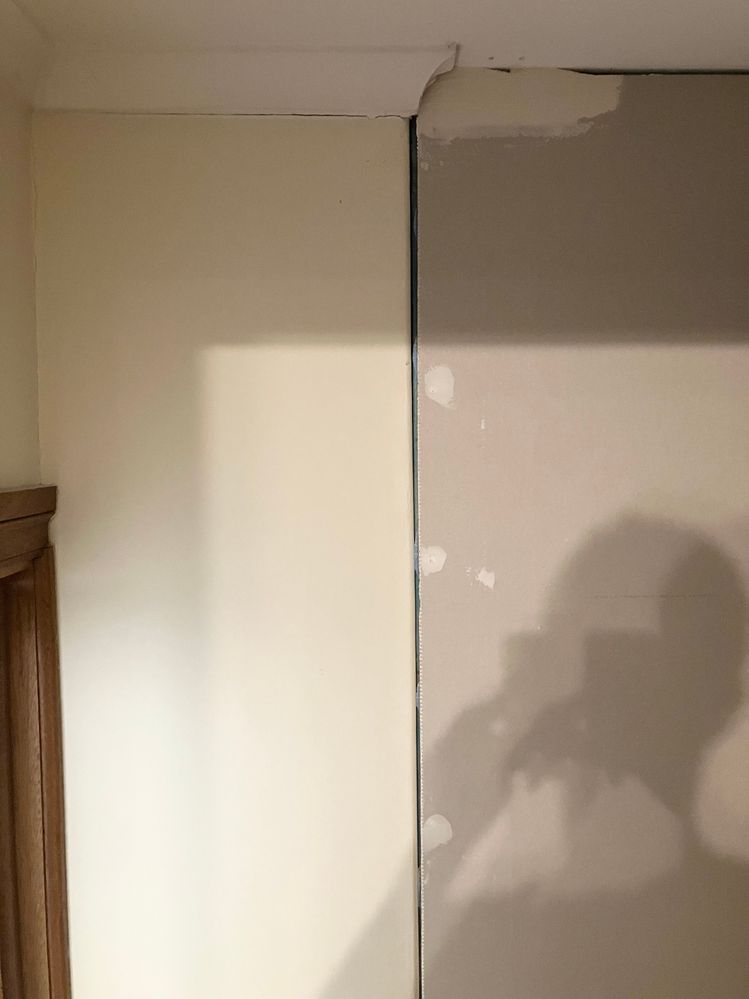
 

IMG_1078.jpeg

MitchellMc
Bunnings Team Member

Re: How to flush a solid brick painted wall with a gyprock wall.

Welcome to the Bunnings Workshop community @Tim0. It's brilliant to have you join us, and many thanks for your question about joining walls.

For a situation like yours, you need to remember that you are joining two very different materials: a rigid, painted brick wall and a more flexible gyprock stud wall. Because of that difference, any attempt to make a seamless flush joint with standard multi-purpose joint compound alone is likely to crack over time, especially along the seam or in the corners.


Sanding the paint on the brick is a good first step. You want to scuff the surface so any filler or adhesive will bond better. You don’t need to remove all the paint, just create a roughened surface for adhesion.


Once that’s done, you have two practical approaches. The first is to try and reduce the gap as much as possible using multi-purpose filler so you’re down to just a small seam, maybe around 5 millimetres or less. After that, you can use a flexible sealant, such as Sikaflex 11FC, to fill the gap. The flexibility of the sealant will absorb any movement between the brick and the gyprock, greatly reducing the chance of cracks appearing later. You can then paint over the sealant to match the walls.


The second approach is to cover the transition with a trim or beading. You could use a timber or plastic cover strip, or even a quad moulding in corners, which hides the joint entirely. This is often the most reliable long-term solution, particularly for internal corners, because it avoids the problem of movement-induced cracking altogether.


Either approach can work well, but the key is either using a flexible filler or providing a physical cover, because trying to plaster the two surfaces flush with only gypsum-based compounds usually ends up cracking over time.


Let me tag @Nailbag for his thoughts.

Please let me know if you have any questions.

Mitchell
 

See something interesting? Give it the thumbs up!
Nailbag
Home Improvement Guru

Re: How to flush a solid brick painted wall with a gyprock wall.

Hi @Tim0 


Taking on board the very good points @MitchellMc has highlighted to me leaves two options. These are also based on your level of acceptance in finish. These both assume the walls are level.  

1. Have the gap professionally filled by a plasterer for a seamless finish across the two surfaces. This would be my preferred option 


2. Simply fill the gap with a flexible internal filler and then inlay a timber trim across the gap. This would be an easy cost effective DIY job that would still look relatively seamless once painted.

Nailbag

Why join the Bunnings Workshop community?

Workshop is a friendly place to learn, get ideas and find inspiration for your home improvement projects