The Bunnings Workshop community can help with your home improvement projects.
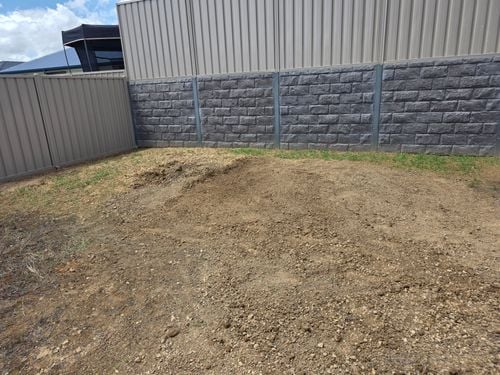
What would remove house paint splatters from a colourbond fence and retaining wall?
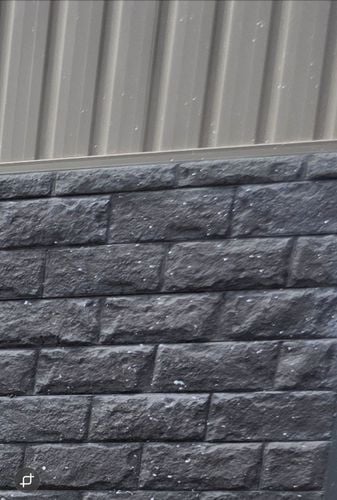
I believe this is Taubmans snow drift paint, overspray from builders contractors 2-3 years ago from painting interior doors (they never bothered to come back and fix).
Is there a suitable product, method (eg. Paint or graffiti remover gel) that is both masonry and colourbond powdercoated fence safe (colour Riversand).
Welcome to the Bunnings Workshop community @misheycat. It's wonderful to have you join us, and many thanks for your question about removing paint.
You are right to be cautious here, because most paint strippers and graffiti removers are quite aggressive and there is a real risk they will attack the Colorbond powder coating or permanently stain the masonry. In general, there are no paint removers I would confidently recommend as being completely safe for both surfaces at the same time, especially given the paint has been on there for a couple of years.
The safest approach is to start with the least aggressive methods and work up only if needed. I would begin with a pressure washer, keeping the nozzle back slightly so you are not etching the masonry or damaging the fence coating. You may be surprised how much overspray will lift if it was only lightly bonded. On the Colourbond fence, after washing, you can carefully try a plastic scraper to see if you can lift the paint off mechanically. If it is interior door paint, it is likely a water-based or oil-based enamel and often sits on top of the powder coat rather than chemically bonding to it.
For the masonry or retaining wall, a stiff bristle brush combined with washing is usually the next step. Avoid going straight to a wire brush unless absolutely necessary, as it can leave visible marks on rendered or block surfaces. If you do consider a chemical remover at any point, it is important to test it in a very inconspicuous area first, as even products labelled as masonry safe can leave shadows or discolouration, and they are very likely to damage the Colorbond finish.
Overall, patience and mechanical removal is your best bet here. Start gentle, test small areas, and only escalate if you are confident the surface underneath will not be compromised.
Please let me know if you have any questions.
Mitchell
Afternoon @misheycat
Because the paint has been there for so long I was thinking of another way you could remove the white from being so noticable.
How about a permanant marker pen? I know Officeworks have a large range that you get to try them out on paper first, or maybe a paint sample pot of the two colours and dab the spots with a small brush? Tho they will age differently so fade differently.
Dave
To Mitchell --
Apologies for the delay, been meaning to reply.
Upon closer inspection it looks like its basically on most of the panels of the back fence and the retaining and it seems well and truly baked on, I tried pressure spraying unsuccessfully, I tried a plastic scraper (not the best tool, wasn't super thin to get under the paint, I was looking at a tool on the bunnings site but haven't been able to get in store and its not available online - unsure if it would be good enough to get rid of the paint though.
https://www.bunnings.com.au/trojan-plastic-scraper-blades-20-pack_p0515776
I managed to get 1 dot off but it took forever, tried with wd40 to loosen and I tried a tiny dot of methylated spirits but didn't want to touch the colour of the Colourbond so was pretty gentle, still no joy.
To Dave - Apologies for the delay, been meaning to reply.
Per my reply above to Mitchell, its basically on most of the panels of the back fence and the retaining and it seems well and truly baked on and I cannot foresee I can paint every single dot, it'll take forever.
I did however partly take your advice and have ordered a can of the equivalent Wattyl Riversand coloured paint. I was thinking I could try and spray a bit on a paint pallet and try what you've said to minimise the impact, as the photos don't do it justice but the white on beige colour really stands out and we've just installed a pergola so sitting up there I won't be able to unsee the contrasting colours.
Not sure how effective this will be long-term though as you've mentioned above. Unsure if we could just go and paint the whole fence? Or if it would peel, I have no idea (neither does the husband).
Welcome back @misheycat, and thanks for taking the time to update everyone.
Given everything you have already tried, it does sound like the paint has fully cured and bonded over time. At the two to three year mark, water-based or enamel overspray can effectively bake onto both powder-coated steel and masonry, which makes chemical removal without surface damage extremely difficult.
Your idea of colour matching and disguising rather than removing is, realistically, the most practical path forward at this stage. Using a Wattyl Riversand match is a sensible move. Spraying a small amount onto a palette and then dabbing the spots with a small artist’s brush or sponge is about as controlled as it gets. It is slow, but it avoids overspray and lets you visually reduce the contrast, which is really the issue here rather than the paint itself. Over time, the touch-ups may weather slightly differently, but on an outdoor fence that already gets sun variation panel to panel, this is usually far less noticeable than bright white speckling.
Painting the entire Colorbond fence is possible, but it is a much bigger commitment and needs to be done correctly to last. Colorbond must be thoroughly cleaned, lightly scuffed, and primed with a suitable metal primer before topcoating, otherwise peeling is very likely. It is not something I would recommend as a quick fix, especially if the fence itself is otherwise in good condition. The retaining wall is more forgiving, but you would then be committing to repainting that whole surface as well for consistency.
Blending the spots back visually is the safest and most controllable solution, even if it feels tedious. If you tackle the most visible areas first, especially the sections you see most from the pergola, you may find the overall improvement is enough that the rest fade into the background.
Mitchell
Workshop is a friendly place to learn, get ideas and find inspiration for your home improvement projects
We would love to help with your project.
Join the Bunnings Workshop community today to ask questions and get advice.