The Bunnings Workshop community can help with your home improvement projects.
Hi
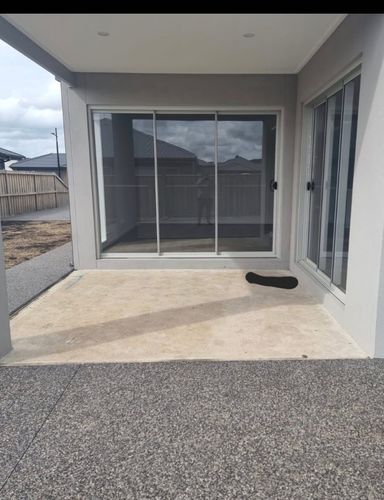
I am tiling outdoor alfresco. I am getting different answers from different tradesman.
Concreter allowed 15m gap 10m for tile and 5m for glue.
I just had someone look at it and saying that in back area gap is 20m.
He is saying glue is not option or screet but some time board or concrete to level it.
I am confused and would love your help.
2nd picture where black line is where he is saying 20m but u can see tile is ok at front.
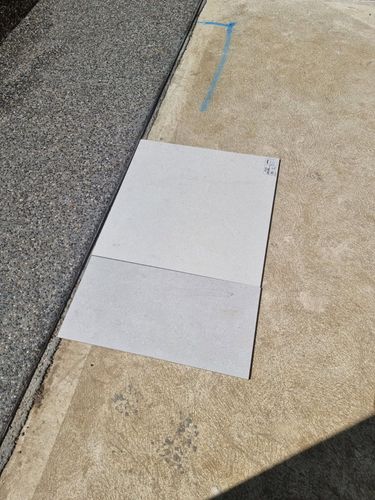
sorry I sent it to the wrong place. I have attached picture of area.
One is saying screed and other is glue.
Hi @paula24,
As mentioned, the advice differs as you are speaking to more than one tradesperson. In my opinion, the height difference is too great to resolve the issue simply with tile glue, so I'd go with the tradesperson who suggested the area needs to be levelled with screed first.
Mitchell
Hi
sorry. i have another question.
self levelling can that be any thickness.
I know with screed it has to be 15m which won't be suitable so i am thinking maybe self levelling is better.
paula
Hello @paula24
The quick answer is yes; self-levelling compounds can be applied up to 15mm in thickness. Please note that it is important to follow the application instructions so that the concrete will level properly. If applied too rapidly the concrete will not cure properly or irregularities will appear on the surface.
If you need further assistance, please let us know.
Eric
HI
sorry about another message about tiling
with product called Ardit can that be applied at different thickenss on the concrete.
the concrete is not leveled to tiling.
the entrance is lower than the where the concrete is.
the tiler is suggesting to put 8m and reduce it to 4 to 5m
or the second question please
is bringing up with glue. glue will be aprox 10m thick. would that be stable or will it drop.
we are trying to make sure it will level to the concrete
i have sent pictures in my previous post.
paula
Hi @paula24,
Yes, you can vary the height of a layer of Ardit to suit the concrete’s uneven surface. It can start thicker where needed and then taper down to the required level, so it’s suitable for areas like your entrance that are lower than the surrounding concrete. It’s best to follow your tiler’s advice here, as they deal with this sort of thing every day. If they’re suggesting using roughly 10 mm of adhesive to bring the tile up to level, that should be stable. Typically, tilers will apply slightly more than the finished thickness so they can bed the tile down and achieve a solid 10 mm layer. These are the kinds of adjustments and judgments that experienced tilers make, which is why it’s worth trusting their guidance. They’re providing the most effective method for your situation based on their expertise and previous work.
Mitchell
Thank you so much for your response.
It is hard to trust tiler information. They tell you different things. One is saying adhesive will work and one says no.
Its hard to know what to do and believe.
Paula
As mentioned previously, @paula24, the area needs to be levelled first and then tiled over. It's always best to start with a levelled surface rather than trying to use adhesive alone to level it.
Mitchell
Thank you.
I have another question on different topic.
The concreter put i think its called expansion foam. Don't know if we should remove it and caulk around house or you can caulk without removing it. I have attached pictures and some pipes there is gaps.
If you look at next pipes shows foam around house too. I got picture attached of polyurethane that he would use.
Sorry for asking so many questions.
You're absolutely fine to ask as many questions as you need @paula24, that’s what we’re here for.
You’d typically cut that expansion foam down so it’s level with the top of the concrete, then go over it with the polyurethane sealant you mentioned. The foam itself isn’t designed to seal the joint, it’s there to act as a buffer to stop the concrete from cracking where two hard surfaces meet. Applying the sealant over the top will neaten the appearance and fill any small gaps, especially around the pipes.
So in short, you don’t need to remove the foam completely, just trim it down and then seal over it to tidy things up and protect the area.
Mitchell
Workshop is a friendly place to learn, get ideas and find inspiration for your home improvement projects
We would love to help with your project.
Join the Bunnings Workshop community today to ask questions and get advice.