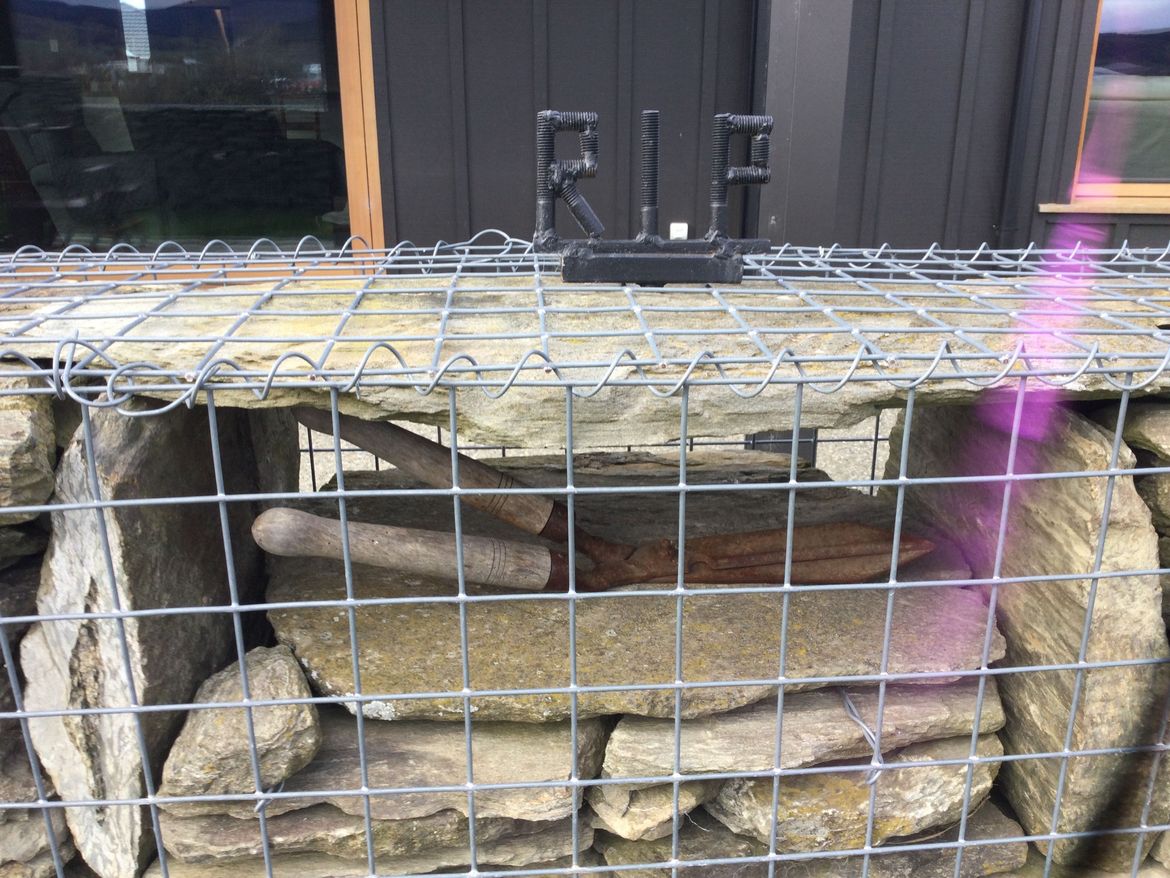
"A long time ago
I made a pledge,
To build myself
a no cut hedge".
....and so the project began. The first job was to dig a trench 36 metres long by 800mm wide to clear the topsoil down to about 320mm deep to the subsoil as the wall needed a firm base.
The bottom of the gabion basket was to be level with the path along the side of the house, so a laser level was used to establish a data line along the existing wooden fence posts.
From this data line, I then measured down to my chosen level and erected 200mm high boxing along the full length of the wall as, and even though it was relatively level overall, one end of the wall needed to be raised up a little to keep it level and at the other end a little bit of the dirt needed to be retained to stop it falling onto the gabion basket when finished.
Although the height to the depth of the wall was less than the 2:1 ratio (975 high: 525 deep) and not requiring support posts. I had railway iron posts 1700mm long on hand, which were used as follows: -
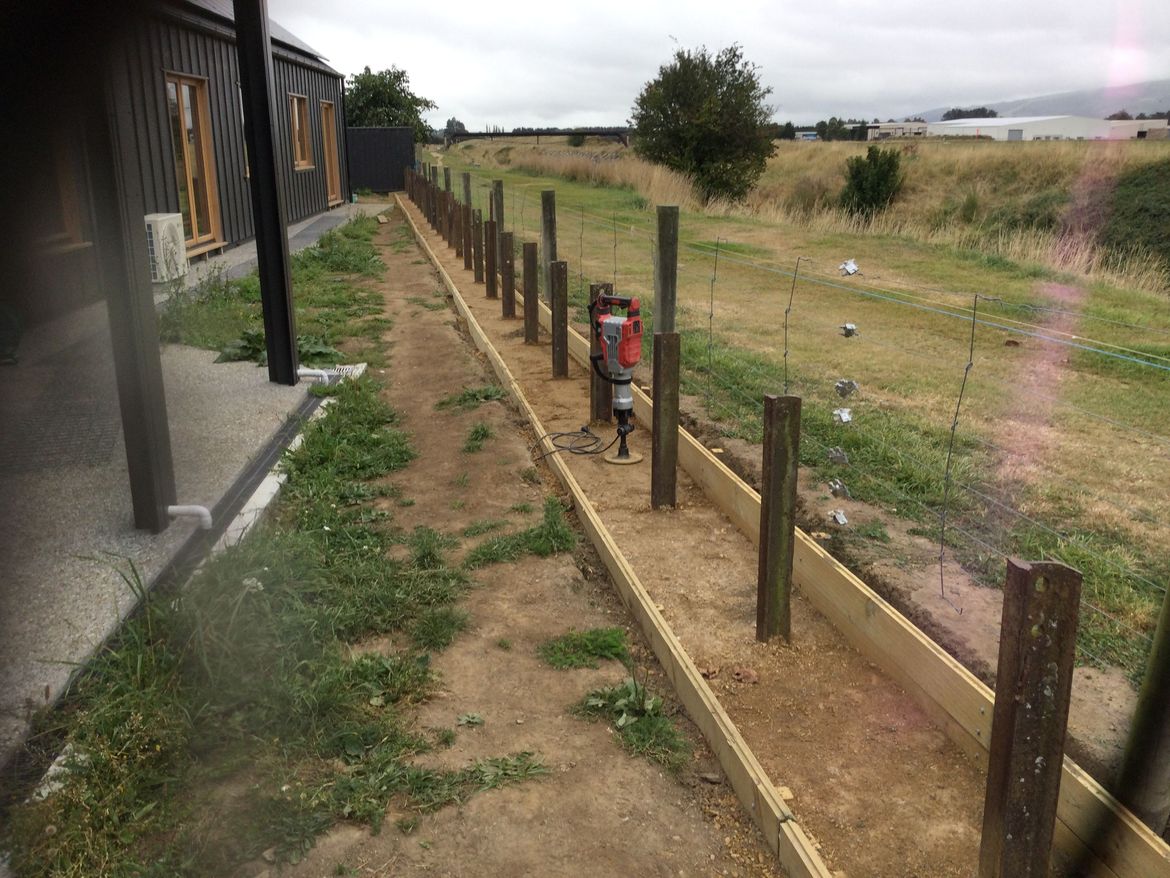
The bottom layer of the basket was cut to size and laid. The two end posts were marked and erected and then a string line was pulled between them to keep all the rest of the posts in a straight line. The hole spacings were marked out 1.3 -1.5M apart and the mesh cut. Using a post hole digger, the holes were dug to a depth of approximately 750mm deep. Next step was to put the posts in with the face of the post on the string line as I was making my own baskets from full sheets of mesh, and as it was only one basket right through with no baffles and the baskets were not going to be built in modules, so it was necessary to do it this way to avoid a wobble in the wall line. (The baskets were in two sections, one at 2 metres wide and the other 33 metres wide with a one metre gap in between for the gate).
A T- stick was placed across the top of the boxing marked at 750mm above the final ground level to keep the posts at a consistent height and ensure they were within the recommended 1.5 times the depth from the top for support posts.
When all the support posts were in place, the base was backfilled with 10 tonnes of a gravel mix from the local quarry which was then rammed tight with an electric jack hammer in three layers to within 50mm from the top of the boxing. Once this was done, the top was screed with some finer river gravel to give the baskets and rocks something to bed into.
It was now time to make the baskets (see DIY spiral winder machine for gabion baskets post).
Another reason for installing the support posts was that I wanted to keep the front and back faces consistent and even so that the mesh didn’t end up with wobbles and bulges as you looked along the length of the fence.
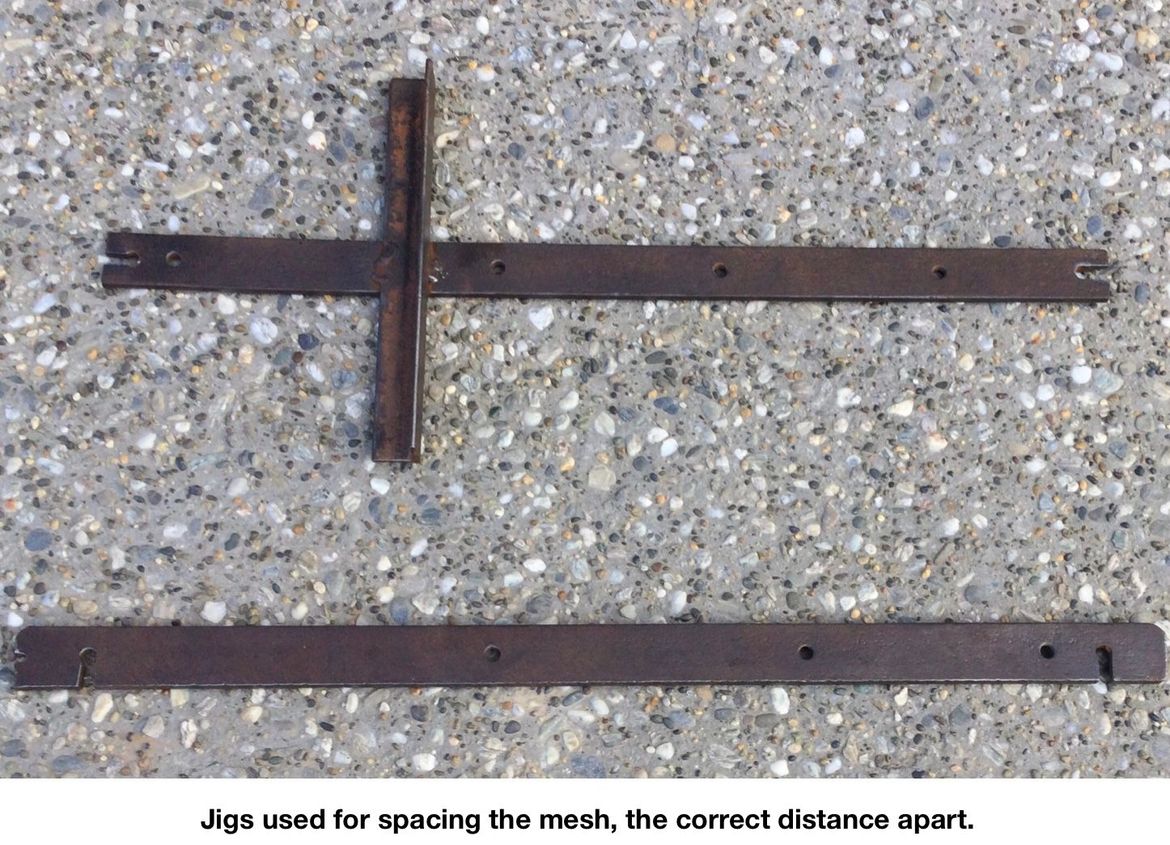
To achieve this I made a jig out of a piece flat metal and angle iron. In the flat metal two holes were spaced 525mm apart ( equal to the exact depth of the mesh) and then slotted so that they would clip onto the wires of the mesh. The angle iron was then welded onto the flat at the exact correct distance that the face of the post was supposed to be from the wall face. When it came to installing, the brace wire was hooked onto the front face of the mesh and, with the jig in position, the wire was pulled tight, wrapped around the post and then hooked onto the back face. For the intermediary brace wires between the posts the jigs were used to stop the faces spreading.
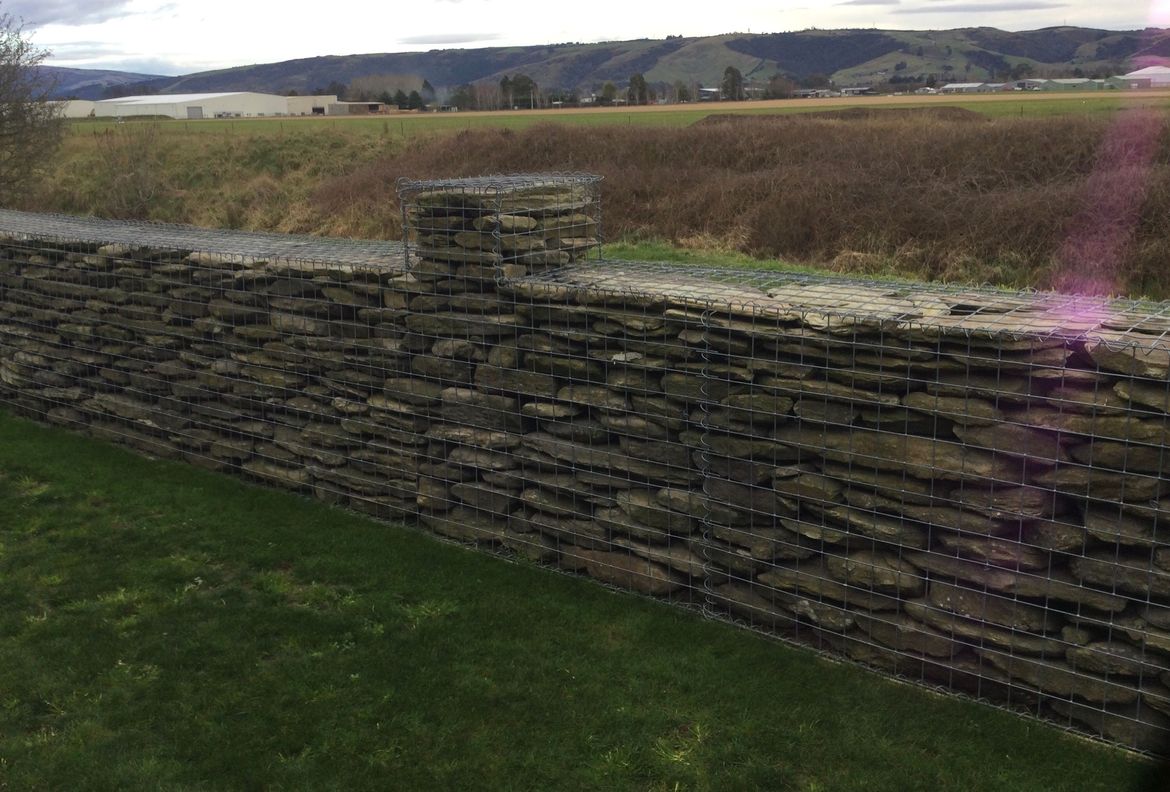
Another reason for not installing baffles or building the baskets in modules was that the schist rock was lineal in dimension, and I wanted a continuous look profile in keeping with the house. This made the placing of the rock easier as it was done in runs along the fence. All the rock was placed by hand on both faces (yes, that did mean climbing in and out of the baskets until the layers were high enough to be reached from the outside)! Smaller rock, building rubble and quarry blasted chip was used to fill the middle.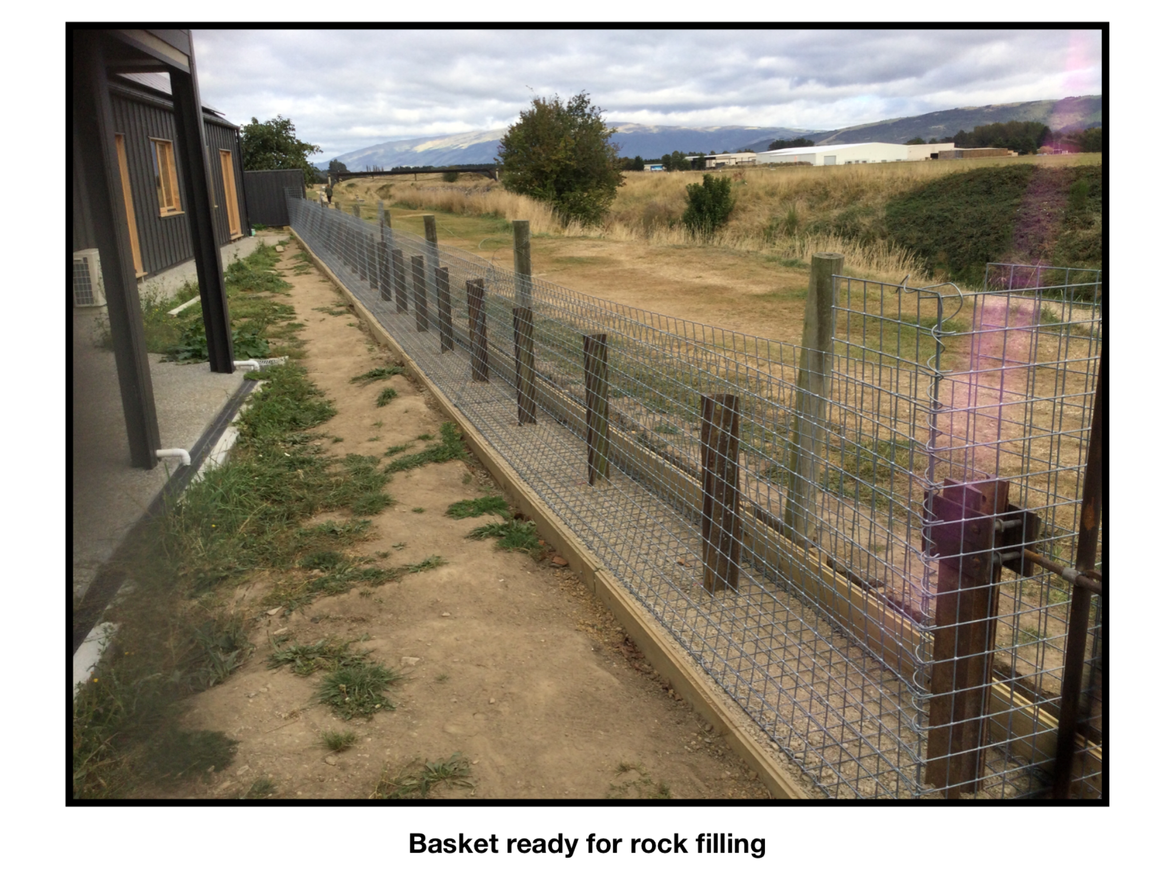
Once all that was done the baskets were ready for rock filling, and an estimated 30 tonnes of rock was carted and placed by hand to complete the job.
"I can now relax in my slippers,
Finally, I have laid to rest,
And entombed,
My old hedge clippers!"