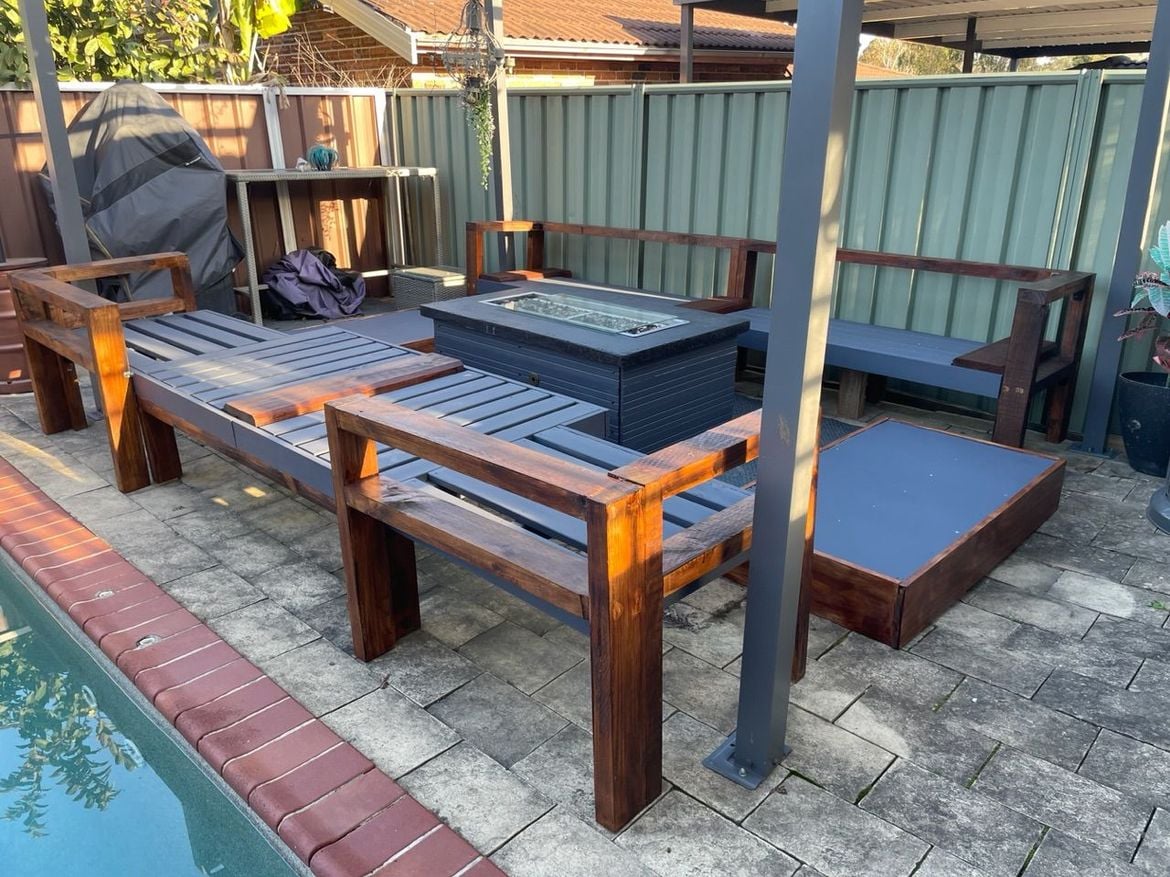
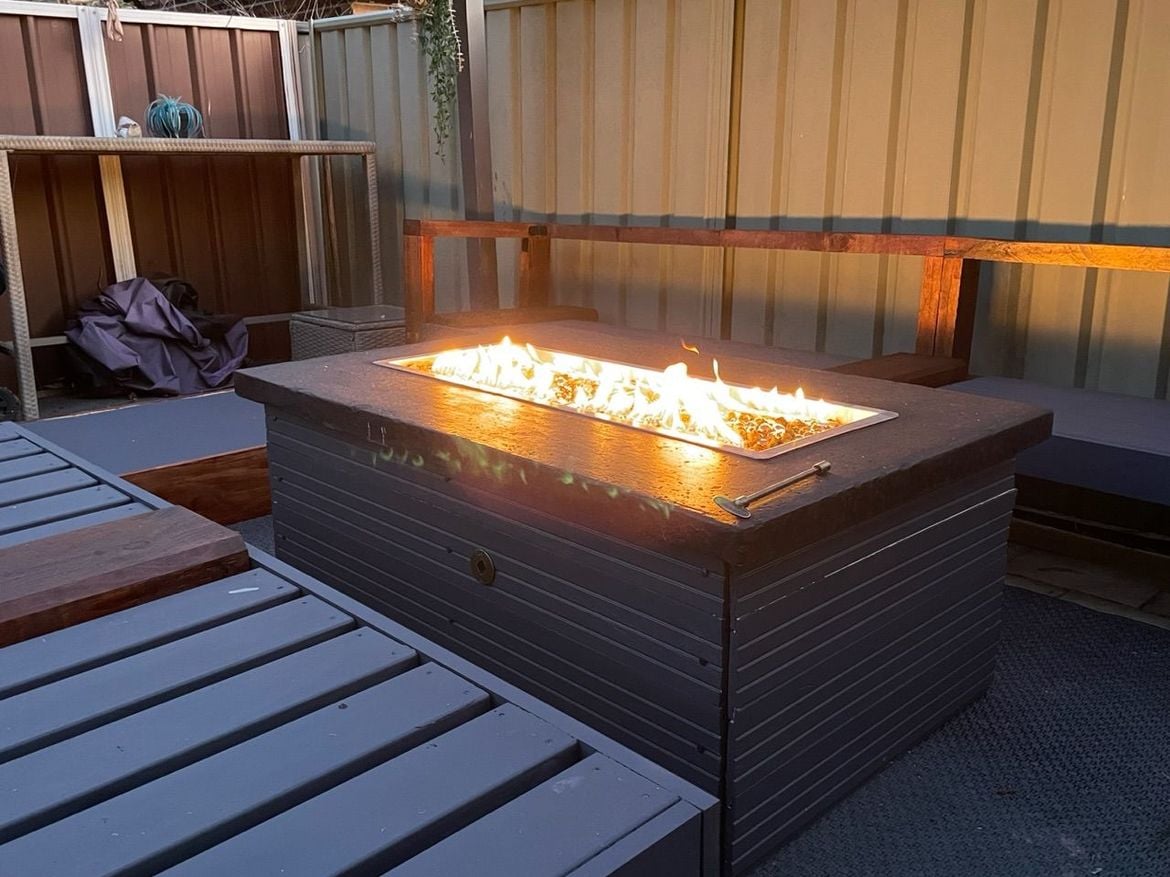
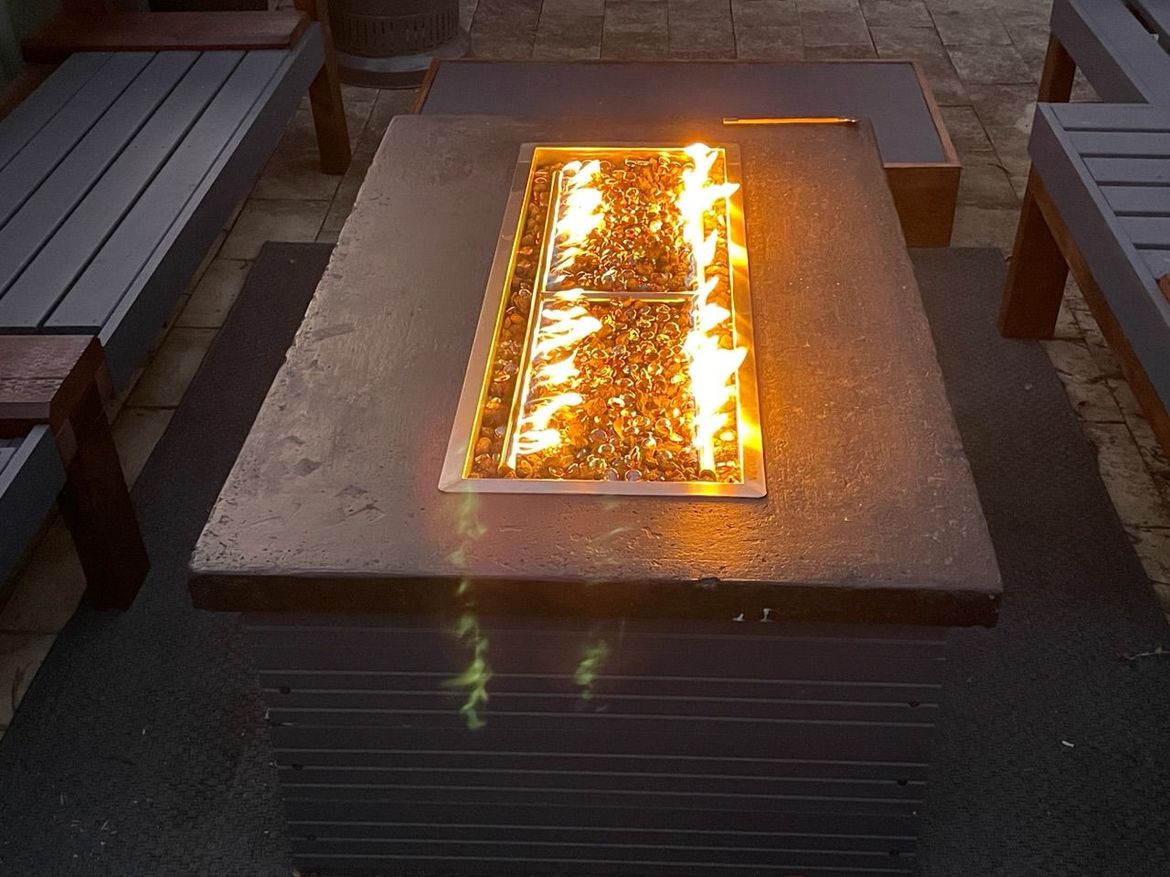
Steps
Step 1
Purchase a gas burner insert. The one I used came from Vevor.com (95x35cm) for about $100.
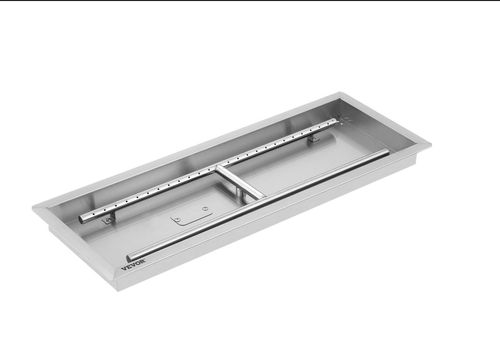
I recommend buying the burner first so that you can double check the measurements before you cast the cement table top. This will ensure you have the exact measurements, especially the depth of the pan.
Note: The one I bought has an American gas fitting. So I had to buy a bunch of adaptors and hoses to mate it to an Australian gas bottle. If you can find one with Australian fittings I’d save yourself some trouble and get that. That being said it meant I could use buy a fancy shut off valve as they only seemed available with American fittings.
Step 2
Cast the cement for the table top.
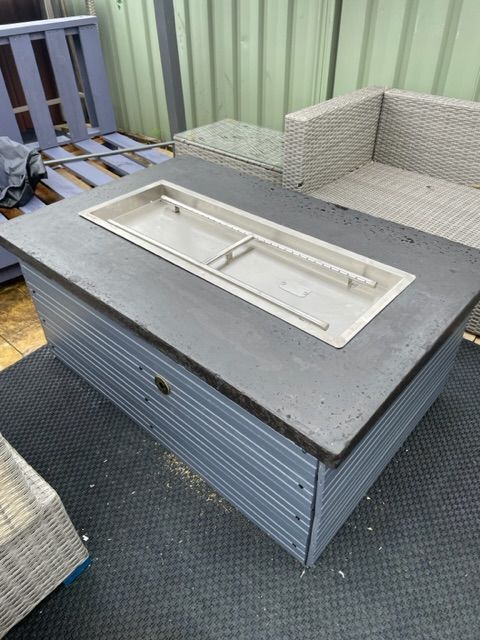
- Determine how big you want the table to be, factoring in the dimensions of the pan. Mine is 1200x800x50 which gives enough space around the insert for drinks/food when not in use.
- Be sure to leave a space for the insert and that it is centred in your mould. I used some 30mm pine off cuts double up to create the space in the middle for this).
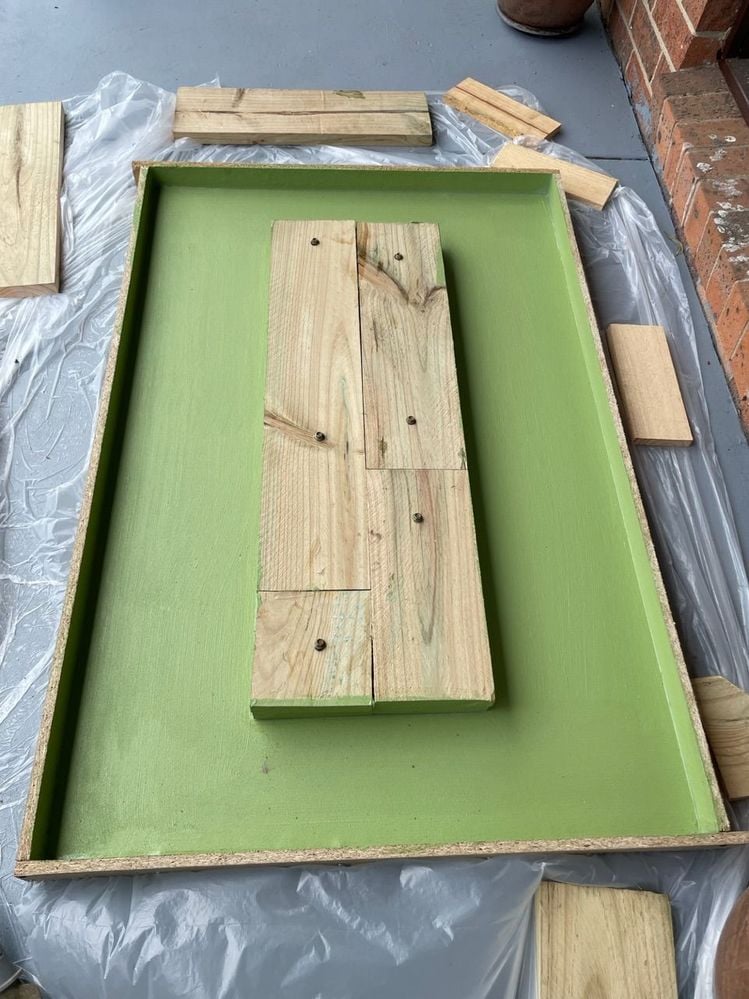
- Mix some hi-strength concrete and pour into the completed mould. For my dimensions I used about 70kg of concrete, plus some Dulux black oxide colouring to give it a darker look. I didn’t use any steel reinforcement in this, but you can if you want.
- Smooth out the cement with a trowel making sure it is pushed all the way to the edges and level.
- Cover the mould and allow to cure. I gave it about 3 days.
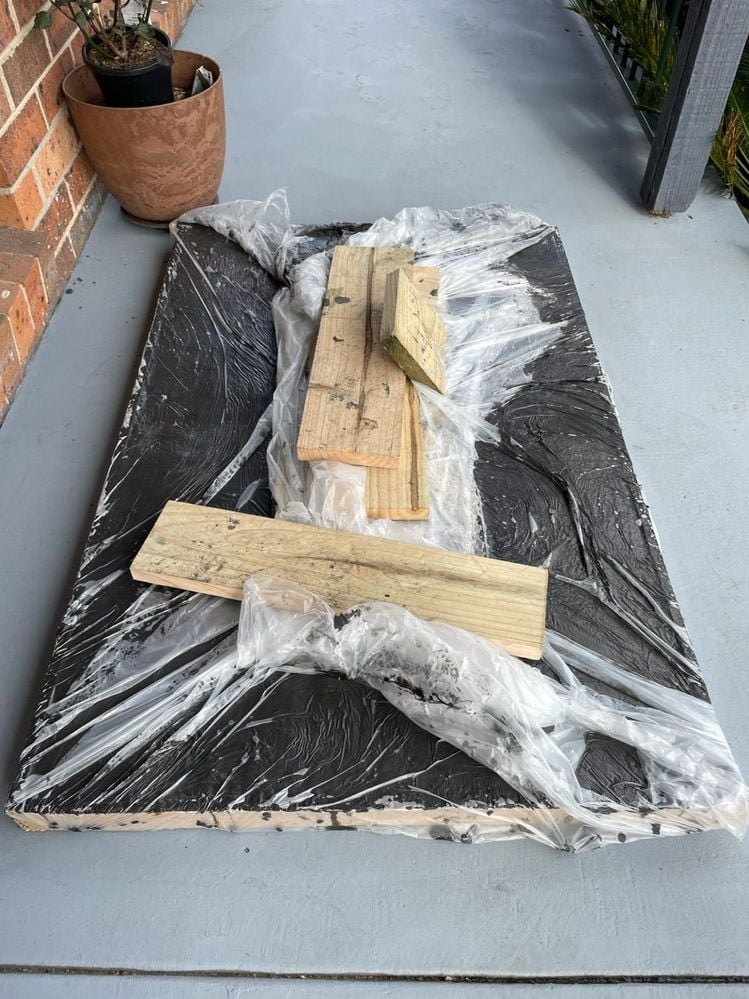
Casting Tips:
- Run some silicone along the seams of the mould to prevent leaks and give the top smooth edges when set.
- Spray the mould with WD-40 before putting the concrete in so it will remove it easier once cured.
- Use Formply for the mould.
- Run a sander without paper along the outsides of the mould to release any air bubble and get the concrete into the corners. Let the mould sit for 30mins and then repeat this to make sure no bubbles are left.
Step 3
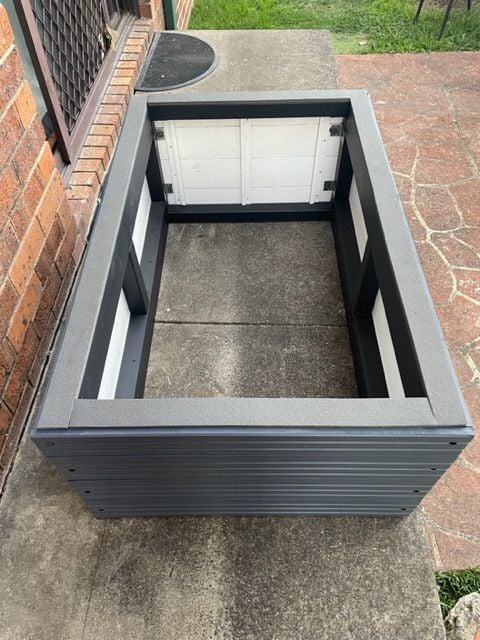
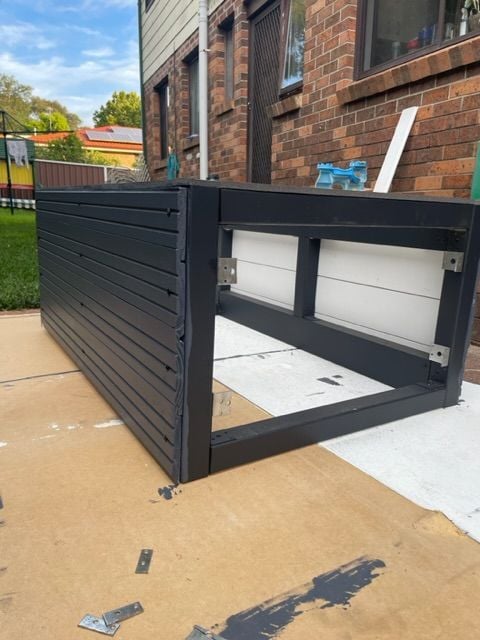
Build the frame
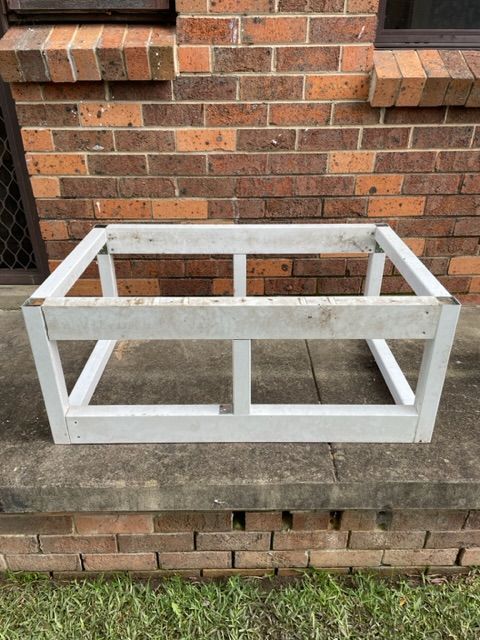
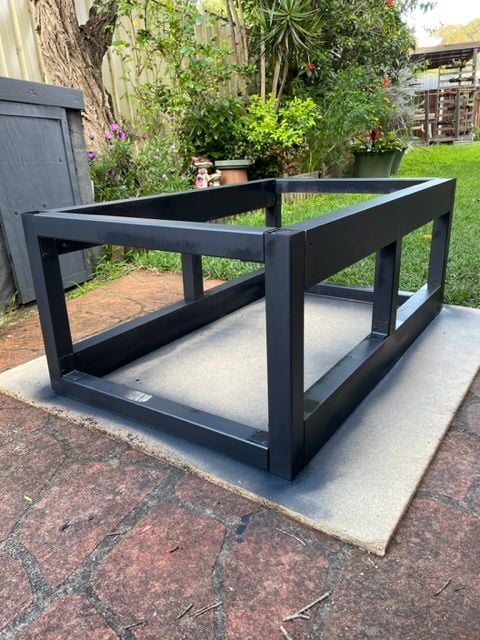
- Determine your dimensions for the frame based on the size of your tabletop. My frame is 1150x750X500 to give a 50mm over hang and have space underneath for the gas bottle.
- Considering the weight of the table top (about 80kg) I used some scrap 50x50mm and 50x100mm hollow steel.
- The pieces are held together with 50x50mm angle brackets, because I don’t own a welder or actually know how to weld.
- Spray the frame with some black etch primer to avoid any rusting.
- The facade uses shiplap pine lining boards painted with exterior paint, the colour is colorbond ironstone.
- I attached the lining boards to the frame with some 30mm metal screws.
- Make a panel at one end of the frame to allow for the gas bottle to be removed and to connect your hoses and fittings. I did this by screwing the boards to some backings supports and gluing magnets to the back to attach to some brackets on the frame.
- Finally add some foam expansion joint filler along the top to make a good seal when the table top is laid on.
Step 4
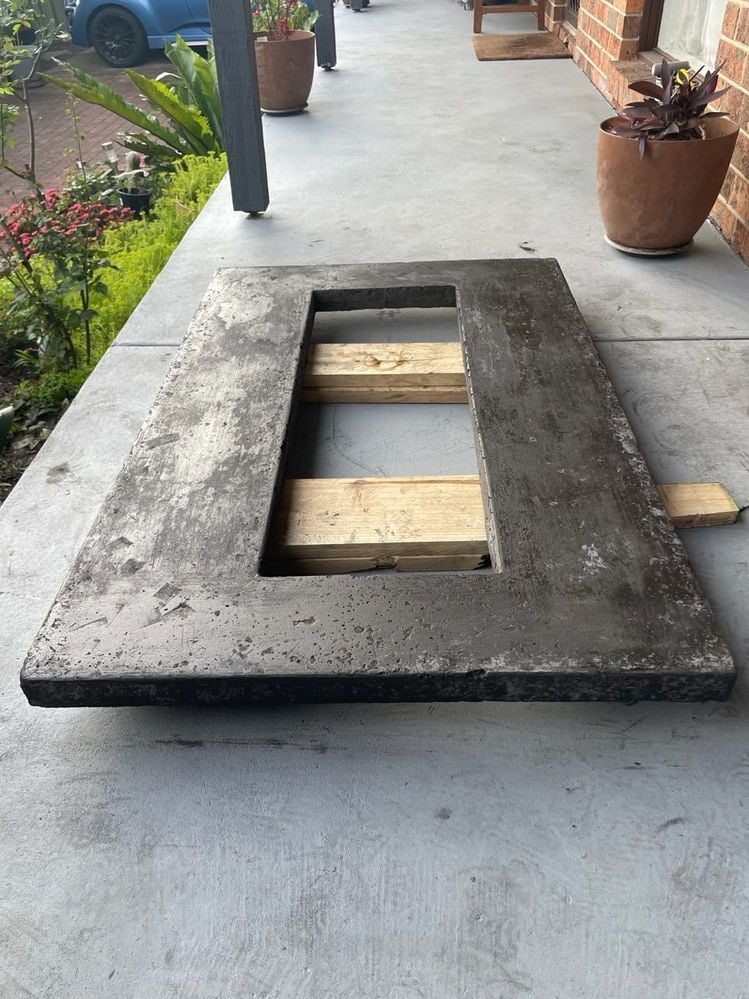
Remove the table top from the mould
- Peel away the sides, top and centre insert and flip your mould up the right way.
- A light sand might be needed depending on how well the cement set and the mould came away.
- Once you are happy with the surface, seal the cement to protect from the elements. I used Crommelin Diamond Coat natural sealer. A sample pot size (250ml) gave me 3 good coats.
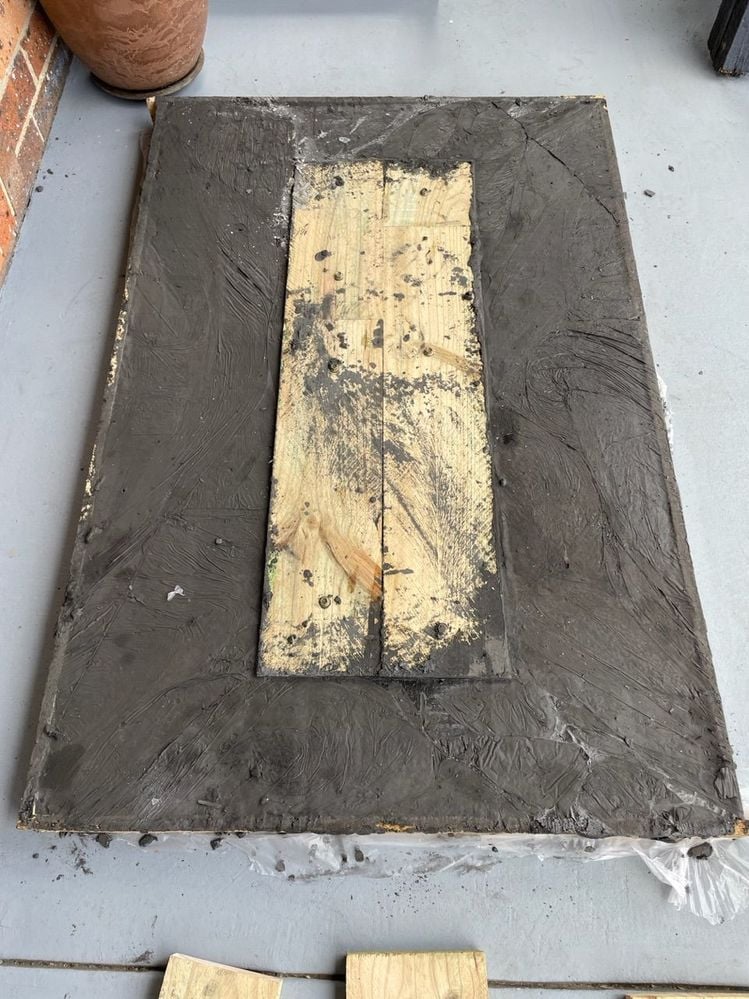
Note: I decided to use an old chip board sheet and some left overwater proofing paint (to create a smooth surface) to save money. This worked sort of well, although when it came time to separating the main part of the mould it wouldn’t come off and I had to scrape out wood chips and sand the top. Get a smoother surface and save yourself some hassle by using proper Formply.
Step 5
Assembly
- Place the base in your desired position. Be sure to get this right because the top weighs about 80kg and you don’t want to have to move it twice.
- Get someone to help you place the cement top on the frame.
- Insert the burner into the cement top. A couple of taps with a rubber mallet may be needed for this.
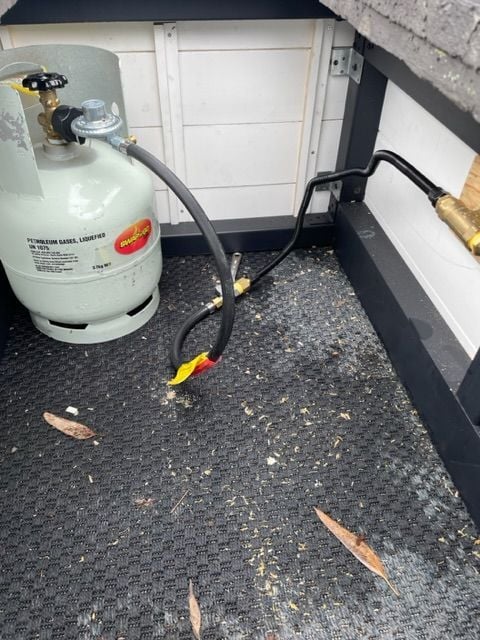
- Connect your hoses and shut off valve (if applicable) to the burner and gas bottle (I used a 4kg bottle due to the limited space).
- Make sure your connections are tight and sealed with tape.
- Turn the gas on and check each connection for leaks using soapy water. If you’re unsure about this get a professional to check it first.
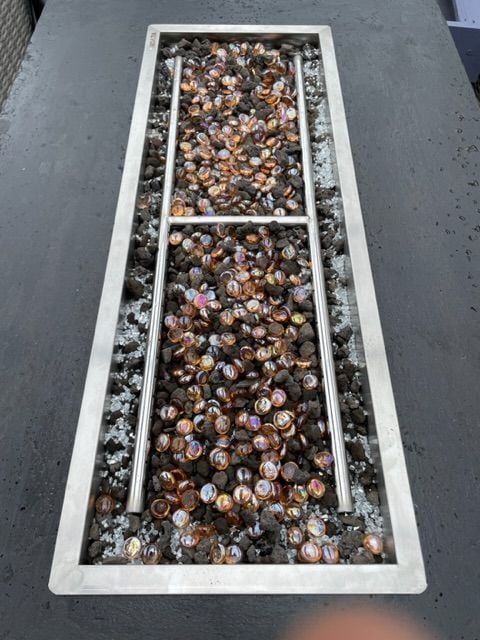
- Add in the rocks and decorative stones to the pan.
Step 6
Light the burner and enjoy!
Be sure to check the connections again for any leaks
and make sure any glassware or small hands are kept away from the burner.