Hi there, I am looking for some advice on a multi-step repair project for my weatherboard house.
The Situation:
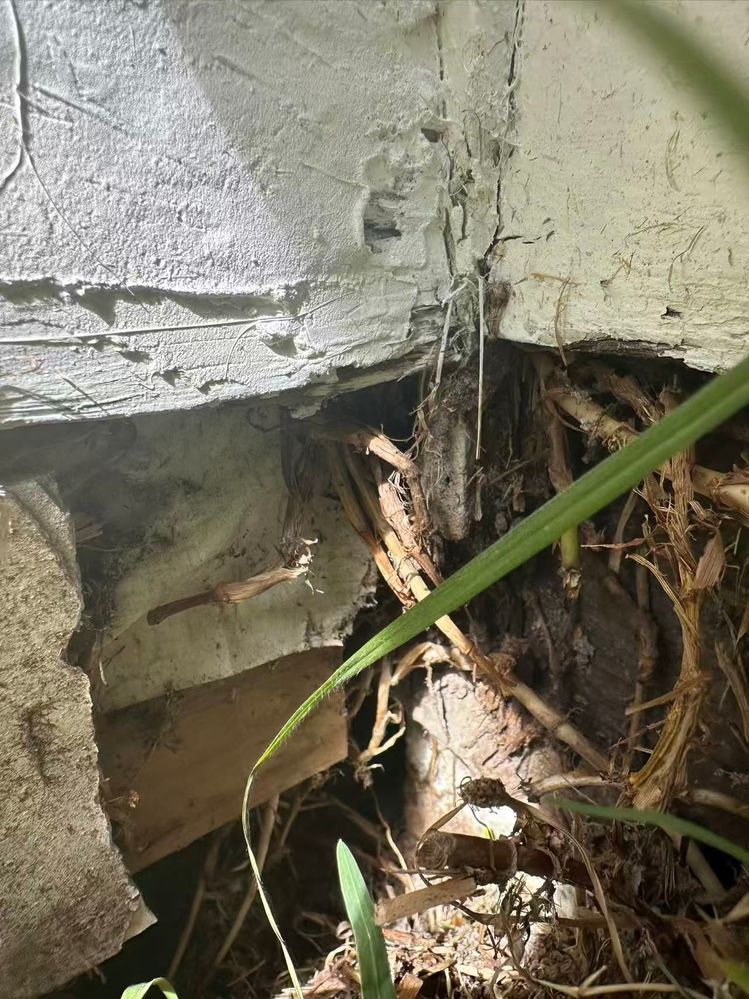
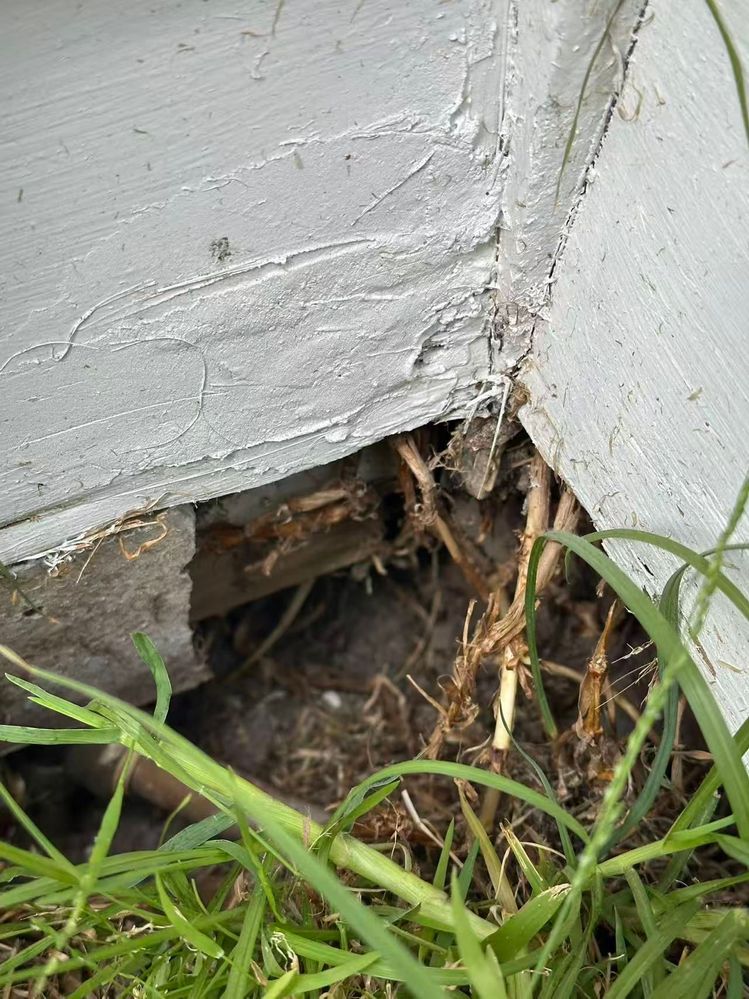
- Rotted Plinth & Cavity: A section of the plinth board has failed, revealing a cavity where I can see the Bottom Plate and a Concrete Stump. All the ends of the boards/plinth are covered with lawn now.
- Low Clearance & Ventilation: The gap between the internal floor level and the external lawn is very tight. This has caused poor sub-floor ventilation and is a major concern for termite ingress and ongoing moisture damage.
To seal the cavity, fix the drainage, and prevent future moisture ingress to protect the foundations, my Proposed Step-by-Step Plan:
- Phase 1: Plinth Repair & Sealing
- Dig out a 200mm wide trench along the wall to expose the damage.
- Remove rot and treat remaining timber with a wood preserver.
- Insert H4 Treated Pine blocks to support any compromised sections.
- Use Expanding Foam to seal the internal cavity (air/water seal) and install a new sheet as the external plinth.
- Phase 2: Waterproofing
- Apply a Bitumen-based waterproofing membrane to the new plinth and any timber-to-ground contact points.
- Ensure a proper "drip edge" logic so water doesn't wick behind the new plinth.
- Phase 3: French Drain & Landscaping
- Lay a Socked Agi Pipe at the base of the trench, sloped away from the house
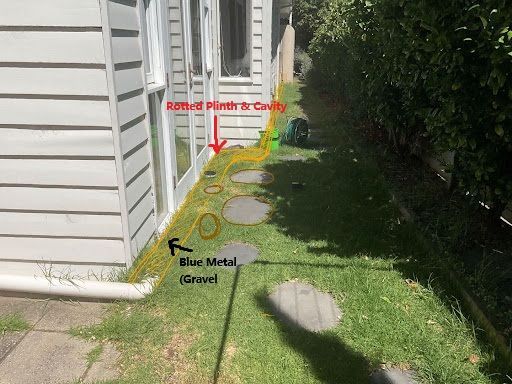
- Use Weed Mat and 20mm Blue Metal (Gravel). I will ensure the gravel level remains at least 50-75mm below the bottom weatherboard to maintain airflow to the sub-floor.
My Questions for the Community:
- Does this workflow seem correct for a long-term fix?
- Is Expanding Foam the best way to seal such a large cavity in a weatherboard wall, or should I consider other materials?
- Are there any specific "flashings" I should install between the new plinth and the existing weatherboard to ensure water sheds correctly?
- Does the Agi-pipe need to be connected to the stormwater main, or can it discharge to a lower point on the lawn?
I've attached some photos of the rotted area and a sketch of my proposed drainage plan. Any advice or product recommendations would be greatly appreciated!
Thanks in advance!