The Bunnings Workshop community can help with your home improvement projects.
So my house is built a meter or so above street level. The front lawn near the house slightly slopes away, then has a steeper slope near the property lawn. I am slowly converting the entire lawn into a native garden but the ground is pretty hard clay with crappy drainage. I've sheet mulched a strip near the property line and it was fine to just add extra compost and dirt on top to plant into while the organics slowly work at the clay underneath. But between mulch, compost and soil, I added about 30cm of height. Im worried if I do the same to the "flat area" that I will be redirecting water towards the house rather than down the hill? In a perfect world I would dig out the top layer of lawn before adding anything to keep it at the same level, but not a lot of extra money for landscaping so it would have to be by hand and will take forever.
How much could I build the area up before affecting drainage? If I keep the dirt layer smaller, I'm guessing the mulch shoudnt affect drainage as much? If I spend the next 6 months topically applying clay breaker is that going to do enough to help the existing soil?
Good Evening @Snakeytail
The sketch helps out heaps
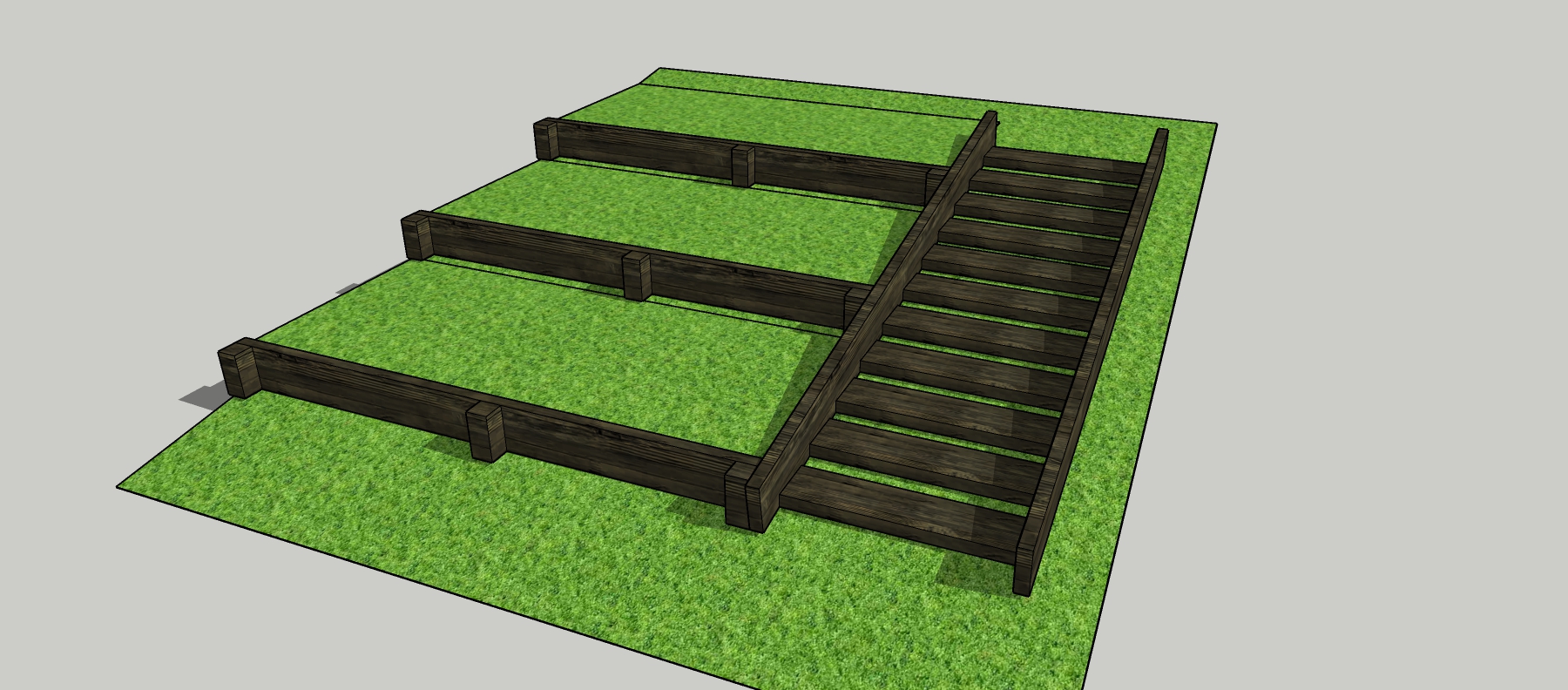
So the fall looks resonable. Im heading towards that first sketch up that @EricL drew. Even if its just one sleeper half way up the slope it will hep the drift of material down hill. I would still go less mulch/soil near the house and then towards the depth you want as you go towards the slope.
I use a mattock, a 6 foot crowbar and a square nosed shovel to dig holes in clay. They work well, usually its just the crow bar and the shovel to remove the clay. I generally try and make it liek a big bowl and fill them with decent soil, not compost. I also make sure I dont overwater the plants which is hard to judge. Definently the crowbar is the best tool.
Dave
I think I've exaggerated the slope a bit, the material I've put down thus far has stayed pretty much in place even through our Brisbane storm season. But I did pickup some nice bush rocks to put along the bottom of the slope. And it would be easy enough to put a sleeper at the top edge of the current mulch patch before I do anything else. Just need to figure out where the sewer pipe is in the yard before I drive stakes! I like the look of stones would a one or 2 layer stone wall work as well for this scenario as a wood sleeper? I have watched a couple videos of installing a raised garden bed wall, which assuming this install would be similar. Most of them seem to put a trench of rock behind the wall for drainage and support, would a shorter version need this?
I was also planning to run a path on the flattish area parallel to the current garden, so those edges would also be another line of defence against erosion.
Might have to try a crowbar, I have a tool that's more of a hoe than a mattock that is pretty much useless. I saw someone use a jack hammer to breakup clay which sounds like fun!
Hi @Snakeytail,
Yes, you could use stones as your retaining wall as long as they are sufficiently heavy and they sit on a solid, stable base. This video from our supplier Adbri Masonry has a good example of how to create a stable foundation for a block or stone retaining wall - How to Build a Retaining Wall | DIY Made Easy | Adbri Masonry.
Regardless of the height of your retaining wall, it is a good idea to install a trench of drainage gravel behind it, as this helps to reduce the hydrostatic pressure applied to the back of the wall by giving it a channel that water can easily travel through to a drainage point elsewhere. It is also worth installing some socked agi pipe in this drainage gravel as it will help collect and move the water elsewhere.
If you wanted to give @Dave-1's method a try, then a Fencing Crowbar is the specific type you'd be looking at. They are great for breaking up clay, which you can then remove with a shovel.
Let me know if there is anything else we can assist with.
Jacob
Good Evening @Snakeytail
As an alternative retaining wall that incorporates its own drainage have a look at these small gabion baskets. They only need a firm base to sit on (I scalp the grass so its undug soil) and then just rest the cages on it. Fill with your style of rocks you like and bingo, water drains easily, they can be moved if you want to later on. Have a look at my bookmarks and you will see a fair range of different gabion baskets.
To make life easy Bunnings stocks a few different sizes and I am thinking of Jack 65 x 30 x 15cm Landscaper's Plant Support Garden Gabion with some weed mat behind it so the fine soil dosnt filter through. You could have the wall 150mm high or 300mm high depending on what you like.
Dave
Workshop is a friendly place to learn, get ideas and find inspiration for your home improvement projects
We would love to help with your project.
Join the Bunnings Workshop community today to ask questions and get advice.