The Bunnings Workshop community can help with your home improvement projects.
Hi community,
I'm looking to add insulation and moisture protection under a timber floor for a terrace house (ground level). The timber floor will go over joists that are suspended with a small cavity of around 400mm above a dirt floor.
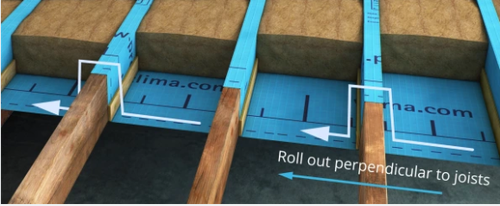
As well as to improve the insulation, I'm looking to stop moisture and musty smells coming up through the floor. The solution I'm thinking of is to add a breathable waterproof membrane over the joists and create a bit of a hammock to hold the earthwool floorshield insulation. Pic attached of the kind of setup:
The product I'm looking at for the membrane is the Ametalin VapourTech Brane
It doesn't mention floor application, so I wanted to get some opinion on whether it would work for my situation?
Much appreciated.
Solved! See most helpful response
I understand foil vs insulation to reduce moisture soaking the insulation, but I don’t understand why the foil side of https://www.bunnings.com.au/ametalin-1350mm-x-60m-silverwrap-micro-perforated-md-vapour-permeable-re... should be exposed, instead of blue side, to the moist air under the joists. Is anyone able to further explain this?
Hello @farnie
Great question—this comes down to how vapour-permeable reflective foil membranes like Ametalin SilverWrap Micro Perforated are designed to work in managing both moisture and radiant heat.
The foil (shiny) side of the membrane should face outward (downwards if underfloor), even though it might seem counterintuitive if you’re worried about moisture rising from below. Here's why: the foil side reflects radiant heat, helping regulate temperature. The blue side is not reflective, and exposing it outward would reduce the foil's ability to reflect heat.
Now to your main concern—moisture control. This specific product is micro-perforated and vapour-permeable, meaning it allows moisture vapour to escape from the insulated cavity (above the membrane) to prevent condensation build-up, while still offering protection against bulk water (e.g. splashes or wind-driven rain under subfloors). If you were to expose the blue side instead, you'd still get vapour permeability, but you'd lose the benefit of radiant heat reflection, which is part of the intended function of the membrane.
So, the foil side is exposed because it:
If you're in a particularly damp area, combining this wrap with proper subfloor ventilation is key to preventing moisture build-up.
If you need further assistance, please let us know.
Eric
Thanks @EricL ! I had assumed the membrane was a one way moisture barrier to keep moisture to one side of it. Your explanation makes a lot more sense
Workshop is a friendly place to learn, get ideas and find inspiration for your home improvement projects
We would love to help with your project.
Join the Bunnings Workshop community today to ask questions and get advice.