The Bunnings Workshop community can help with your home improvement projects.
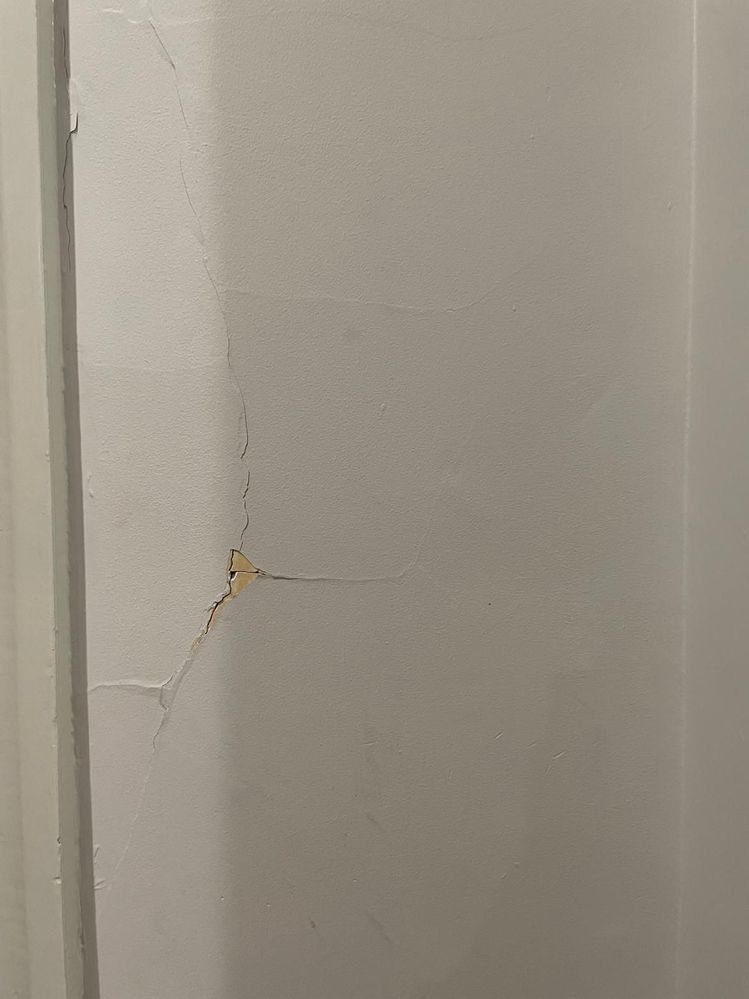
Home is 100 years old. A section of hard plaster on an internal wall (about 10cm x 30cm) has become separated from a brick wall (the section has a bit of flex in it). It has a crack through the middle of it too. Is there a way to reattach the section and then seal the crack? or do I need to remove the section of plaster and patch the whole section?
Hello @DIGDIG
Repairing this wall is not your straightforward plaster, sand and paint variety. Being over a hundred years old the odds are very high that there is asbestos behind that wall. I propose having it tested first just to be on the safe side. If it is positive, you'll need an asbestos removal specialist to get rid of the asbestos. If the results are negative, you can continue with your repair plans. I propose consulting a heritage plastering specialist if you wish to keep traditional plaster on your wall.
You can also consult the specialist in regards to upgrading sections of your wall to modern plastering techniques, that is if you want to modernize your plastered wall. I understand that it is tempting to simply rip out the wall, but in the process, you might actually end up adding more work to the repair work that needs to be done. My best advice is to gather as much information as you can before you make your decision.
Let me call on our experienced members @Dave-1 @Nailbag and @Jewelleryrescue for their recommendations.
If you need further assistance, please let us know.
Eric
Hi @EricL
Reading @EricL reply I think he's already on the mark with his recommendations and strategy. It could end up being something simply cosmetic and in need of scraping back the loose cracked material and having it then filled, sanded back, primed and the wall painted. I tend to lean towards this as being the resolve.
Nailbag
Good Evening @DIGDIG
A third perspective ![]()
I think it looks like horse hair plaster, I remember my grandmothers place had this as her ceiling in her foyer. I am unsure about it containing asbestos but it would be a wise move as @EricL suggests to get it tested first before attempting to repair/replace the broken section. From memory its not a standard thickness so cutting a section out and replacing it isnt a simple step.
I do like the idea of looking into the type of plaster it is and whether the house is heritage listed (means a different set of rules probably needs to be followed)
Test first and if safe then would look into how much it moves/flexes and determine if you want to try and repair or replace that section between the doors. Just had a thought, if its on a brick wall there really shouldnt be much of a flex to it.
Dave
Hi @DIGDIG
The biggest current incidence of mesithelioma is among the DIY sector! If you don't get this checked and then you're possibly exposed (should it be positive) would be madness! The fact that there is an exposed crach and flex in the wall is like saying there is a bellows that could be pumping fibers into your atmosphere.
I'm sorry if I'm making this frightning as it may turn out to be nothing but then again it could be something. If it turns out there is Asbestos, a failure to record your possible exposure could exclude you from future compensation if the worst were to eventuate so do not delay on the testing!
Edited to add that I have to commend @EricL on his pick up that there may be a possibility of asbestos here.
Thanks for the response. Do you have a suggestion for how to fix it once I've got it tested?
Good morning @DIGDIG
It depends on what is behind the plaster. You have mentioned that its a brick surface. (easy enough to check with pushing a philips head screwdriver through the plaster rotating it as a slow drill bit) If you hit something solid then its brick, if there is nothing there then its open behind the plaster)
If its brick then you could insert some glue through more holes to bind teh plaster sheet to the brick.
If its open, then really it will depend on how much flex the cracks have. 10cm by 30cm is the area you say is cracked, from recent experience the rear of the cracks could be blown out so a cosmetic repair (V cut, then fill and sand) may not be the best option. If the wall flexes at all I would suggest to cut out the segmant (and a bit) and patch it.
Dave
Thank Dave. Its definitely brick, I've drilled through some other parts of my house to mount cupboards to walls. Did you have a suggestion on type of glue?
Good morning @DIGDIG
Something like this Sika 290ml Sikaflex®-118 Extreme Grab Construction Adhesive I am still hesitant tho, if the plaster is mounted directly on the brickwork then it shouldnt have been able to crack like it has. I would only use this suggestion if there is around a 5mm gap between plaster and the brick.
I will stress again to check for asbestos due to the age and unknown compond of the plaster. When I have worked with removal of cables wrapped in asbestos insulation we were taught its the fibres that you cannot see with the naked eye that will caus eyou the issue.
Dave
Workshop is a friendly place to learn, get ideas and find inspiration for your home improvement projects
We would love to help with your project.
Join the Bunnings Workshop community today to ask questions and get advice.