The Bunnings Workshop community can help with your home improvement projects.
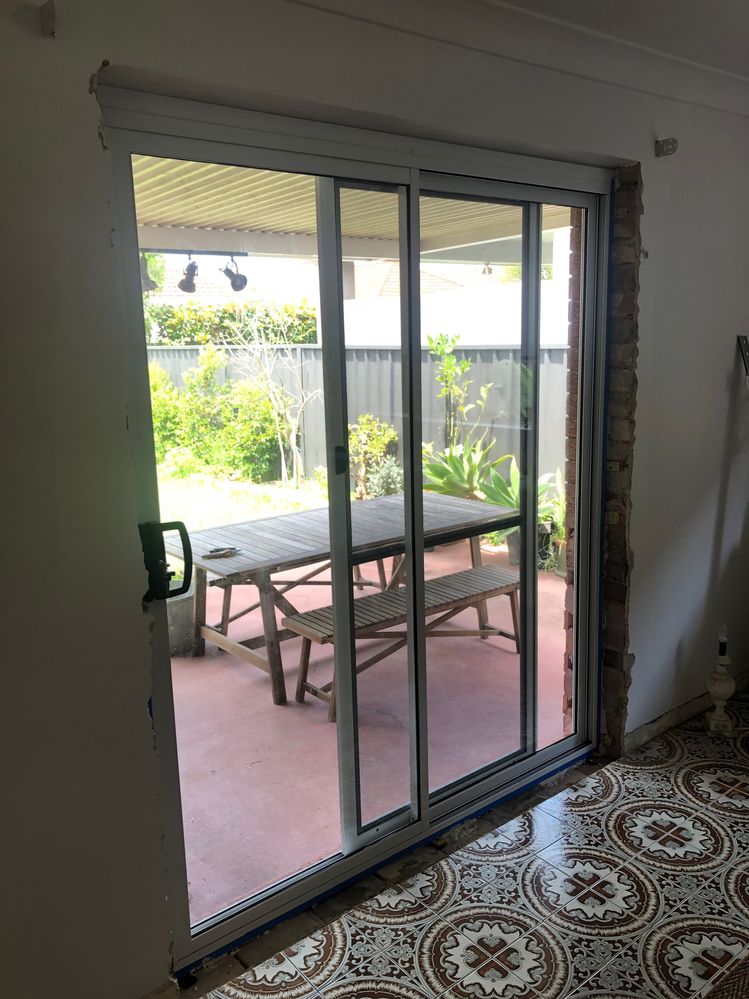
We have just had a sliding door installed and need to finish it off.
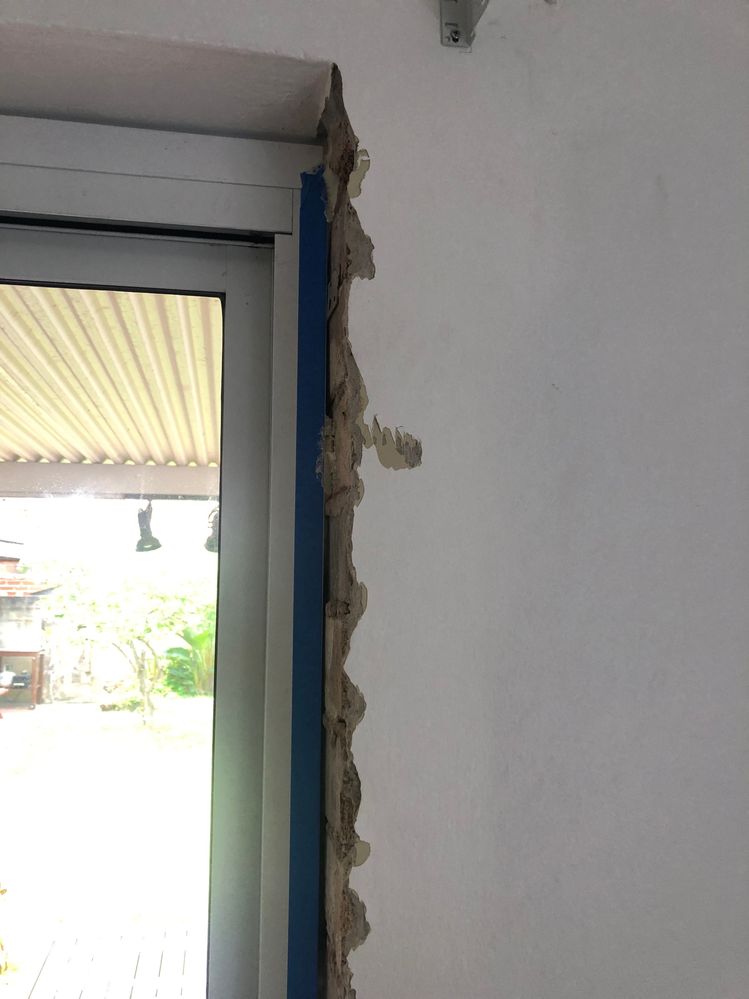
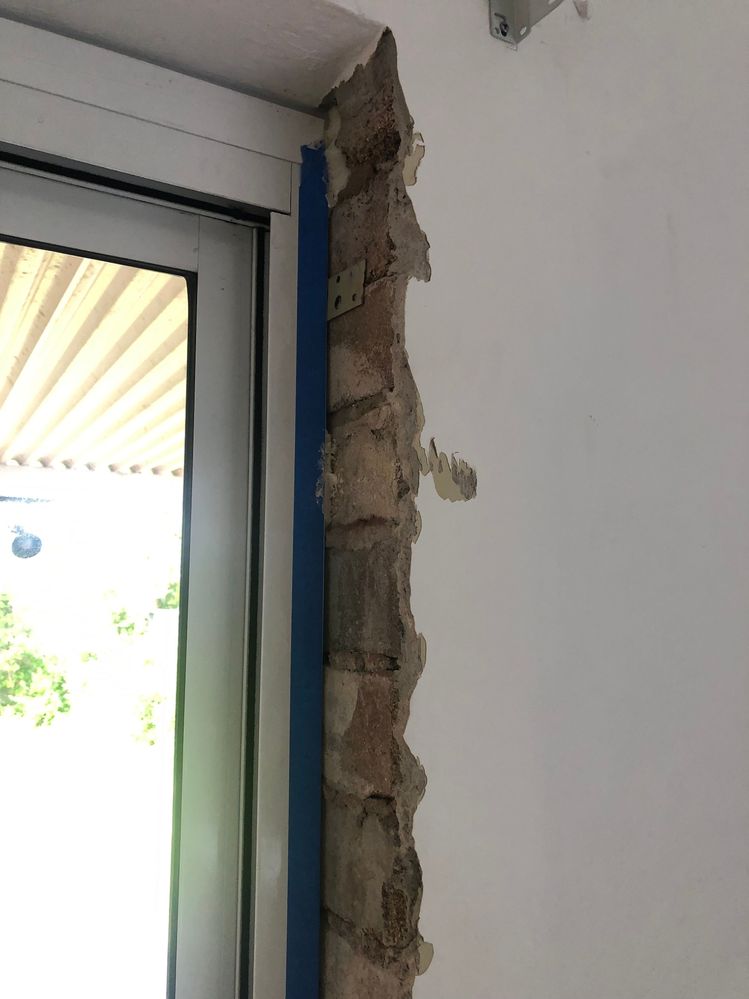
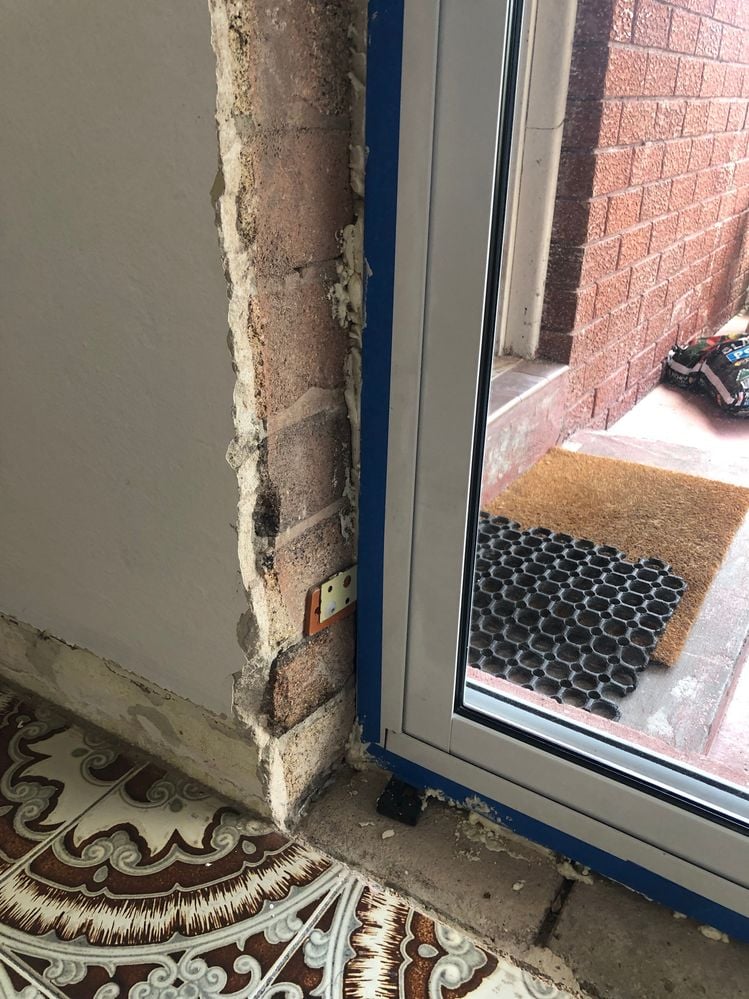
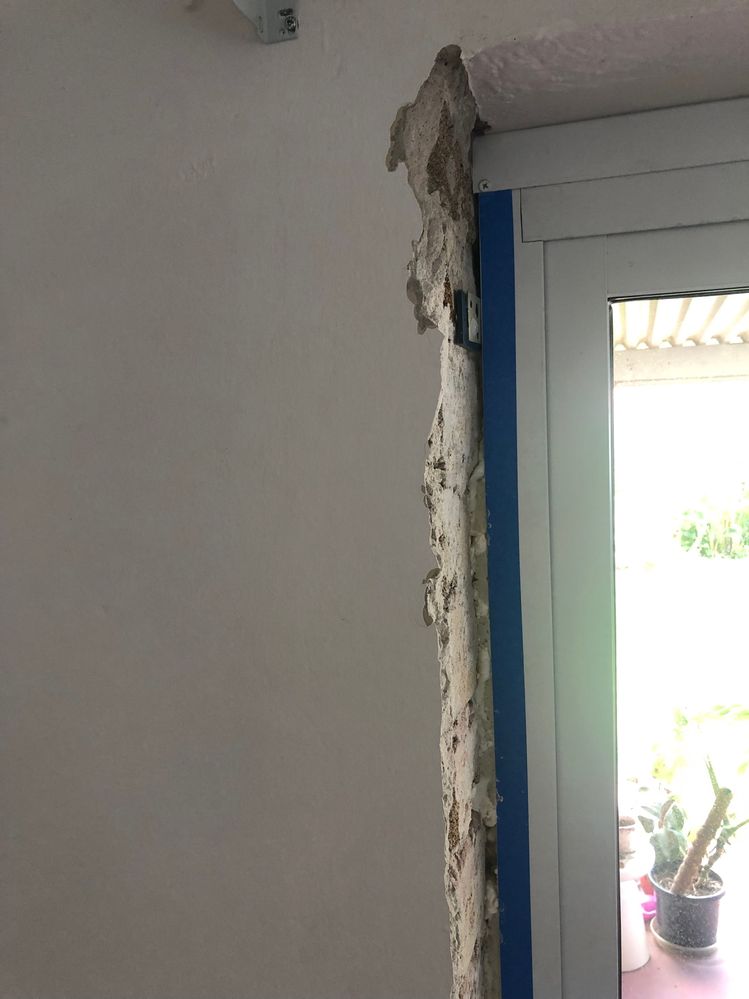
Please advise on the best method and products needed to render/plaster the exposed recess.
It's currently quite an uneven surface, between 2-20mm difference.
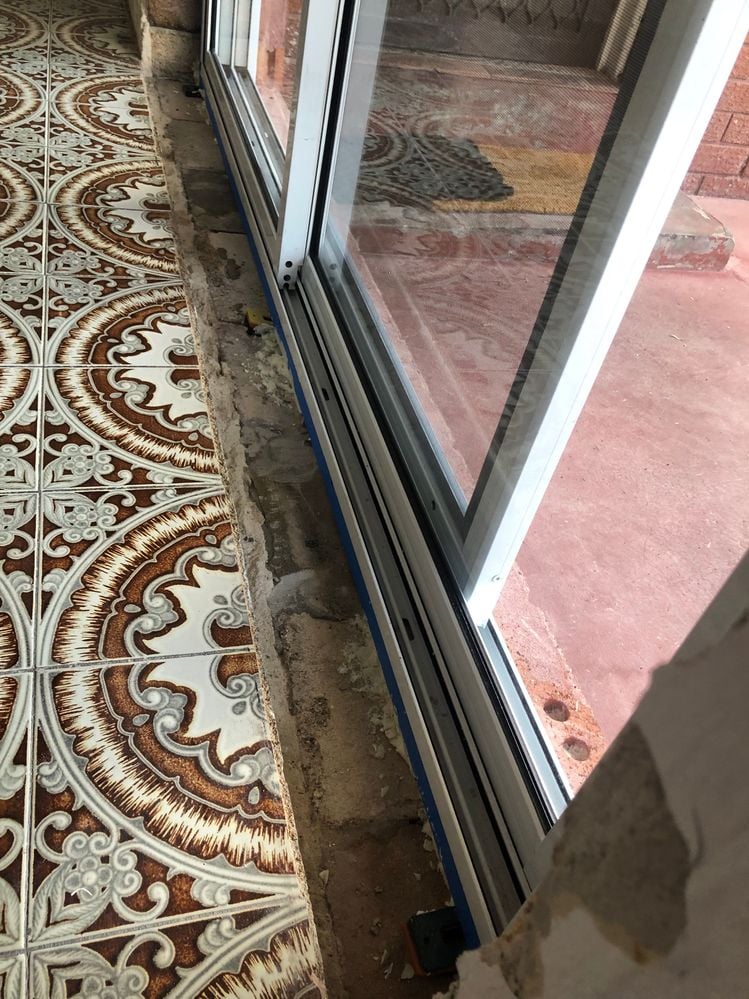
We also need advice how best to fill in, or cover the void in the floor ( 30mm deep).
We do not have any of the original tiles spare!
Would prefer to avoid wood panelling etc in order to match other windows in the house.
Thank you!
Hi @WhichAisle,
Thank you for your question about how to finish the brick opening on a newly installed sliding door.
I'd suggest rendering the brick with Dunlop Multipurpose Acrylic Render as a base layer and then Dunlop Fine Coat Render as a topcoat before painting. Between the two coats, you'll be able to account for the unevenness of the brick and create a flat, smooth surface.
Typically, you would use an External Render Trim to get a nice, clean corner, but in your situation, this could be a bit tricky because of the existing render on the wall. You might have to chip back the render by around 100mm so you can install this bead. The other option is to go without a bead and just shape the corner, but it would be weaker and more difficult to get a clean finish.
To be entirely honest with you, the existing render on the wall makes this job surprisingly complex to the point that I would consider contacting a renderer for their assistance. They should be able to recommend a solution that would be both clean and strong.
For the floor, I'd just give the bricks a good clean to remove any dust or debris, apply a bond coat of BondCrete to the brick, then pour concrete over the brick and smooth it out with a trowel. Once dry, you could paint it with concrete paint in a colour of your choosing.
Allow me to tag our helpful members @Noyade, @Nailbag, @AlanM52 and @Dave-1 to see if they have any ideas.
Jacob
Good Afternoon @WhichAisle
I would render it as well, that said I dont have a lot of experience in rendering and up until the point @JacobZ mentioned considering a renderer It was in my head as doable
Maybe not as my first rendering experience tho
I hadnt considered the corner edge (I am use to plaster and ow easy it is work.)
The floor I would use concrete as well to give it a nice solid surface. Without seeing the other windows in the house I would go for a neutral colour with the existing floor so your eyes belnd in over it. Not a cream but something with a little more colour so the dirt dosnt show as easily type deal.
As a second option and yeah its a personal taste option
I actually like the industrial roughness of the brickwork. There is something about how it showcases what was and then what is now. Removing the roughness/sandy parts of the brick surface and maybe painting it white as an alternative option.
Dave
Hi @WhichAisle
For the sides, I would definitely render as per @JacobZ directions. Either yourself or get a pro in.
I would use 110mm x 19mm Tassie Oak which will filly that void nicely. It will need to be doubled up and packed. Width is the same as a standard brick. Liquid nail this all into place then seal with an oil of choice.
Nailbag
Hi @WhichAisle,
Render... and I would get someone for that job.
Floor as per @JacobZ's suggestion.
I did a search for those tiles with no results.
Cheers
Thank you for the swift reply.
With the initial base render, do we need to reinforce it with some kind of mesh?
Or just gradually build it up layer by layer?
Cheers!
Appreciate the advice!
Cheers
Hi @WhichAisle,
Mesh is typically used when you are applying render over a wider area to thin substrates, like fibre cement boards, where, if hit, the board can flex. Brick will not do this, so there is no real need.
Let me know if you have any further questions.
Jacob
Workshop is a friendly place to learn, get ideas and find inspiration for your home improvement projects
We would love to help with your project.
Join the Bunnings Workshop community today to ask questions and get advice.