
The Bunnings Workshop community can help with your home improvement projects.
- Bunnings Workshop
- >
- Discussion
- >
- Whole of House
- >
- Restoring a couple of bentwood chairs
Restoring a couple of bentwood chairs
- Subscribe to RSS Feed
- Mark Topic as New
- Mark Topic as Read
- Float this Topic for Current User
- Bookmark
- Subscribe
- Mute
- Printer Friendly Page
Share


- Mark as New
- Bookmark
- Subscribe
- Mute
- Subscribe to RSS Feed
- Highlight
- Report Inappropriate Content
Restoring a couple of bentwood chairs
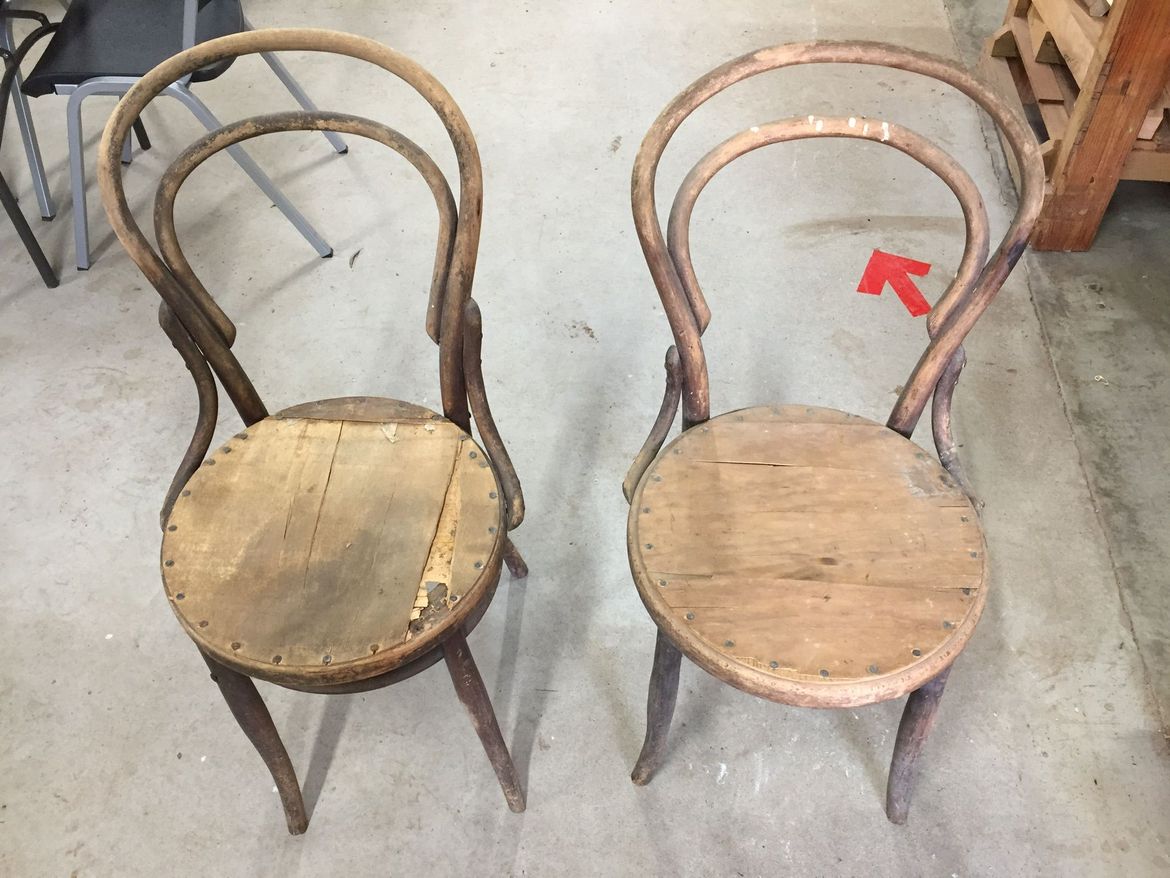
These two old chairs are my next restoration project. I will post some pics as I progress with the work.
- Mark as New
- Bookmark
- Subscribe
- Mute
- Subscribe to RSS Feed
- Highlight
- Report Inappropriate Content
Re: Restoring a couple of bentwood chairs
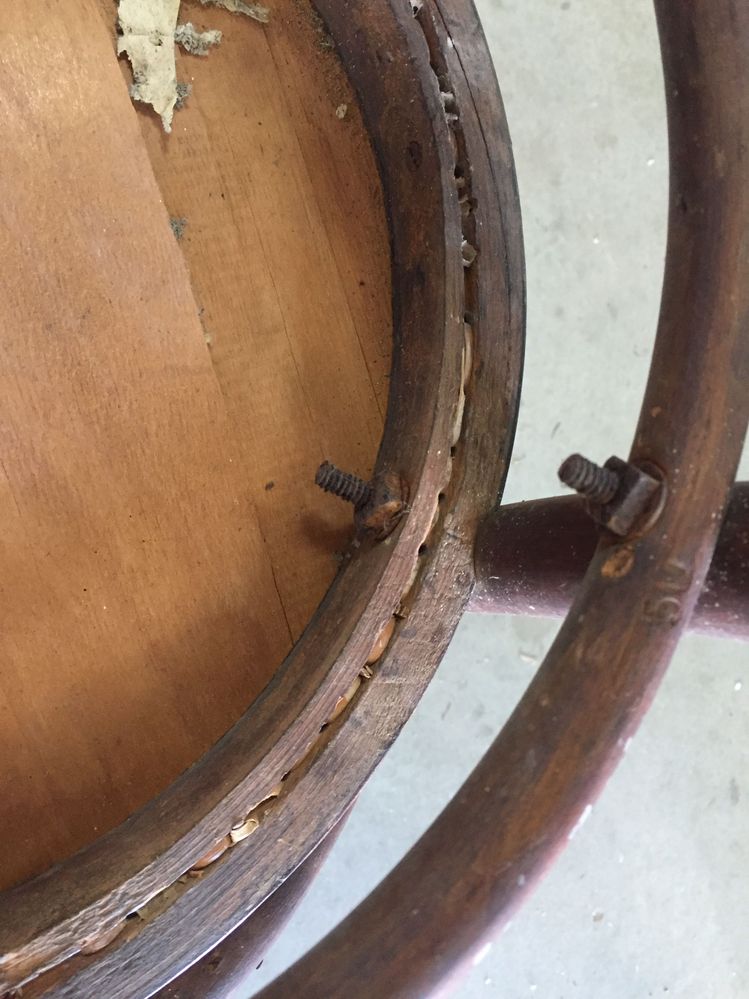
I have completely pulled one of them apart and removed the remnants of the old rattan cane from the seat. The underneath side of the seat which has a groove around the line of holes will be filled with a suitable two pack adhesive mixed with sawdust that closely matches the colour of the timber of the chair. The top side then needs a groove routed in that to take the new rattan seat that will be installed in a one piece sheet instead of woven. Had to use a fine blade in the angle grinder to remove the very rusted on nuts and bolts. Still deciding whether to use bolts or plug the holes and then use screws as they would have in the original chairs.


- Mark as New
- Bookmark
- Subscribe
- Mute
- Subscribe to RSS Feed
- Highlight
- Report Inappropriate Content
Re: Restoring a couple of bentwood chairs
Hi @Newqlder,
Many thanks for the update on your project. I trust our members will be looking forward to seeing some images of the progress.
Please keep the updates coming and let us know if you need any assistance.
Mitchell

- Mark as New
- Bookmark
- Subscribe
- Mute
- Subscribe to RSS Feed
- Highlight
- Report Inappropriate Content
Re: Restoring a couple of bentwood chairs
Certainly will Mitchell.
I have been having troubles posting some text with pics. Tells me I have to review and remove.
Is is the only way to continue to add to the post is to reply to my original post?
- Mark as New
- Bookmark
- Subscribe
- Mute
- Subscribe to RSS Feed
- Highlight
- Report Inappropriate Content
- Mark as New
- Bookmark
- Subscribe
- Mute
- Subscribe to RSS Feed
- Highlight
- Report Inappropriate Content
Re: Restoring a couple of bentwood chairs
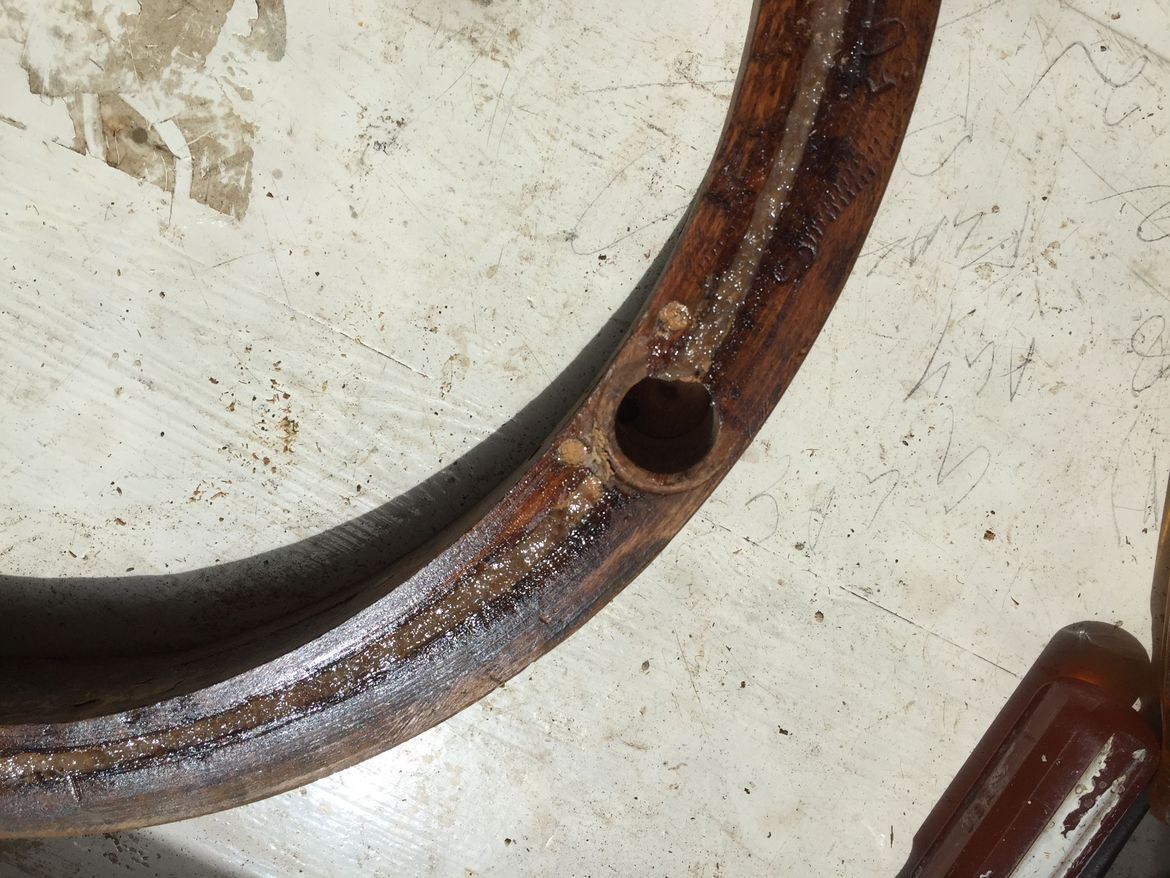
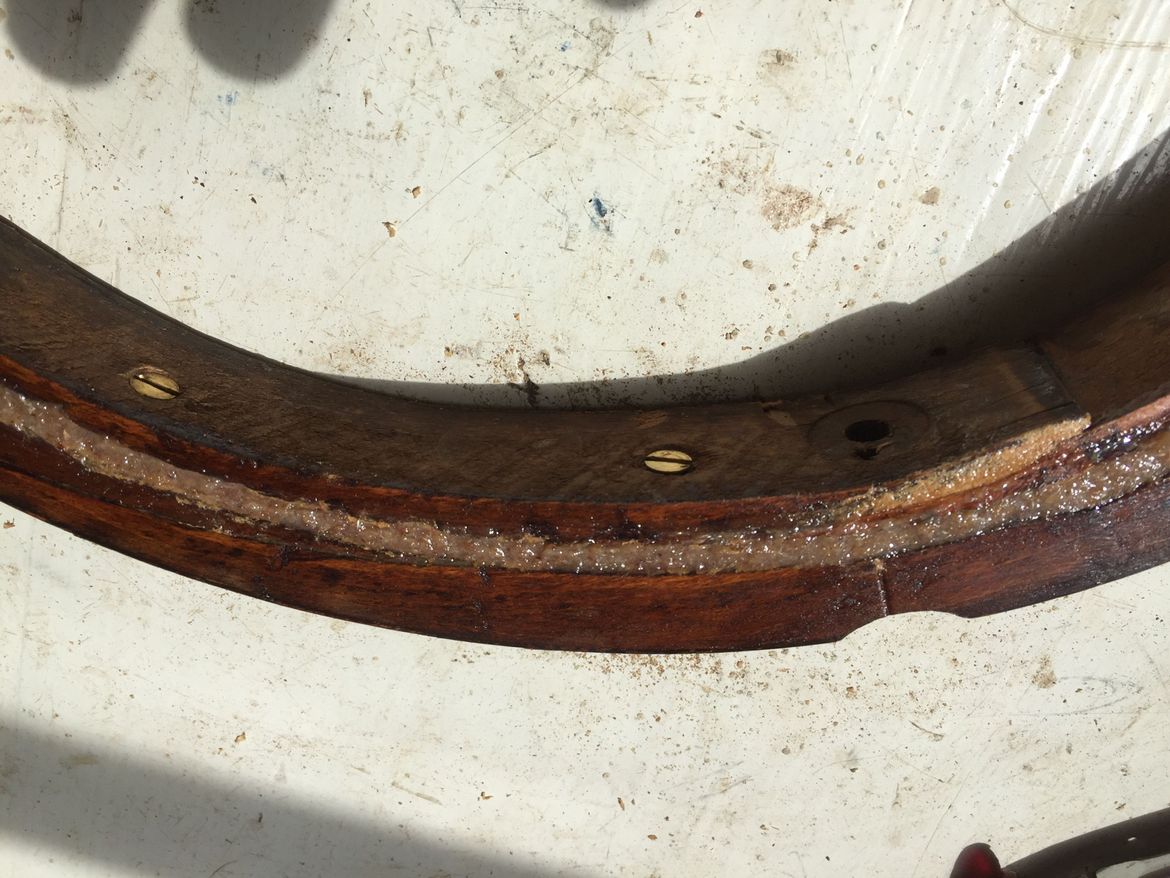
The chair ring has been filled around the underneath groove that was used previously for the rattan cane weaving. All parts now presanded and ready to fill the holes in the top of the seat ring before routing the groove for new rattan cane.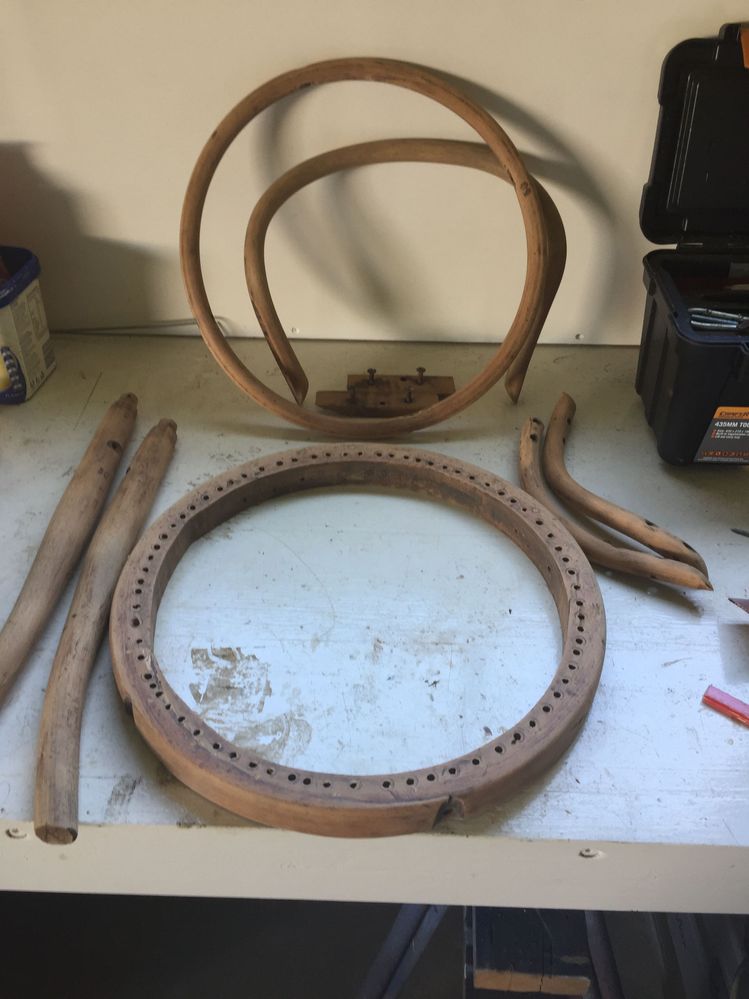

- Mark as New
- Bookmark
- Subscribe
- Mute
- Subscribe to RSS Feed
- Highlight
- Report Inappropriate Content
Re: Restoring a couple of bentwood chairs
Don't use sheet cane. It destroys the chair and doesn't last.
- Mark as New
- Bookmark
- Subscribe
- Mute
- Subscribe to RSS Feed
- Highlight
- Report Inappropriate Content
Re: Restoring a couple of bentwood chairs
Welcome to the Bunnings Workshop community @EdwardJ. It's terrific to have you join us, and many thanks for jumping into the discussion.
Despite this being a discussion from quite some time ago, I'm sure anyone who comes across it would love to hear your recommendations on alternate ways to go about this project. I'm not particularly familiar with the restoration of cane chairs. Would the alternative to a sheet cane be weaving it yourself with strands? I'd imagine that would be quite the process. Is it something achievable as a D.I.Y. project?
Looking forward to hearing your advice.
Mitchell
- Mark as New
- Bookmark
- Subscribe
- Mute
- Subscribe to RSS Feed
- Highlight
- Report Inappropriate Content
Re: Restoring a couple of bentwood chairs
Yes, Weaving it yourself. Getting the materials is harder now. I used to take 3-4 hours though I'm sure most could get it done in a day or two.
Happy to show anyone who wants to do it themselves.

- Mark as New
- Bookmark
- Subscribe
- Mute
- Subscribe to RSS Feed
- Highlight
- Report Inappropriate Content
Re: Restoring a couple of bentwood chairs
Can any offer any advice on replacing the ply seat on these bentwood chairs? I have some I want to restore, they seem to be made of 3 layers of veneer each about 1.5mm and have a shallow bowl shape formed into them. If possible I would like to duplicate this form but haven't had any experience forming ply, and seems like a concave bowl would be especially difficult.
Found this interesting video on the tube, but doesn't have details on the timber used. No heating or steaming, just pressed, but what kind of timber would be best for this?

Why join the Bunnings Workshop community?
Workshop is a friendly place to learn, get ideas and find inspiration for your home improvement projects
You might also like






We would love to help with your project.
Join the Bunnings Workshop community today to ask questions and get advice.