Workshop
Ask a question

The Bunnings Workshop community can help with your home improvement projects.

Which render should I use?

squeakysim
Building a Reputation

Which render should I use?

Render1.jpgRender2.jpgRender3.jpg


I have some patch rendering to do and I thought it would be pretty straight forward; just get some straight sand and cement render for the scratch coat and then apply a top coat. But, this is my first time and there are a multitude of different options out there it seems! 

And, I've got a few different scenarios which I feel require different considerations, so I want to try and find a single option that can cover them all if possible without the needs for buying different materials for each...

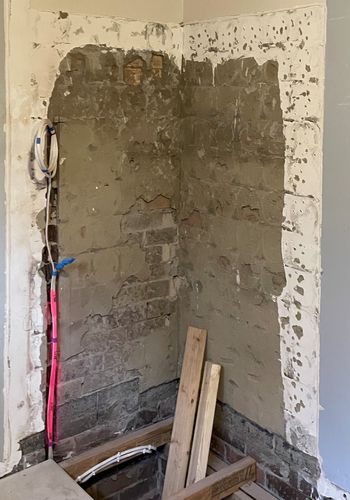
1. I have full depth patching, that goes back to brick to carry out in the kitchen (10mm+)

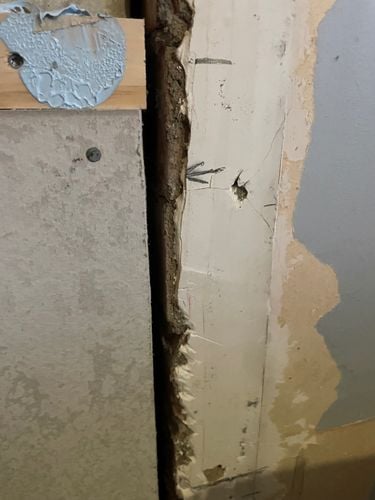
2. I need to patch where the old wall heater was and now has a sheet of cement board to render over (5-10mm), but there is deep gaps on the sides (see photo)

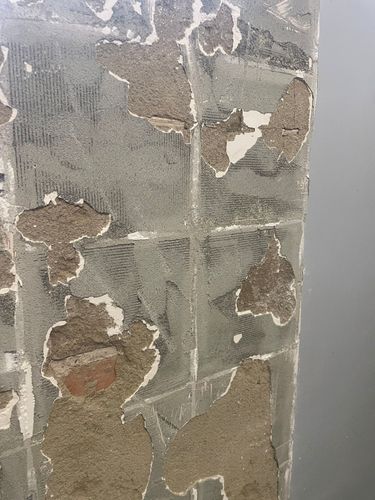
3. I need to skim some areas where removing tiles has removed mainly just the top coat, and few mm's of base coat in places.

4. Oh yes, and also filling in chasings from new cable runs (about 30mm).


I was going to keep it simple and cost effective, but then I read you need to use a different kind of render for cement board and I don't want to have to buy different materials for each task!


Can I use Dunlop 20kg Multipurpose Acrylic Render  as a base for all tasks, then apply a top coat?

JacobZ
Bunnings Team Member

Re: Which render should I use?

Hi @squeakysim,


Thank you for your question.


For scenarios 2 and 3, the Dunlop Multipurpose Acrylic Render would be suitable in a single coat.


For scenarios 1 and 4, you will need to do multiple coats, as it can only be applied in coats up to 10mm thick.


For those deeper gaps on the side of scenario 2, you would be better off using a structural repair mortar such as this Dingo Structural Mortar, which can be applied up to 75mm thick, as they look to be quite deep.


You could then topcoat with this Dunlop Fine Coat Render before painting.


Let me know what you think and if you have further questions, please don't hesitate to ask.


Jacob


squeakysim
Building a Reputation

Re: Which render should I use?

Thanks.

I already have the standard mortar mix, do you think this would be okay, or could I maybe add something to it to help with the structural aspect?

Is the multipurpose render just a base coat? Do I need to add a topcoat if all I’m doing is tiling over it?

JacobZ
Bunnings Team Member

Re: Which render should I use?

Hi @squeakysim,


You should get away with just using mortar because of how narrow the gaps are. You may just need to apply it in a few layers to allow it to dry through.


The multipurpose render is a base coat, which basically means that it is not a particularly smooth finish. You could use it as a topcoat, but it wouldn't be the smoothest surface. If you were tiling over it, there is no need for any additional top coat to go over the top.


Let me know if you have any further questions, happy to help if required.


Jacob


squeakysim
Building a Reputation

Re: Which render should I use?

Thanks @JacobZ 

How long would you leave between layers of mortar, and then before adding the topcoat? 
I assume there’s no issues with waterproofing on the base coat either..?

JacobZ
Bunnings Team Member

Re: Which render should I use?

Hi @squeakysim,


The Dunlop Acrylic Render should be left 6-8 hours before adding the topcoat. You can see further information here - Dunlop Multipurpose Acrylic Render Datasheet


In the case of a mortar, you won't have a datasheet like the above one to fall back on, so just to be safe, I'd give it 24 hours between layers.


It's always best to check the instructions for your specific waterproofing product, but I can't say I've ever come across a waterproofing membrane that couldn't be applied over a base coat render.


Jacob


squeakysim
Building a Reputation

Re: Which render should I use?

Great! Thanks!

I meant to ask the if I need to apply a bonding agent to the brickwork for the base coat? I know you didn’t mention, but thought I’d just check!

JacobZ
Bunnings Team Member

Re: Which render should I use?

Hi @squeakysim,


I have to apologise, I missed what you mentioned about having to use a different render over cement board, and I've just noticed that the datasheet for the Dunlop Multipurpose Acrylic Render mentions that it should not be applied over FC sheeting. 


The rest of my advice still applies, but we will have to re-examine the cement sheeting.


Can you advise what the plan is with the cement sheeting? Are you just looking to coat it, then paint, or is there a waterproofing membrane and tiles that need to go over it?


To answer your most recent questions, they recommend using Dunlop Multipurpose Water Based Primer on porous concrete surfaces before rendering. You don't have porous concrete, but it wouldn't hurt to use it.


Apologies for my error. Please rest assured, I will work with you to find a solution.


Jacob


squeakysim
Building a Reputation

Re: Which render should I use?

No worries and thanks for the pick up! The cement sheeting is to be plastered and painted. So from what you’ve said, and the products you proposed, it looks like the fine coat render should be okay on cement board. What do you think? 

I’m adding an extra photo from the kitchen showing what needs to be done there as I didn’t have one before. 

image.jpg

JacobZ
Bunnings Team Member

Re: Which render should I use?

Hi @squeakysim,


I'll give a quick summary.


Tidy up the walls and remove any dust or debris, then apply Dunlop Multipurpose Water Based Primer as a bonding agent.


The Dunlop Fine Coat Render would is fine for use on the cement board and as a topcoat in any areas you plan to paint.


If you are tiling over it, just use the Dunlop Multipurpose Acrylic Render, then waterproof over the top, making sure you confirm compatibility with the specific membrane.


Let me know what you think and if you have further questions, don't hesitate to ask.


Jacob


Why join the Bunnings Workshop community?

Workshop is a friendly place to learn, get ideas and find inspiration for your home improvement projects