A large gabion wall made with recycled mesh and rock.
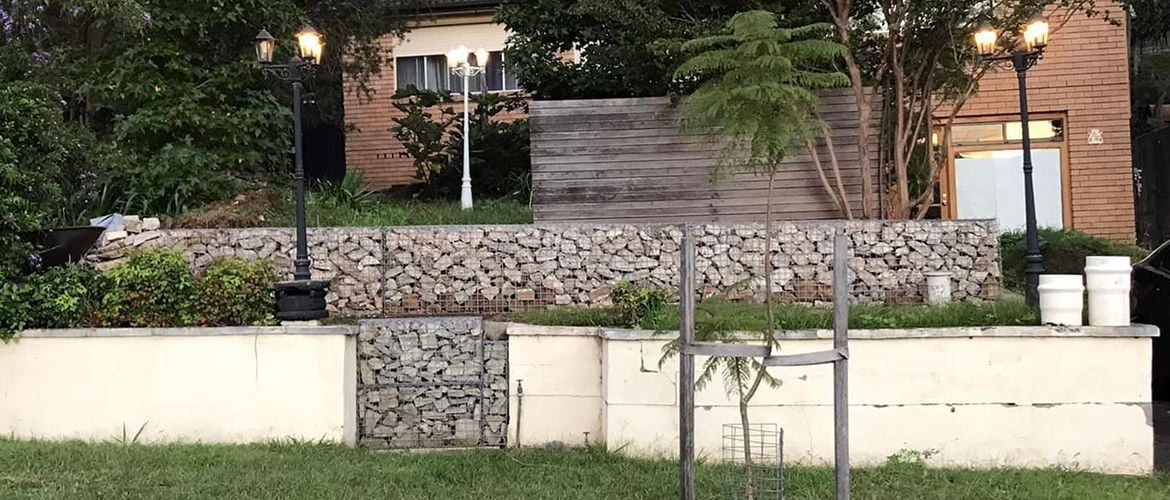
The project
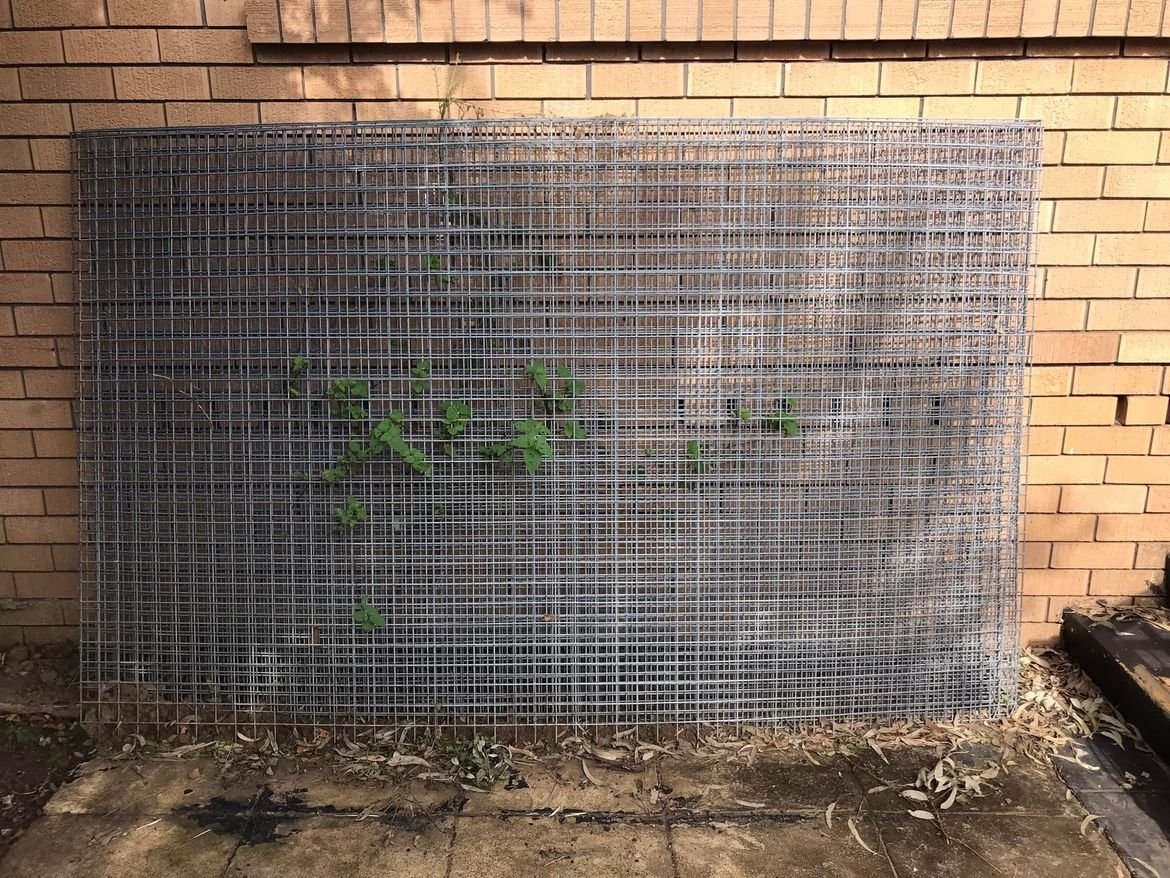
I had bought secondhand 50mm by 50mm galvanised mesh and had these stockpiled for this project of building a gabion wall. I think the mesh is 4mm thick.
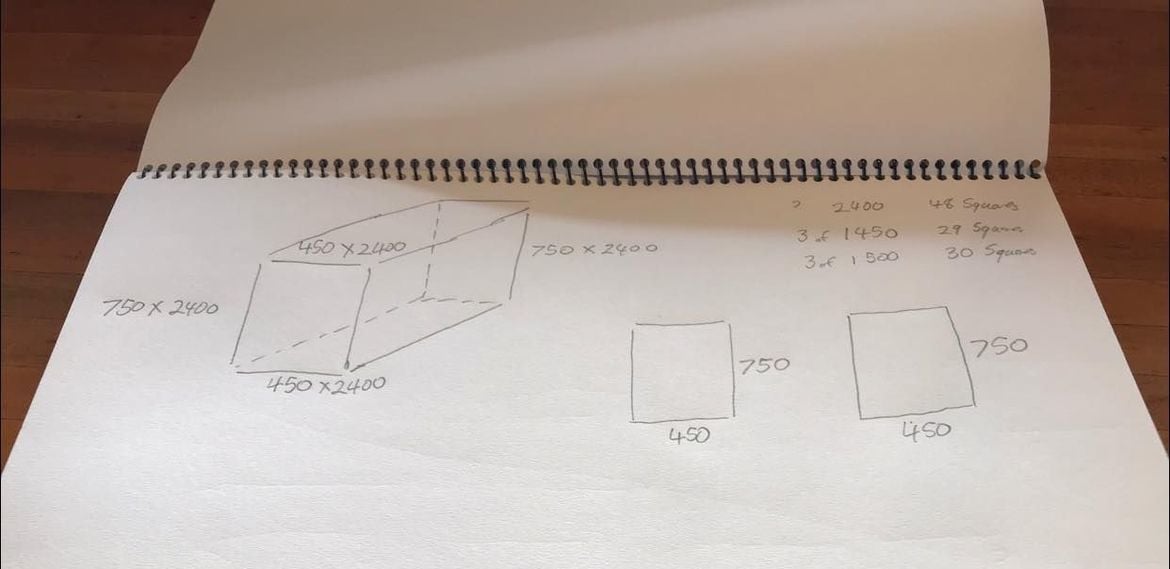
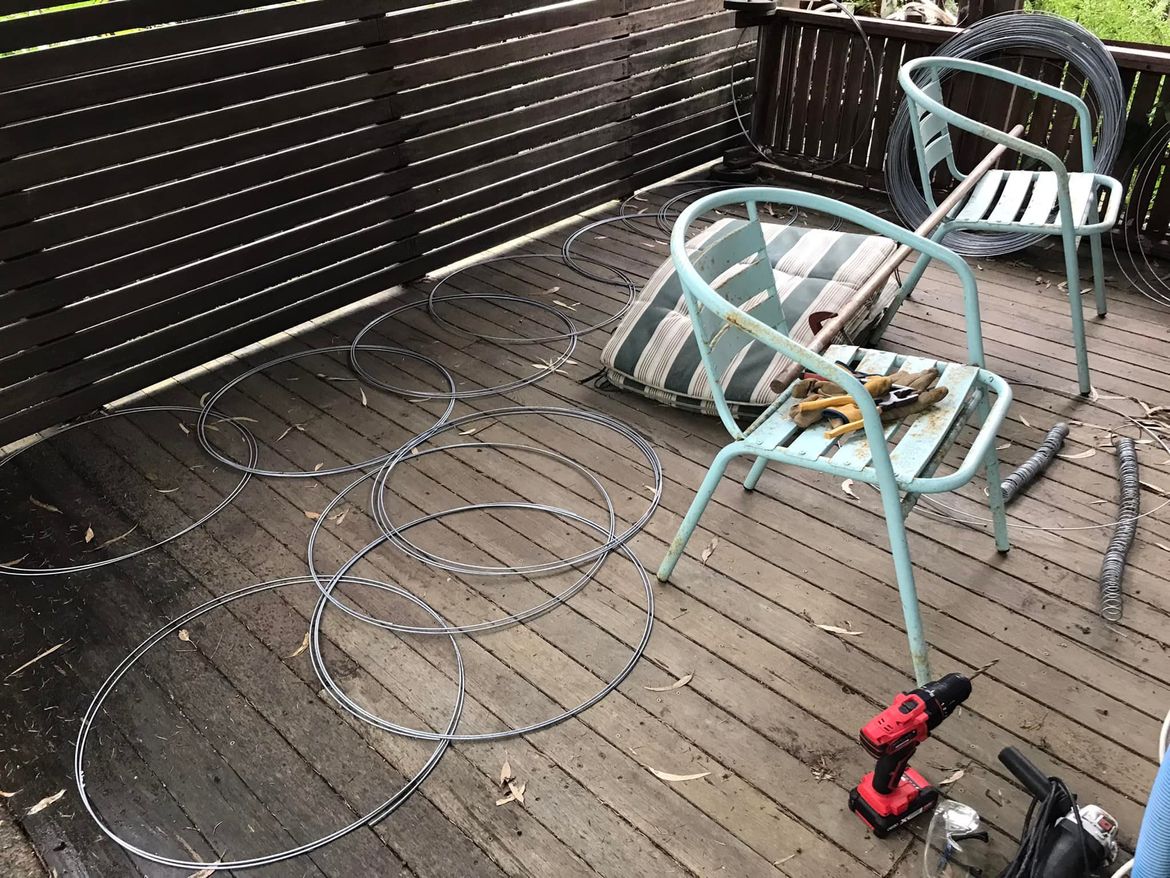
Working out how many baskets I could make from the mesh I had.
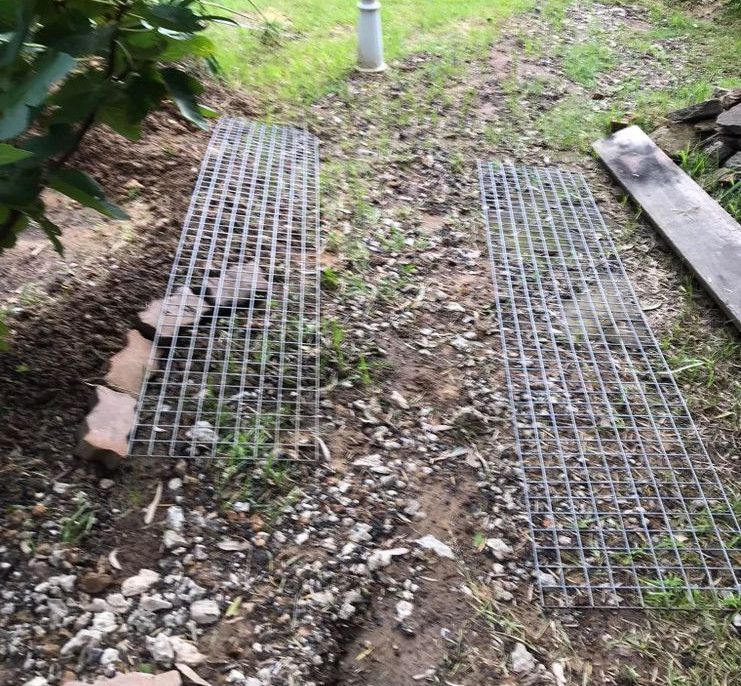
I used a grinder to chop up the sections.
I would then stitch the sections together using 3mm fencing wire.
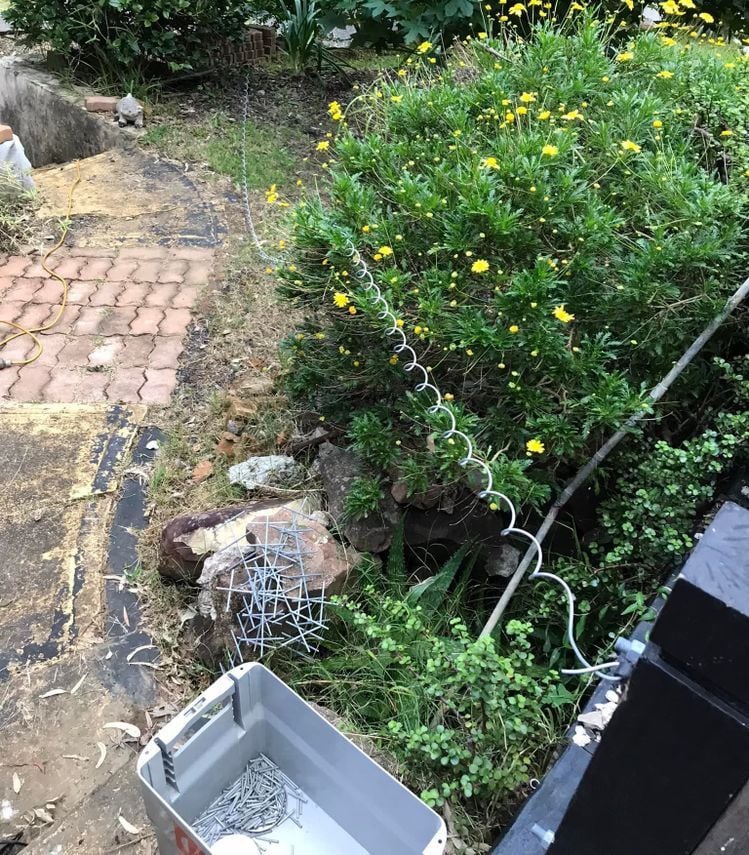
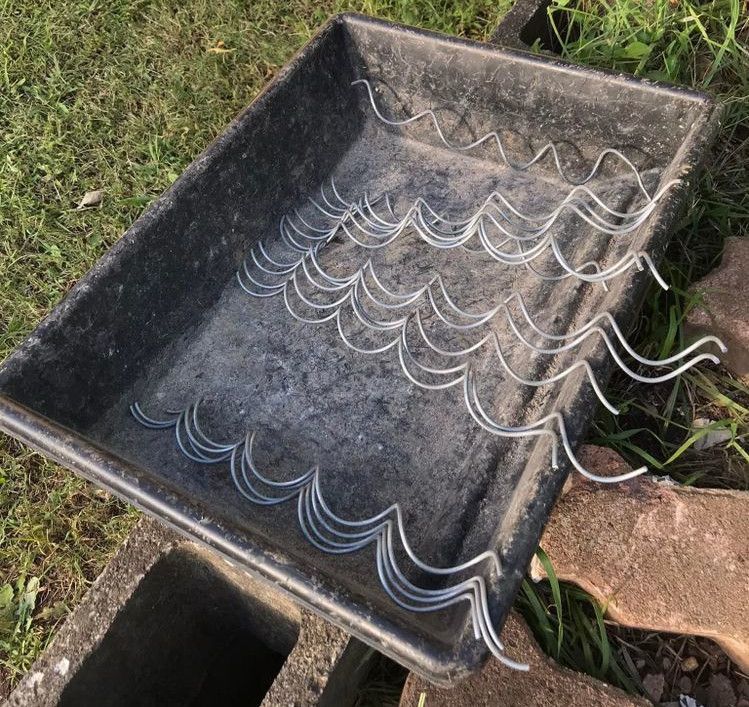
The tight spirals I made of the fencing wire (using a broom handle) I would stretch out by attaching one end to a solid post and just walking backwards.
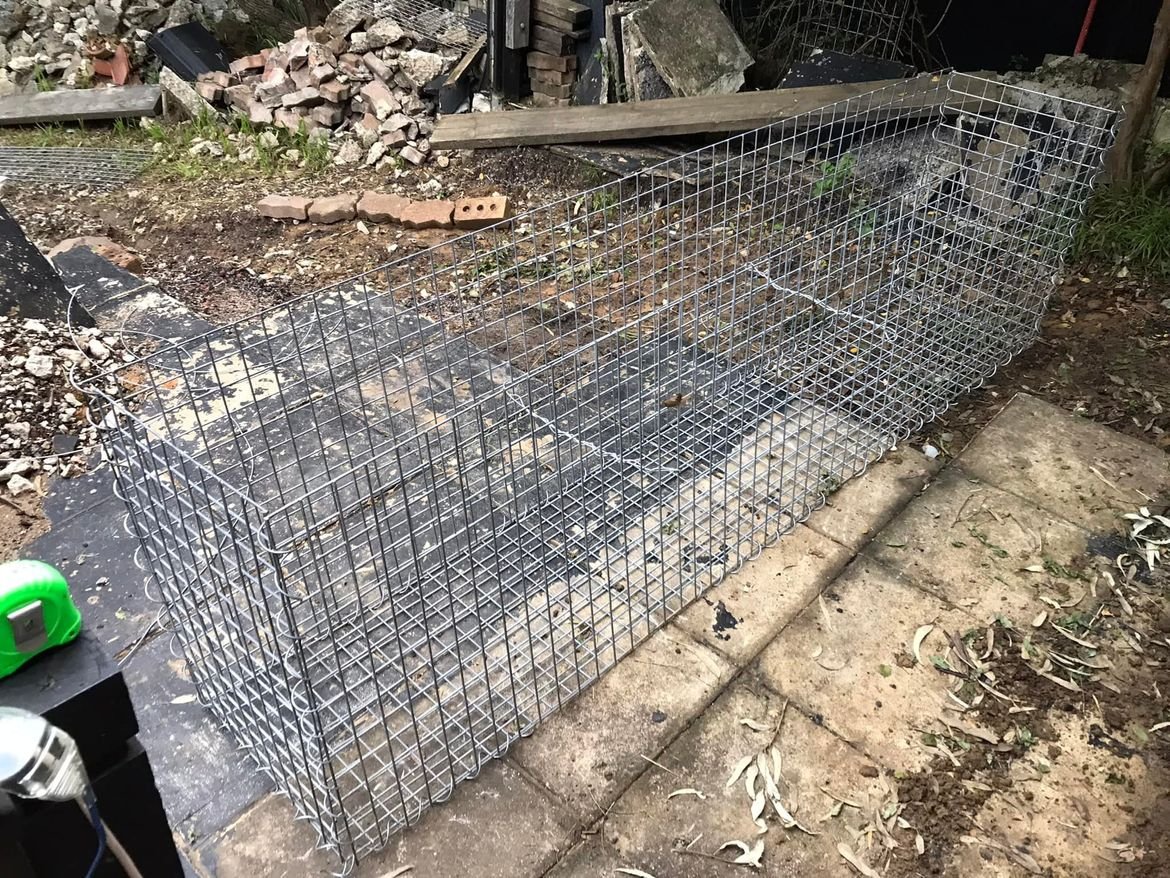
The first basket being put together.
This is how I would spiral wrap the wire. I just kept winding until the broom was full. It was hard work.
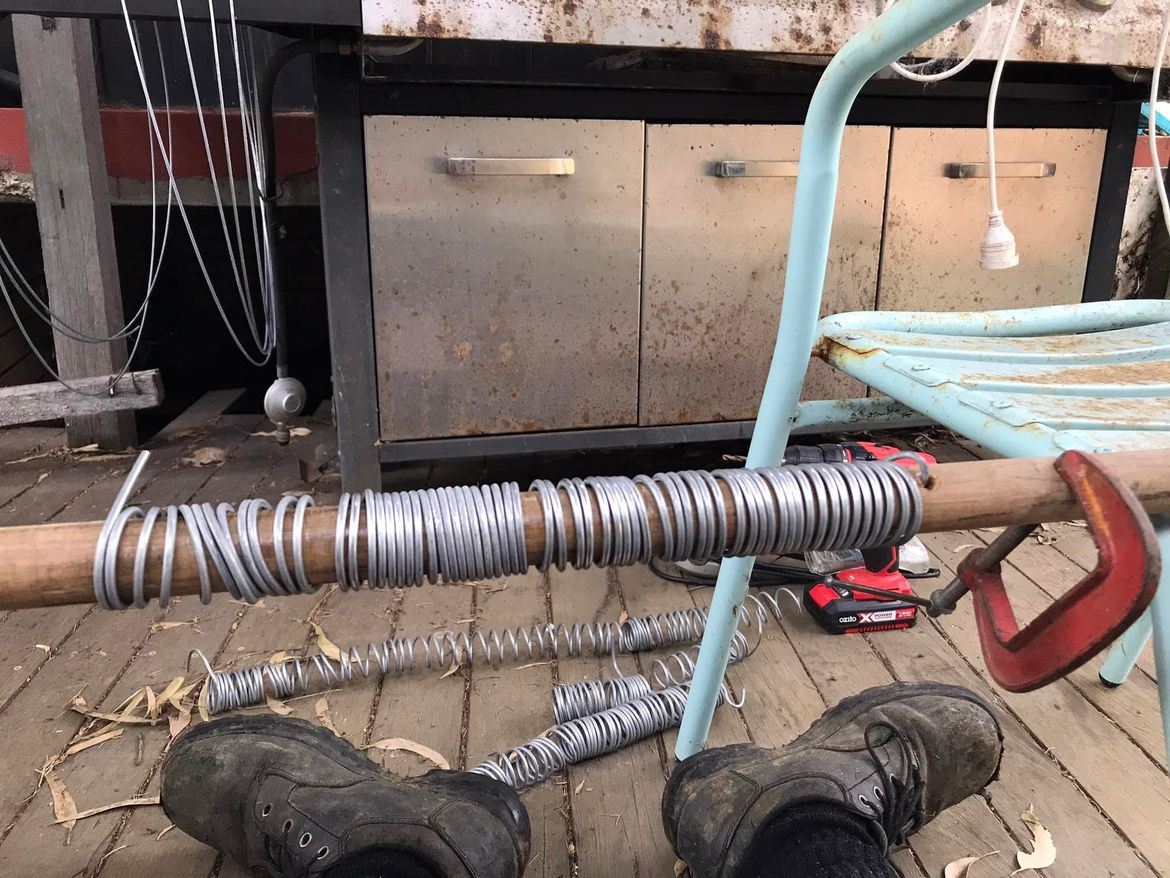
I figured if I chopped up the longer lengths I was going to spiral wrap, it would be a lot easier. I did drill a hole through the middle of the broomstick to slot the wire in and then turn the broomstick by hand. It made it much easier.
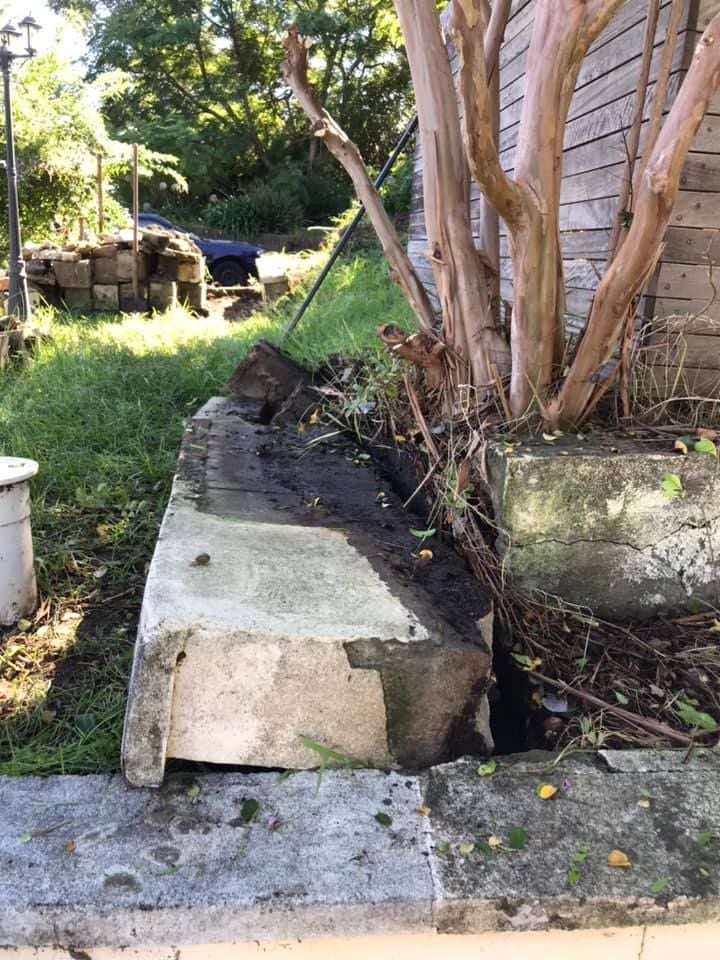
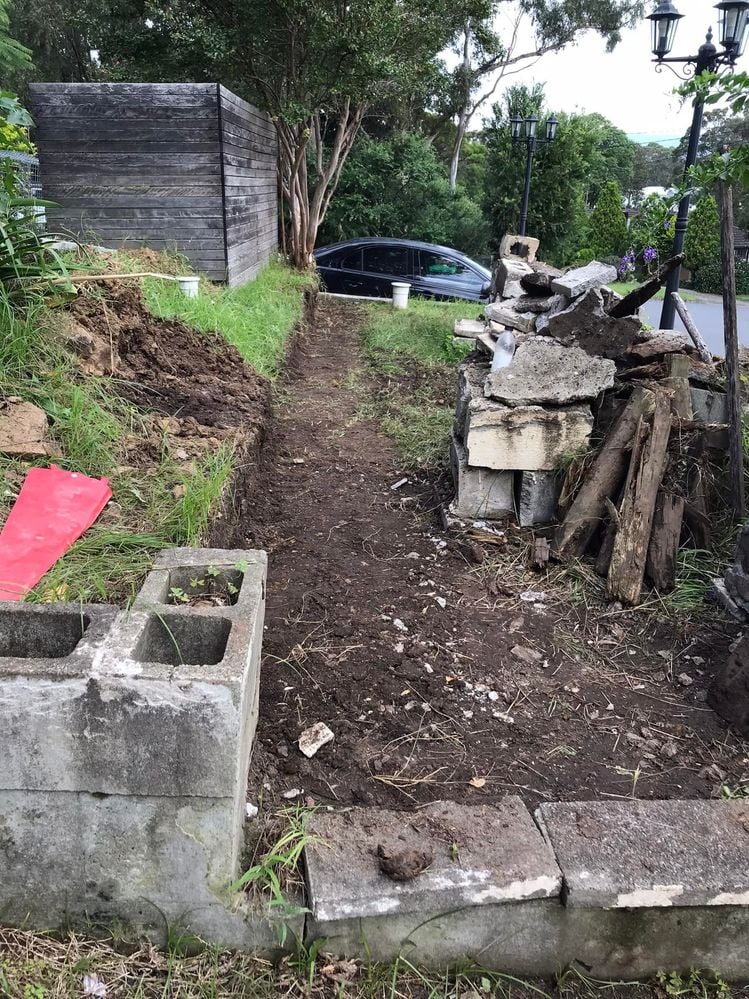
The old Besser block retaining wall that I had to take out the centre section when the sewage was redone. There is no base to it and the blocks were apparently laid on the dirt. This is a part of the wall that had to go.
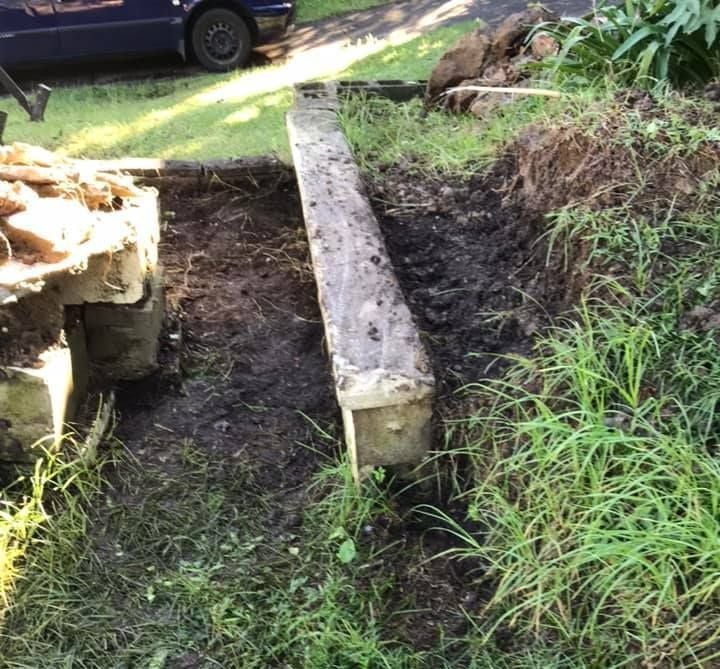
No structural strength at all. I levered it with the crowbar and one hand.
I backfilled the low points and tamped the ground. I should have used a dirt compacter right where the tamp is as I had put in stormwater pipes about 800mm below ground.
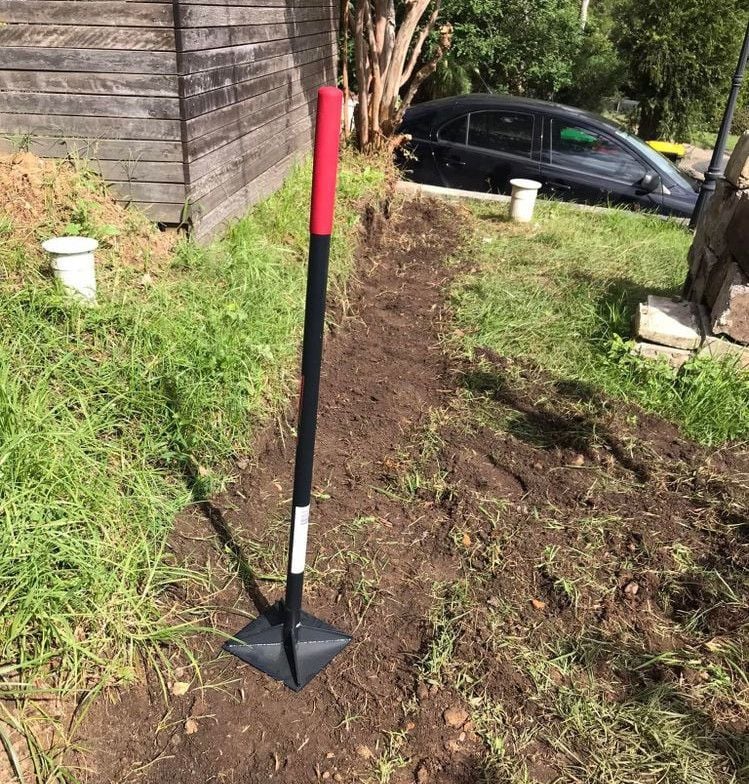
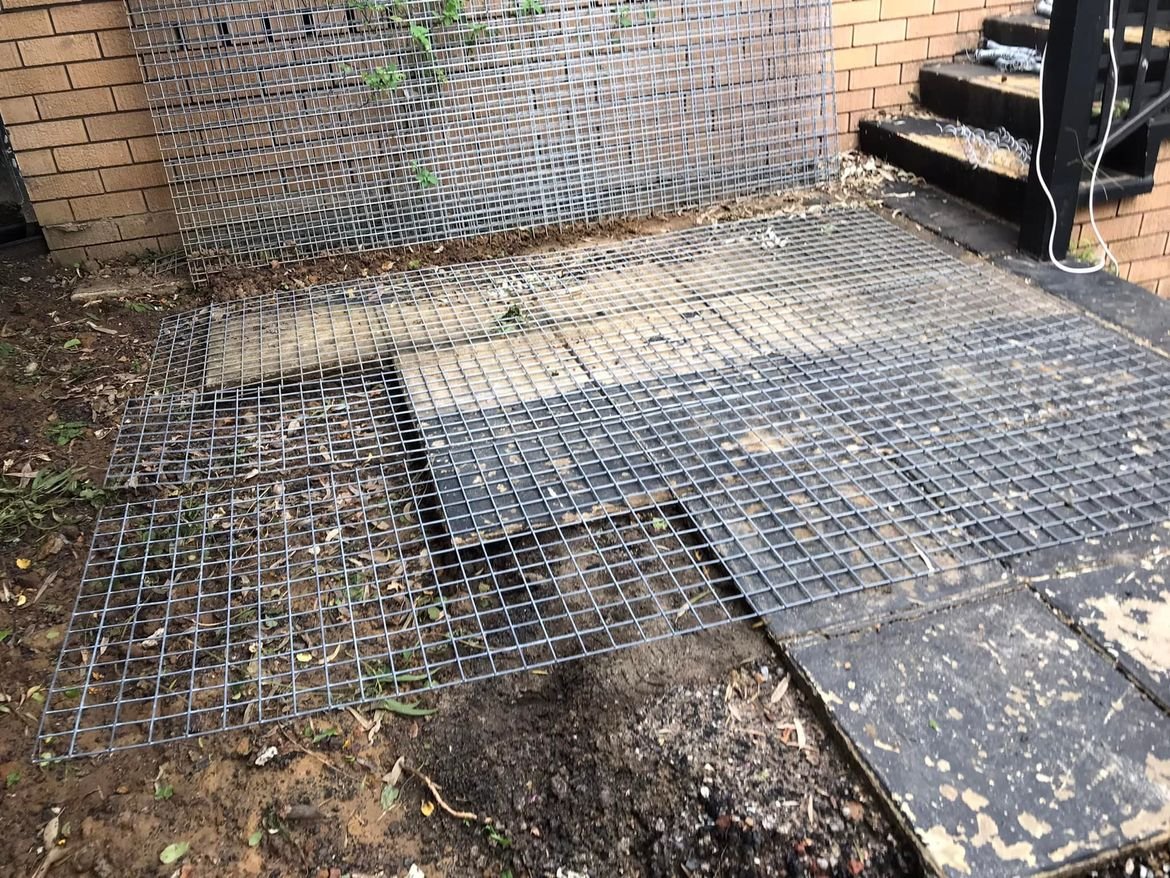
All prepped and ready to lay out the cages.
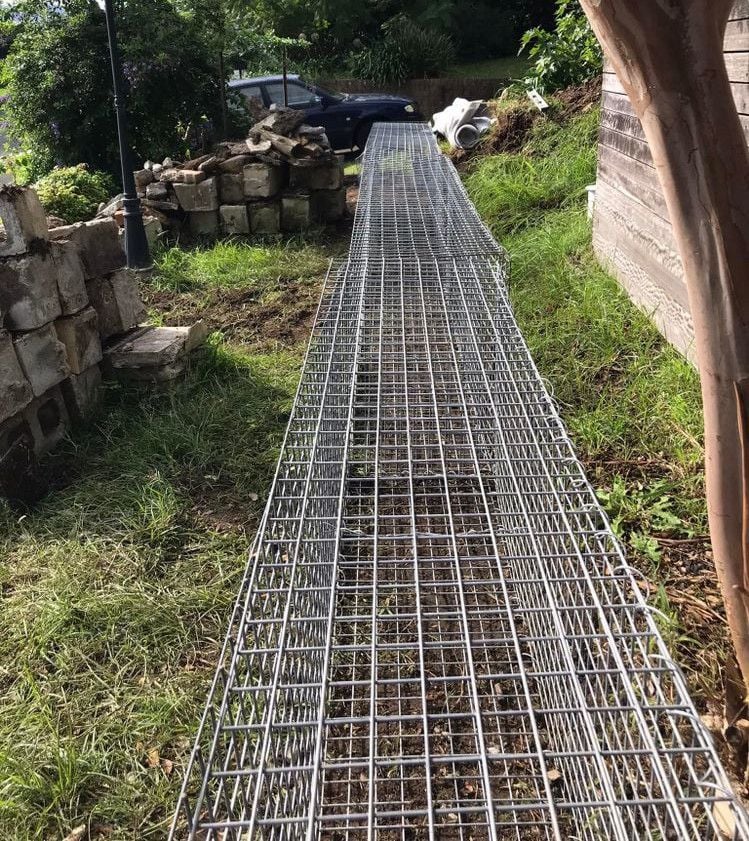
Lining the cages up. Three all lined up for this stage.
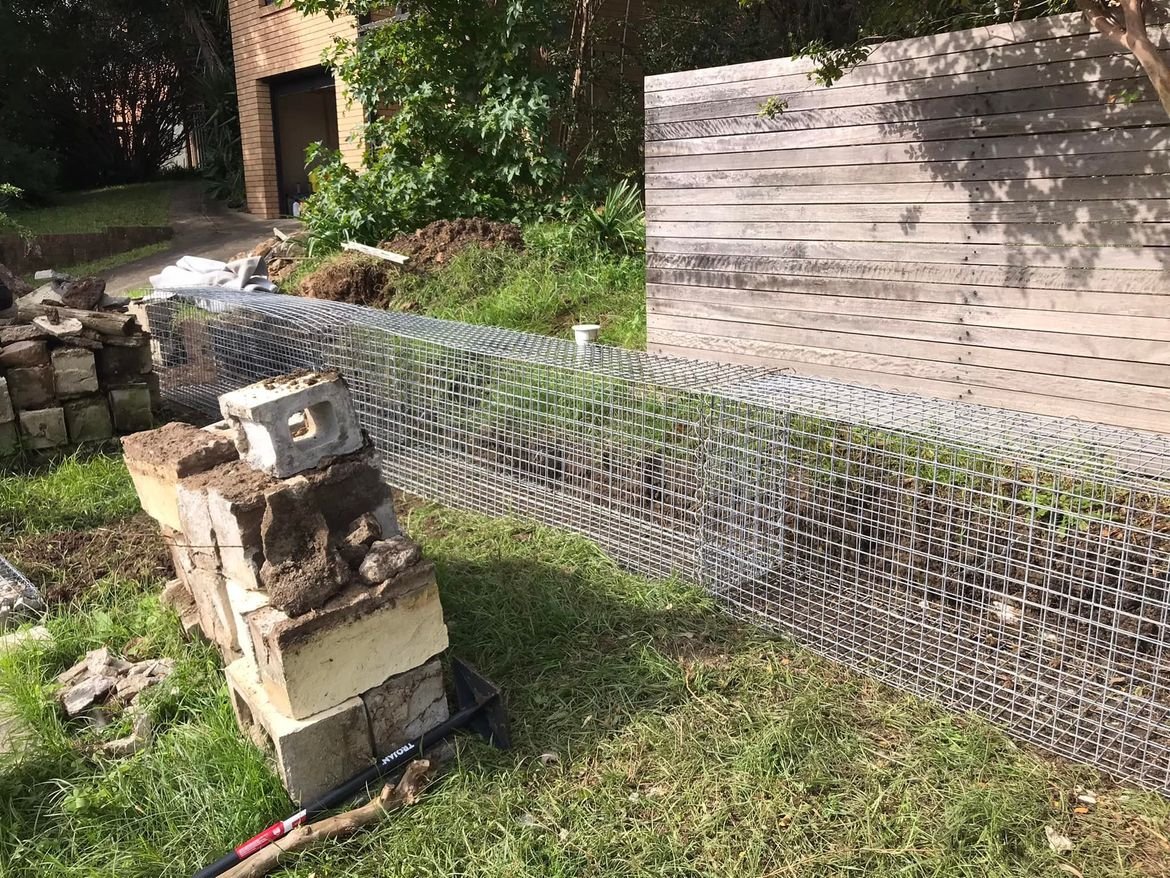
Hmm. Never thought of how to get them lined up exactly. The spirals and the wave-type twist that the mesh has make it hard.
I used some old upholstery material to stop dirt fines from entering the cage. I have used it before and it lasts and seems to work well.
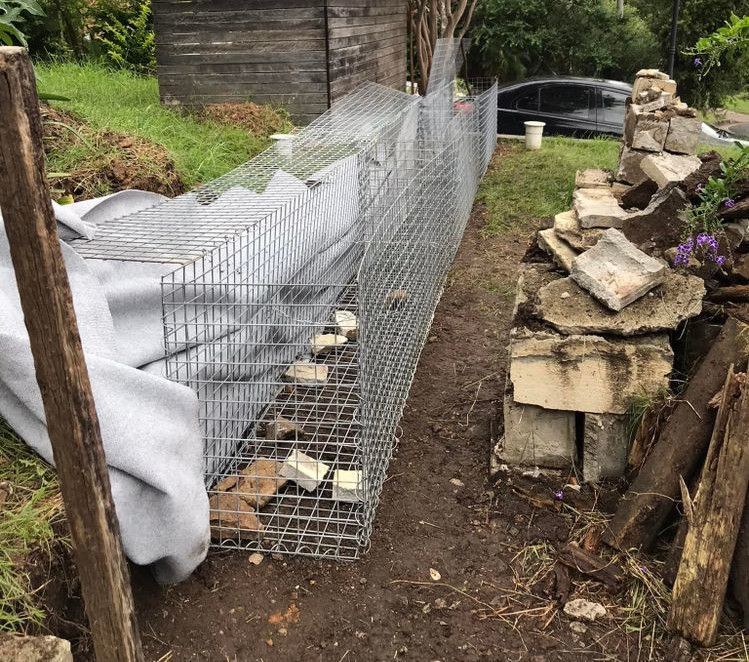
I lay the stones out evenly and also make sure there are no obvious bulges in the walls. I also make sure I "face" the viewable sides with nicer stones. This time I was after an industrial look and feel, so I used broken-up concrete pathway.
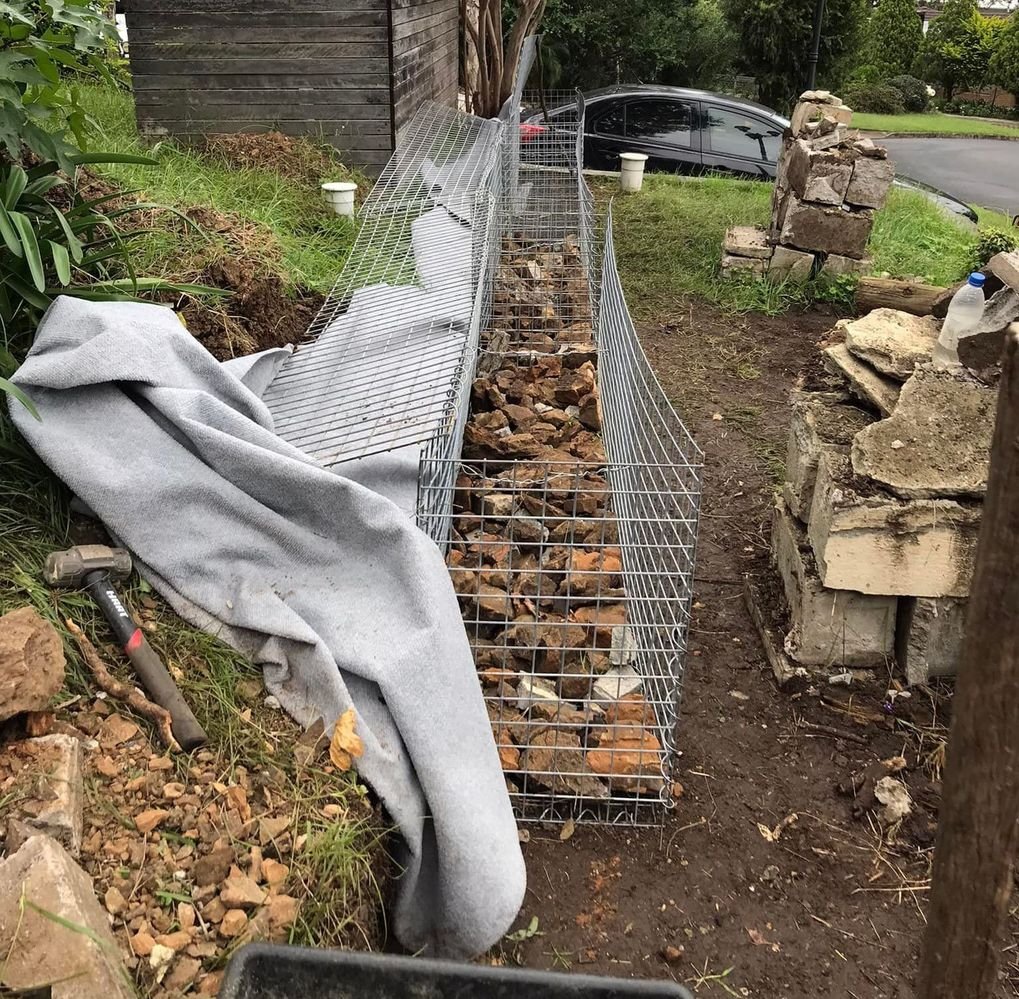
I had a lot of soapstone that I used in the wall.
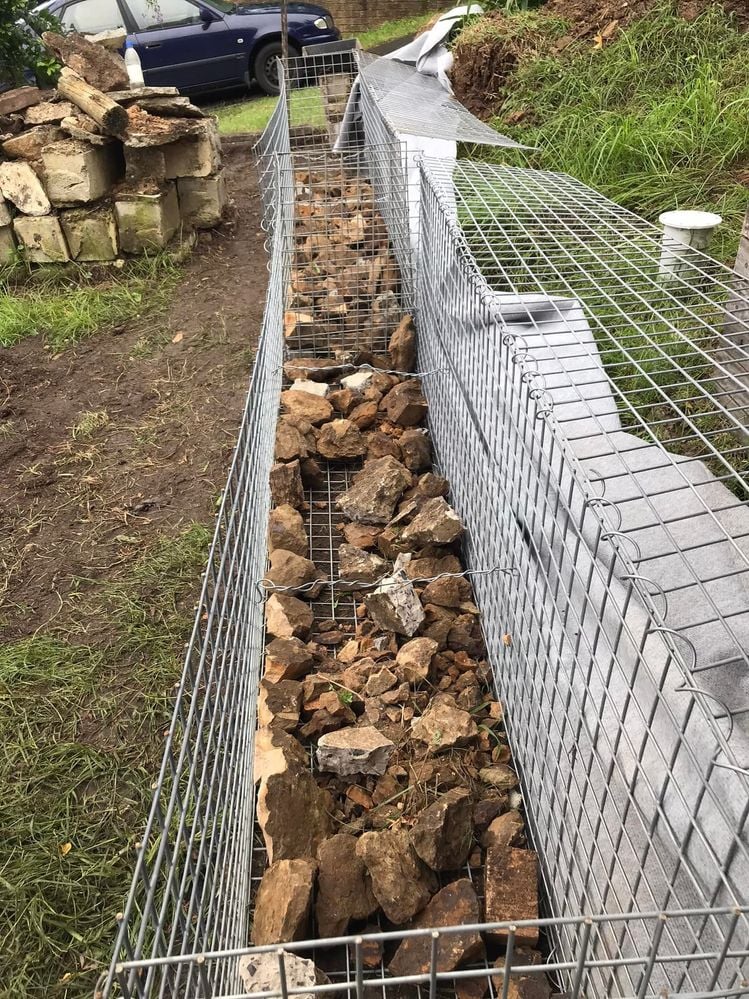
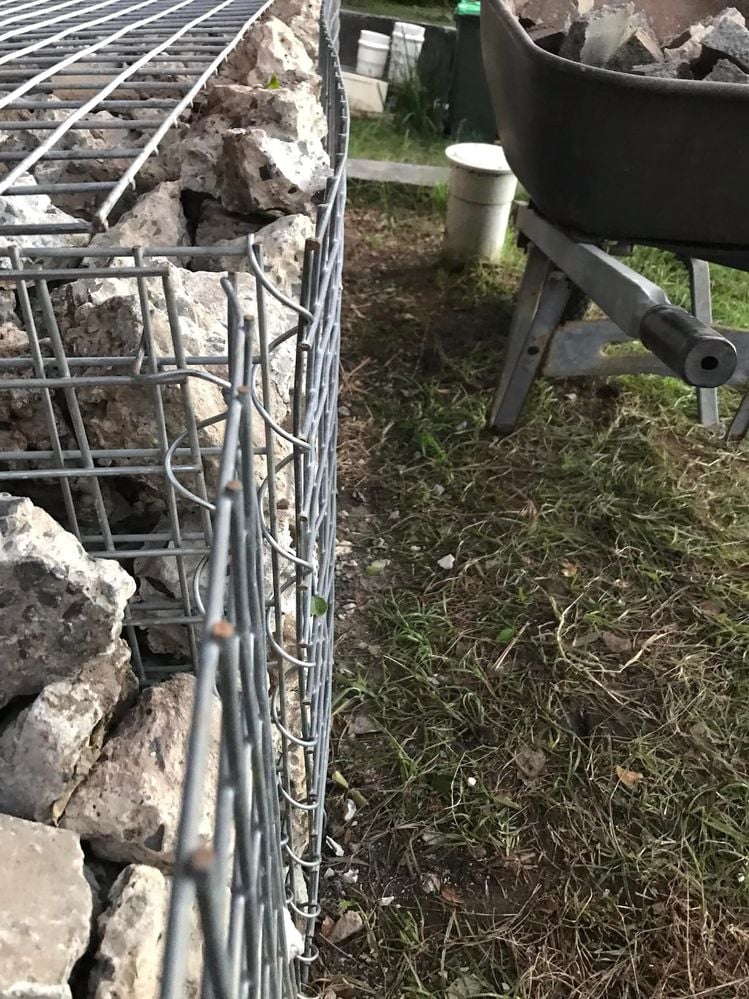
Just showing the way the spirals work to connect the sides of the cage together.
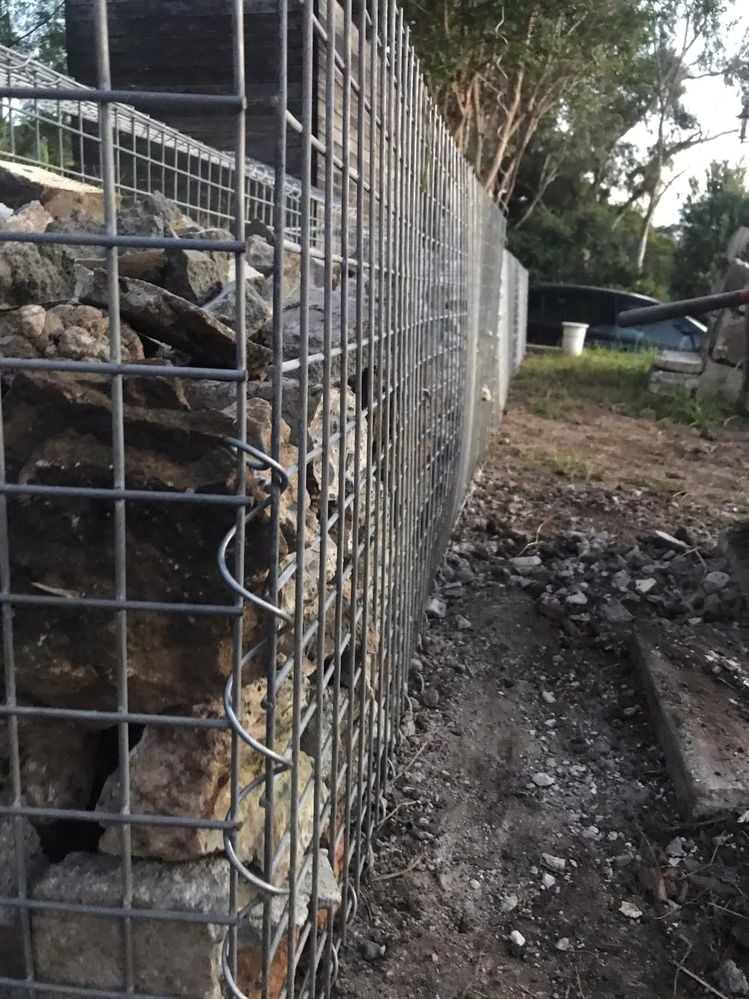
This is the waste rock/brickwork placed at the rear of the cage. I stacked all the rocks and didn't just pour them in as I didn't want movement later on.
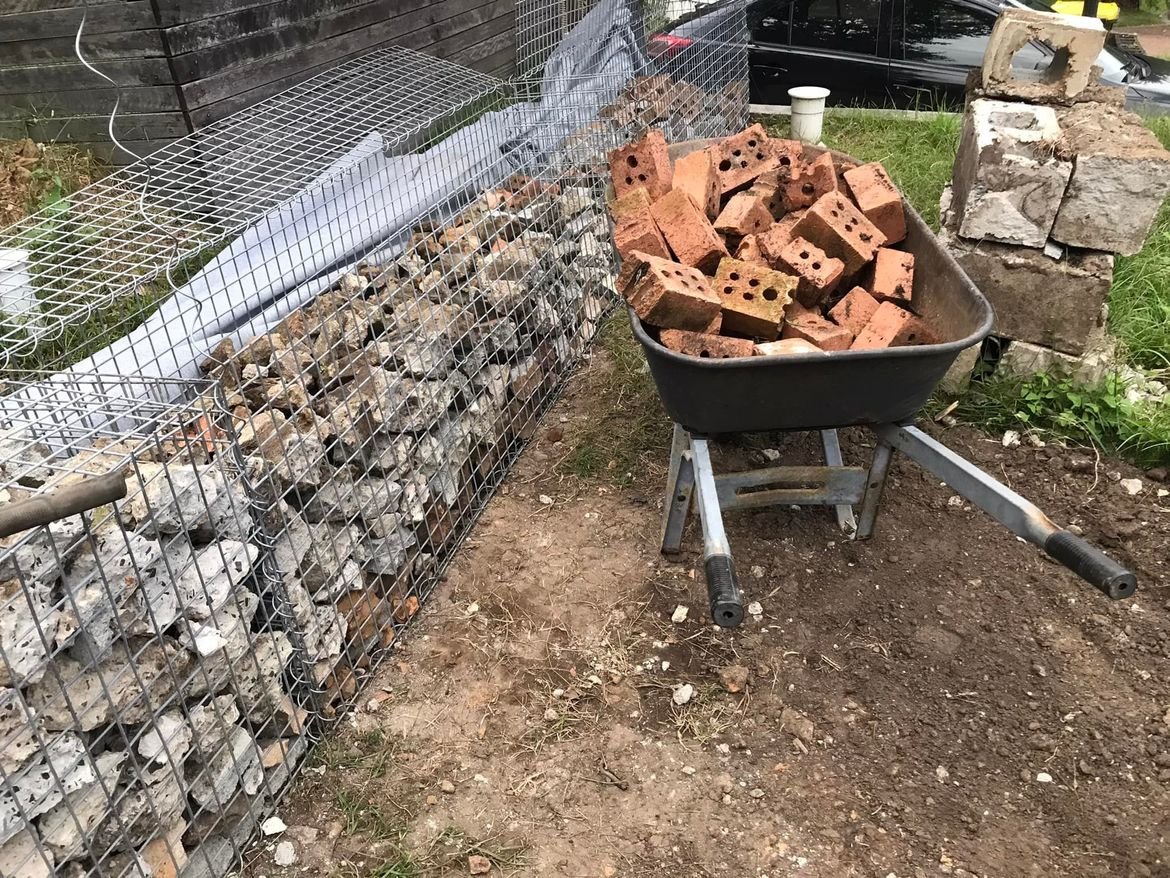
The only issue I found while doing a "wall" with more than one segment was lining them up together. I have since worked out that if you put two cages together and remove one spiral from where they butt up to one another and use the other to go between the right and left plus the centre panel then the cages line up perfectly.
The spirals showing the new size and approximate width of them.
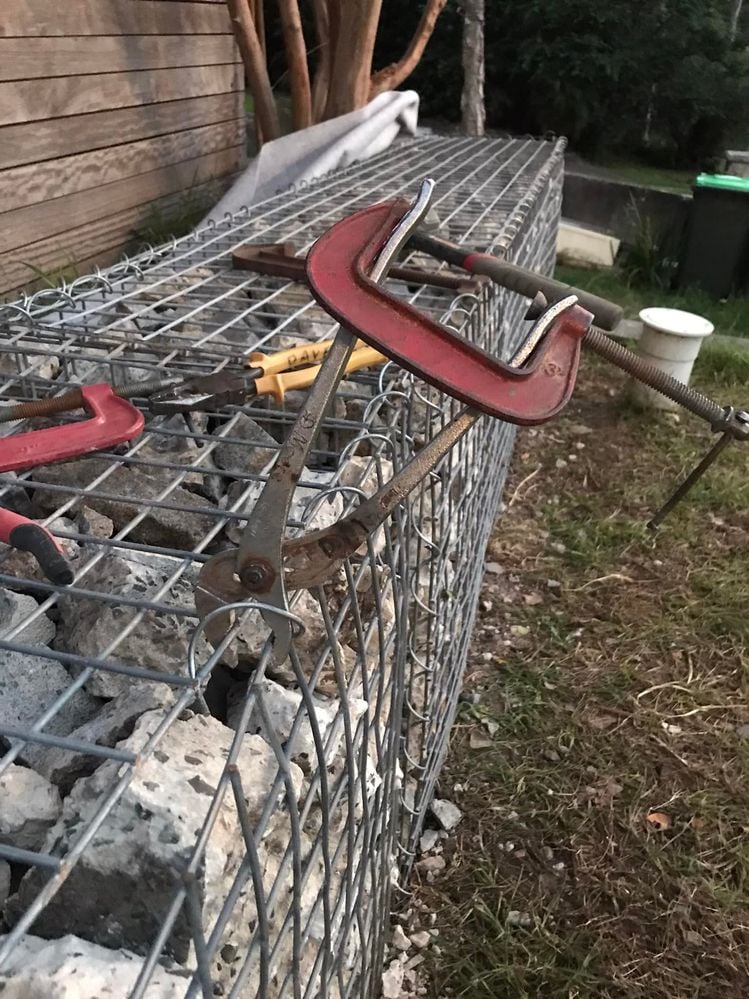
Trying to tie the lids to the sides. The rear was already joined when I put the cage together (like a lid hinge). This is the hard way.
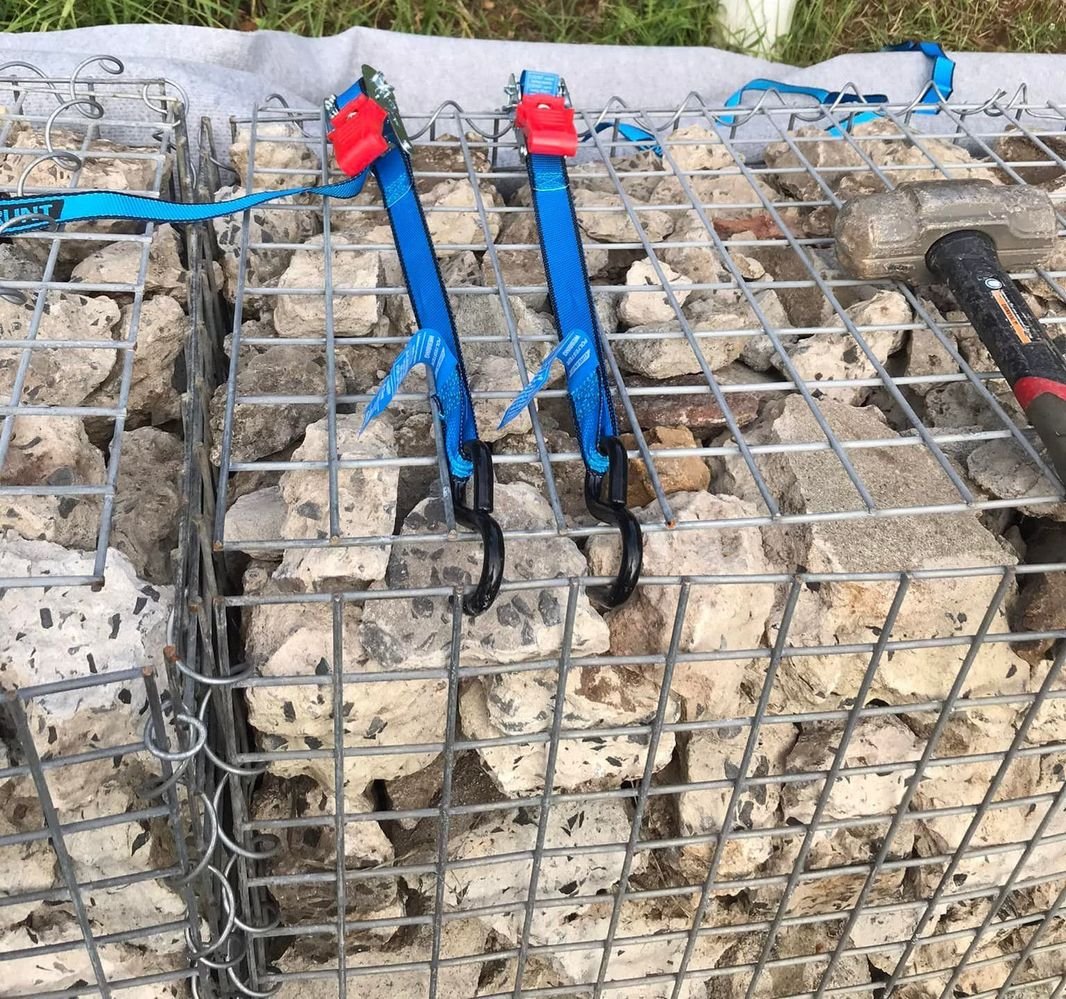
Joining lids to sides. This is the easy way. I bought a cheap set of ratchet straps from Bunnings and used them to tighten the sides inwards. Worked like a dream.
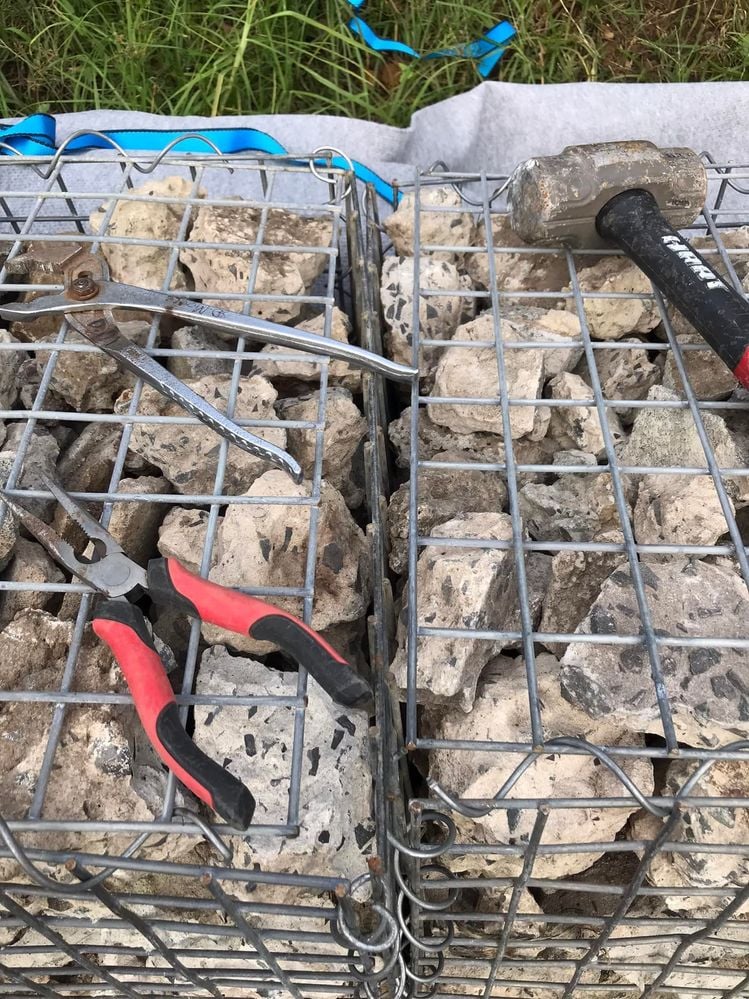
The tools I used were, multigrip pliers, long-nose pliers (these were great) and a pound hammer to tap the rocks when they didn't want to move.
The general rule I follow with gabion walls is: if the wall is 400mm wide, then 800mm high should be the maximum height. Road base would maybe have made the wall more solid but I figure the sheer weight of the cages work in their favour. Any settling will happen as the cages are filled. I did tamp the ground but what isn't seen is that I mostly shaved the ground to create a level surface. That kept the ground compact and intact.
The section of the wall in the middle (where you can see a smaller cage at the very front) is actually the only area that I was concerned with as I had dug a deep trench through for stormwater. By all rights I should have filled and tamped every foot or so but I was stuffed after backfilling it all, so I was happy to just get the pipe buried.


