Steps
Step 1
First and foremost, prepare the wall by filling any holes or sanding back trouble spots and then clean the area. This will ensure no dirt or grime is left on the walls and will leave a smooth finish.
Step 2 - Time to measure
Decide the height and spacing of the battens. A common height for the battens is around two thirds of the wall height, but you can adjust it to your preference.
Use a measuring tape, level, and pencil to mark the desired height of the battens on the wall. Ensure that the marks are level. We used a handy calculator to help with getting exact spacing. There are tons of sites online, but we used Slat Gap.
Step 3 - Make the cuts
Cut the MDF to the length and width for your desired look. We decided to have our battens 100mm wide and a total height of 1330mm. We wanted to make sure that it didn't interfere with the light switches.
The length of each board was roughly 1060mm, however, there were some adjustments to be made due to our uneven walls. The top horizontal batten was measured to fit the length of the wall. This occasionally meant using more than one board.
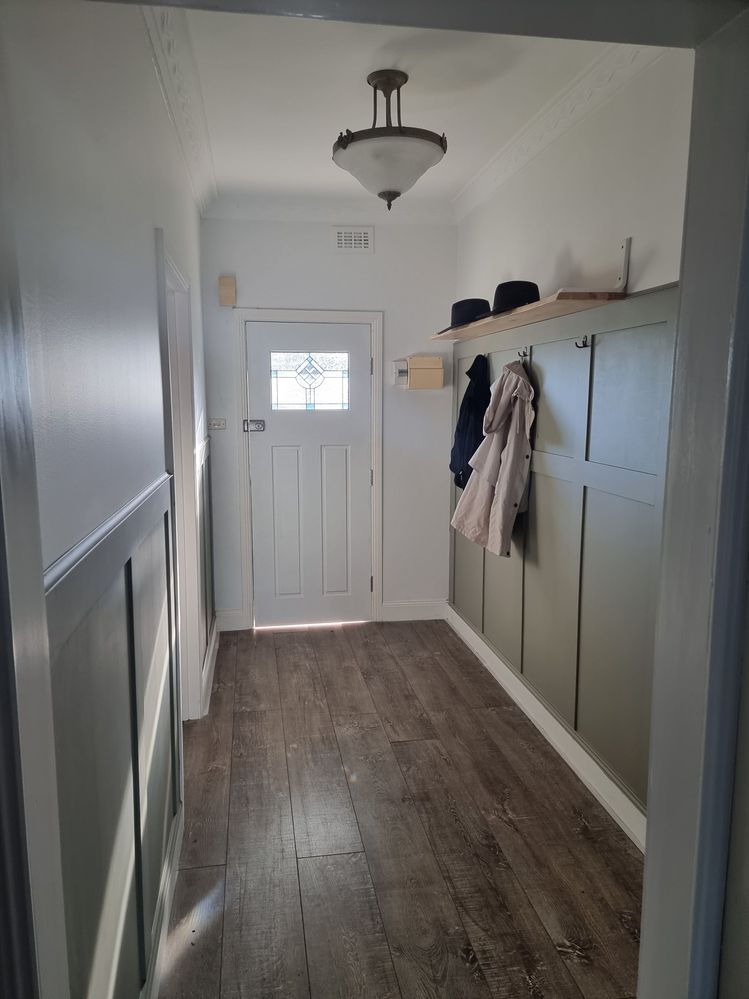
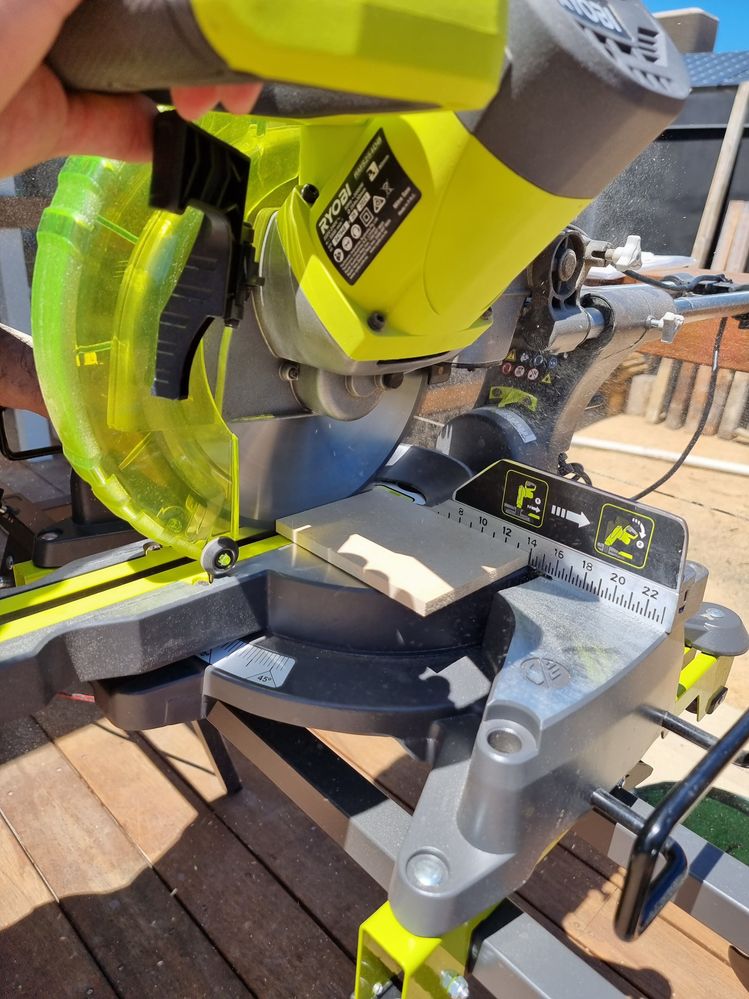
On the right hand side of the entrance door, we decided to add in coat hooks and a shelf, so we extended the height to a total of 1910mm. We used a circular saw for the longer cuts and mitre saw for the short. Don't forget your PPE (safety goggles and ear plugs) for this step.
Husband's helping hands to measure twice before cutting.
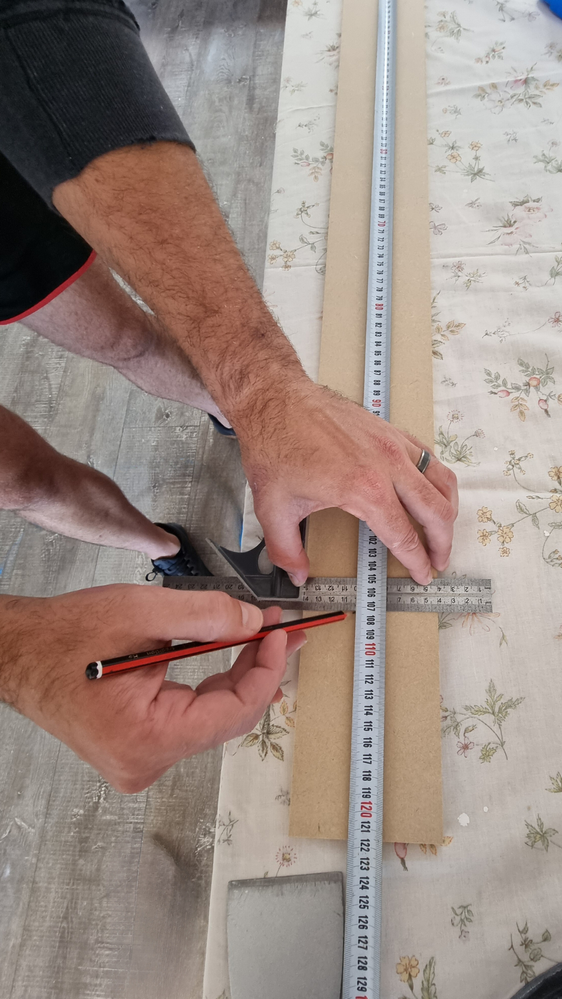
Using a mitre saw to cut the lengths.
Step 4 - Install horizontal battens
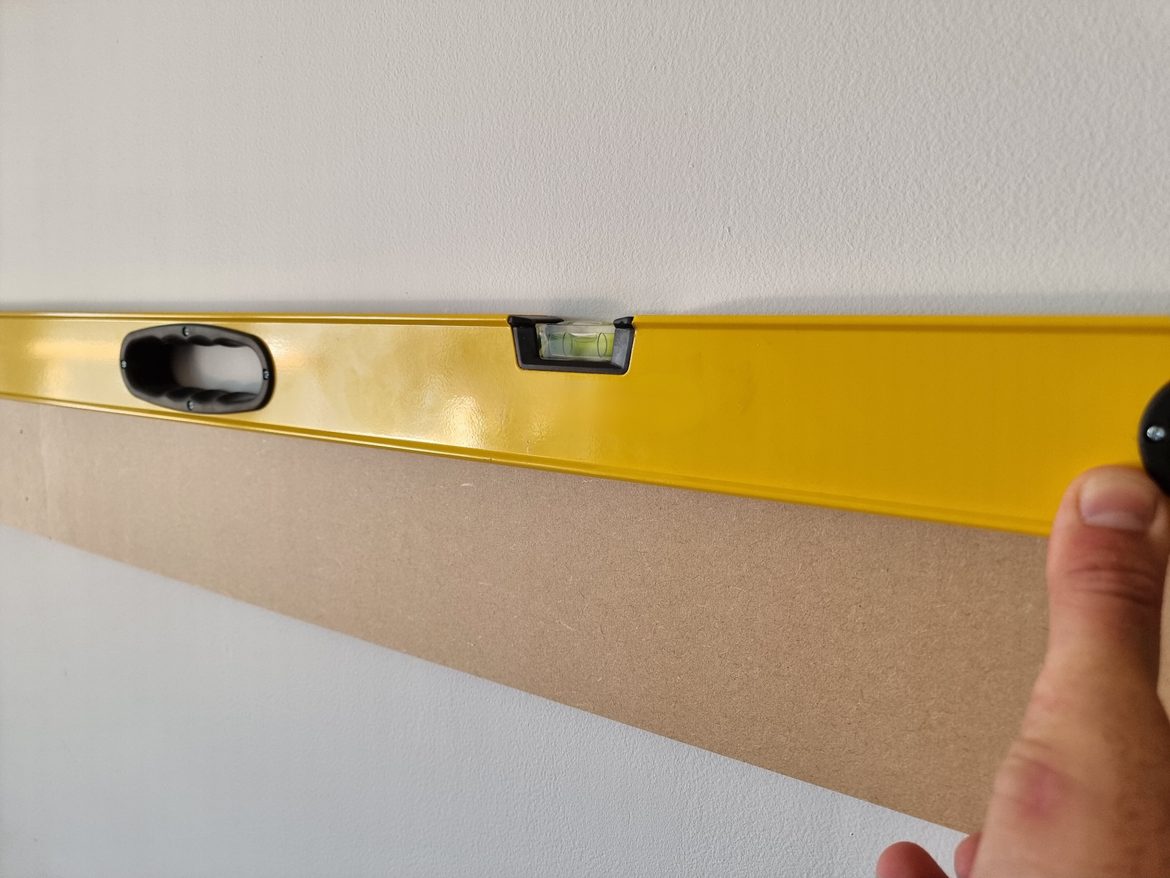
Attach the horizontal battens to the wall. We used a nail gun but you can use a hammer and nails, although this increases the size of your gaps to fill later. Ensure they are level and aligned with the marked height of the battens. You can use a stud finder to nail them into the wall studs for added stability.
Double checking the level.
Step 5 - Install vertical battens
Align your vertical battens against the pre-spaced marks on your wall. We made sure to double check the spacing along the way. Secure the battens to the wall using a nail gun or hammer and nails.
Spacing of the battens.
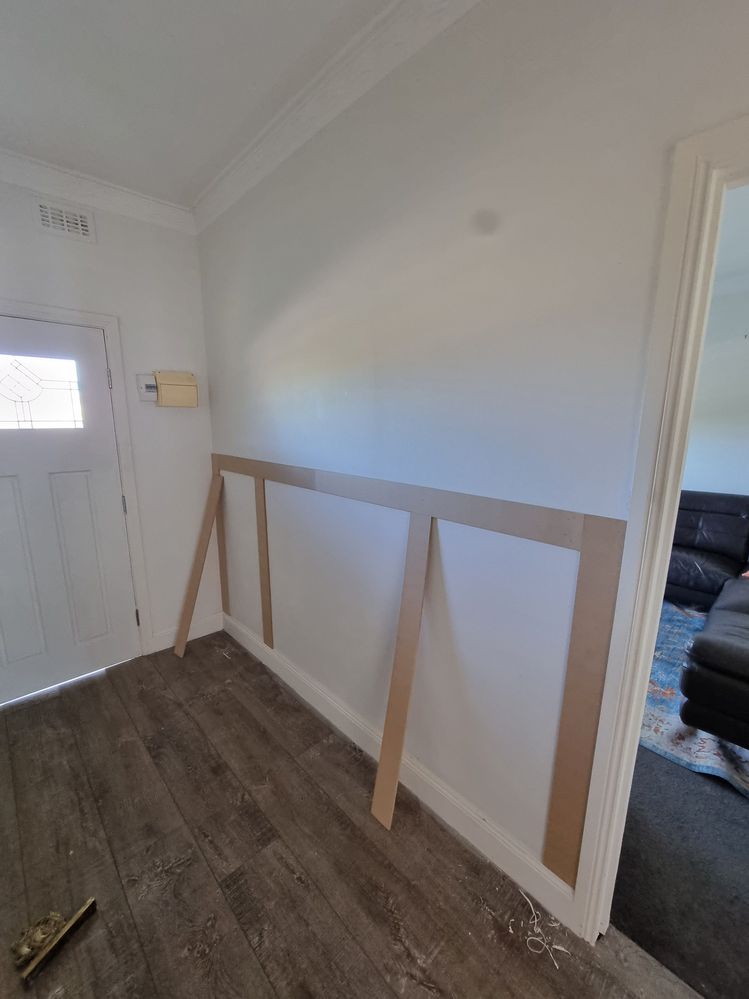
Secured vertical battens.
Step 6 - Install trim
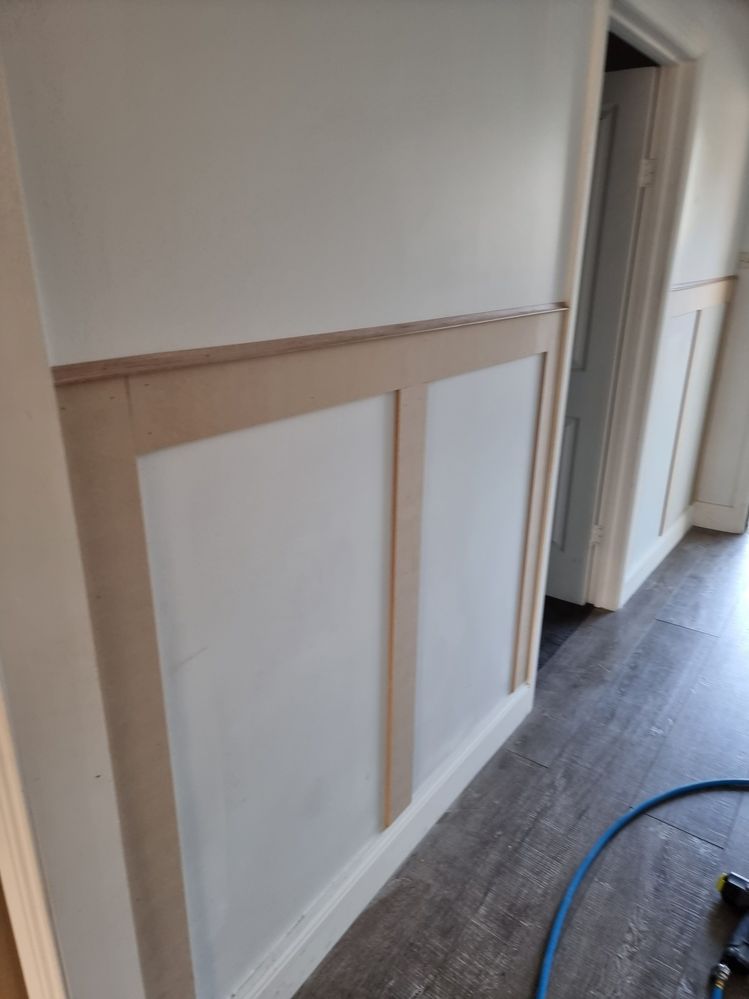
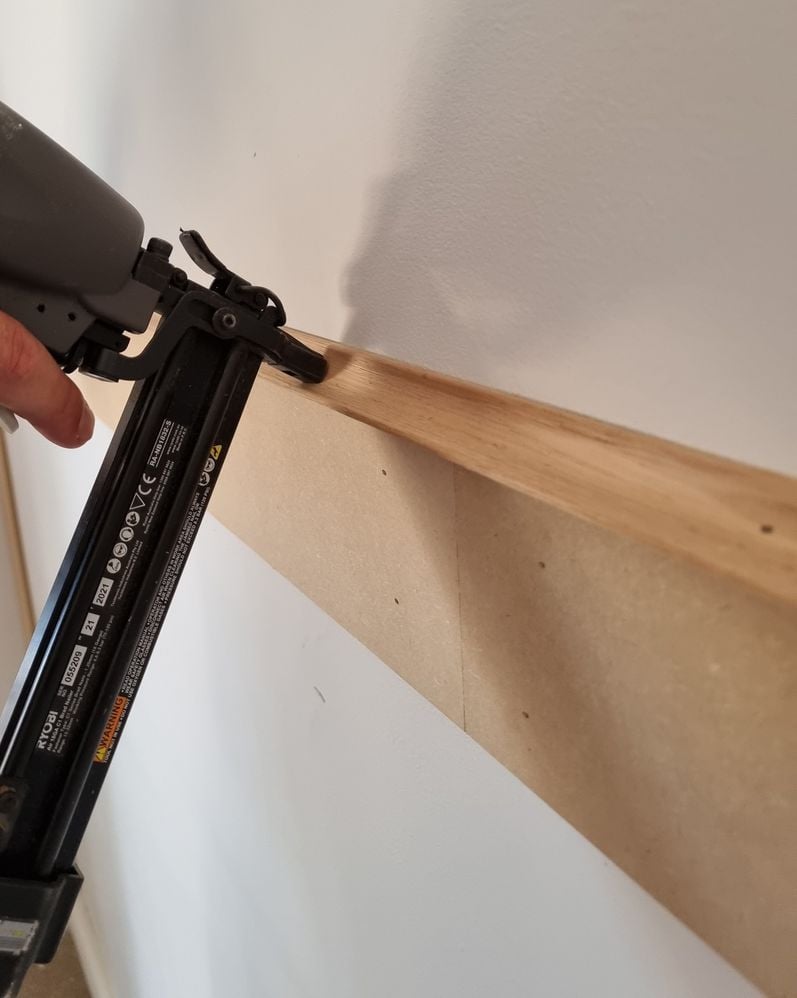
Cut and measure your trim to fit along the top of your horizontal batten. Use a nail gun or liquid nails to attach.
Using a nail gun to secure trim to wall.
Step 7 - Make it smooth
Fill any nail holes or gaps between the boards with gap filler. Allow it to dry and then sand the patched areas until smooth. Give your boards and trim a light sand to prep for painting. We used 240 grit.
Step 8 - Paint away
Use painters tape on any wall surface you don't want to get paint on. Using the detail brush, do the inside corners first and then the roller brush to create a smooth finish.
Tip: I wish that we painted the trim before attaching and then touching up after nailing it. This would have prevented us from needing to tape up the wall and needing to cover and recover paint bleed from the tape.
Step 9 - Enjoy your hard work
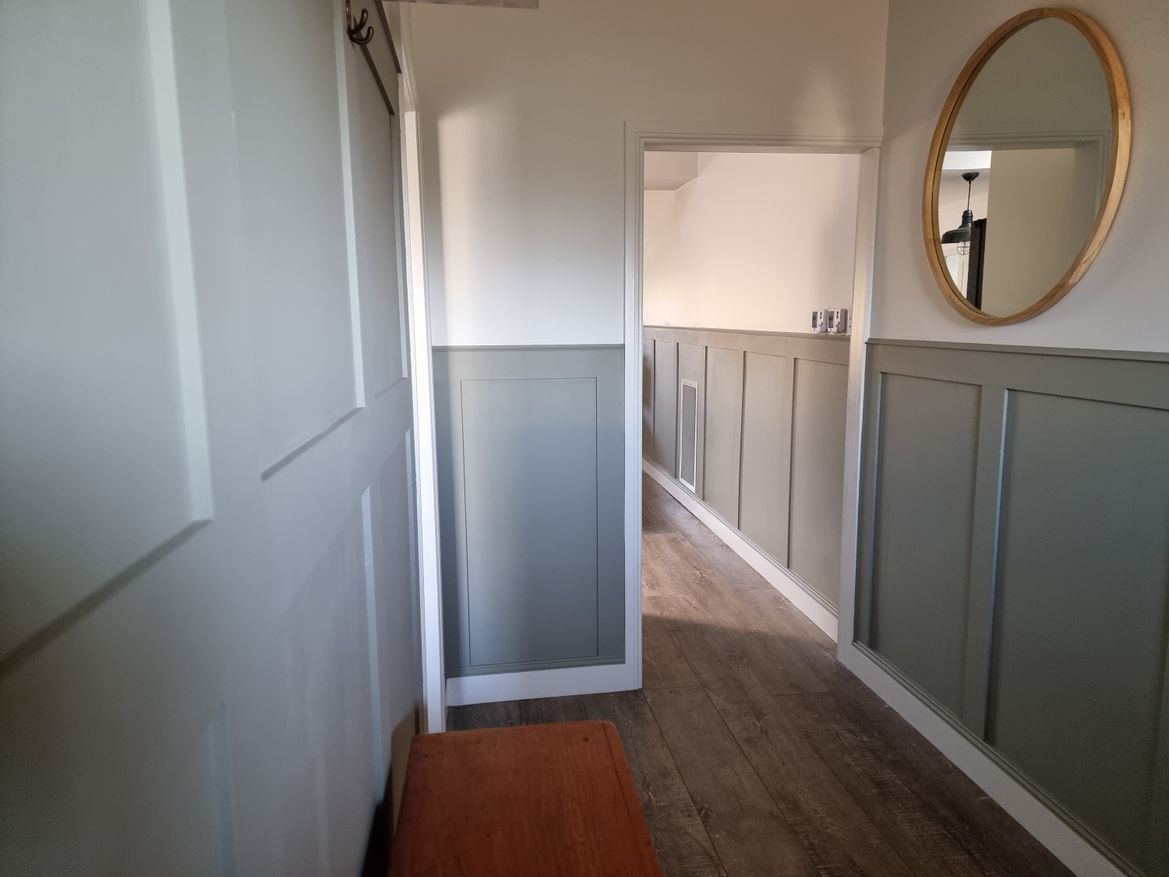
This was a really fun project that we absolutely loved. The next step is to replace the shelf with one that doesn't stick out so much, add a bench seat, and then onto relocating the electrical box and replacing with a nice side light window.
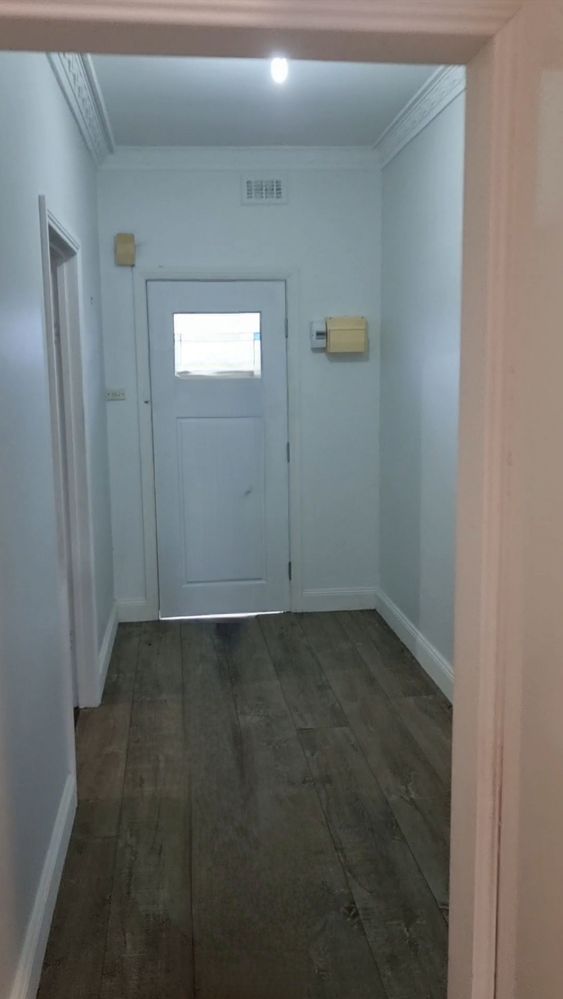
Before and after