Steps
Step 1
The first step was to repair the crazing of the ceiling. Moisture and a previous bad paint job had caused the paint to crack and peel. I scraped all the loose flaky bits off and then sanded smooth the edges. Once I had done that, I filled in the paint height difference with an interior filler. I did this in 2017 and it's still going strong seven years later.
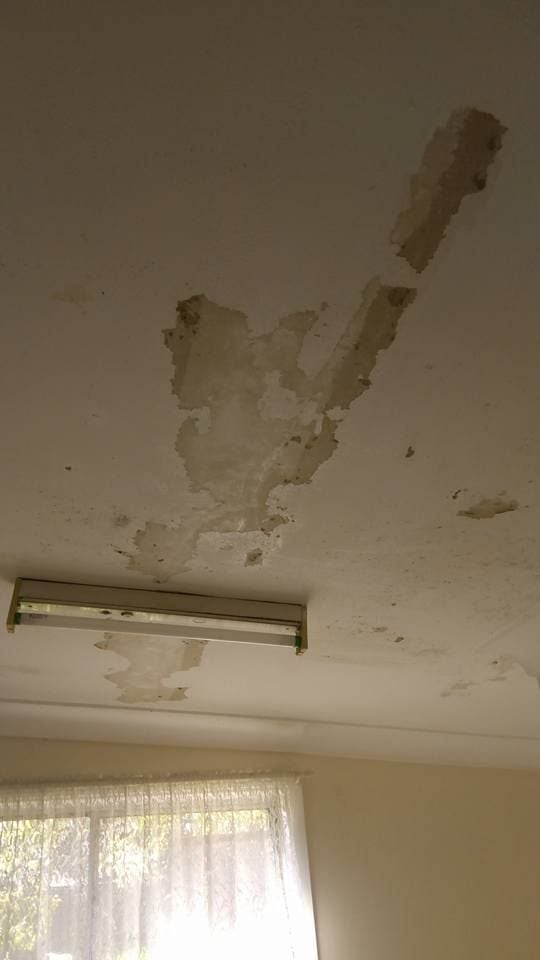
I really didn't want to replace the ceiling so I thought I would give it a go to clean it back and repair. This would have been directly above the dryer with the previous owners. I kind of regretted starting it as my arms would ache like crazy from working over my head.
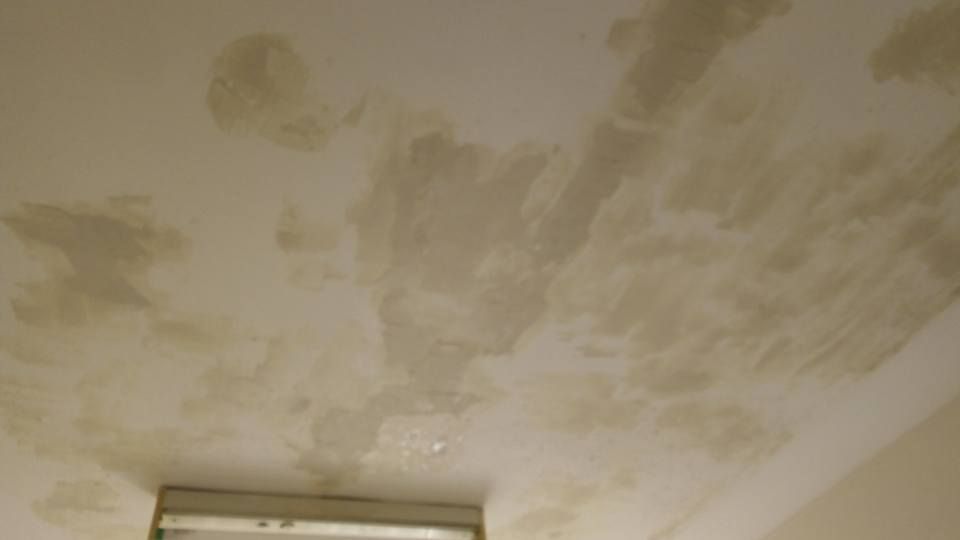
Once scraped clean and sanded, I filled in the dips with a fine putty. This putty worked extremely well and was incredibly easy to sand.
This looks messy as but it was smooth to the touch. So much sanding.
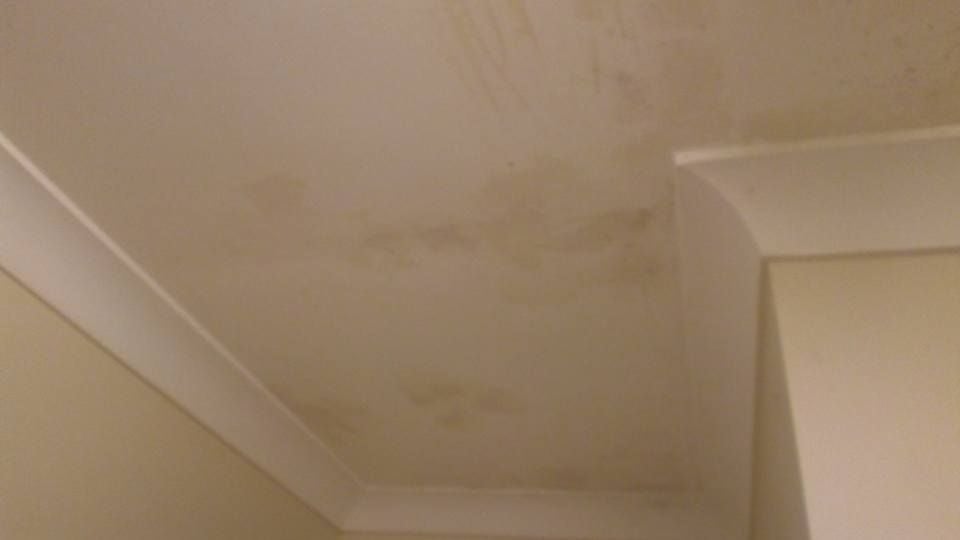
Step 2
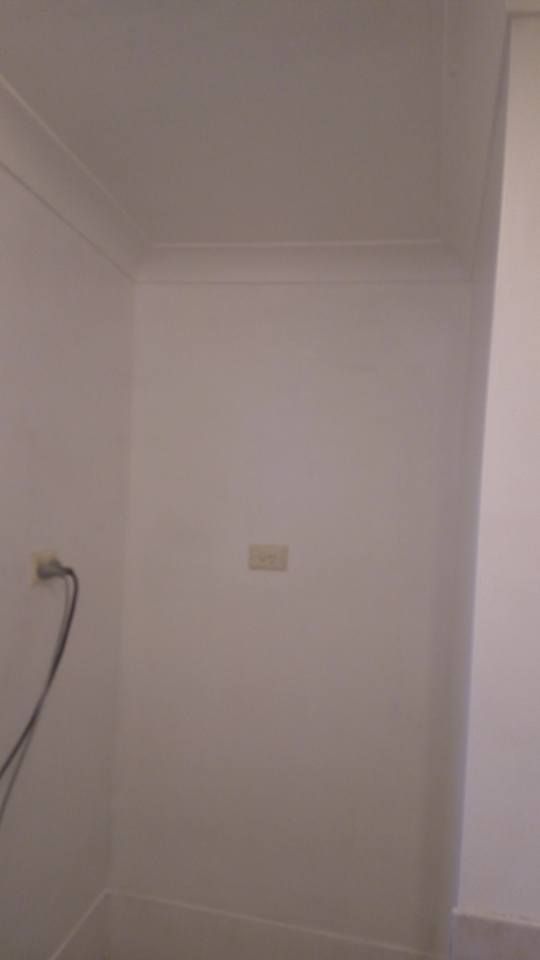
Time to start the painting. So much nicer. I painted the walls and you can see the old cream colour really show up.
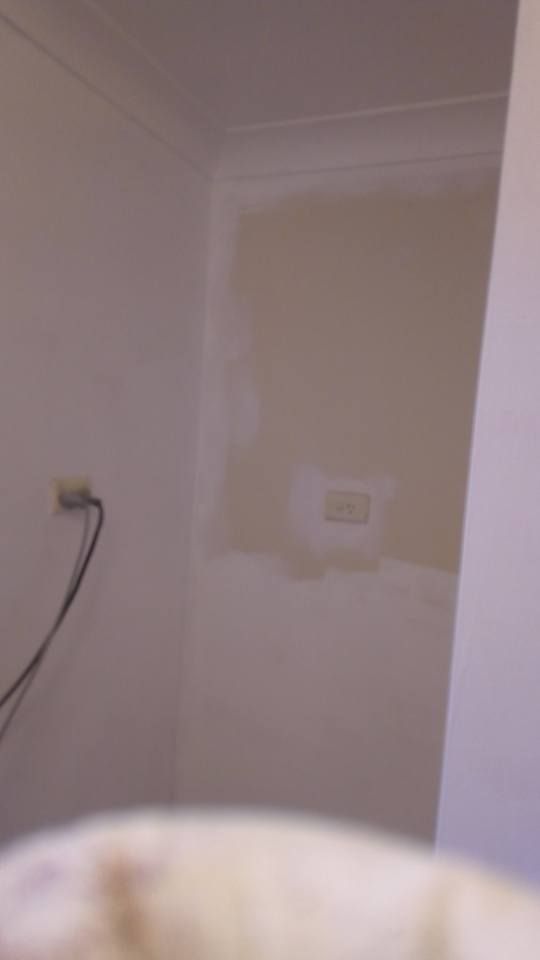
This gives a much brighter and clean feeling.
Step 3
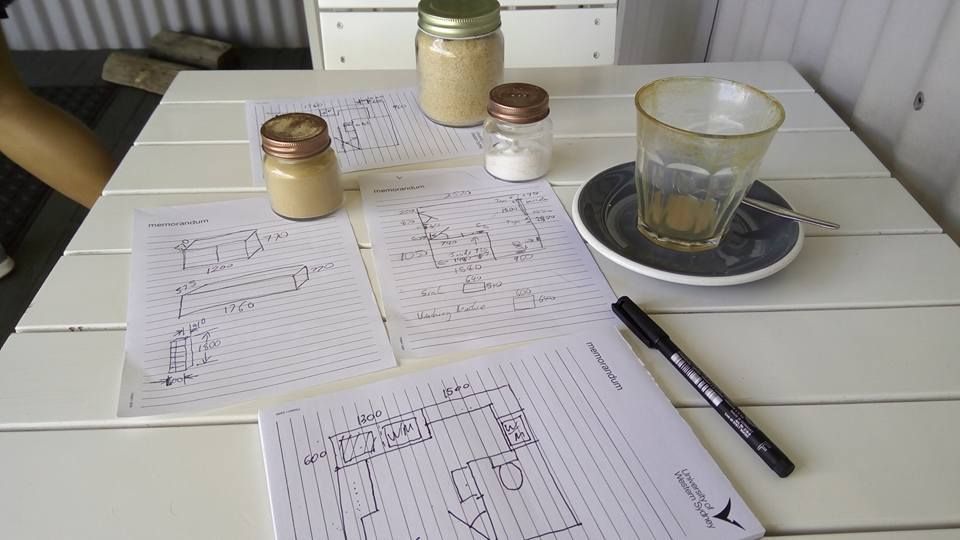
I was working out the door angles, windows and what would fit. For me, sketching it out really helps to bring all the parts together and helps spot any issues. The ripping out of the existing laundry sink and fixing old damage was next on my list.
I found a very low rise LED light. Seriously, I didn't realise how bright it was going to beam.
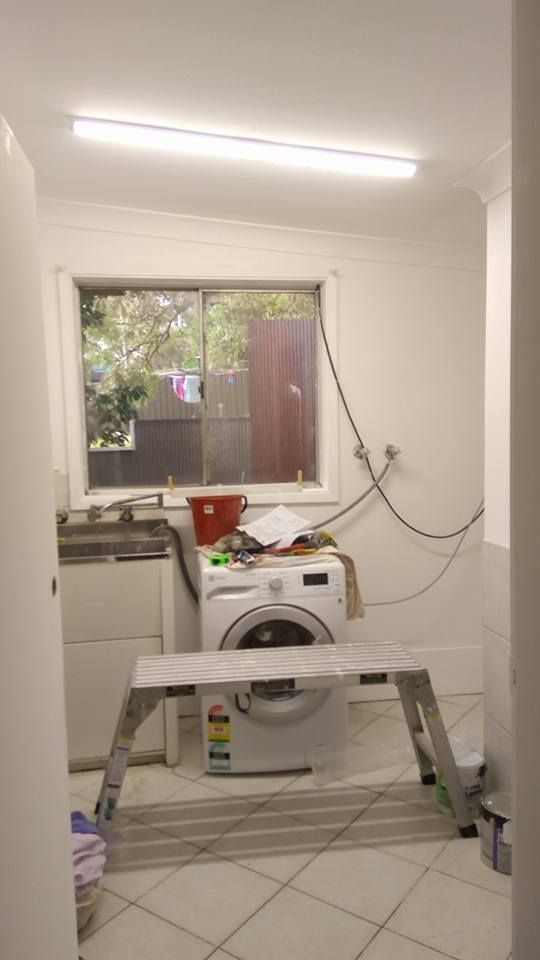
The old laundry sink is about to go. It was a pain in the neck to remove.
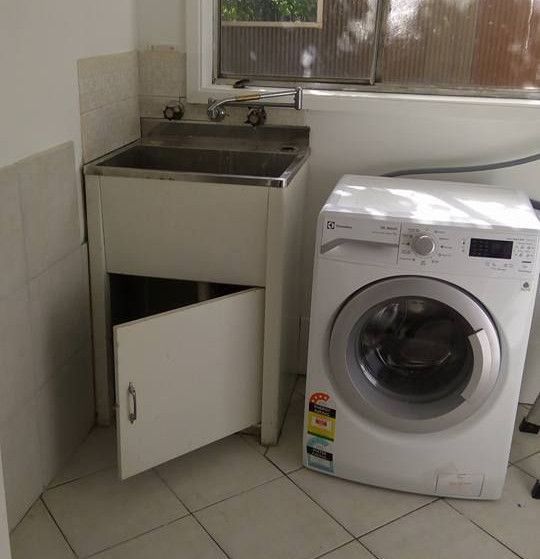
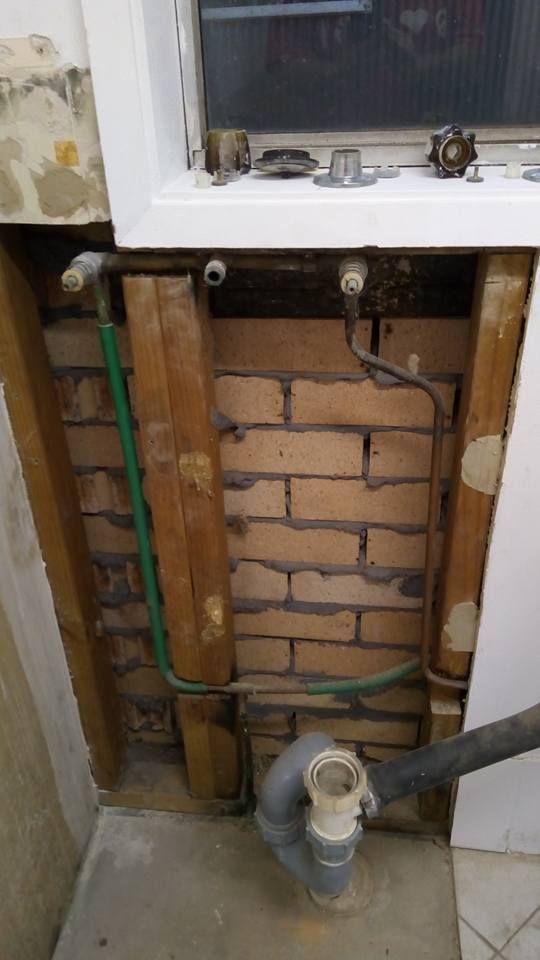
You can see how close the taps are to the window trim. I removed all the old material that had been used in the wrong place.
Step 4
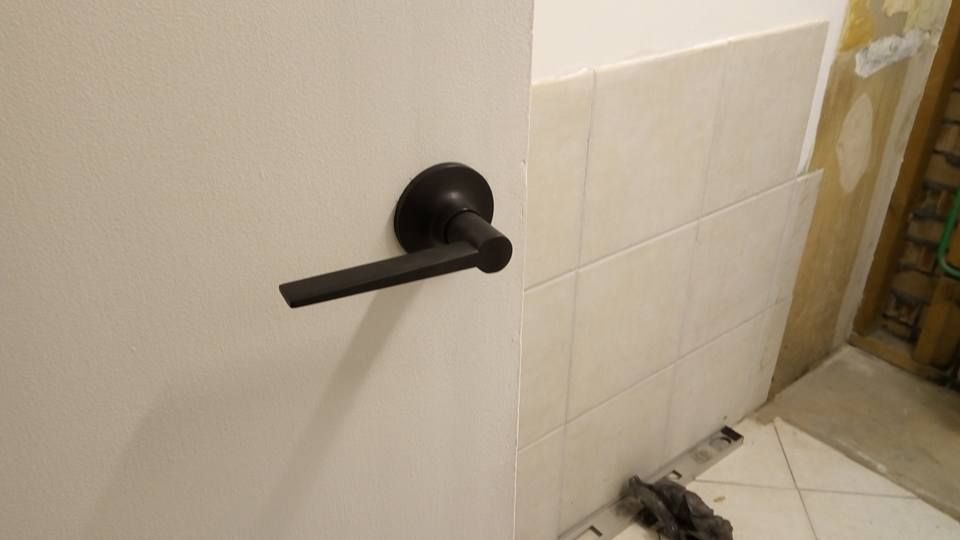
The next stage was to replace the backing area that I had cut out with some villaboard and also put on some door handles for the two doors in the room. I was stressing about the villaboard, even though the Bunnings staff had told me how to cut it. It turns out they nailed it. It was so easy, I couldn't believe it. I also started out mapping how I would lay the new/reused benches in reality, compared to my sketches.
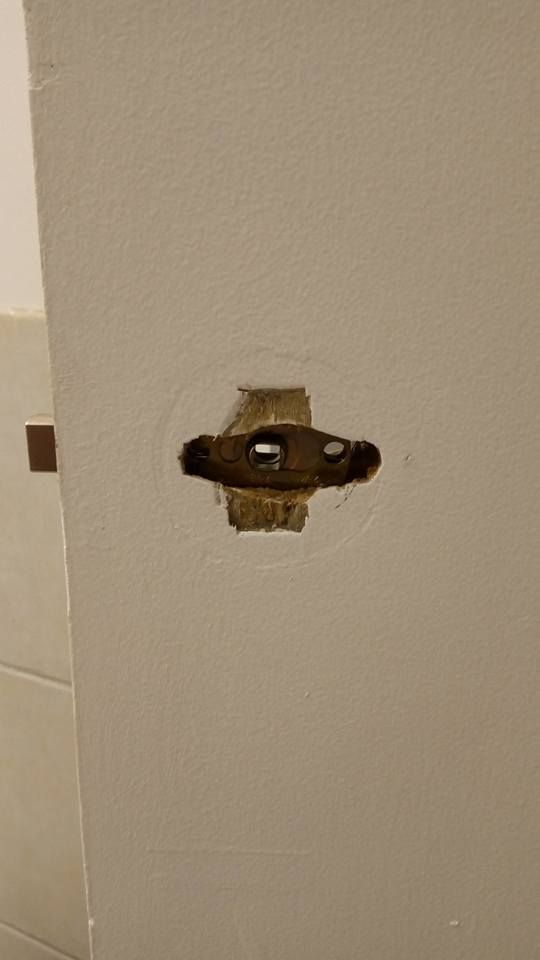
I removed the old door handles and then realised the new ones needed a different centre cut out. Ugh. Looking back at it, I could think of a few different ways to do it other than filing and trying to drill it out.
Testing out to see if it fits.
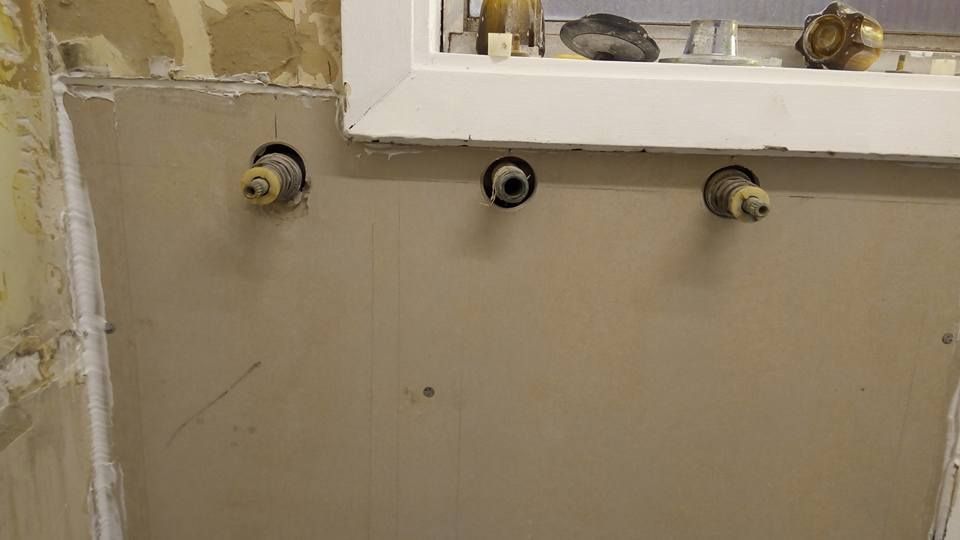
I had to cut the sheet of villaboard I was using to size and also cut a section out of it. It was like cutting/scouring/snapping a plaster sheet.
Once trimmed to size, I had to drill the holes for the tap fittings. I used a diamond bit hole saw.
I put down tape so the drill wouldn't want to "travel" so easily. There is no centre spindle on these type of drill bits and I had not used them before.
I glued it in place and nailed it. I'm pretty sure I drilled pilot holes, as I was worried I'd snap it by driving a nail through it.
Laying out the plinth so I could get an indication on "how to" and whether my ideas would work for fitting out the room. It changed how I decided to go forward.
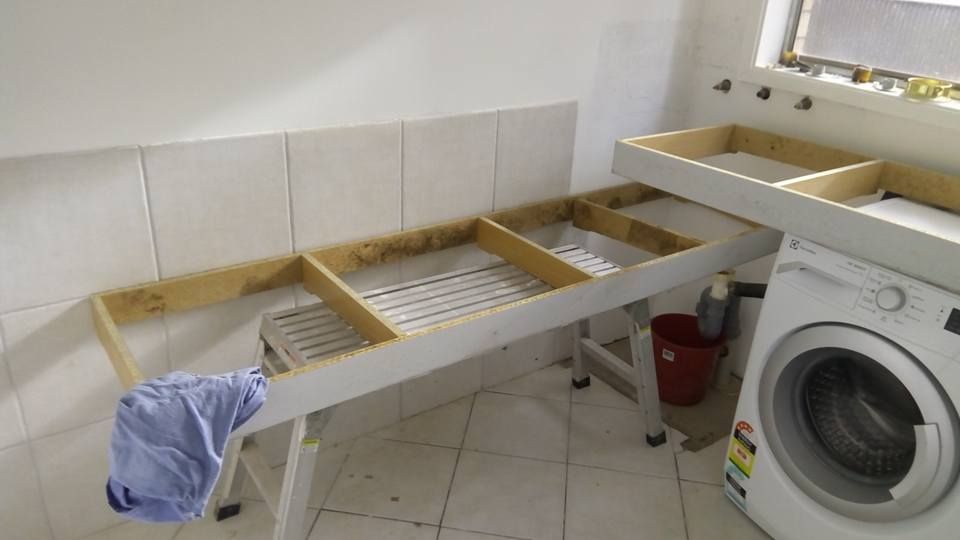
Step 5
Time to start retro-fitting some bench carcasses I had recovered from work that were being thrown out.
I hadn't factored in the washing machine needing to sit on the floor and I hadn't thought of dead space in a corner, if the cupboards go around that corner.
I had considered widths for people passing, etc. These all showed up when I laid out the bases just to get an idea of upper body movement in the room.
Removing the back so I could cut down the "thickness" of the shelves, from 600mm down to 350mm, I think.
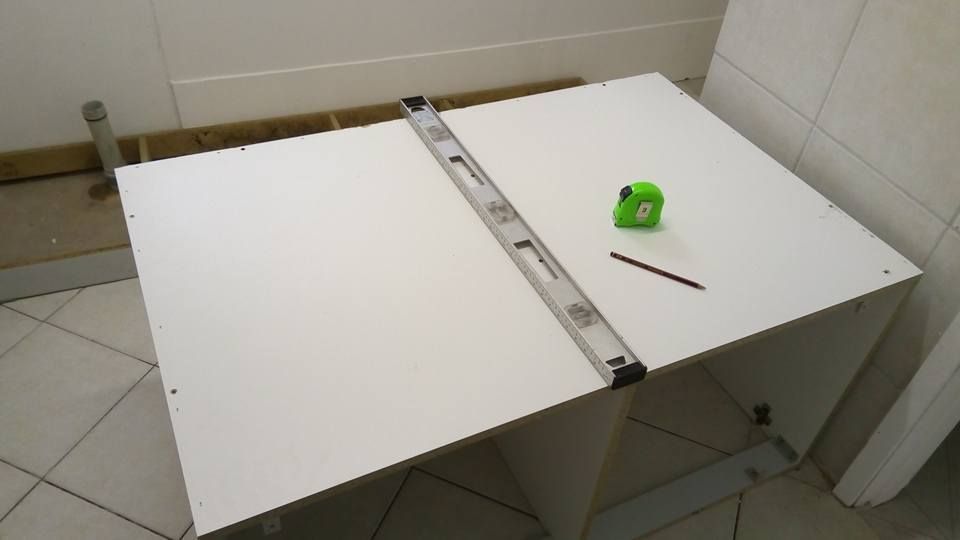
The rejigged plinth. It worked a dream. Slowly getting the pieces placed as I wanted them. I made sure I left more space on either side of the washing machine in case the next model I bought was bigger. I left 80mm extra all up.
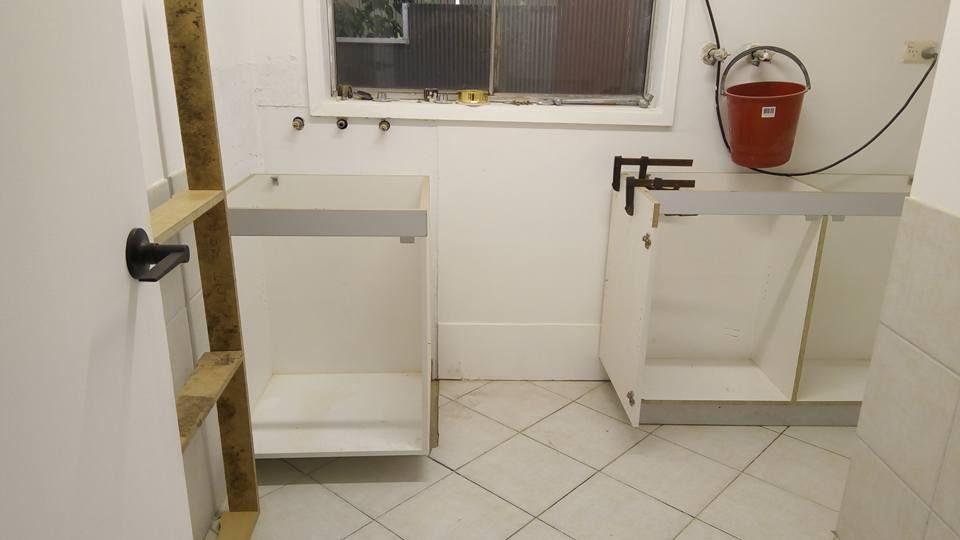
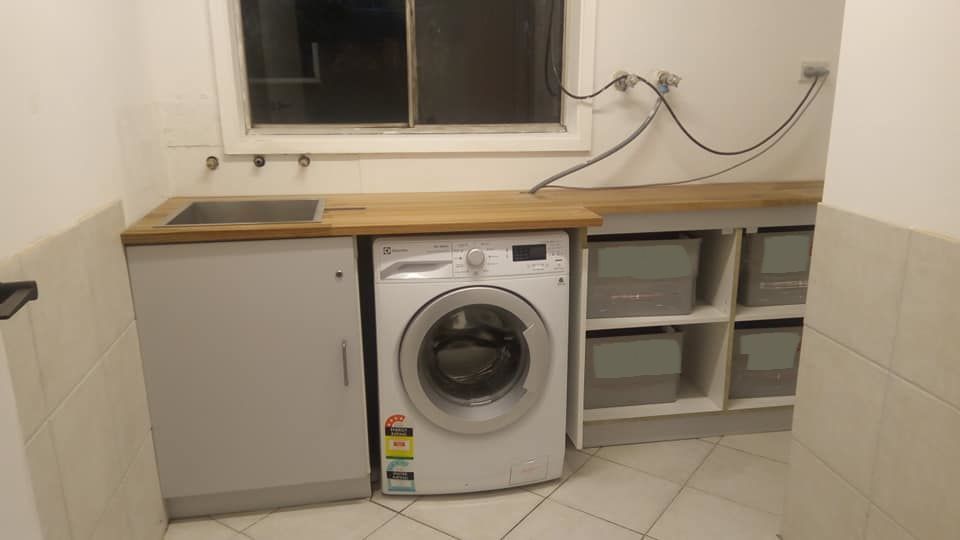
The new revamped width. I didn't want to put doors on these as there is really no space to be able to open them and it's a laundry, so I thought shelving would be better.
Placing the new timber top.
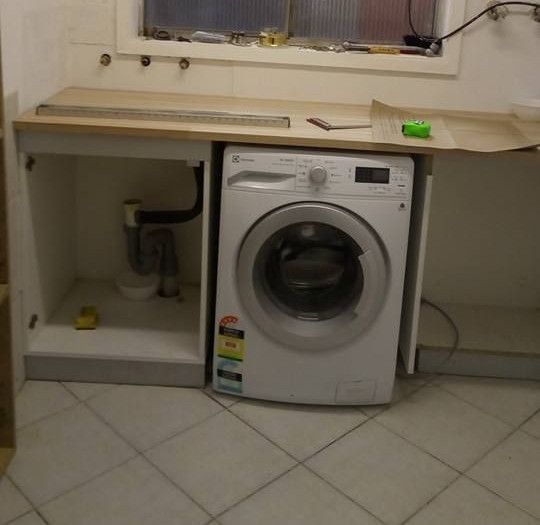
Figuring out the tolerances and how close I want to go to the edge.
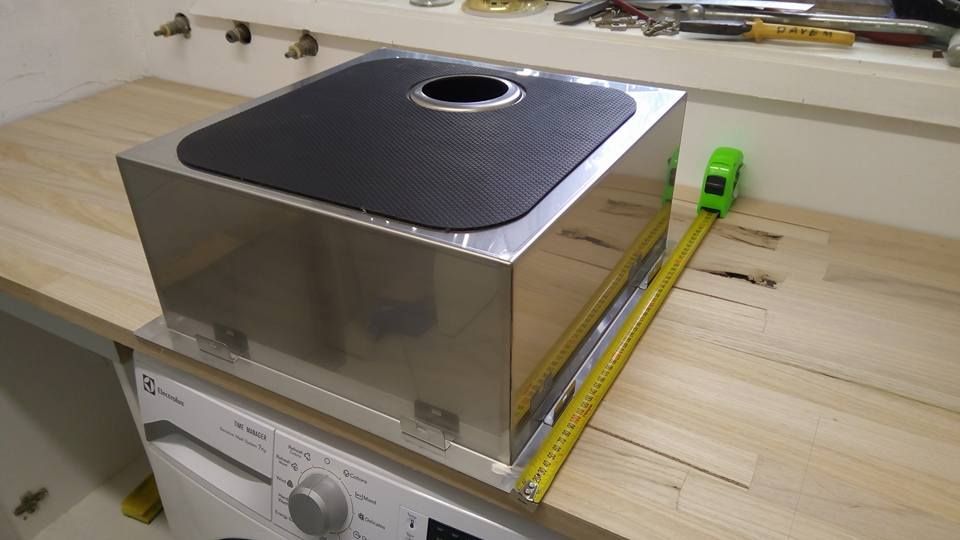
Cutting out the hole. I really should have taken the whole piece outside to cut as I almost injured myself in such a confined area. Remember, the circular saw can "kick" - you can see the mistake/cut on the left hand side of the hole. The saw "kicked" as it bit into the timber. Silly mistake.
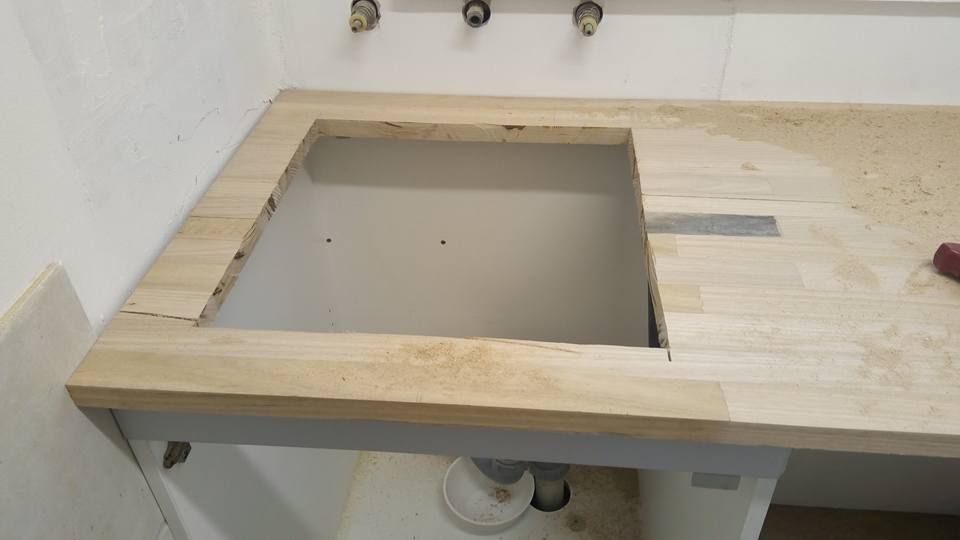
Step 6
The next bit was oiling and joining the timber sections together. I gave it three coats all up and haven't needed to oil it in the seven years since. I should probably do so but no water gets on the surface as it is.
Making sure that the bench was going to be level.
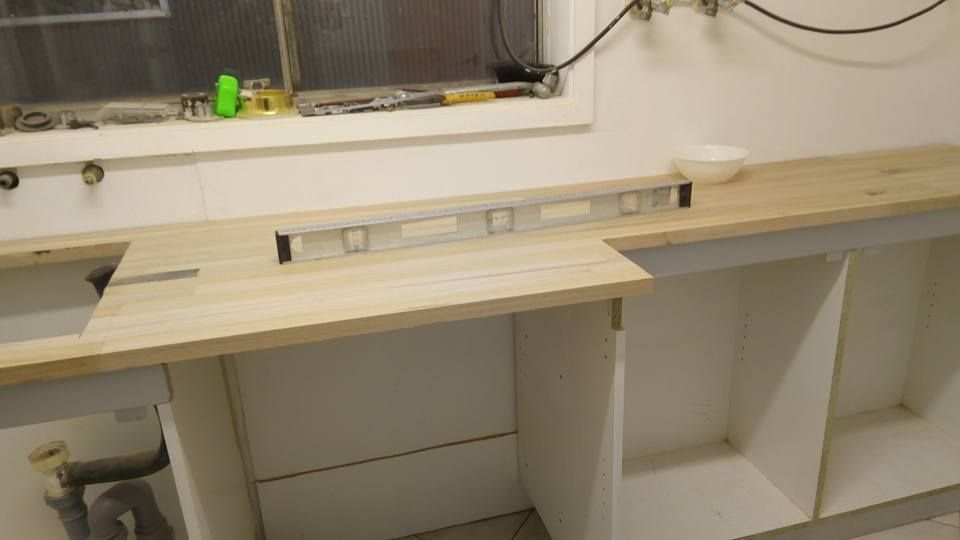
The small edge being strengthened. One thing I didn't allow for was the spacing for the edge clamps of the sink. They just fitted, otherwise I would have been in trouble.
I used the middle part of the sink I cut out for the end of the bench. This was filling for a cut on the timber when I had measured it wrong.
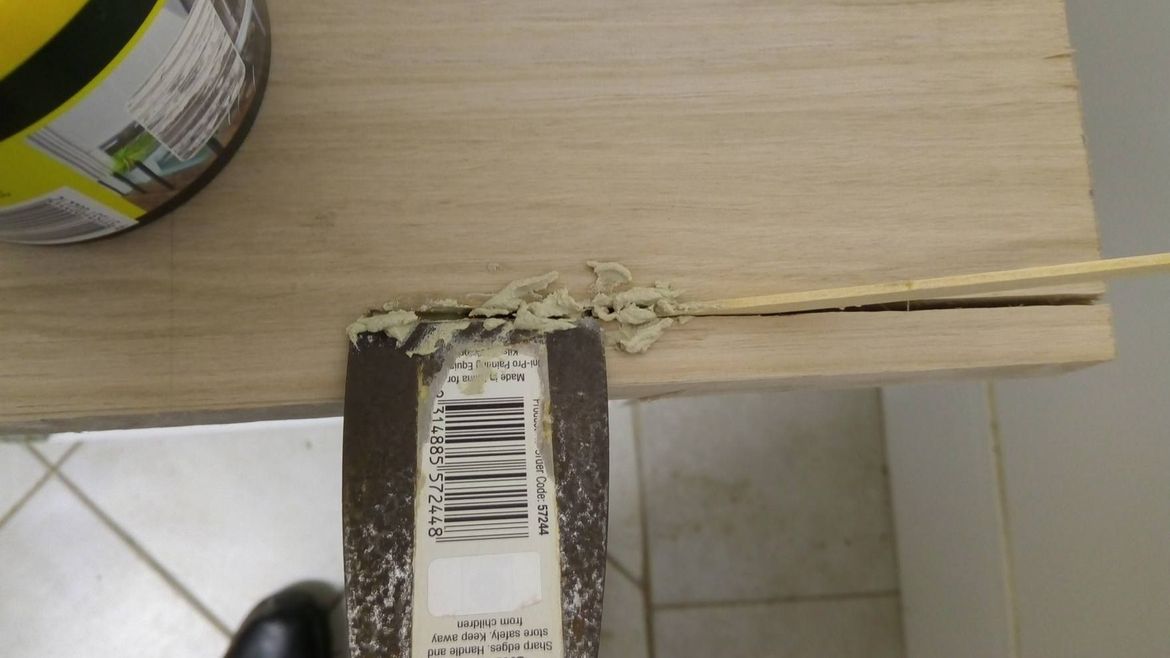
The timber benchtop I had bought from Bunnings was discounted as it had some rough spots like these. I didn't mind as that was what I was after for this "retro" fit of the laundry.
Starting to oil the bench. I didn't want a lacquer as I figured it degrades over time. The timber really shone through with the oil applied.
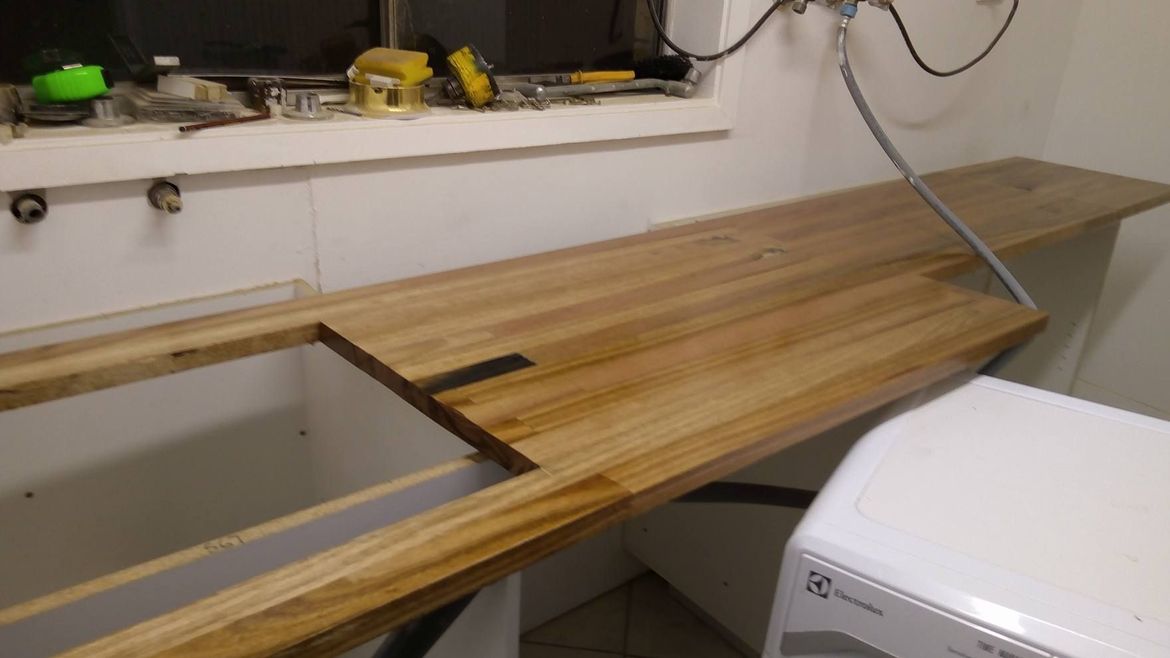
Three coats in and water beads nicely. It still beads seven years later.
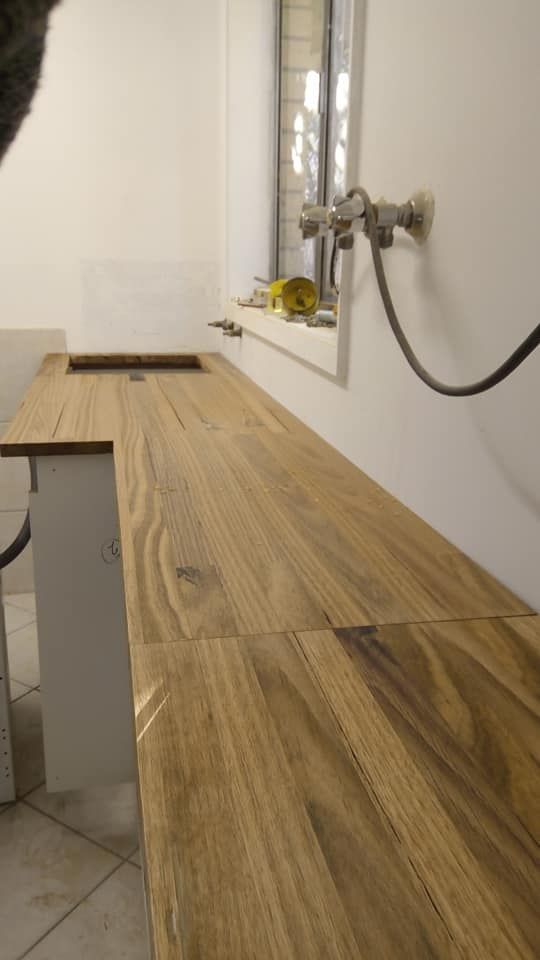
The join is from the piece that was cut out for the sink and then reused to extend the benchtop. It's smooth to the touch, though the grain didn't match. I was happy with it.
Without the door and shelving added.
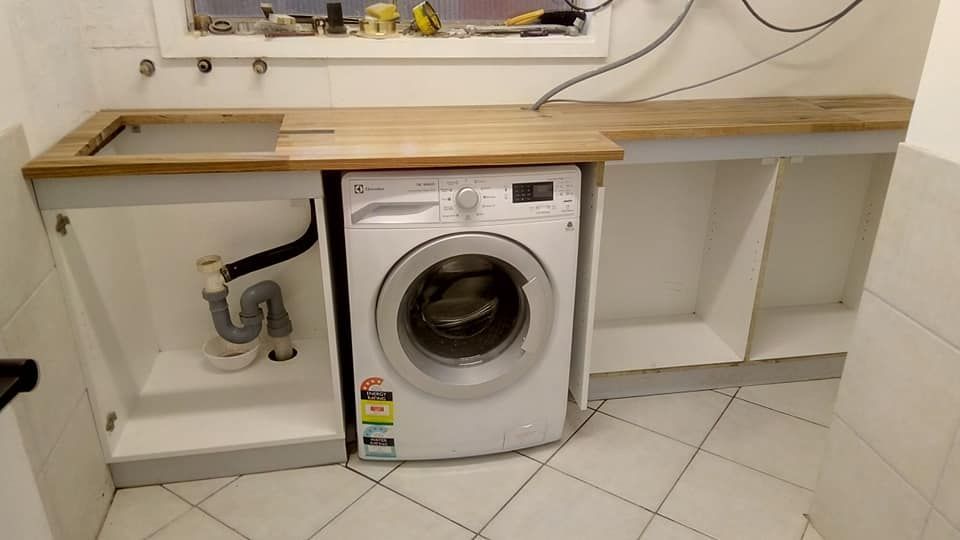
Marrying up the existing plumbing and the new stuff. Back to Bunnings to buy adaptors. I hadn't thought it through beforehand.
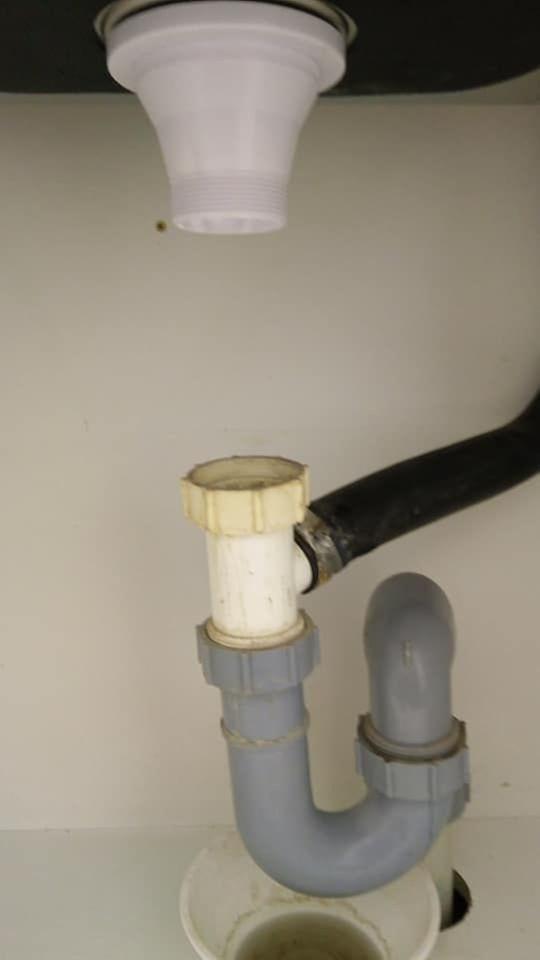
Then it was all connected and working. I had a little leak at first from a perished rubber O ring but replaced it and no more drips.
Step 6
The last stage was tidying it all up and putting back the shelving and storage of tools. etc. This was a long job over nine months as outside projects were taking priority. Here it is with the door and shelves fitted.
I am really happy how it came together. I should "smooth" the sharp corner near the washing machine but that's all I would change. I still have to do the splashback.
I had wanted to hang an "air dryer" for years. This is the spot I had in mind. It would cost a lot in electricity to run a normal air dryer for clothes, so doing it this way will cost only a fraction of that. I bought a floor fan just for the job and it sits on the bench to the right of the washing machine.
I reused a Storage rack system that was being thrown out at work. Now it's just a normal clothes hanger. It sits in the channels nicely and can be expanded out or shrunk as necessary. I didn't fasten it to the wall at the base as did not want to drill through the tiles on the wall. But I did fasten it in six places further up.
It really works well with a bench fan sitting next to the window. Three hours of the fan and the clothes are almost dry.
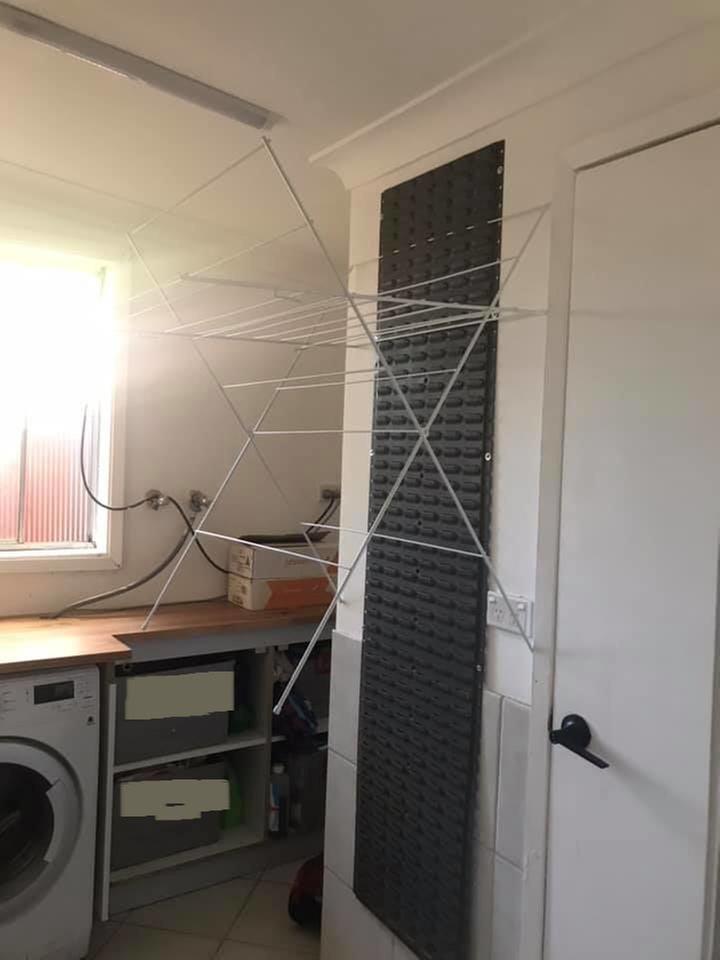
It was a long project and I was glad when I finished it. The laundry is a very functional room now. It's my tool and laundry storage plus drying room.
Tools and materials
Materials used in the project:
Tools used in the project: